

 Back
Back


 Back to Catagories


Table of Contents


 + 44 7452
122728
+ 44 7452
122728
 17-Sep-2026
Maria Thompson
Artificial Intelligence (AI) is already rewriting the rulebook of Human Resources (HR). From hiring smarter to boosting employee engagement, AI in HR is transforming traditional workplaces into an exciting hub of data‑driven decisions and personalised experiences. What once took hours of manual effort now happens in moments, opening the door to faster and fairer People Management.
By automating routine tasks and analysing workforce data, AI in HR enables HR professionals to focus on strategic initiatives that drive business growth. In this blog, we'll explore how AI is reshaping HR and why it's quickly becoming an essential partner in building the workplaces of tomorrow. So read on!
What is AI in HR?
Artificial Intelligence (AI) is a kind of advanced technology that helps machines perform tasks that typically require human-like intelligence. This includes analysing information, recognising patterns and making decisions. By processing vast volumes of data, AI systems can identify trends, interpret speech and even forecast future outcomes.
In Human Resource Management, often called Human Capital Management (HCM), AI is used to streamline routine tasks through intelligent tools and automation. It's transforming how organisations recruit, manage, develop and retain talent, thus making HR processes more efficient and data-driven.
Types of AI in HR
Artificial Intelligence includes several specialised technologies, each designed to support different HR activities. Here are some common types of AI in HR and their applications:
1) Generative AI
Generative AI uses large datasets to produce new content such as text, images and videos. In HR, it can help create job descriptions, draft personalised candidate messages, develop training materials and analyse workforce data. Popular generative AI tools include ChatGPT, Copilot and Perplexity.
2) Conversational AI
Conversational AI uses Natural Language Processing (NLP) to power Chatbots and Virtual Assistants. These tools provide instant support to employees and candidates by answering HR policy questions. These can also assist with benefits enrolment, recommending learning resources and improving communication.
3) AI Voice Technology
AI voice assistants serve round-the-clock HR support by responding to employee enquiries and directing complex issues to HR professionals. This improves response times and ensures employees receive timely assistance.
4) Machine Learning
Machine learning allows AI systems to learn from data and improve predictions over time. In HR, it can help identify potential employee turnover, match candidates with suitable job roles, and recommend fair salary ranges. It can also detect patterns in workforce data to uncover trends in performance or retention.
5) Natural Language Processing (NLP)
NLP helps AI understand and analyse human language in both written and spoken forms. HR teams use it to analyse employee feedback, survey responses, performance reviews and interview transcripts to identify patterns in employee sentiment and workplace concerns.
6) Automation AI
Automation AI helps streamline repetitive HR tasks such as resume screening, payroll processing, and compliance tracking. This reduces manual workload, minimises errors, and improves operational efficiency.
7) AI Agents
AI agents are advanced AI systems that can independently perform tasks and make decisions with minimal human input. In HR, they can monitor employee performance, recommend career development opportunities, schedule training programmes, and guide new employees through onboarding processes.
Become an HR trailblazer and lead with a strong vision. Sign up for a range of HR Leadership Courses now!
How is AI Used in Human Resources?
AI is transforming Human Resources by making HR processes faster and smarter. By automating routine tasks and providing insights, AI boosts the overall employee experience throughout the employee lifecycle. Here are some common ways AI is used in HR:
1) Recruitment and Hiring
AI streamlines the hiring process by scanning resumes, matching candidates with job requirements and identifying key qualifications. Recruiters also use AI tools to write job descriptions, create recruitment posts and provide interview preparation information to candidates.
2) Onboarding and Offboarding
AI-powered platforms can automate onboarding tasks such as completing forms, sharing company policies and scheduling training sessions. Similarly, AI can help with offboarding by sending exit surveys, managing return-of-asset documentation and removing system access when employees leave. These AI-powered solutions streamline Onboarding and Offboarding, making the employee transition process more efficient.
3) Workforce Planning
AI can analyse large amounts of workforce data to identify trends, predict employee turnover, and highlight skill gaps. This helps HR teams plan training programmes and prepare future leadership through effective succession planning.
4) HR Chatbots and Virtual Assistants
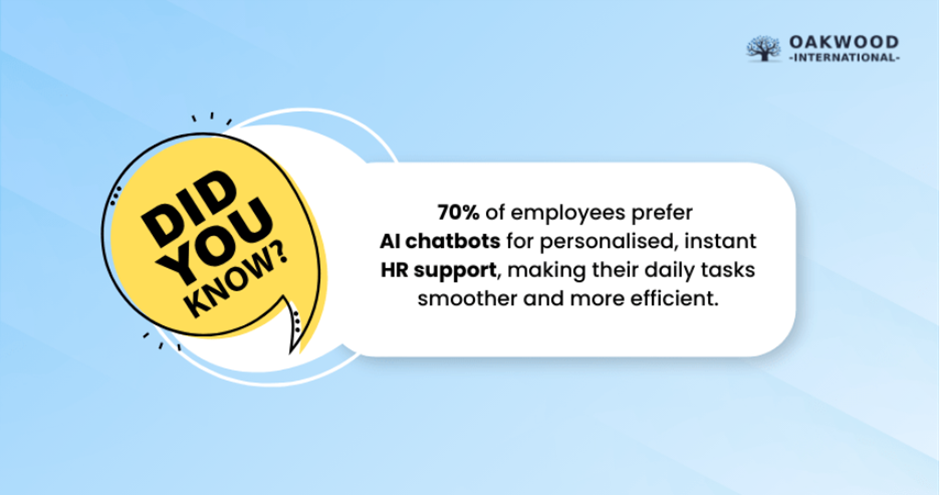
AI chatbots provide 24/7 support by answering common employee questions related to HR policies, benefits, and leave. These tools improve employee support while reducing the workload for HR teams.
5) Learning and Development
AI helps create personalised learning experiences by analysing employee performance and recommending relevant training programmes. It can also support automated course creation and intelligent learning systems.
6) AI in HR Analytics
AI allows HR teams to analyse employee data related to performance, engagement, and retention. These insights can help organisations make stronger decisions about Workforce Management and develop better strategies to improve employee satisfaction and productivity.
7) AI in Talent Management
AI supports performance tracking, career development, and succession planning. It can identify high-performing employees, recommend career growth opportunities, and help organisations retain valuable talent.
8) AI-based Coaching
AI tools can provide personalised coaching and feedback to employees. They support skill development, offer learning recommendations, and help employees improve performance through continuous guidance.
9) AI for HR Business Partnering
AI helps HR professionals align their workforce strategies with the business goals. By analysing workforce data and providing insights, AI helps HR teams contribute more effectively to organisational planning and decision-making.
Benefits of AI in HR
From better efficiency and strategic planning to reduced costs, there are plenty of benefits of AI in HR. Let's explore these advantages in detail:
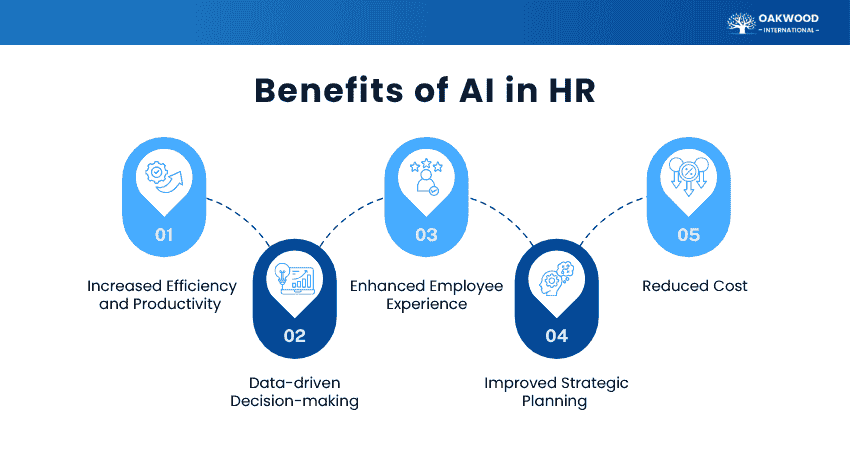
1) Increased Efficiency and Productivity
AI automates routine HR tasks, enabling HR professionals to focus on more important activities. It speeds up processes, reduces paperwork through digital systems, and provides support around the clock, making HR services faster and more responsive.
2) Data-driven Decision-making
AI analyses large amounts of data to support informed decision-making. It can identify patterns, predict potential issues, and help HR teams track performance indicators across departments more effectively.
3) Enhanced Employee Experience
AI tools can provide personalised support by quickly answering questions and offering tailored career development guidance. This helps reduce delays, improve employee satisfaction and support employees in achieving their professional goals.
4) Improved Strategic Planning
AI gives organisations deeper insights into workforce trends and employee needs. This helps HR teams plan talent strategies, develop future roles and align Workforce Management with business goals.
5) Reduced Cost
AI can reduce HR costs by speeding up recruitment, improving training efficiency, and streamlining HR processes. These improvements help organisations save resources and invest more in strategic initiatives.
Decode the best workforce trends and let data drive your HR confidence. Register for our HR Analytics Course now!
Challenges and Concerns with AI in HR
Despite its striking advantages, there are still challenges to implementing AI in HR. Here are the biggest ones yet:
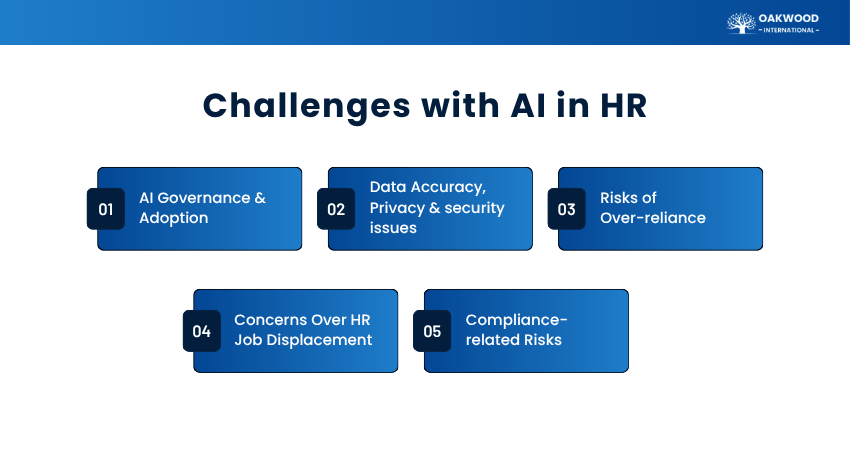
1) AI Governance and AI Adoption
One big challenge in using AI in HR is the lack of clear governance frameworks. Many organisations adopt AI tools without having proper guidelines for how they should be used. Effective AI governance is important to ensure that AI systems are implemented responsibly, ethically, and in line with organisational policies.
2) Data Accuracy, Privacy, and Security Issues
AI systems rely on large volumes of employee data. If the data is inaccurate or incomplete, the results generated by AI can also be unreliable. Furthermore, handling sensitive employee information raises concerns about security breaches, data privacy and misuse of personal data, which organisations must manage carefully.
3) Risks of Over-reliance
Relying too much on AI for decision-making can create problems in HR processes such as recruitment, performance evaluation, or employee monitoring. While AI can support decision-making, human judgement is still essential to ensure fairness, transparency, and ethical outcomes in People Management.
4) Concerns Over Job Displacement for HR Roles
The growing use of AI in HR may lead to concerns about job displacement, as some routine HR tasks become automated. This can create anxiety among HR professionals and employees who fear that technology may replace certain roles in the future.
5) Compliance-related Risks
AI systems used in HR must follow legal and regulatory requirements related to data protection, employment laws, and ethical decision-making. Failing to comply with these regulations can lead to legal issues, loss of employee trust and reputational damage.
Top AI Tools and Technologies in Human Resources
By using AI-powered solutions, HR departments can work more efficiently and make better decisions than ever before. Here are some examples of AI tools used in HR:
1) IBM Watson
IBM Watson provides a range of AI tools designed to support HR activities such as talent acquisition, workforce planning, and employee engagement. It offers advanced analytics that help HR teams screen resumes, rank candidates, analyse engagement data, and support Performance Management with data-driven insights.
2) ChatGPT
ChatGPT is a widely popular conversational AI tool that interacts with users in a natural, human-like way. HR teams use ChatGPT to answer employee queries, support onboarding processes, assist candidates during recruitment, and automate responses to frequently asked questions.
3) HireVue
HireVue is a platform that uses AI to conduct video interviews and evaluate candidates. It analyses candidate responses during interviews and provides insights into skills, behaviour, and cultural fit, helping recruiters identify strong candidates more quickly.
4) Workday
Workday is a comprehensive HR Management platform with AI capabilities for Talent Management, payroll and Workforce Analytics. Its AI-driven tools support recruitment, performance reviews and employee development by providing personalised insights and workforce Data Analysis.
5) Visier
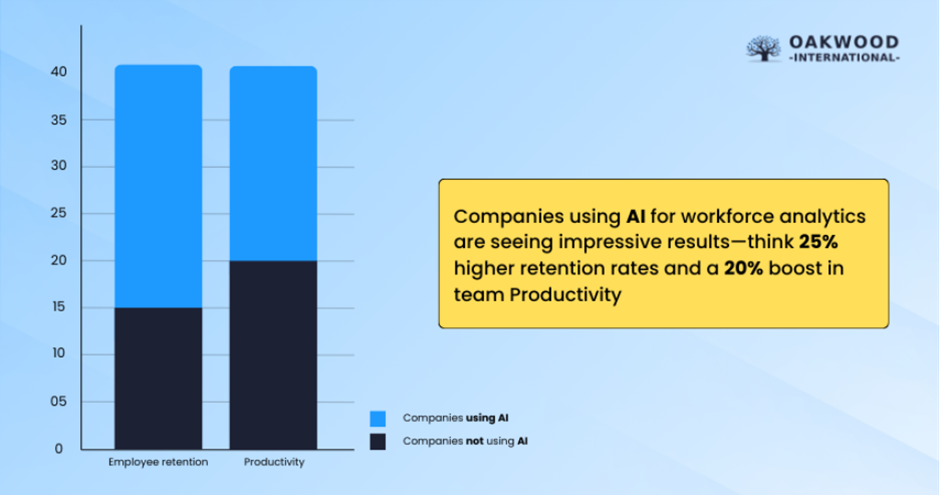
Visier is an HR Analytics platform that provides insights into workforce planning, engagement and retention. It helps HR leaders analyse employee turnover, productivity and workforce trends, thus allowing them to make informed strategic decisions.
6) HiredScore
HiredScore is an AI-based recruitment platform that uses machine learning and natural language processing. It integrates with applicant tracking systems to analyse resumes and prioritise candidates, helping recruiters focus on the most suitable applicants.
7) Eightfold.ai
Eightfold.ai is an AI-powered Talent Management platform designed to support hiring, retention, and employee development. It uses advanced algorithms to match the candidates with the job roles based on their skills and career paths. It also identifies skill gaps and recommends training opportunities.
8) Pymetrics
Pymetrics uses AI and neuroscience-based assessments to match candidates with suitable roles. Through game-based assessments, it measures cognitive and emotional traits, helping organisations reduce bias and improve hiring decisions.
9) ADP DataCloud
ADP DataCloud is an analytics platform that supports workforce Data Management. It helps HR teams manage payroll data, track workforce trends and integrate HR information systems to improve efficiency and accuracy.
10) Ultimate Software's UltiPro
UltiPro is an HR software platform that uses AI-driven analytics to manage the employee lifecycle. It provides insights into AI in Employee Engagement, turnover trends and performance data, enabling HR leaders to make better workforce planning decisions.
Build the right capabilities that move people and organisations forward with our Human Capability Development Program Course - Sign up now!
The Future of AI in HR
The future of AI and HR brings many new opportunities and changes to the profession of Human Resources. As AI becomes more common in workplaces, HR professionals must learn fresh skills and adapt to new ways of working. Consider these points:
1) In the future, AI will be used across every stage of the employee lifecycle, from recruitment to workforce planning.
2) AI tools and digital assistants may take responsibility for certain activities, which will change how work is organised.
3) As AI automates routine and administrative work, HR professionals will focus more on people-focused responsibilities.
4) Their role will shift towards guiding AI adoption across the organisation.
5) This shift may also require organisations to provide reskilling and upskilling programmes
6) This will help employees can move into new roles that emphasise human strengths such as creativity, empathy and critical thinking
Conclusion
Artificial Intelligence is reshaping HR by turning traditional processes into smarter, faster, and more strategic operations. From recruitment to employee development, AI in HR helps organisations unlock better insights and create better workplace experiences. As technology continues to evolve, HR teams that embrace AI will be far better equipped to build agile and future-ready workforces.
Let AI handle the heavy lifting and turn everyday tasks into effortless wins. Sign up for our Duet AI for Workspace Training today!
Frequently Ask Questions
What are Examples of AI in HR?
Examples of AI in HR include:
a) Resume screening tools
b) HR chatbots
c) Recruitment platforms
d) Workforce Analytics systems
e) AI-powered learning platforms
These tools help automate tasks such as candidate shortlisting, answering employee queries, analysing workforce data, and recommending personalised training.
How can GenAI Help HR?
Generative AI can support HR by creating job descriptions, drafting employee communications, generating training content and summarising HR data or reports. It can also help HR teams respond to employee queries quickly and assist recruiters in writing outreach messages or interview guidelines.
Is Artificial Intelligence the Next Big Thing in HR?
Yes, Artificial Intelligence is becoming an important part of modern HR. It helps organisations improve efficiency, make data-driven decisions, and enhance employee experiences. While AI will not replace HR professionals, it will support them by automating routine tasks.
Related Blogs
Didn’t Find What You’re Looking For?

Our commitment to excellence ensures an exceptional learning experience tailored to your professional development needs.


© Copyright 2026 - Oakwood International ™ - All rights reserved.


SUPER SALE
 Get Amazing Discounts
And Deals
Get Amazing Discounts
And Deals