

 Back
Back


 Back to Catagories


Table of Contents


 + 44 7452
122728
+ 44 7452
122728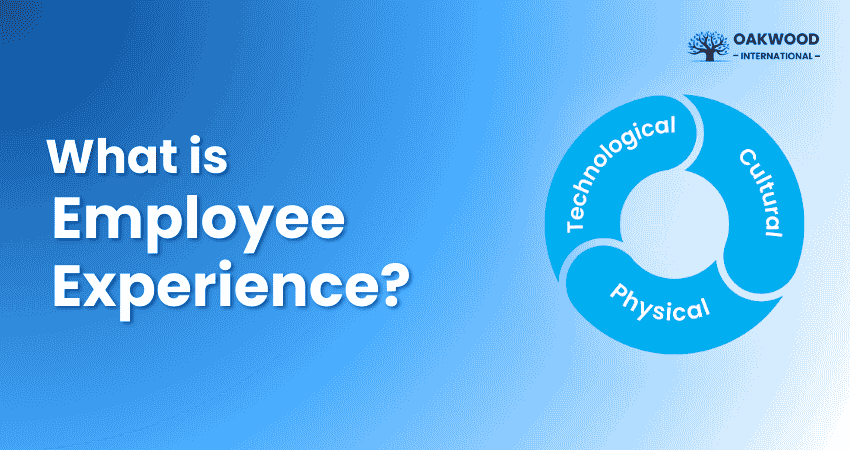
 08-Sep-2026
Richard Harris
Think about your own workplace for a moment. What makes you feel motivated and satisfied at work? Is it supportive managers, growth opportunities, or feeling respected and heard? These everyday interactions are not random; they form the foundation of Employee Experience and influence how people feel about their roles and their connection to the organisation.
This is why understanding What is Employee Experience helps organisations create workplaces where people feel valued and supported. In this blog, you will explore why Employee Experience matters, its key stages, and practical ways to build a positive and engaging work environment. Let’s get started!
What is Employee Experience?
Employee Experience is the overall journey an employee has with an organisation, from the moment they apply for a job to the day they leave. It includes everything they see, feel, and experience at work, such as workplace culture, leadership, technology, communication, and support systems.
It is shaped by daily experiences such as onboarding, teamwork, career growth, recognition, and the work environment. These interactions influence how employees feel about their roles, their level of engagement, and overall performance. In simple terms, Employee Experience reflects how employees experience work and how organisations support their success.

Why is Employee Experience Important?
Employee Experience shapes how employees feel about their work and organisation. It influences motivation, engagement, and performance, directly affecting business success and benefiting both employees and the organisation.
Employee Experience is important because:
1) Enhances Productivity and Performance:
When employees feel supported and valued, they stay motivated, focused, and deliver better quality work.
2) Strengthens Retention and Reduces Turnover:
Positive workplace experiences encourage employees to remain with the organisation, lowering recruitment and training costs.
3) Increases Employee Engagement:
A supportive environment builds commitment, enthusiasm, and active involvement in work.
4) Improves Company Culture and Employer Reputation:
A positive workplace attracts top talent and encourages collaboration.
5) Boosts Customer Satisfaction:
Engaged employees are more likely to provide high-quality service and build stronger customer relationships.
6) Promotes Employee Well-being:
Supportive work environments help reduce stress, burnout, and absenteeism.
7) Supports Long-term Organisational Success:
When employees thrive, overall business performance and growth improve.
Develop workforce capabilities and leadership skills to drive organisational growth with our
Human Capability Development Program Course
– Join now!
Key Stages of the Employee Experience Journey
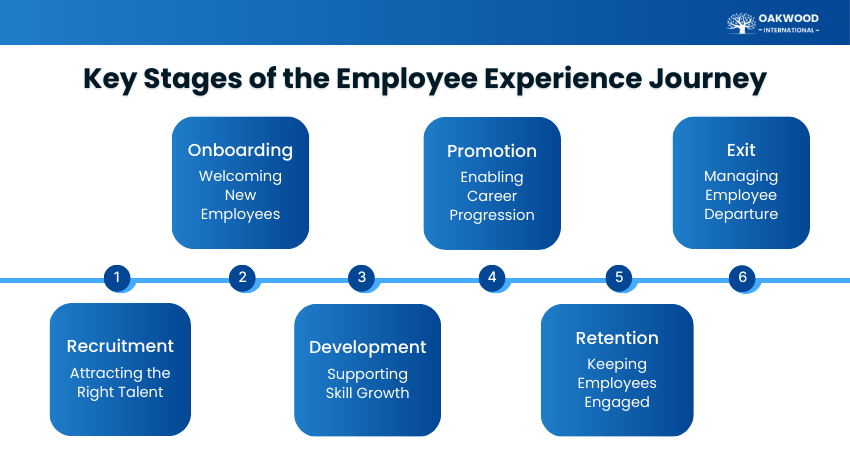
Employee Experience develops across several stages, often called the employee lifecycle. Each stage shapes how employees perceive the organisation and influences their long-term commitment and performance. Below are the key stages of this journey:
1) Recruitment
Recruitment is the first stage of the Employee Experience journey, where organisations attract potential candidates and clearly present what they offer. It focuses on communicating culture, values, and opportunities to create strong first impressions for long-term engagement from the very beginning.
During this stage, organisations also set clear expectations about roles, responsibilities, and workplace environment right from the start. They seek candidates who align with company values while gathering feedback and insights to understand what potential employees truly need and value most.
2) Onboarding
Onboarding introduces new employees to their roles and helps them understand expectations and workplace practices. It sets the tone for future experiences by providing guidance, clarity, and early support from the very beginning, which builds confidence and reduces uncertainty during transition.
A well-structured onboarding process ensures employees receive the tools, information, and resources needed to perform effectively from the beginning. Regular feedback and check-ins help organisations improve support systems and address challenges before they affect engagement.
3) Development
Development focuses on helping employees build skills, expand knowledge, and take on new challenges throughout their careers. Organisations provide learning opportunities, training programmes, and guidance that support continuous professional growth and prepare individuals for changing roles and responsibilities.
Investing in development aligns employee ambitions with organisational goals and strengthens long-term performance. Regular reviews and progress discussions help employees track achievements, identify improvement areas, and stay motivated while building expertise that benefits both employees and organisations.
4) Promotion
Promotion represents career progression and recognition of employee contributions and achievements. Clear advancement pathways help individuals understand opportunities for growth and encourage continued commitment to organisational goals while reinforcing fairness and transparency in promotion decisions across the organisation.
Open communication about career expectations and an
Employee Development Plan
helps employees prepare for future roles and responsibilities. Organisations that actively support progression through guidance, mentoring, and feedback build trust and retain talented individuals who see meaningful growth opportunities.
5) Retention
Retention focuses on keeping employees satisfied, engaged, and committed throughout their time with the organisation. It involves maintaining supportive environments, addressing concerns, recognising contributions, and ensuring employees feel valued and motivated to continue contributing their skills and experience.
Organisations strengthen retention by listening carefully to employee feedback and taking meaningful action when concerns arise. Monitoring engagement levels and analysing patterns in feedback helps identify risks early and prevent dissatisfaction from leading to higher turnover and reduced morale.
6) Exit
The exit stage occurs when employees leave the organisation, marking the final part of their journey within the company. Although departures can be challenging, they provide valuable insights into experiences and reveal areas where organisations can improve future workplace practices going forward.
A structured offboarding process supports smooth transitions for teams and ensures knowledge is transferred effectively. Exit interviews help organisations understand reasons for leaving, identify improvement opportunities, and refine strategies that strengthen Employee Experience and reduce future turnover risks.
How to Improve Employee Experience Strategy?
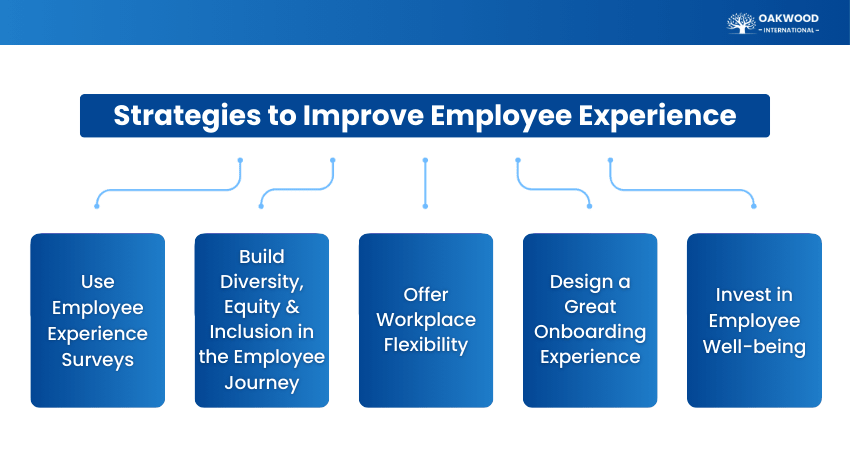
Improving Employee Experience requires intentional planning and continuous effort. Organisations must design systems, policies, and environments that support employees at every stage of their journey. The following strategies can help achieve this:
1) Use Employee Experience Surveys
Employee Experience surveys help organisations understand how employees feel about their workplace, culture, and support systems. They provide honest feedback that highlights strengths and areas needing improvement.
Regular confidential surveys give employees a voice and help organisations make informed decisions. Acting on this feedback improves
Employee Satisfaction
, strengthens engagement, and helps attract and retain talented employees.
2) Build Diversity, Equity & Inclusion in the Employee Journey
Creating a diverse, fair, and inclusive workplace helps employees feel respected, valued, and supported. Inclusive environments encourage participation, innovation, and collaboration across teams.
Organisations should embed diversity, equity, and inclusion into recruitment, development, leadership, and everyday practices. When employees feel a sense of belonging, they are more engaged and committed to their work.
3) Offer Workplace Flexibility
Flexible working arrangements support work-life balance and employee well-being. Options like remote work, flexible schedules, and role sharing help employees manage responsibilities more effectively.
Flexibility also expands the talent pool by removing location barriers and allows employees to explore different roles or develop new skills. This improves satisfaction, productivity, and long-term commitment.
4) Design a Great Onboarding Experience
A well-planned onboarding process helps new employees feel welcomed, prepared, and confident in their roles. Providing clear guidance, support systems, and regular check-ins helps them adjust quickly.
Mentoring, structured development plans, and opportunities to connect with colleagues create a smooth transition. A positive onboarding experience builds early engagement and sets the foundation for long-term success.
5) Invest in Employee Well-being
Supporting employee wellbeing means caring for physical, mental, emotional, and financial health. A supportive culture helps employees manage stress, stay motivated, and feel valued beyond their daily tasks.
Organisations can promote wellbeing through health programmes, personal support services, development opportunities, and time off. When employees feel cared for, they are more resilient, productive, and committed to the organisation.
Develop data-driven HR skills to improve workforce performance with our
HR Analytics Course
– Register today!
How to Measure Employee Experience?
Measuring Employee Experience helps organisations evaluate effectiveness and identify improvement opportunities. Below are the key methods used to measure it:
Employee Engagement Surveys
Employee engagement surveys measure how committed and motivated employees feel towards their work and organisational goals. They help assess enthusiasm, dedication, and connection, providing a clear indication of how employees experience their workplace.
Conducting these surveys regularly helps organisations track engagement levels over time and identify areas needing improvement. They also reveal whether employees feel valued, recognised, and willing to recommend the organisation as a positive place to work.
Support Satisfaction Surveys
Support satisfaction surveys evaluate how employees perceive the assistance and resources provided by the organisation. This includes support from managers, HR teams, and internal services that help employees perform their roles effectively.
High satisfaction levels indicate strong support systems, while lower scores highlight areas needing attention. These surveys help organisations improve responsiveness, strengthen resources, and ensure employees feel supported in their daily work.
Temperature Checks
Temperature checks are short, frequent surveys designed to capture real-time feedback on employee wellbeing and workplace sentiment. They help organisations monitor how employees feel about workload, stress levels, and work-life balance.
Because they are conducted regularly, temperature checks help detect concerns quickly and allow organisations to respond before problems grow. This ongoing monitoring supports timely action and continuous improvement.
Sentiment and Behavioural Surveys
Sentiment surveys explore how employees feel about their work environment, culture, and sense of belonging. Behavioural surveys examine how employees act in different situations, such as collaboration, communication, and teamwork.
Together, these surveys provide deeper insights into both attitudes and behaviours. They help organisations understand how employees experience the workplace emotionally and practically, supporting better decision-making and cultural improvement.
Open-ended Surveys
Open-ended surveys allow employees to share detailed feedback in their own words rather than selecting fixed responses. This approach captures richer insights and reveals issues that structured surveys may overlook.
By encouraging honest expression, organisations gain a clearer understanding of employee concerns, experiences, and suggestions. This qualitative feedback helps guide meaningful improvements and more responsive workplace practices.
Exit Surveys
Exit surveys are conducted when employees leave the organisation and provide valuable insights into their overall experience. They help identify reasons for departure and highlight patterns that may indicate workplace challenges.
Analysing exit feedback helps organisations understand what worked well and what needs improvement. These insights support better retention strategies and help create stronger Employee Experiences in the future.
Challenges of Employee Experience
Employee Experience is shaped by changing work models, rising expectations, and rapid technological change. These changes create several key challenges for organisations:
1) Hybrid and Remote Work Management:
Maintaining strong communication, culture, and collaboration across distributed teams can be difficult.
2) Mental Health and Burnout:
High workloads, stress, and blurred work-life boundaries can reduce well-being and productivity.
3) Limited Workplace Flexibility:
Lack of flexible working options can lower satisfaction and increase employee turnover.
4) Inconsistent Recognition and Career Growth:
Limited development opportunities or unclear career paths can reduce motivation and engagement.
5) Feedback and Data Limitations:
Difficulty gathering and acting on employee feedback can prevent meaningful improvements.
6) Lack of Collaboration Between Departments:
Poor coordination between departments can lead to inconsistent policies and Employee Experiences.
Learn practical Talent Management skills to develop future leaders and high performers. Join our
Talent Management Training
now!
Employee Experience Best Practices
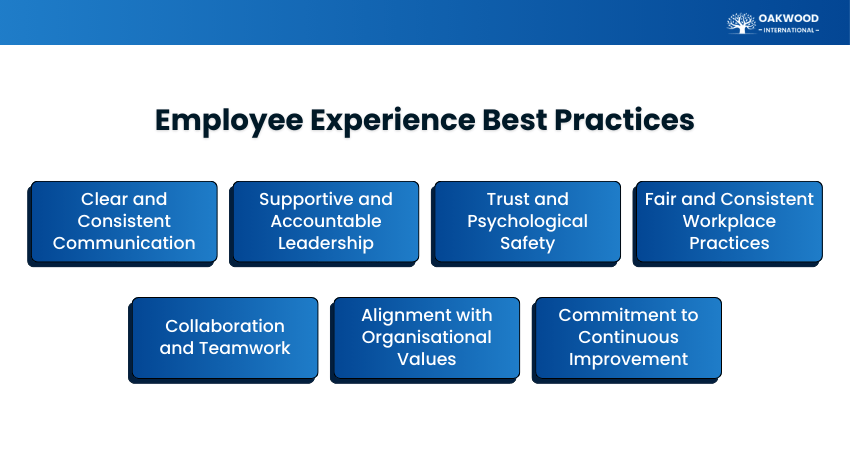
Employee Experience best practices are everyday principles that help create a positive, consistent, and supportive workplace by shaping leadership, teamwork, and daily operations. Key best practices include:
1) Maintain Clear and Consistent Communication:
Share information openly to build trust, alignment, and understanding across teams.
2) Develop Supportive and Accountable Leadership:
Encourage leaders to guide, listen, and treat employees fairly.
3) Create a Culture of Trust and Psychological Safety:
Ensure employees feel safe to share ideas, ask questions, and express concerns.
4) Ensure Fairness and Consistency in Workplace Practices:
Apply policies and decisions equally to build credibility and trust.
5) Encourage Collaboration and Teamwork:
Promote cooperation and knowledge sharing across teams and departments.
6) Align Daily Practices with Organisational Values:
Ensure actions reflect the organisation’s stated principles.
7) Commit to Continuous Improvement:
Regularly review and adapt workplace practices to meet changing needs.
Conclusion
Understanding What is Employee Experience is essential for creating a workplace where employees feel supported, valued, and inspired to perform at their best. By recognising its key stages, addressing challenges, and applying effective practices, organisations can build stronger cultures, improve retention, and achieve long-term success.
Learn how to manage employee relations and create positive workplace environments with our
Employee Engagement Training
– Join now!
Frequently Ask Questions
What are Examples of Employee Experience?
Examples include onboarding support, workplace culture, leadership communication, career development opportunities, flexible working arrangements, recognition programmes, and wellbeing initiatives. Every interaction employees have with their organisation forms part of their experience.
What are the Three Pillars of Employee Experience?
The three key pillars of Employee Experience are the physical, technological, and cultural environments. These shape where employees work, the tools they use, and the workplace culture they experience. Together, they influence how employees feel, behave, and perform throughout their journey.
Is Employee Experience the Same as HR?
No. HR manages policies, processes, and administrative functions, while Employee Experience focuses on how employees perceive and feel about their entire journey within the organisation. HR supports Employee Experience, but they are not the same.
Related Blogs
Didn’t Find What You’re Looking For?

Our commitment to excellence ensures an exceptional learning experience tailored to your professional development needs.


© Copyright 2026 - Oakwood International ™ - All rights reserved.


SUPER SALE
 Get Amazing Discounts
And Deals
Get Amazing Discounts
And Deals