

 Back
Back


 Back to Catagories


Table of Contents


 + 44 7452
122728
+ 44 7452
122728
 15-Sep-2026
Maria Thompson
Workplace harmony doesn't happen by chance. It grows through open communication, fairness and trust. When concerns arise, a well-defined Grievance Procedure acts as a structured pathway for resolving issues before they blow up into larger conflicts. It gives employees a voice while helping organisations maintain transparency and a positive work environment. That’s why a good understanding of What is a Grievance Procedure is vital.
Whether it's about addressing workplace disputes or strengthening employee confidence, an effective grievance process benefits everyone involved. In this blog, we'll explore What is a Grievance Procedure, its benefits, best practices for successful implementation and more. So read on and build a workplace where trust and open communication enjoy the spotlight!
What is a Grievance at Work?
A Grievance at work is a concern, complaint or problem raised by an employee about something they believe is unfair, inappropriate or affecting their role, treatment or working environment. It can range from a minor misunderstanding or an inappropriate remark to more serious matters that affect an employee's well-being, rights or performance.

What is a Grievance Procedure?
A Grievance Procedure is a formal process that organisations use to handle employee concerns fairly, consistently and confidentially. It provides employees with a structured way to raise workplace issues while helping employers investigate complaints, resolve workplace issues and promote a fair and respectful workplace.
A typical Grievance Procedure outlines:
1) How employees can raise a grievance
2) Who is responsible for handling the complaint
3) How grievances are investigated fairly
4) How decisions are communicated
5) The employee's right to appeal
6) The responsibilities of both employees and employers throughout the process
Different Types of Grievance
Employee Grievances can arise in many forms, depending on who is affected and the nature of the concern. Understanding the different categories of Grievances is key for organisations to address these issues and create a supportive workplace. Here are the main types of Grievances:
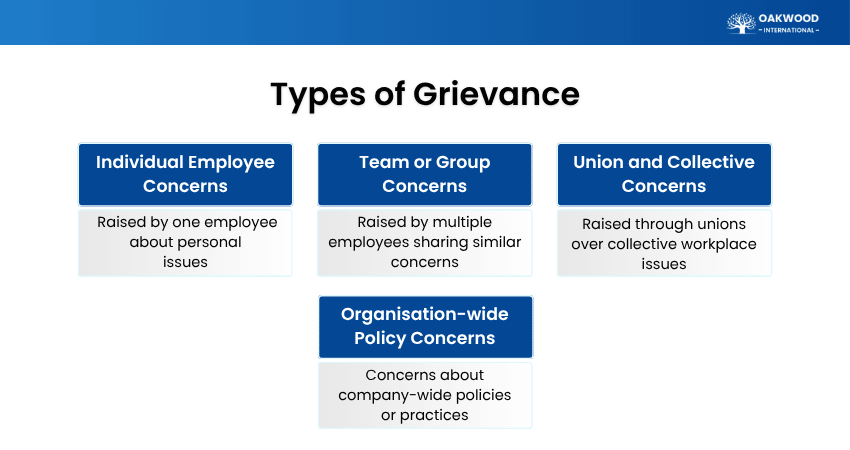
1) Individual Grievances
Individual Grievances are concerns raised by a single employee about an issue that directly affects them. Here are some examples:
a) Allegations of unfair treatment, discrimination, harassment or bullying.
b) Conflicts with managers or colleagues that impact an employee's work experience.
c) Concerns about workplace behaviour or equal treatment.
d) Complaints about specific employment decisions, such as being denied a promotion, receiving an unfair performance review, facing inconsistent disciplinary action, etc.
e) Situations where an employee feels a decision has negatively affected their career or well-being.
2) Group Grievances
Group Grievances come up when a concern impacts multiple employees within a team or department. Here are some examples:
a) Issues affecting a group of employees, such as unsafe working conditions, inadequate resources, insufficient facilities, ineffective workplace practices, etc.
b) Concerns that hinder the team's ability to perform their roles effectively.
c) Complaints involving changes that affect several employees, such as shift schedules, workload allocation, compensation structures, benefits, or working arrangements.
d) Situations where employees experience the same issue and choose to raise it collectively.
3) Union Grievances
Union Grievances are typically raised through employee representatives or labour unions when concerns involve collective agreements or employee rights. Here are some examples:
a) Situations where employees believe the organisation has failed to follow the terms of a collective negotiation agreement.
b) Concerns regarding contractual obligations, pay, benefits, or agreed working conditions.
c) Complaints related to the recognition, treatment, or involvement of employee unions.
d) Concerns that arise when unions are not appropriately consulted on significant organisational decisions or workplace changes.
e) Broader disagreements between management and union representatives regarding pay, benefits, working conditions, job security, or organisational policies.
f) Issues that may require formal negotiation or mediation.
4) Organisational Grievances
Organisational Grievances focus on concerns that stem from company-wide practices, systems, or policies. Here are some examples:
a) Questions or complaints about how workplace policies are interpreted, implemented, or enforced.
b) Issues involving inconsistencies, lack of transparency, or perceived unfairness in organisational processes.
c) Recurring management challenges, cultural issues or patterns of discrimination and inequality.
d) Reports of unethical, illegal or non-compliant practices within the organisation.
e) Concerns raised to protect employees, stakeholders or the organisation from misconduct and potential risks.
Gain the people skills to influence business success at the highest level with the CIPD Level 7 Advanced Diploma in Strategic People Management Training - Sign up now!
Steps in the Grievance Procedure
Although the exact process may vary between organisations, most Grievance Procedures follow a structured approach to ensure workplace concerns are handled fairly and consistently. The typical steps in the process are outlined below:
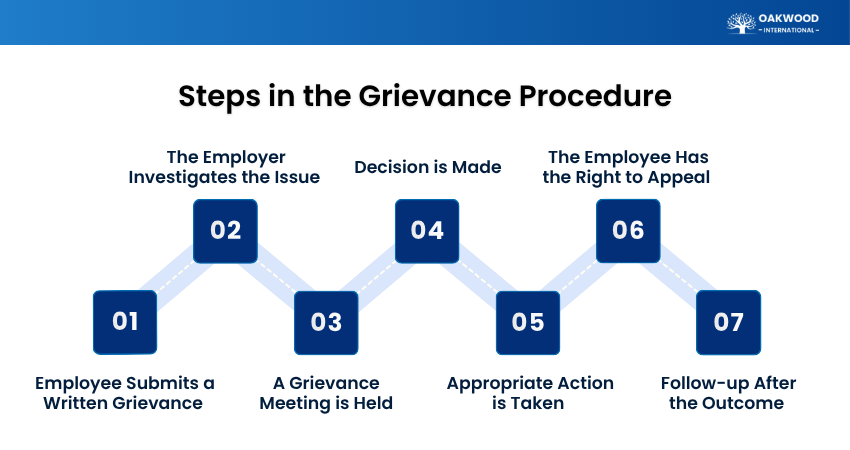
1) Employee Submits a Written Grievance
The process begins when an employee formally raises a workplace concern, usually in writing. Providing clear and relevant information helps the employer understand and investigate the issue effectively. A written grievance should include:
a) The nature of the complaint
b) Relevant events and circumstances
c) Names of individuals involved
d) Dates, times and supporting evidence, where available
e) The outcome the employee hopes to achieve
If the concern is raised verbally, the employer may ask the employee to put it in writing or assist them in documenting the Grievance.
2) The Employer Investigates the Issue
Once the Grievance has been received, the employer investigates the matter to establish the facts. The extent of the investigation depends on the nature and complexity of the complaint. This may involve:
a) Interviewing relevant individuals
b) Reviewing documents and records
c) Examining emails or workplace communications
d) Assessing available evidence, such as CCTV footage or system logs
The investigation should be conducted fairly and impartially before any decision is made.
3) A Grievance Meeting is Held
After the investigation, the employer usually arranges a Grievance meeting to discuss the concern with the employee. This allows the employee to explain their grievance, present additional information and discuss possible solutions. Where applicable, the employee may be accompanied by a workplace colleague or trade union representative.
4) Decision is Made
After considering the information gathered during the investigation and grievance meeting, the employer decides on the outcome. The decision should be communicated clearly to the employee, along with the reasons for the outcome and any actions that will be taken.
5) Appropriate Action is Taken
If the grievance is upheld, the employer takes appropriate corrective action to resolve the issue. Depending on the circumstances, this may include:
a) Workplace adjustments
b) Changes to policies or procedures
c) Additional training or support
d) Corrective action to address the issue
e) Beginning a separate disciplinary procedure where misconduct is identified
In some situations, organisations may also use mediation to help resolve interpersonal conflicts where both parties agree that it is appropriate.
6)The Employee has the Right to Appeal
If the employee is disappointed with the outcome, they may appeal the decision. The appeal should normally be reviewed by a different manager or an independent decision-maker who was not involved in the original decision. The appeal typically considers:
a) Whether the investigation was conducted fairly
b) Whether relevant evidence was considered
c) Whether the outcome was reasonable and proportionate
7) Follow-up After the Outcome
A Grievance Procedure does not end with the final decision. Follow-up is an important step in ensuring that the agreed actions have been implemented and that the issue has been effectively resolved. Human Resources (HR), managers, union representatives, or relevant parties should check in with the employee to:
a) Confirm that commitments have been fulfilled
b) Address any remaining concerns
c) Ensure workplace relationships and operations have stabilised
d) Reinforce trust in the grievance process
Learn how to lead the right way with our range of People Management Courses - Sign up now!
Benefits of an Effective Grievance Procedure
An effective Grievance Procedure gives employees a safe way to raise workplace concerns. By resolving issues fairly and consistently, it helps prevent conflicts, builds trust and supports a positive work environment. The key benefits include:
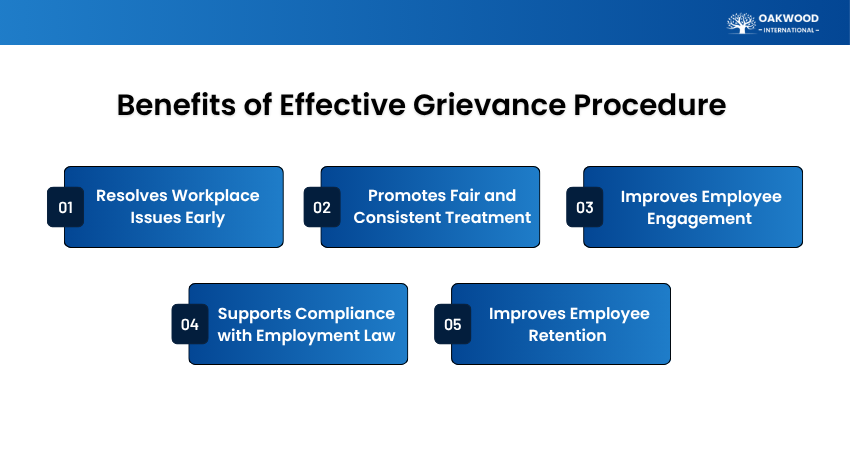
1) Resolves Workplace Issues Early
An effective Grievance Procedure helps address concerns before they escalate into larger disputes. Early resolution minimises workplace disruption, improves communication and creates a more productive working environment.
2) Promotes Fair and Consistent Treatment
A structured grievance process ensures all complaints are handled objectively and consistently. This reduces bias, increases transparency and gives employees confidence that their concerns will be assessed fairly.
3) Improves Employee Engagement
When employees know their concerns will be heard and considered, they are more likely to feel valued and motivated. This encourages greater trust, commitment and participation in the workplace.
4) Supports Compliance with Employment Law
A well-defined Grievance Procedure helps organisations comply with employment law and recognised workplace standards. It also reduces legal risks by ensuring complaints are investigated fairly and documented appropriately.
5) Improves Employee Retention
Employees are likely to stay with an organisation that listens to their concerns and resolves issues fairly. A transparent grievance process strengthens trust, improves job satisfaction and reduces staff turnover.
Drawbacks of a Formal Grievance Procedure
While a formal Grievance Procedure offers many benefits, it also has some limitations, including:
1) Discourages Minor Complaints: Employees may avoid raising smaller issues through a formal process, while managers may overlook concerns that are not officially documented.
2) Time-consuming Process: Investigating and resolving Grievances may take a long time. This can delay decisions and prolong workplace issues.
3) Administrative Burden: Handling every grievance requires documentation, investigation, and follow-up. This increases paperwork and administrative effort.
4) Risk of Misuse: Although uncommon, the procedure may occasionally be misused through unfounded or excessive complaints, potentially delaying the resolution of genuine workplace concerns.
Learn how to shape positive workplace culture with the CIPD Level 3 Certificate in People Practice Training - Sign up now!
Best Practices for an Employee Grievance Procedure
When creating or reviewing your organisation's Grievance Procedure, ensure you follow these best practices:
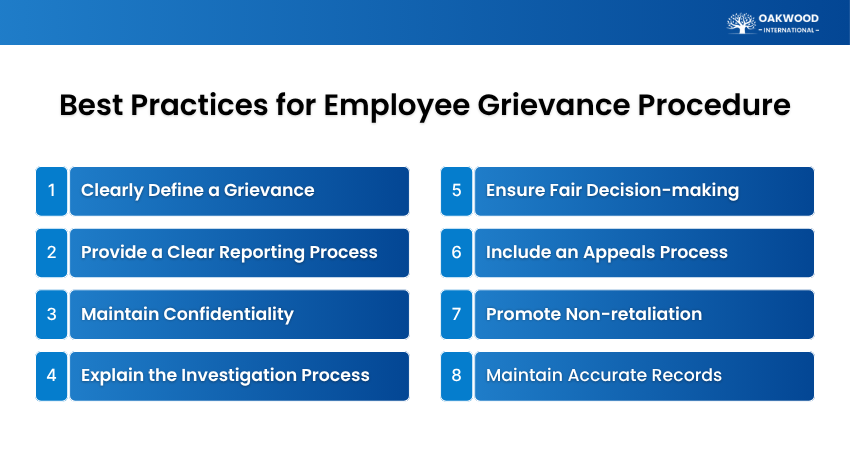
1) Clearly Define a Grievance: Explain what constitutes a Grievance and the types of workplace concerns employees can raise.
2) Provide a Clear Reporting Process: Outline who to contact, what information employees should provide and any supporting documents required.
3) Maintain Confidentiality: Handle Grievances confidentially and share information only with those involved in resolving the issue.
4) Explain the Investigation Process: Describe how Grievances are investigated, who may be involved and how evidence will be assessed.
5) Ensure Fair Decision-making: Clearly explain how decisions are made and the possible outcomes.
6) Include an Appeals Process: Provide employees with a clear procedure to appeal if they disagree with the outcome.
7) Promote Non-retaliation: Ensure employees can raise concerns without fear of retaliation or unfair treatment.
8) Maintain Accurate Records: Keep secure documentation of Grievances, investigations, findings and outcomes.
Conclusion
A workplace thrives when every employee feels heard. A Grievance Procedure creates a clear and fair path for resolving concerns before they become bigger problems. Understanding What is a Grievance Procedure empowers leaders to build trust, strengthen workplace relationships and create a culture where fairness, respect and open communication flourish.
Attain a firm grasp on the essentials of modern HR practices with the CIPD Qualification Training. Register today!
Frequently Ask Questions
How Long Should a Grievance Procedure Take?
The length of a Grievance Procedure depends on the complexity of the issue and the organisation's policy. Simple cases may be resolved within a few days, while more complex matters can take several weeks. Employers should handle grievances promptly, keep the parties involved informed throughout the process and avoid unnecessary delays.
Can an Employee Be Accompanied at a Grievance Meeting?
Yes. Employees can usually be accompanied at a formal grievance meeting by a workplace colleague or trade union representative. Having someone with them can provide support, help explain their concerns and ensure the meeting is conducted fairly.
On What Grounds Can You Raise a Grievance?
An employee can raise a Grievance about any workplace issue that affects them. Common reasons include:
a) Bullying or harassment
b) Discrimination
c) Unfair treatment
d) Health and safety concerns
e) Workload issues
f) Pay disputes
g) Breach of contract
h) Working conditions
i) Conflicts with colleagues or managers
Related Blogs
Didn’t Find What You’re Looking For?

Our commitment to excellence ensures an exceptional learning experience tailored to your professional development needs.


© Copyright 2026 - Oakwood International ™ - All rights reserved.


SUPER SALE
 Get Amazing Discounts
And Deals
Get Amazing Discounts
And Deals