

 Back
Back


 Back to Catagories


Table of Contents


 + 44 7452
122728
+ 44 7452
122728
 17-Sep-2026
Maria Thompson
Ever dreamt of working in an office where employees feel truly seen, heard, and valued, no matter the distance between them? This isn't just a dream; it's the reality that AI in Employee Engagement can help create. As organisations strive for more meaningful connections with their teams, Artificial Intelligence (AI) is stepping in to offer personalised experiences that drive motivation and performance.
But how exactly can AI enhance engagement? How can it transform feedback into real-time action? In this blog, we'll dive into the many ways AI in Employee Engagement is reshaping the modern workplace. With emerging trends, AI is becoming a key player in creating a thriving, and connected workforce. Let's explore further!
What is AI in Employee Engagement?
Consider AI in Employee Engagement as the automation of knowledge tasks, such as complex analysis, communication, problem-solving, pattern recognition, and more. AI employs Machine Learning (ML) and Natural Language Processing (NLP) to emulate human intelligence in machines that perform tasks necessitating human-like cognitive abilities.
In terms of boosting Employee Engagement, AI can be utilised to extract insights from employee data and Predictive Analytics, aiding People Analytics For Decision Making in areas like recruitment, employee performance evaluation, employee experience, and workforce planning.
The Benefits of Using AI in Employee Engagement
Using AI in Employee Engagement offers numerous advantages. Let's explore them in detail:
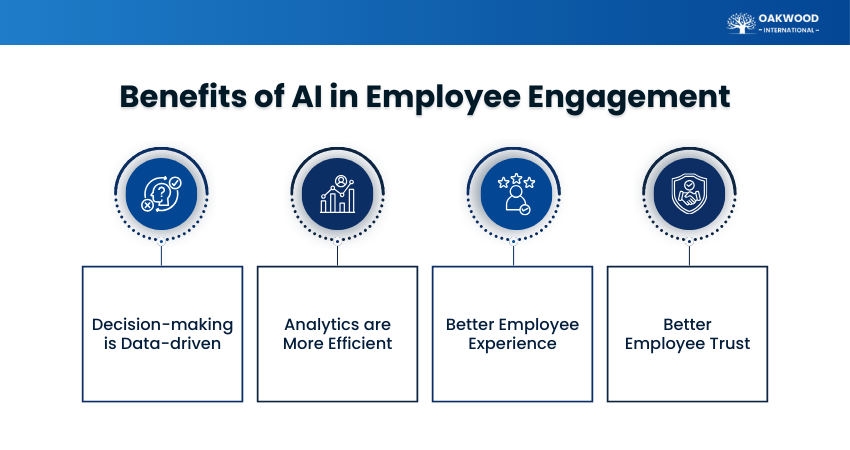
1) Decision-making is Data-driven
By utilising AI algorithms across a vast array of employee data, your organisation can uncover deeper insights into workplace aspects that both positively and negatively impact your employees.
2) Analytics are More Efficient
Insights that might otherwise take many hours of hard work to extract, decipher, and analyse can be rapidly delivered through AI Leadership to the Managers and leaders who need them. This reduces the administrative burden, streamlines the process, and frees up time for those leaders and Managers to act on the insights.
3) Better Employee Experience
Employing AI-powered tools across your employee data means that experience gaps can be swiftly identified, hyper-targeted with effective actions, and closed.
4) Better Employee Trust
Many employees, as discussed above, are wary of the role of AI in Employee Engagement. However, if you implement AI properly in your organisation (by being transparent, explaining everything, and communicating the actions you're taking as a result), employees will see the positive differences and improvements AI brings to their workplace and relationships.
Disadvantages of Using AI in Employee Engagement
While AI brings many advantages, it also poses certain challenges that organisations need to address. Here are some key drawbacks:
1) Privacy and Data Protection
The collection and storage of employee data and sensitive information inherently carries the risk of security breaches or unauthorised access. Therefore, it is crucial that organisations implement strong security measures. They must:
a) Respect employee privacy rights
b) Comply with the relevant data protection regulations
2) Bias and Unfair Treatment
Bias and discrimination may exist in historical data, which AI might interpret and present as misleading insights. It is essential to address this by monitoring and auditing AI systems to ensure they do not produce biased or unsuitable outcomes.
Research has also found that employees with disabilities and those who identify as transgender or non-binary are more willing to use AI for typically human-centred activities, such as performance appraisals and job interviews, likely because they perceive AI as less biased than people.
3) Transparency and Openness
Some employees may be concerned about a lack of transparency, control, and potential misuse of their data. It is crucial for organisations to build trust by:
a) Communicating clearly
b) Being transparent about how the data will be used
c) Including employees in decision-making processes
4) Quality and Accuracy
The effectiveness of AI systems relies heavily on the quality of the data they process. If the data is biased or inaccurate, the AI's outputs will reflect these issues, potentially leading to poor decisions. Ensuring high-quality, unbiased data is essential for maintaining the accuracy and reliability of AI-driven insights.
a) Data Dependency: The effectiveness of AI is reliant on the quality and completeness of the data it processes. Erroneous data can result in incorrect predictions and decisions.
b) Bias and Fairness: AI systems can unintentionally perpetuate existing biases available in the data, leading to unfair treatment of employees.
Harness the inspiring blend of people strategy and powerful leadership in our range of HR Leadership Courses - Sign up now!
Applications of AI in Employee Engagement
To improve employee engagement with AI, organisations can explore several practical applications. Each AI solution is designed to address specific workplace challenges that companies may encounter. It is important to identify your organisation's most urgent needs first and gradually introduce these technologies while evaluating their impact on employees. Here are some applications:
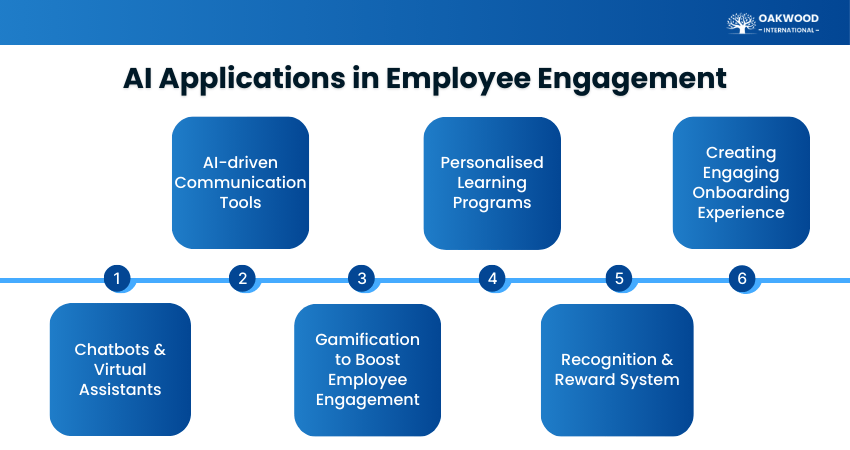
1) Chatbots and Virtual Assistants for Employee Support
HR teams often receive the same questions repeatedly, such as queries about leave policies, benefits, or equipment requests. At the same time, employees may wait hours or even days to receive responses to these simple questions. These tools can operate around the clock, handle multiple conversations simultaneously, and never become overwhelmed by repetitive questions.
These systems essentially act as a constantly available HR Assistant that can support employees at scale. Here's how AI chatbots and Virtual Assistants can be used:
a) Responding to frequently asked employee questions
b) Providing on-demand guidance and training support
c) Automating routine administrative tasks
d) Improving communication between HR teams and employees
2) AI-driven Communication and Collaboration Tools
AI-powered communication tools are the key to effective collaboration. They streamline interactions and improve access to information. They can highlight relevant data when needed and connect employees with the right colleagues for specific queries. Working in the background, these technologies make workplace communication more organised and purposeful.
Here are some ways to use AI-driven communication and collaboration tools:
a) Boost communication efficiency and strengthen team collaboration
b) Automate routine and time-consuming tasks
c) Analyse data to gain insights into Employee Engagement
d) Deliver personalised feedback to employees more quickly and effectively
3) Gamification to Enhance Employee Engagement
Many workplace motivation systems rely on generic rewards such as badges or leaderboards. While these methods may create short-term excitement, they often fail to sustain long-term engagement because they are not tailored to individual motivations. AI-driven gamification takes a more personalised approach.
By analysing employee behaviour and preferences, AI systems can create customised challenges and incentives that align with each employee's goals and interests. This makes engagement activities feel more meaningful and relevant. Here's how AI can support gamification:
a) Creating and managing reward systems
b) Encouraging employees to complete tasks through notifications or friendly competition
c) Collecting behavioural data to understand employee preferences
4) Personalised Learning and Development Programs
Traditional training programmes often assume that all employees learn in the same way and at the same pace. As a result, some employees may feel bored while others struggle to keep up. This mismatch can lead to low participation and unused learning resources. AI-powered learning platforms personalise the entire development process.
They analyse an employee's current skills, identify knowledge gaps and create tailored learning pathways. As employees progress, the system recommends new resources that align with their evolving needs. How AI can support personalised learning:
a) Designing customised development programmes for employees
b) Analysing skills, interests, and learning goals
c) Recommending relevant training materials and activities
d) Tracking progress and development over time
5) Recognition and Reward Systems
AI-powered recognition systems can detect patterns in employee performance that Managers might overlook. By analysing contributions across projects and tasks, these systems help identify employees who consistently exceed expectations and recommend appropriate recognition opportunities. Benefits of using AI for recognition and rewards:
a) Monitoring employee performance more accurately
b) Sending timely recognition or reward notifications
c) Analysing performance data and suggesting areas for improvement
6) Creating an Engaging Onboarding Experience
Traditional onboarding processes often follow a standard checklist for all employees, regardless of their role or experience. As a result, many new hires may still feel uncertain about their responsibilities or disconnected from their team after the first few weeks. AI can transform onboarding by creating personalised onboarding journeys that adapt to each employee's background, job role, and learning preferences.
These systems deliver information gradually, connect employees with mentors, and monitor progress to ensure a smooth integration into the organisation. How AI can improve onboarding:
a) Creating personalised onboarding checklists and content
b) Providing real-time feedback to new employees
c) Managing large volumes of onboarding information efficiently
d) Automating tasks such as resource sharing and account setup
e) Connecting new employees with onboarding mentors or buddies
f) Supporting self-service platforms for onboarding questions
Develop skills and strengthen mindsets. Sign up for our Human Capability Development Program Course to ensure a future-ready workforce!
How to Implement AI-Driven Engagement Strategies?
Introducing AI to improve Employee Engagement works best when the technology aligns with an organisation's culture and strategic priorities. Taking a phased and structured approach allows teams to build trust in AI solutions while demonstrating measurable results without overwhelming the organisation.
1) Identify Your Organisation's Needs
Begin by clearly understanding your organisation's current engagement challenges and opportunities. This requires combining HR data with employee and manager feedback to create a complete picture of the workplace environment.
Key activities to focus on include:
a) Engagement Audits: Analyse existing engagement metrics to identify patterns and highlight areas that need improvement.
b) Stakeholder Input: Collect feedback from leaders, Managers and employees to understand engagement challenges and identify where AI could add value.
c) Priority Mapping: Determine a set of targeted initiatives where AI can create meaningful impact while remaining practical to implement.
2) Select the Right AI Tools
The AI technology market offers a variety of engagement solutions, ranging from standalone applications to platforms that include integrated AI capabilities. Selecting the right tool requires matching its features with your organisation's goals and existing systems.
Important factors to consider include:
a) Evaluation Criteria: Assess the tool's functionality, usability, scalability, and compatibility with your engagement strategy.
b) Integration Requirements: Ensure the selected solution integrates smoothly with HR systems, communication tools, and existing data platforms.
c) Pilot Testing: Run small pilot projects to test effectiveness, refine workflows, and identify potential issues before implementing the solution organisation-wide.
3) Train the HR Team
AI solutions are only effective when the people using them understand how to apply them. HR teams need the skills to interpret AI insights and incorporate them into their engagement strategies while maintaining human judgement. Training efforts should focus on the following areas:
a) AI Literacy: Provide foundational knowledge about AI capabilities and limitations to support informed decision-making.
b) Tool Proficiency: Offer practical training sessions so teams can confidently navigate and use AI platforms.
c) Change Management: Prepare HR professionals to promote adoption, address employee concerns, and communicate the benefits of AI within the organisation.
Navigate HR challenges with confidence - register for our HR Skills for Non-HR Managers Training.
4) Track and Optimise Performance
Implementing AI for engagement is not a one-time initiative but an ongoing process that evolves with the organisation. Continuous monitoring ensures that AI tools remain aligned with organisational goals and workforce needs. To maintain effectiveness, focus on these practices:
a) Success Metrics: Define clear, measurable goals for each AI initiative that support both engagement and broader business objectives.
b) Regular Reviews: Schedule periodic evaluations to assess AI performance and its impact on employees and organisational culture.
c) Continuous improvement: Establish feedback systems that collect insights from users and stakeholders, allowing AI applications to be refined over time.
How are Employees Using AI for Employee Engagement?
Employees are utilising AI in various innovative ways to boost engagement and productivity. Here are some notable applications:
a) Onboarding: AI streamlines the onboarding process by offering new employees personalised training programmes and resources, ensuring a smoother and more efficient transition.
b) Performance Monitoring: AI tools assist in monitoring and enhancing employee performance by analysing data and providing insights into areas needing improvement.
c) Learning and Development: AI tailors learning and development programmes to meet each employee's specific needs, ensuring they receive the most effective and related training.
d) Rewards and Recognition: AI systems can identify and reward employees for their accomplishments, thereby boosting morale and motivation.
e) Conflict Resolution: AI aids in resolving conflicts by analysing communication patterns and suggesting solutions, fostering a harmonious workplace.
f) Enhanced Communication: AI improves communication within the organisation by providing real-time feedback and facilitating better collaboration among team members.
AI Employee Engagement Tools
AI and automation are transforming the way organisations engage with their employees. Here are some essential tools:
1) AI Chatbots and Virtual Assistants for HR Support
AI customer service technology can enhance team efficiency. Chatbots facilitate better self-service and reduce call volumes, while Interactive Voice Response (IVR) prioritises the most critical customer calls. AI can also manage repetitive tasks such as post-call summaries and issue logging.
By freeing up your customer teams to focus on the most important or challenging inquiries, AI prevents them from getting bogged down in administrative tasks, thereby increasing their efficiency and job satisfaction.
2) Predictive Analytics
Predictive Analytics, often seen as the epitome of AI, gathers real-time data from every touchpoint, merges AI-powered insights with operational metrics and provides preemptive insights. This enables you to intervene in a situation, sometimes even before it occurs.
3) Performance Management Systems With AI Integration
AI systems are transforming Performance Management to become more agile, collaborative, and human-centric. Contemporary Performance Management Software now utilises AI and machine learning to analyse employee performance data, tracking both individual progress and company-wide performance in a far more holistic manner.
4) Talent Management
Because this approach is data-driven, with relevant information streamed into and analysed in a central location, your HR and people teams can make rapid, evidence-based decisions about your workforce using integrated, reliable, and trustworthy data.
In the realm of Talent Management, Predictive Analytics can identify employee behaviours and risk factors that may prompt your top talent to leave. This allows you to intervene and improve employee retention.
5) HR 'Co-pilots'
Real-time coaching and guidance for Managers and leaders enable HR teams to support them at any moment throughout the working day.
6) Identifying and Addressing Workforce Attrition Drivers
Organisational attrition data, when combined with employee experience feedback, illuminates the reasons behind employee departures. For instance, it can identify issues in the onboarding process that cause new hires to leave prematurely. This information is delivered to leaders via dashboards, enabling Data-driven Leadership to swiftly address negative experiences and refine retention strategies to minimise turnover.
Master the art of Data Analysis and make a measurable impact in your HR processes - join our HR Analytics Course now!
Factors to Consider Before Investing in an AI-powered Engagement Solution
Before picking an AI engagement solution, it's important to evaluate the available options carefully. Considering the following seven key factors while making your choice:
1) Ease of Use: Prioritise those tools that are simple for your team to adopt. The platform and its integrations should be easy to understand for regular use.
2) Return on Investment (ROI): Determine whether the AI tool will help reduce costs and save time. Also assess its scalability to ensure it can support your organisation as it grows.
3) Analytics Capabilities: Strong analytics enable organisations to measure performance and identify areas for improvement. Many advanced AI solutions provide real-time insights and use historical data to forecast future outcomes.
4) Ethical Considerations and Bias: Evaluate potential ethical concerns and legal implications, including how the AI system manages bias and fairness in its outputs.
5) Key Stakeholders: Consider everyone who will interact with the tool. Identify ownership, define who will manage daily operations, and determine which stakeholders need to be informed, involved, or trained.
6) Maintenance and Support: Every AI solution requires ongoing management. Make sure the provider offers reliable support and assistance to resolve issues and help identify new ways to use the technology effectively.
Employee Engagement Trends
The biggest trend is AI algorithms assisting management in eliminating the ambiguity and guesswork surrounding employee motives, enabling employees to achieve their goals more efficiently. The Future of AI in Business is rapidly evolving, with Microsoft's Work Trend Index reporting that 79% of leaders consider AI a strategic priority.
AI offers numerous benefits for HR. It removes exhausting, repetitive tasks, accelerates talent searches, enhances Employee Engagement, and helps reduce Employee Attrition. AI can significantly improve the employee experience.
However, many HR experts still question the effectiveness of this technology in handling traditionally human tasks, such as decision-making. Despite doubts about AI's ability to manage tasks requiring empathy or intuition, this technology has already transformed the workplace, setting new standards of efficiency.
Conclusion
AI in Employee Engagement is transforming how businesses connect with their teams, boosting productivity and morale. By embracing this technology, organisations can offer more personalised experiences, thus fostering greater employee motivation. As AI continues to grow, its effect on engagement will only increase, benefiting both employers and employees.
Learn to allocate resources wisely - register for our Human Resource Budgeting Training now!
Frequently Ask Questions
What are the 5 C's of Employee Engagement?
The five C’s of Employee Engagement represent key elements that help organisations build a motivated and productive workforce. These include Clarity, Confidence, Collaboration, Credibility, and Connection.
What are the Four Types of Employee Engagement?
Employee Engagement is commonly classified into four types:
a) Highly Engaged: Motivated, proactive and committed to organisational goals
b) Moderately Engaged: Perform their duties but may not go beyond expectations
c) Barely Engaged: Show minimal enthusiasm
d) Disengaged: Lack motivation and may negatively impact team morale
What are the 5 Principles of AI?
The five core principles of AI include:
a) Fairness: Ensures AI systems avoid bias and discrimination
b) Transparency: Helps users understand how AI systems make decisions
c) Accountability: Ensures organisations remain responsible for AI outcomes
d) Privacy: Protects sensitive data
e) Safety: Focuses on building safe and reliable AI systems
Related Blogs
Didn’t Find What You’re Looking For?

Our commitment to excellence ensures an exceptional learning experience tailored to your professional development needs.


© Copyright 2026 - Oakwood International ™ - All rights reserved.


SUPER SALE
 Get Amazing Discounts
And Deals
Get Amazing Discounts
And Deals