

 Back
Back


 Back to Catagories


Table of Contents


 + 44 7452
122728
+ 44 7452
122728
 08-Sep-2026
Maria Thompson
Technology is transforming how organisations operate, compete, and grow, but success requires more than adopting the latest digital tools. Understanding What is Digital Leadership is essential for organisations looking to embrace change, foster innovation, and empower teams in an increasingly digital world.
Digital leaders drive transformation by combining technology with strategic vision, agility, and strong people leadership. In this blog, we'll explore What Is Digital Leadership, its core principles, essential skills, benefits, and practical strategies to help you lead with confidence in the digital age.
What is Digital Leadership?
Digital Leadership is the ability to guide people, processes, and organisational strategy in a technology-driven environment. It combines strong leadership with digital knowledge to help organisations embrace innovation, adapt to change, and achieve business objectives through the effective use of digital technologies.
Rather than focusing solely on technology, Digital Leadership is about creating a culture that encourages collaboration, continuous learning, and innovation. Digital Leaders empower teams to adopt new ways of working, respond to changing customer needs, and drive successful digital transformation across the organisation.

Why Does Digital Leadership Matter?
Digital Leadership is essential because it enables organisations to adapt to rapid technological change while remaining competitive. Digital Leaders create a clear vision for transformation, encourage innovation, and help teams embrace new technologies that improve efficiency, customer experiences, and business performance.
It also plays a key role in building an agile and future-ready workforce. By promoting collaboration, continuous learning, and data-driven decision-making, Digital Leadership helps organisations respond to evolving market demands, manage change effectively, and achieve long-term growth in an increasingly digital world.
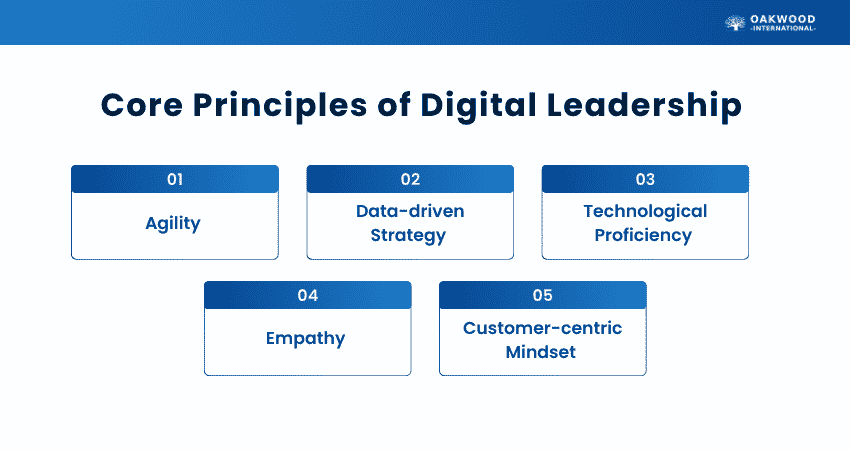
Core Principles of Digital Leadership
The following principles below form the foundation of effective leadership in a digital-first world.
1) Agility
Digital Leaders embrace change and adapt quickly to evolving technologies, market trends, and customer expectations. They encourage flexible thinking, continuous improvement, and innovation to help organisations respond effectively to new challenges.
2) Data-driven Strategy
Effective Digital Leaders use data and analytics to guide decision-making and measure performance. By relying on insights rather than assumptions, they identify opportunities, reduce risks, and make informed strategic decisions.
3) Technological Proficiency
A strong understandin of digital technologies enables leaders to identify the right tools for business growth. While they may not be technical experts, they understand how emerging technologies can improve operations, collaboration, and customer experiences.
4) Empathy
Empathy helps Digital Leaders understand the needs of employees, customers, and stakeholders during periods of change. By listening actively and communicating openly, they build trust, strengthen collaboration, and support successful digital transformation.
5) Customer-centric Mindset
Digital Leaders prioritise customer needs when developing strategies and adopting new technologies. They focus on delivering seamless experiences, gathering customer feedback, and continuously improving products and services to create long-term value.
Power up your leadership journey with our CMI Level 5 Award in Management and Leadership Training - Sign up now!
Essential Digital Leadership Skills for Success
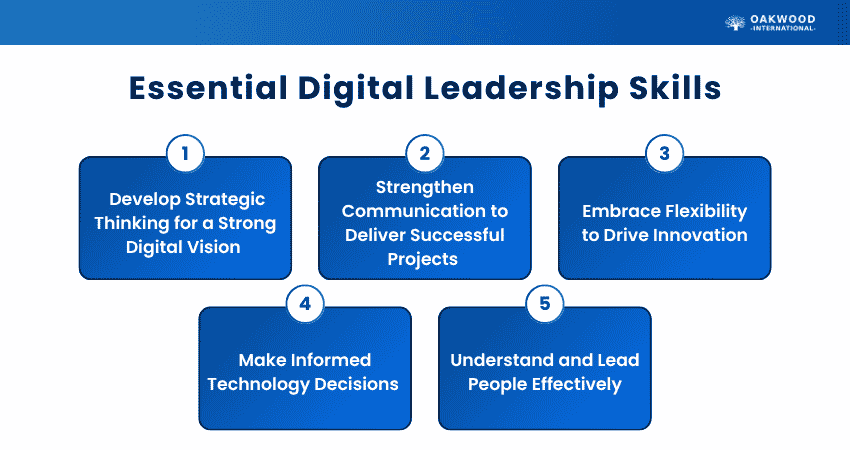
Successful digital leaders rely on a combination of technical knowledge, strategic thinking, and strong interpersonal abilities. The following skills are essential for leading teams, driving innovation, and achieving long-term success in the digital era:
1) Develop Strategic Thinking for a Strong Digital Vision
Successful digital leaders create a clear vision that aligns technology initiatives with long-term business objectives. They assess the organisation's current capabilities, identify future opportunities, and develop practical roadmaps to support digital transformation.
Strategic thinking helps leaders anticipate market changes, prioritise investments, and ensure digital initiatives deliver measurable business value rather than adopting new technologies simply for the sake of innovation.
2) Strengthen Communication to Deliver Successful Projects
Clear communication is essential for turning digital strategies into successful outcomes. Digital leaders explain complex ideas in a way that different stakeholders can understand, helping teams remain aligned throughout digital transformation initiatives.
They also encourage active listening, gather feedback, and maintain transparency, which builds trust and improves collaboration across departments. Effective communication ensures everyone understands their role in achieving shared digital goals.
3) Embrace Flexibility to Drive Innovation
Technology evolves rapidly, making adaptability a vital leadership skill. Digital leaders remain open to new ideas, monitor emerging trends, and assess how new technologies and innovations can improve business performance.
Rather than resisting change, they encourage experimentation, learn from setbacks, and adjust strategies when needed. This flexibility enables organisations to respond quickly to changing customer expectations and competitive market conditions while maintaining business continuity.
4) Make Informed Technology Decisions
Choosing the right technology requires balancing innovation with business priorities. Effective digital leaders evaluate the costs, risks, scalability, security, and long-term benefits of technology investments before making decisions.
They rely on data, organisational objectives, and stakeholder input to select solutions that improve efficiency, enhance customer experiences, and support sustainable growth. Thoughtful technology decisions optimise investment, reduce unnecessary spending and maximise the value of digital transformation initiatives.
5) Understand and Lead People Effectively
Technology alone does not drive digital transformation; people play an equally important role. Digital transformation succeeds when people are supported throughout the change process. Strong digital leaders understand their teams' strengths, encourage continuous learning, and create an environment where collaboration and innovation thrive.
By recognising individual contributions, providing opportunities for skill development, and addressing concerns with empathy, leaders build motivated teams that confidently embrace new technologies and ways of working.
Hone your potential as a high-impact Manager with the CMI Level 5 Certificate in Management and Leadership Training - Register now!
How to Develop Digital Leadership Skills?
The following strategies can help you strengthen your leadership capabilities and confidently lead in a digital-first world.
1) Keep up with Emerging Digital Trends
Digital leaders should stay informed about emerging technologies, industry developments, and changing customer expectations. Reading industry reports, attending webinars, participating in professional networks, and exploring new digital tools help leaders recognise opportunities and prepare their organisations for future challenges. Continuous learning ensures leaders remain proactive rather than reactive in a rapidly changing digital environment.
2) Strengthen Communication and Team Collaboration
Strong communication enables leaders to align teams around a shared digital vision and ensure everyone understands organisational goals. Encouraging open discussions, active feedback, and cross-functional collaboration helps break down silos and improves teamwork. Clear communication also builds trust, making it easier for employees to embrace new technologies and organisational change.
3) Make Informed Decisions Using Data
Digital leaders should rely on accurate data rather than assumptions when making strategic decisions. Analysing business metrics, customer insights, and performance data enables leaders to identify trends, assess risks, and measure the success of digital initiatives. A data-driven approach supports more confident decision-making while helping organisations improve efficiency and achieve measurable outcomes.
4) Build Adaptability in a Digital Environment
As technology and business needs continue to evolve, leaders must remain flexible and willing to adjust their strategies. Embracing change, encouraging experimentation, and learning from both successes and setbacks help organisations remain resilient. Adaptable leaders foster a culture of innovation where teams feel confident exploring new ideas and responding quickly to changing market conditions.
5) Establish a Strong Digital Presence
An effective digital leader actively engages with digital platforms to communicate ideas, share expertise, and connect with employees, customers, and industry peers. Building a professional digital presence through platforms such as LinkedIn, participating in online communities, and promoting knowledge sharing enhances credibility while demonstrating commitment to digital transformation and continuous learning.
What Makes You a Good Digital Leader?
A good digital leader combines strategic thinking, adaptability, and technological awareness to lead teams through change. The following qualities help leaders drive innovation and achieve lasting success.
a) Creates a Clear Digital Vision: Inspires teams to embrace digital transformation by communicating a shared purpose and long-term goals.
b) Leads by Example: Demonstrates a willingness to learn, adapt, and adopt new technologies in a rapidly changing digital landscape.
c) Understands the Organisation: Identifies business strengths, weaknesses, and opportunities to support effective digital strategies.
d) Drives Digital Transformation: Guides the adoption of new technologies while ensuring they align with business objectives.
e) Keeps Pace with Innovation: Stays informed about emerging technologies and industry trends to maintain a competitive advantage.
f) Makes Informed Decisions: Uses data, analysis, and business insights to choose the right digital solutions and initiatives.
g) Builds Trust Through Communication: Listens to employee feedback, addresses concerns, and communicates openly throughout change.
h) Empowers People: Encourages collaboration, supports skill development, and helps teams confidently adapt to new ways of working.
Conclusion
Understanding What is Digital Leadership is key to succeeding in today's digital-first world. It combines technology, strategic thinking, and strong leadership to drive innovation, adapt to change, and empower teams. By mastering Digital Leadership, organisations can achieve sustainable growth and stay competitive.
Develop the expertise to manage people, projects, and change effectively with the CMI Level 5 Courses – Register now!
Frequently Ask Questions
What are the Seven Pillars of Digital Leadership?
The seven pillars of Digital Leadership, developed by Eric Sheninger, provide a practical framework for leading successful digital transformation. The seven pillars are:
a) Communication
b) Public relations
c) Branding
d) Professional growth and development
e) Engagement and learning
f) Opportunity
g) Learning environment and spaces
What are Examples of Digital Leadership Tools?
Some popular examples of Digital Leadership tools include:
a) Instant messaging platforms like Slack
b) Web-based Project Management solutions like Trello and Asana
c) Performance management tools for tracking Objectives and Key Results (OKRs)
d) Video conferencing platforms like Microsoft Teams
e) Collaboration applications like SharePoint
What Makes Digital Leadership Different?
Digital Leadership moves beyond traditional top-down management by promoting agility, collaboration, and innovation. Instead of focusing only on operations, digital leaders use data, embrace technological change, and encourage continuous learning to keep remote, hybrid, and in-office teams aligned and adaptable.
Related Blogs
Didn’t Find What You’re Looking For?

Our commitment to excellence ensures an exceptional learning experience tailored to your professional development needs.


© Copyright 2026 - Oakwood International ™ - All rights reserved.


SUPER SALE
 Get Amazing Discounts
And Deals
Get Amazing Discounts
And Deals