

 Back
Back


 Back to Catagories


Table of Contents


 + 44 7452
122728
+ 44 7452
122728
 20-Oct-2026
Veronica Davis
Think about your first day at a new job, the interview you attended, or the support you receive when something goes wrong at work. Behind all these moments is Human Resources, quietly ensuring everything runs smoothly for employees.
If you have ever wondered What is Human Resources and how it shapes your work experience, you are not alone. In this blog, you will explore HR roles, key functions, and simple tips to see if this career path is right for you. Let’s get started.
What is Human Resources?
Human Resources, commonly known as HR, is the HR department in an organisation that manages employees throughout their entire journey, from recruitment and onboarding to training, performance management, and benefits administration. It ensures that employees are supported at every stage of their employment.
HR also acts as a link between management and employees, helping maintain clear communication and a positive work environment. Understanding What is Human Resources also highlights its role in ensuring compliance with labour laws while promoting a safe, productive, and engaging workplace culture.

Why is Human Resources Important?
Human Resources plays a key role in helping organisations run smoothly by managing employees effectively and aligning people with business goals. It supports a productive work environment, and the following points highlight why it is important:
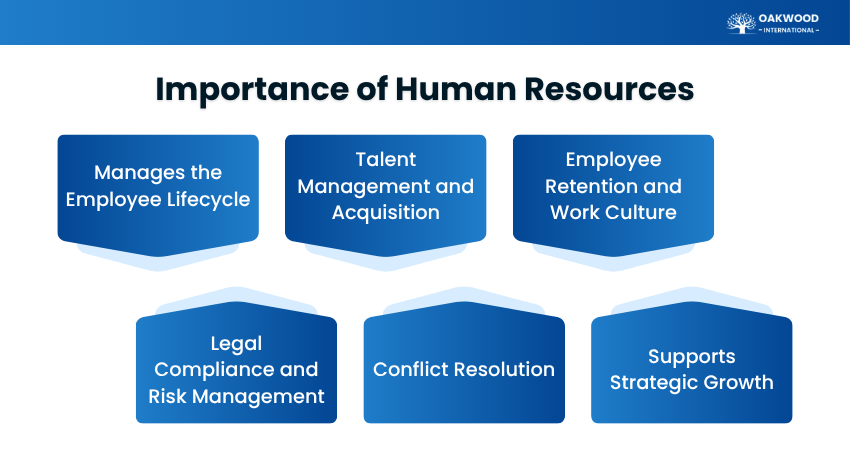
1) Manages the Employee Lifecycle: HR manages the employee lifecycle from hiring to exit, ensuring alignment with organisational goals and improving overall performance.
2) Talent Management and Acquisition: HR recruits and trains the right people, improving productivity and ensuring the organisation has the skills needed to achieve its objectives.
3) Employee Retention and Work Culture: HR promotes a positive work environment, improving engagement and reducing employee turnover.
4) Legal Compliance and Risk Management: HR ensures policies follow labour laws, helping organisations avoid legal issues and maintain fair practices.
5) Conflict Resolution: HR handles workplace disputes professionally, creating a respectful and safe environment for employees.
6) Supports Strategic Growth: HR aligns workforce strategies with business goals, improving efficiency and supporting long-term success.
Develop advanced HR skills to lead teams and drive business outcomes with our
Certified HR Manager Training
–Join today!
Functions of Human Resources
Human Resources performs key functions that support employees and the organisation, managing the employee lifecycle from hiring to development and retention. These Human Resources functions create a structured and efficient workplace, as outlined below:
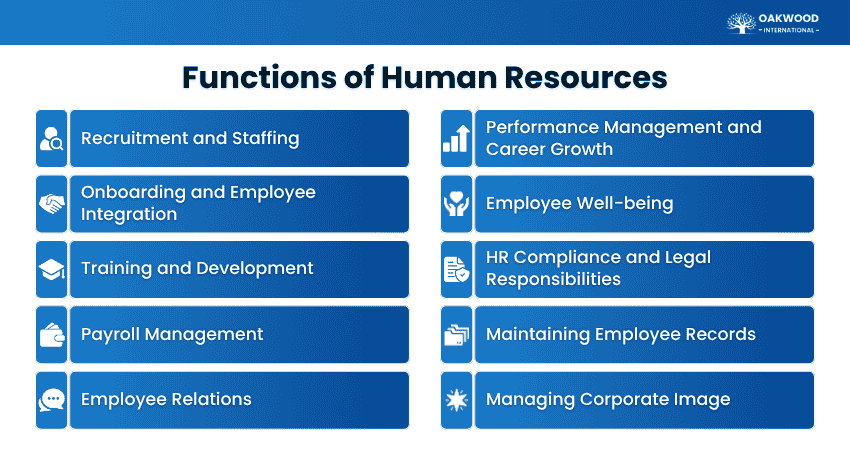
1) Recruitment and Staffing
Recruitment and staffing involve identifying, attracting, and selecting suitable candidates for organisational roles. HR teams create job descriptions, advertise vacancies, and screen applicants to ensure the right skills and cultural fit, helping organisations improve productivity and overall performance effectively.
2) Onboarding and Employee Integration
Onboarding helps new employees understand their roles, responsibilities, and company culture. HR provides guidance, training, and resources to ensure a smooth transition, helping employees feel welcomed, reduce confusion, improve engagement, and support long-term retention within the organisation.
3) Training and Development
Training and development focus on enhancing employee skills and knowledge. HR organises learning programmes to improve performance and support career growth, ensuring employees stay updated with industry trends while increasing confidence, job satisfaction, and readiness for future leadership opportunities.
4) Payroll Management
Payroll management ensures employees are paid accurately and on time. HR handles salaries, deductions, bonuses, and tax compliance, maintaining transparency and fairness, while building trust, avoiding legal issues, and ensuring proper financial record-keeping for reporting and auditing purposes.
5) Employee Relations
Employee relations focus on maintaining positive relationships between employees and management. HR resolves conflicts, addresses concerns, and ensures fair treatment, helping improve communication, build trust, reduce workplace issues, and create a respectful and motivated work environment.
6) Performance Management and Career Growth
Performance management involves evaluating employee performance and providing feedback for improvement. HR sets goals, conducts appraisals, and supports career growth, helping employees understand their potential, improve skills, and achieve higher levels of performance within the organisation.
7) Employee Well-being
Employee well-being focuses on supporting physical and mental health. HR introduces wellness programmes, flexible work options, and support systems, helping reduce stress, improve morale, increase engagement, and create a positive environment where employees can perform effectively.
8) HR Compliance and Legal Responsibilities
HR ensures organisations follow employment laws and regulations by maintaining fair practices and proper policies. This helps avoid legal risks, protect organisational reputation, and ensure employees are treated fairly, building trust and maintaining ethical workplace standards consistently.
9) Maintaining Employee Records
Maintaining employee records involves managing personal details, performance data, and employment history. HR ensures accurate record-keeping, allowing easy access to information, supporting compliance, improving decision-making, and ensuring smooth HR operations across the organisation consistently.
10) Managing Corporate Image
Managing corporate image involves promoting a positive employer brand. HR ensures employees represent company values professionally, attracting talent, building stakeholder trust, and improving retention by creating a workplace culture that employees feel proud to be part of.
Build powerful HR strategies that drive organisational growth and performance with our
HR Strategy Training
–
Register now!
Different Types of Human Resources Roles
Human Resources offers a variety of roles, each focusing on specific responsibilities within the HR function, helping individuals choose a suitable career path based on their skills and interests. Here are some of the most common HR roles in organisations:
1) HR Assistant / HR Administrator
An HR Assistant or HR Administrator supports daily tasks like maintaining records, scheduling interviews, and handling queries. This role ensures smooth operations and serves as an entry point, helping individuals gain practical experience and build strong HR foundations.
2) HR Generalist
An HR Generalist manages functions like recruitment, onboarding,
employee relations
, and training. This role requires a broad understanding of HR processes and suits professionals who enjoy handling diverse responsibilities in a dynamic work environment.
3) HR Specialist
An HR Specialist focuses on areas such as recruitment, training, or compensation. This role requires in-depth expertise, enabling professionals to provide targeted support and help organisations improve efficiency in specific HR functions.
4) HR Analyst
An HR Analyst uses data to improve HR processes and decision-making. They analyse employee information, identify trends, and provide insights that support workforce planning, improve engagement, and enhance overall organisational efficiency.
5) HR Manager / HR Executive
HR Managers
and Executives oversee HR operations, manage teams, and ensure policies are implemented effectively. They align HR strategies with business goals and play a key role in driving organisational success through strong leadership.
6) Talent Acquisition Specialist / Recruiter
Talent Acquisition Specialists manage recruitment by sourcing, screening, and selecting candidates. They focus on attracting the right talent, helping organisations build strong teams and stay competitive by placing skilled individuals in suitable roles.
7) Compensation and Benefits Manager
A Compensation and Benefits Manager designs salary structures and benefits programmes. This role ensures fair rewards, improves employee satisfaction, and helps organisations attract and retain skilled professionals through competitive compensation strategies.
8) Health and Safety Manager
Health and Safety Managers ensure workplaces meet safety standards and legal requirements. They implement policies to reduce risks, prevent accidents, and promote employee well-being while maintaining compliance with health and safety regulations.
Transform people data into actionable insights for organisational success with our
HR Analytics Course
– Join now!
What Skills are Required for a Career in Human Resources?
A successful career in Human Resources requires a mix of soft and technical skills. These skills help HR professionals manage people effectively and handle various responsibilities. Below are some of the key skills needed to succeed in the HR field:
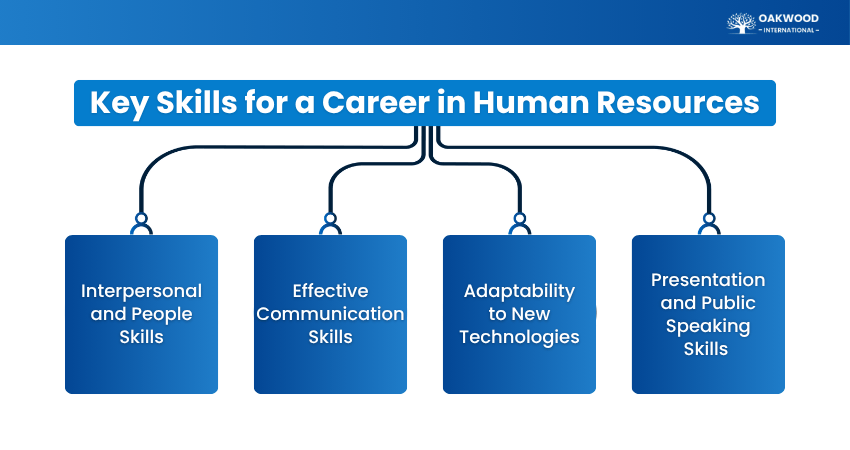
1) Interpersonal and People Skills
Interpersonal skills help HR professionals build relationships, understand personalities, manage conflicts, and handle situations with empathy and professionalism, creating a positive work environment where employees feel valued and motivated to contribute effectively.
2) Effective Communication Skills
Communication skills enable HR professionals to share information clearly, listen actively, and manage sensitive conversations, ensuring transparency, reducing misunderstandings, building trust, and improving collaboration across teams while keeping policies well understood.
3) Adaptability to New Technologies
Adaptability to technology allows HR professionals to use digital tools for recruitment, data management, and performance tracking, improving efficiency, accuracy, and decision-making while helping organisations stay updated with modern workplace trends.
4) Presentation and Public Speaking Skills
Presentation and public speaking skills help HR professionals deliver training, lead meetings, and communicate ideas clearly, building confidence and ensuring organisational goals, policies, and initiatives are effectively understood and accepted across all levels.
Tips for Deciding if an HR Career is for You
Here are some practical steps you can take to decide if a HR Career is the right fit for you
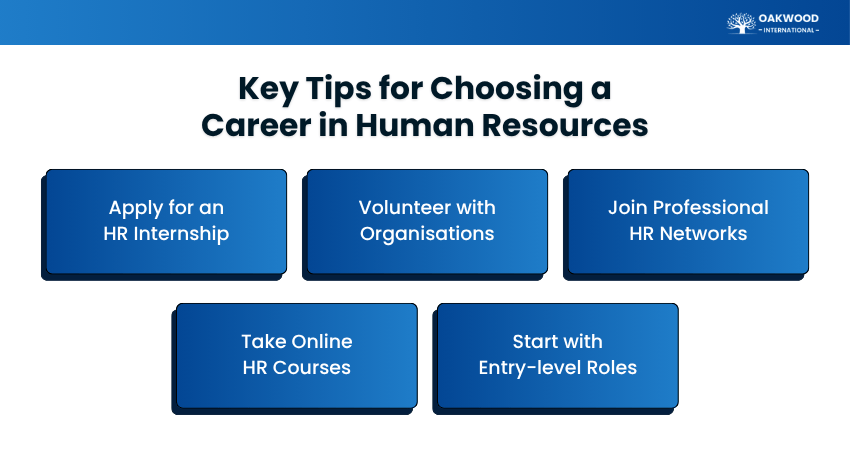
1) Apply for an HR Internship: Internships help you understand daily HR functions and gain hands-on experience in tasks such as recruitment, record management, and employee support.
2) Volunteer with Organisations: Smaller or non-profit organisations often need HR support. Volunteering allows you to gain real experience while contributing to meaningful work.
3) Join Professional HR Networks: Becoming part of HR communities or organisations helps you connect with professionals, attend events, and learn from industry experts.
4) Take Online HR Courses: Online learning helps you stay updated with industry trends and develop skills in areas such as payroll, compliance, and employee management.
5) Start with Entry-level Roles:
Applying for HR support roles allows you to gain practical experience and gradually grow into specialised or senior HR positions over time.
Conclusion
Human Resources plays a vital role in shaping organisations by managing people, improving performance, and building positive workplaces. Understanding What is Human Resources and the role of the HR department helps you see its value in business success. With the right skills and interest, HR offers rewarding career opportunities and long-term professional growth.
Gain in-demand HR skills to drive performance and organisational growth with the HR Leadership Courses – Join now!
Frequently Ask Questions
What is an Example of Human Resources?
An example of Human Resources is managing recruitment by posting job roles, screening candidates, and hiring suitable employees. It also includes handling payroll, training staff, and resolving workplace issues to ensure smooth operations and employee satisfaction.
How Long Does it Take to Study HR?
It typically takes a few months to a few years to study HR, depending on the course. Short certifications can be completed in 3–6 months, while a bachelor’s degree usually takes 3–4 years, with additional time for advanced qualifications or specialised training.
What is the Average Salary in HR?
HR Manager salaries in the United Kingdom typically range from £37K–£65K per year, according to Glassdoor. Pay varies based on experience, location, and organisation size, with higher earnings for senior roles and specialised HR expertise.
Related Blogs
Didn’t Find What You’re Looking For?

Our commitment to excellence ensures an exceptional learning experience tailored to your professional development needs.


© Copyright 2026 - Oakwood International ™ - All rights reserved.


SUPER SALE
 Get Amazing Discounts
And Deals
Get Amazing Discounts
And Deals