

 Back
Back


 Back to Catagories


Table of Contents


 + 44 7452
122728
+ 44 7452
122728
 07-Sep-2026
Maria Thompson
Behind every successful organisation is a team of people who feel valued, supported, and motivated to grow. However, finding the right talent and keeping employees engaged remains one of the biggest challenges employers face today. Talent Management helps organisations move beyond simply hiring people to building strong, committed teams that grow with the business.
In this blog, we explain what Talent Management is, why it matters, and provide practical examples. We also cover the process and best practices that help organisations attract, develop, and retain the right talent. Let’s get started.
What is Talent Management?
Talent Management is a strategic process that focuses on attracting, developing, engaging, and retaining employees to support an organisation’s goals. It covers the full employee lifecycle, from hiring and onboarding to development and succession planning, ensuring the right people are placed in the right roles.
Supporting growth through training, Performance Management, and clear career paths helps employees build skills and stay motivated. This approach creates a capable workforce that contributes directly to long-term business success.

Why is Talent Management Important?
Talent Management is important because people drive results. When employees perform well, organisational performance improves. Below are the key reasons that show how Talent Management supports stronger performance and sustainable success:
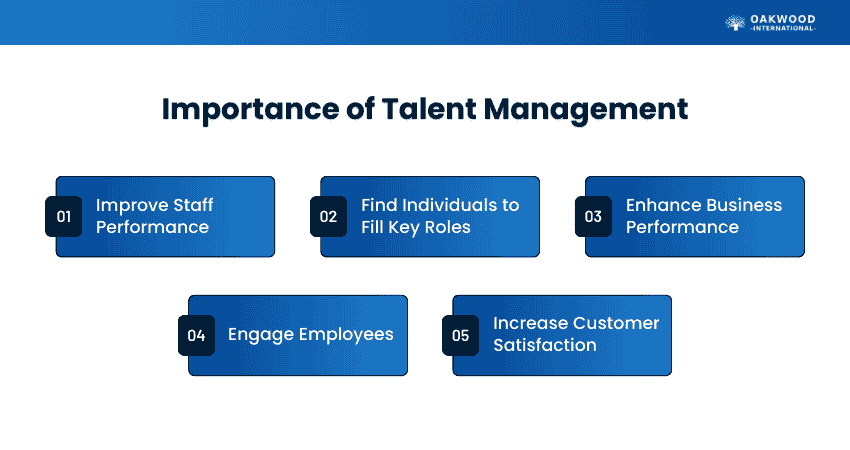
1) Improve Staff Performance
Talent Management improves performance by supporting learning, development, and regular feedback. Well-trained employees are more confident, motivated, and productive, which leads to better results and stronger innovation.
Example: An organisation that provides regular skills training and performance coaching often sees higher productivity and fewer errors.
2) Find Individuals to Fill Key Roles
By identifying high-potential employees early, organisations can prepare people for critical roles. This reduces disruption, supports succession planning, and ensures the right skills are available when needed.
Example: A company preparing future managers internally can quickly fill leadership roles when senior staff leave or retire.
3) Enhance Business Performance
When workforce skills are aligned with business objectives, teams work more efficiently. Talent Management helps organisations adapt to change, improve productivity, and maintain a competitive edge.
Example: A business upskilling employees in digital tools can respond quickly to marketing changes and customer demands.
4) Engage Employees
Providing growth opportunities, recognition, and inclusive practices increases employee engagement across teams and roles. Engaged employees are more committed, loyal, and willing to contribute to the long-term success of the organisation.
Example: Employees offered clear career paths and recognition programmes are more likely to stay motivated and involved.
5) Increase Customer Satisfaction
Skilled and motivated employees deliver better service at every interaction. Their positive attitude and problem-solving skills improve customer experiences, leading to higher satisfaction and better loyalty over time.
Example: Well-trained customer service teams resolve issues faster, leading to higher customer satisfaction and repeat business.
Learn workforce and resource planning strategies with our
Workforce Resource Planning Training
- Join now!
What are Examples of Talent Management?
Talent Management varies by organisation, shaped by its goals, workforce, and industry. Below are real-world examples showing how leading organisations develop skills, build future leaders, and support business growth:
1) World Vision
World Vision Canada places people at the centre of its Talent Management approach. The organisation uses data to understand employee well-being and engagement through a measure called the employee delight index. This helps leaders track talent health and identify areas for improvement.
To support development, World Vision introduced Agile 101, a learning initiative that provides practical training, agile tools, and role-based learning from onboarding onwards. It also runs an internal “You Matter” initiative focused on performance development,
Employee Engagement
,
and building leaders from within the organisation.
2) Hyatt Hotels
Hyatt Hotels manages talent across a global workforce spread over many countries. Its Talent Management strategy focuses on creating a meaningful Employee Experience that supports both staff and guests.
The organisation developed a clear talent philosophy and built a structured playbook around it. This helped standardise HR processes, tools, and systems across locations. As a result, Hyatt reduced inconsistencies and improved how talent is developed and managed worldwide.
3) Walmart
Walmart adapted its Talent Management approach to meet the demands of a changing, digital workplace. To build new digital skills, the company expanded its talent pool by acquiring a social media company. This later became WalmartLabs, the centre of its digital technology operations.
This strategy allowed Walmart to quickly develop technical expertise while preparing the organisation for future digital growth. It also shows how Talent Management can include creative approaches such as acquisitions and internal skill building.
4) Mercy Health
Mercy Health addressed talent shortages in healthcare through partnerships with community colleges. It introduced a paid apprenticeship training for medical assistants, allowing students to learn on the job while earning an income.
This approach helped Mercy Health meet immediate staffing needs while supporting long-term workforce development. It also created clear entry pathways into healthcare careers.
Talent Management Process
The Talent Management Process is an ongoing cycle that helps organisations attract, develop, engage, and retain employees to meet business goals, covering the full employee journey from hiring to succession. The stages below explain how the Talent Management process works:
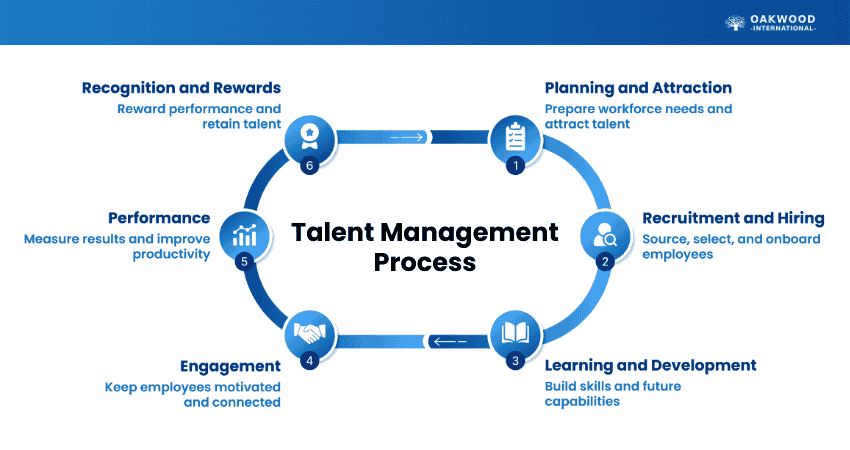
1) Planning and Attraction
This stage focuses on identifying talent needs and attracting suitable candidates through workforce planning, employer branding, and sourcing channels such as job boards, referrals, and social platforms.
2) Selection and Onboarding
Selection involves choosing the best candidates through interviews and assessments. Onboarding then helps new hires settle in by clarifying roles, culture, and expectations, improving confidence, engagement, and early performance.
3) Development
Development focuses on helping employees grow skills and careers. Organisations invest in training programmes, learning opportunities, and career paths to support improvement. This stage helps employees stay capable, confident, and prepared for future roles.
4) Engagement and Performance Management
This stage ensures employees remain motivated and productive. It includes setting clear goals, providing regular feedback, tracking performance, and recognising achievements. A positive work culture and open communication help employees feel valued and committed.
5) Retention and Rewards
Retention aims to keep top talent within the organisation. Fair pay, benefits, recognition, and well-being support help meet employee expectations and reduce turnover. Addressing individual motivators plays a key role in long-term employee satisfaction.
6) Succession Planning and Transition
This stage prepares the organisation for the future by identifying and developing potential leaders. It also includes managing employee exits through effective offboarding, capturing knowledge, and ensuring smooth transitions. Succession planning supports business continuity and continuous improvement.
Accelerate your hiring results with proven talent acquisition strategies and hands-on learning with the
Talent Acquisition Training
– Join now!
Talent Management Best Practices
Effective talent planning helps organisations better align people with work at every stage of the employee journey. Here are the best practices organisations can follow to strengthen decision-making and achieve long-term success:
1) Align Talent Management with Business Strategy
Talent decisions should directly support organisational goals and future priorities. When hiring, development, and succession planning are aligned with business strategy, skill gaps are reduced and workforce readiness improves. This ensures people's capabilities grow alongside the organisation.
2) Build Clear Career Paths and Internal Mobility
Employees stay engaged when they can see how they can grow within the organisation. Clear career paths and internal movement opportunities encourage skill development and long-term commitment. This also helps organisations fill roles faster using existing talent.
3) Focus on Continuous Learning and Development
Ongoing learning helps employees stay capable as roles and technologies change. Training, mentoring, and stretch assignments support both performance improvement and future leadership readiness. A strong learning culture increases confidence, adaptability, and retention.
4) Run Fair and Consistent Performance Management
Clear goals, regular feedback, and objective performance reviews help employees understand expectations. Consistent
Performance Management
builds trust and supports development rather than punishment. This approach improves productivity and motivation across teams.
5) Identify High-potential Talent and Plan Succession
Early High-potential employees should be identified using structured and fair criteria. Early succession planning prepares future leaders and reduces risk when key roles become vacant. It also supports smoother transitions and long-term business continuity.
6) Use Data and People Analytics to Guide Decisions
People data helps organisations understand performance trends, engagement levels, and retention risks. Using analytics reduces bias and improves workforce planning decisions. Data-driven Talent Management leads to more predictable and effective outcomes.
Conclusion
Strong Talent Management planning turns people strategies into real business impact. By using data, smart technology, and clear people-focused practices, organisations can make better decisions and focus on what truly matters: developing, engaging, and retaining talent. These best practices help create a more connected, agile, and future-ready workforce.
Boost your leadership skills with expert People Management Courses and accelerate your career growth today.
Frequently Ask Questions
What is a Talent Management System?
A Talent Management System (TMS) is software that helps organisations manage the entire employee lifecycle in one place. It supports recruitment, onboarding, learning and development, Performance Management, and employee engagement, making it easier to attract, develop, and retain talent.
What's the Difference Between Talent Management and Talent Acquisition?
Talent acquisition focuses on hiring the right people, while Talent Management manages the full employee journey, from development to retention. Simply put, one brings talent in, the other helps it grow and stay.
What is Another Word for Talent Management?
Other related terms include People Management, Workforce Management, Employee Development, and Human Resource Management (HRM), depending on the organisation’s focus and context.
Related Blogs
Didn’t Find What You’re Looking For?

Our commitment to excellence ensures an exceptional learning experience tailored to your professional development needs.


© Copyright 2026 - Oakwood International ™ - All rights reserved.


SUPER SALE
 Get Amazing Discounts
And Deals
Get Amazing Discounts
And Deals