

 Back
Back


 Back to Catagories


Table of Contents


 + 44 7452
122728
+ 44 7452
122728
 05-Oct-2026
Maria Thompson
Imagine a workplace where employees show up excited, inspired, and ready to make an impact instead of feeling forced into their roles. A place where motivation comes naturally and people genuinely care about the work they do. This level of energy doesn’t happen by chance. It is the result of strong Employee Engagement, where individuals feel valued, supported, and connected to their organisation.
In this blog, we’ll break down What is Employee Engagement, why it is essential, its key benefits, and practical strategies you can use to strengthen engagement across your organisation. Let's dive in!
What is Employee Engagement?
Employee Engagement is a concept pertaining to Human Resources (HR) that reflects a worker's enthusiasm and commitment to their role. Engaged employees don’t simply show up; they care about the quality of their work, support their team, and feel genuinely connected to the organisation’s goals. It goes beyond job satisfaction and taps into how motivated, valued, and involved people feel every day.
Employee Engagement also reflects how much trust employees have in their leaders and how supported they feel in their roles. When communication is open, recognition is consistent, and growth opportunities are accessible, employees develop a stronger sense of purpose. This deeper connection empowers them to contribute more meaningfully and remain committed to long-term organisational success.

Why is Employee Engagement Important?
Employee Engagement is essential for every organisation because it directly influences productivity, retention, customer experience, and overall organisational performance. When you know What is Employee Engagement and your employees feel engaged, they put in extra effort, collaborate more effectively, and bring fresh ideas forward.
Engagement also helps reduce turnover, lowers absenteeism, strengthens workplace culture, and builds a more motivated, resilient workforce. In short, high engagement leads to happier employees and better business outcomes.
Levels of Employee Engagement
Employee Engagement reflects employees' perceptions of their organisation. Based on their workplace experience, they are classified into four key categories:
1) Highly Engaged
2) Moderately Engaged
3) Barely Engaged
4) Disengaged
Let’s explore these levels in detail
1) Highly Engaged Employees
a) Highly engaged Employees have a very positive view of their workplace.
b) They act as brand advocates, promoting the company to family and friends.
c) They motivate colleagues, fostering a high-performance work culture.
d) They are emotionally committed to the organisation’s success.
e) They actively participate, take initiative, and go beyond their basic duties.
f) They collaborate effectively and align their personal goals with the company’s objectives.
g) They demonstrate enthusiasm and consistently strive to contribute to organisational growth.
2) Moderately Engaged Employees
a) Moderately engaged employees have a generally positive view of their organisation
b) They like their company but feel held back by certain aspects of their job, team, or workplace.
c) They are less likely to seek additional responsibilities or take initiative.
d) Their engagement is inconsistent, leading to potential underperformance.
e) They may lack strong emotional commitment which affects their motivation and productivity.
f) They often wait for direction rather than proactively taking action.
g) With the right support and recognition, they have the potential to become highly engaged.
3) Barely Engaged Employees
a) These Employees are indifferent towards their workplace, showing minimal enthusiasm or commitment.
b) They lack motivation, only doing the bare minimum to meet job requirements.
c) They have a high turnover risk, as they may be actively seeking other job opportunities.
d) They show minimal engagement, which can impact team morale and overall productivity.
e) They contribute very little to innovation or problem-solving.
f) They often feel disconnected from team goals and workplace culture.
g) They require feedback and clear development opportunities to improve engagement.
4) Disengaged Employees
a) These employees hold a negative view of their workplace, showing dissatisfaction and disinterest.
b) They are disconnected from the organisation’s mission, goals, and future.
c) They lack commitment to their role and responsibilities.
d) These employees pose the risk of negatively influencing colleagues, potentially reducing overall team productivity.
e) They may display a poor attitude that affects team dynamics.
f) They contribute little to teamwork, collaboration, or organisational initiatives.
g) Without timely intervention, they may become a source of conflict or performance issues.
Top Drivers of Employee Engagement
What drives Employee Engagement to its peak? It could be as simple as recognising achievements, providing growth opportunities, or creating a sense of belonging. Identifying these key drivers is the key to transforming a workplace from ordinary to exciting. In fact, everyone in an organisation is a key driver, including:
1) Senior Leaders
2) HR
3) Managers
4) Employee
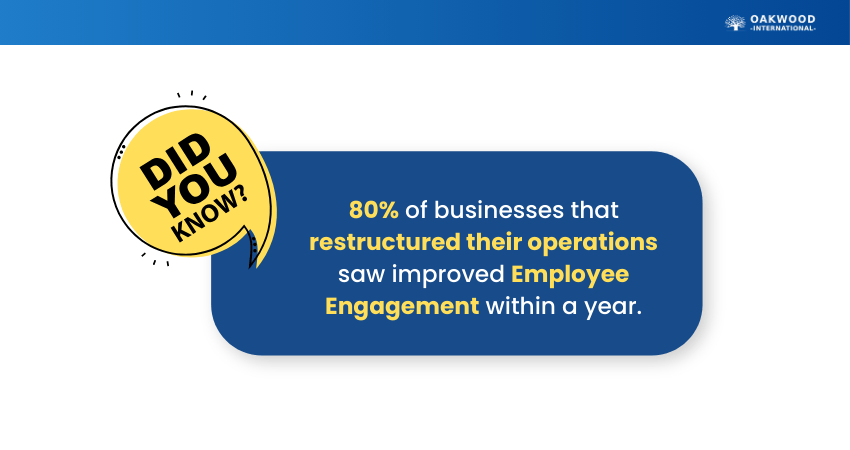
1) Role of Leadership in Employee Engagement
Organisational leaders champion Employee Engagement, building a culture of commitment and motivation.
1) Their influence and advocacy are essential for driving engagement initiatives.
2) Leadership buy-in is crucial for sustained engagement success.
3) Model positive behaviours that encourage engagement.=
4) Outline and communicate a clear vision and Strategy for Employee Engagement.
5) Support and prioritise investment in engagement initiatives.
2) Role of HR in Employee Engagement
Human Resources (HR) plays a central role in shaping the systems, structures, and experiences that influence engagement across the organisation.
1) HR teams play a vital role in aligning leaders, managers, and Employees for effective Employee Engagement.
2) They translate strategy into action, owning the execution of engagement initiatives.
3) To achieve this, HR professionals must ensure alignment and accountability in implementing Employee Engagement Strategies.
5) They must select the right tools and processes for successful execution.
6) They must support and develop managers and teams to sustain engagement efforts.
Want to excel in strategic HR Management and lead organisational success like a pro? Our HR Leadership Courses will guide you - Sign up now!
3) Role of Managers in Employee Engagement
Managers who interact with Employees the most must nurture an environment where every individual stays engaged and thrive. A manager's role in Employee Engagement includes:
1) Building strong relationships with each Employee to foster trust and engagement.
2) Taking action based on team results to improve performance and morale.
3) Being a trusted sounding board for employee feedback examples , and suggestions.
4) Aligning team efforts with organisational priorities to drive success.
5) Supporting employee growth and development through engagement-focused behaviours.
4) Role of Employees in Employee Engagement
Employees themselves are active contributors to the engagement cycle. Engagement isn’t something that happens to employees. It is something they help create through their participation, behaviour, and commitment to a positive work environment.
1) Employees must actively participate in the workplace to strengthen engagement.
2) They should create a sense of community and collaboration among colleagues.
3) They must provide feedback and promote open communication for continuous improvement.
4) They should embrace company values to align with organisational culture.
5) They must engage in decision-making processes to contribute meaningfully to the organisation.
Benefits of Employee Engagement
Employee Engagement brings powerful benefits to both employees and organisations. Here are its key benefits:
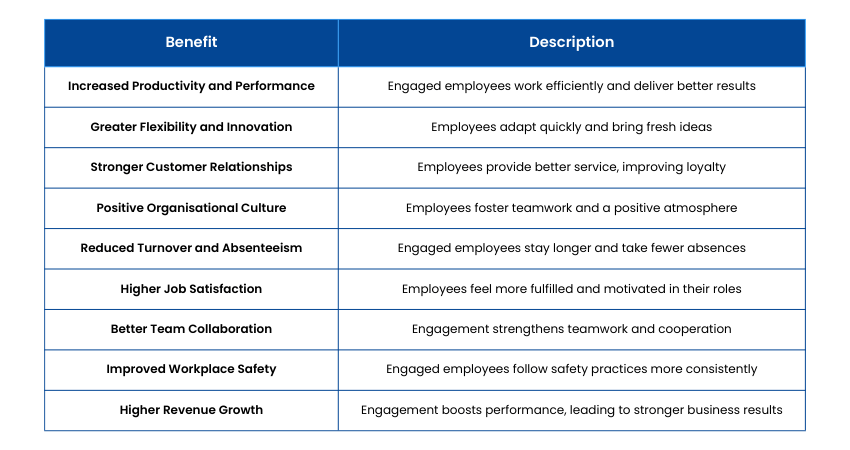
1) Increased Productivity and Performance
a) Engaged employees focus better and do their work well
b) They take responsibility and try to improve their tasks
c)They often work beyond what is expected
d) Teams finish work faster and with fewer mistakes
e) Overall productivity increases when more people are engaged
2) Greater Flexibility and Innovation
a) Engaged employees handle change more easily
b) They share new ideas and creative solutions
c)They stay positive when facing challenges
d) They are open to trying new methods or tool
e) Their mindset helps the organisation improve and grow
3) Stronger Customer Relationships
a) Engaged employees treat customers politely and respectfully
b)They respond quickly and in a helpful manner
c) Their positive attitude makes customers feel valued
d) They solve problems calmly and with care
e) Happy employees create loyal, happy customers
4) Positive Organisational Culture
a) Engaged employees work well with others and support teamwork
b) They help create a friendly and welcoming atmosphere
c) Their good attitude lifts everyone’s mood
d) They communicate better and avoid unnecessary conflicts
e) A positive Work Place Culture attracts and keeps good employees
5) Reduced Employee Turnover and Absenteeism
a) Engaged employees stay with the company for a long period
b) They take fewer unnecessary days off
c) Lower turnover saves time and money on hiring
d) They stay committed even during tough times
e) A stable team improves overall performance and trust
Challenges of Employee Engagement
Understanding What is Employee Engagement is important, but organisations must also recognise the challenges that can prevent employees from feeling motivated and committed. Identifying these obstacles is the first step toward building a healthy and engaging work environment.
1) Lack of Effective Managerial Support
a) Poor leadership makes employees feel unsupported and unsure
b) Lack of feedback leaves employees confused about expectations
c) Weak guidance prevents employees from growing in their roles
d) Inconsistent or unfair behaviour leads to frustration and disengagement
2) Ineffective Workplace Communication
a) Unclear messages lead to mistakes and misunderstandings
b) Lack of transparency makes employees feel left out
c) Infrequent updates lead to confusion about goals or changes
d) Poor communication hurts teamwork and trust
3) Employee Burnout and Exhaustion
a) Heavy workloads make employees feel tired and overwhelmed
b) Long hours affect work-life balance and mental health
c) Constant pressure reduces enthusiasm and focus
d) Burnout leads to lower productivity and more mistakes
4) Lack of Alignment With Organisational Values
a) Employees feel disconnected when values don’t match
b) Misalignment reduces pride and commitment to the organisation
c) People may struggle to stay motivated in their daily tasks
d) Over time, employees may choose to leave for a better cultural fit
Top Indicators of Employee Engagement
Several factors influence Employee Engagement, and the key is to identify and prioritise those that have the greatest impact on your organisation. AI in Employee Engagement is also playing a vital role in analysing data and providing insights to enhance workplace connection.
Certain key indicators serve as the best measures of engagement, and they reflect the core elements that drive connection and commitment in the workplace.
1) Motivating Work
a) Employees seek challenging work that utilises their strengths.
b) They value ownership of tasks and opportunities for growth.
c) Career development opportunities enhance engagement and motivation.
d) HR and leadership should align talent with roles that provide these key engagement factors.
2) Inspiring Teams and Leaders
1) Leadership and team relationships are crucial for driving Employee Engagement.
2) Employees want to work for leaders who prioritise people and their well-being.
3) Valuing employee contributions is key to fostering a sense of appreciation and connection.
4) Leaders and teams should consistently demonstrate integrity to build trust and engagement.
3) Commitment and Loyalty to the Organisation
a) Employees seek organisations with a clear strategy for success.
b) They want to see how their role contributes to the organisation’s goals.
c) Belief in the company’s success increases motivation and engagement.
d) Employees thrive when they can actively contribute to winning teams and organisations.
How to Improve Employee Engagement?
The most effective way to amplify Employee Engagement is by acting on insights. This can be done through two key approaches:
1) At the organisational level, collaborate with leadership to identify key engagement drivers that impact the entire workforce.
2) At the team level, where the greatest impact occurs, focus on factors within a manager’s control, such as career development, problem-solving, and setting clear objectives.
Keep these key actions in mind:
1) Demonstrate your organisation’s core values and mission.
2) Seek feedback actively and apply insights to improve.
3) Ensure managers are engaged and committed.
4) Organise volunteer initiatives to foster teamwork and purpose.
5) Prioritise Employees’ physical and mental well-being.
6) Recognise and introduce Employee Incentive Programmes to reward top performers.
7) Conduct regular Employee Engagement surveys.
Looking to manage conflicts, improve communication, and build stronger Employer-Employee relationships? Register for our
Employee Relations Training
now!
Examples of Employee Engagement Models
Here are some popular Employee Engagement models:
1) William Kahn's Personal Engagement Model: Developed by William A. Kahn, this model emphasises how Employees emotionally, cognitively, and physically invest themselves in their work.
2) Gallup's Q12 Model: This model measures engagement through 12 key questions focusing on expectations, growth opportunities, and relationships with supervisors to improve workplace engagement.
3) Maslach and Leiter's Six Areas of Work-Life Mode: This model identifies six critical workplace factors influencing engagement: workload, control, reward, community, fairness, and values.
4) Aon Hewitt's Engagement Model: Aon Hewitt’s approach assesses engagement across three levels: work, team, and organisation, offering a holistic view of Employee commitment.
5) Hackman and Oldham's Job Characteristics Model: Developed by J. Richard Hackman and Greg Oldham, this model highlights job design as a key driver of engagement, focusing on five core dimensions.
Conclusion
Employee Engagement is the backbone of a thriving workplace as it drives productivity, collaboration, and success. Businesses can nurture an environment where employees feel inspired and valued by building meaningful connections, recognising contributions, and aligning roles with purpose. So, understanding What is Employee Engagement is the key to long-term organisational growth and excellence.
Build the skills needed for modern workplaces with our Human Capability Development Program Course – Join now!
Frequently Ask Questions
What are the Four Pillars of Employee Engagement?
The four pillars of Employee Engagement are:
a) Communication
b) Recognition
c) Growth and development
d) Well-being or work-life balance
How to Improve Staff Engagement?
Whose Responsibility is Employee Engagement?
Employee Engagement is a shared responsibility. Leaders set the vision, managers create daily experiences, HR builds the systems, and employees actively participate. Together, they shape a workplace where everyone feels motivated, connected, and supported.
Related Blogs
Didn’t Find What You’re Looking For?

Our commitment to excellence ensures an exceptional learning experience tailored to your professional development needs.


© Copyright 2026 - Oakwood International ™ - All rights reserved.


SUPER SALE
 Get Amazing Discounts
And Deals
Get Amazing Discounts
And Deals