

 Back
Back


 Back to Catagories


Table of Contents


 + 44 7452
122728
+ 44 7452
122728
 08-Sep-2026
Maria Thompson
What motivates employees to stay engaged, perform at their best, and remain loyal to an organisation? The answer often lies in how they are compensated. Far more than just a salary, Employee Compensation includes bonuses, benefits, incentives, and other rewards that reflect an employee's value to the organisation.
A well-designed compensation strategy helps attract top talent, improve job satisfaction, boost performance, and support employee retention. In this blog, we explore the meaning of Employee Compensation, its key types, and how it works within modern organisations.
What is Employee Compensation and Benefits?
Employee Compensation refers to the total rewards employees receive in exchange for their work. It includes direct payments such as salaries, wages, bonuses, and commissions, as well as indirect benefits like health insurance, retirement plans, and paid leave. A well-structured compensation strategy helps organisations attract, motivate, and retain talent while improving job satisfaction, employee loyalty, and overall business performance.
Here are the key components commonly included in Employee Compensation and Benefits:
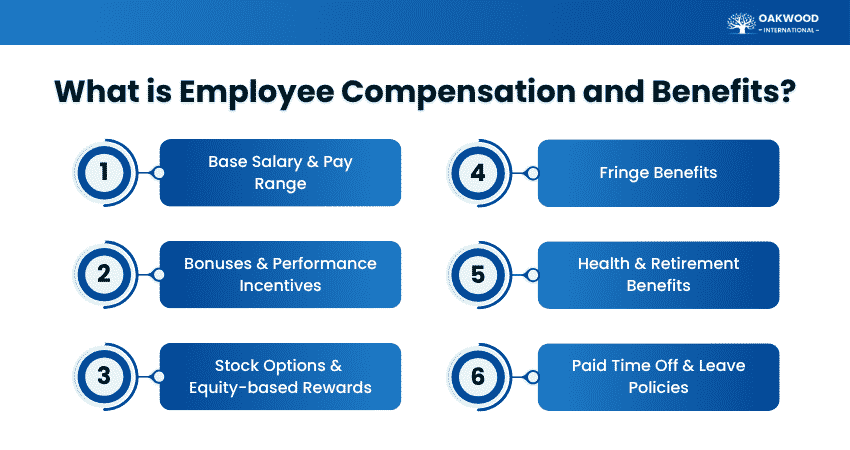
1) Base Salary and Pay Range
Base salary is the fixed amount an employee receives for performing their role. It forms the foundation of a compensation package and is usually determined by role requirements, skills, experience, qualifications, and market rates. Pay ranges help organisations maintain consistency and fairness across similar roles.

2) Bonuses and Performance Incentives
Bonuses and performance incentives are additional financial rewards provided to recognise individual, team, or organisational achievements. These rewards encourage employees to meet performance targets, contribute to business objectives, and maintain high levels of productivity.
3) Stock Options and Equity-based Rewards
Stock options and equity-based rewards give employees the opportunity to share in an organisation's long-term success. By offering company shares or the option to purchase shares at a set price, some organisations can strengthen employee commitment, retention, and alignment with business growth.
4) Fringe Benefits
Fringe benefits are non-cash rewards provided in addition to a regular salary. These may include company vehicles, professional development opportunities, wellness programmes, childcare support, or employee discounts. Such benefits enhance the overall employee experience and add value to the compensation package.
5) Health & Retirement Benefits
Health and retirement benefits support employees' financial security and wellbeing. Health benefits can include medical, dental, and vision coverage, while retirement benefits may involve pension schemes or employer-sponsored savings plans. These benefits help employees plan for both their current and future needs.
6) Paid Time Off and Leave Policies
Paid time off allows employees to take approved leave while continuing to receive their regular pay. This may include annual leave, public holidays, sick leave, parental leave, and compassionate leave. Effective leave policies support work-life balance, employee wellbeing, and long-term job satisfaction.
How Important is Employee Compensation?
Employee Compensation is one of the most important factors influencing an organisation's ability to attract, motivate, and retain talented employees. A fair and competitive compensation package helps organisations stand out in the job market while demonstrating that employees' skills, efforts, and contributions are valued. When employees feel appropriately rewarded, they are more likely to remain engaged, productive, and committed to achieving organisational goals.
Beyond recruitment and retention, compensation also plays a key role in employee satisfaction, performance, and workplace morale. Well-structured pay packages that combine salaries, incentives, bonuses, and benefits encourage employees to perform at their best and contribute to long-term business success. Effective compensation strategies can also reduce turnover, strengthen organisational culture, and improve overall workforce stability.
Types of Employee Compensation Plans
Organisations use different compensation plans to reward employees for their contributions and performance. These plans generally fall into two categories: direct compensation and indirect compensation. Let's discuss them in detail.
Direct Compensation Plans
Direct compensation refers to the monetary payments employees receive for the work they perform. It includes fixed and variable forms of pay that are provided directly to employees as financial rewards. These compensation plans are designed to recognise performance, encourage productivity, and ensure employees are fairly compensated for their skills and responsibilities.
Common examples of direct compensation include:
1) Base salary or wages
2) Overtime pay
3) Bonuses and incentives
4) Commissions
5) Profit-sharing schemes
6) Stock options and equity-based rewards
Indirect Compensation Plans
Indirect compensation consists of non-cash benefits and perks provided by employers in addition to regular pay. While employees do not receive these rewards as direct payments, they contribute significantly to overall job satisfaction, financial security, wellbeing, and work-life balance. Indirect compensation helps organisations create a more attractive employment package and improve employee retention.
Common examples of indirect compensation include:
1) Health and medical insurance
2) Retirement and pension plans
3) Flexible working arrangements
4) Employee wellness programmes
5) Life and disability insurance
6) Employee Assistance Programmes (EAPs)
Gain the skills to influence at the board level with the CIPD Level 7 Advanced Diploma in Strategic People Management Course – Join now!
How Employee Compensation Works?
Here are four key steps that explain how Employee Compensation works within an organisation.
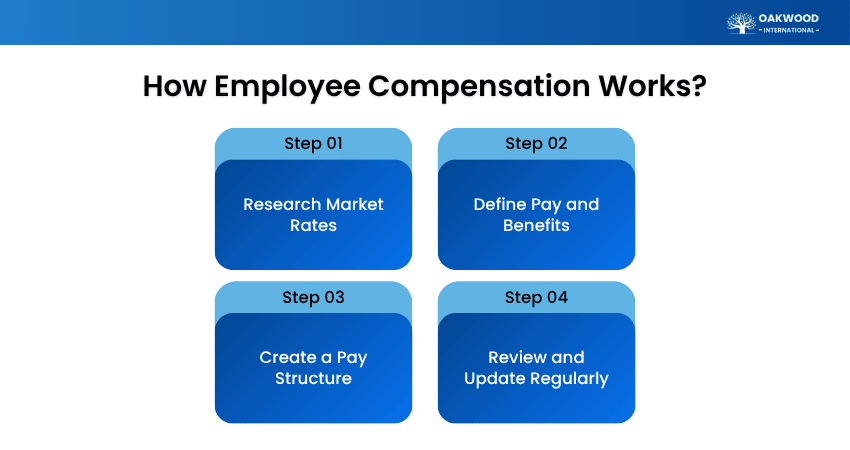
Step 1: Research Market Rates
The process begins with analysing industry salary benchmarks, labour market trends, job responsibilities, and internal pay standards. Organisations compare compensation levels for similar roles within their sector and location to ensure their pay packages remain competitive and aligned with market standards.
Step 2: Define Pay and Benefits
Once salary levels are established, organisations determine the pay components and benefits that form the overall compensation package. These may include health insurance, retirement plans, paid leave, wellness programmes, flexible working arrangements, and other perks that enhance the overall employee experience.
Step 3: Create a Pay Structure
A clear pay structure is then developed to define salary ranges, incentive programmes, bonuses, and compensation progression opportunities. This helps ensure consistency, transparency, and fairness across different roles and levels within the organisation.
Step 4: Review and Update Regularly
Compensation plans should be reviewed periodically to reflect changes in market conditions, business performance, employee expectations, and legal requirements. Regular updates help organisations remain competitive while ensuring compensation continues to support recruitment, retention, and employee motivation.
Develop talent strategically with the CIPD Level 5 Associate Diploma in Organisational Learning & Development Course – Register now!
Conclusion
Employee Compensation is more than just pay; it is a strategic tool for attracting, motivating, and retaining talent. By combining fair salaries, benefits, and rewards, organisations can improve employee satisfaction, boost performance, and support long-term business success. Understanding how compensation works helps create a motivated workforce and a stronger organisation.
Develop people management expertise with the CIPD Qualification Course – Join now!
Frequently Ask Questions
How to Calculate Compensation of Employees?
Employee Compensation is calculated by combining direct and indirect rewards provided for an employee’s work. This includes salary or wages, bonuses, commissions, incentives, benefits, and retirement contributions. Organisations also consider market rates, job responsibilities, experience, and performance when determining compensation.
How to Discuss Compensation with Employees Effectively?
Keep conversations private, transparent, and respectful. Clearly explain how pay is determined, listen to concerns, and set realistic expectations. Ensure employees feel valued, follow up on commitments, and avoid vague or dismissive responses.
What is the Difference Between Compensation and Benefits?
Compensation refers to the overall reward package employees receive for their work, such as salaries, wages, bonuses, and commissions. Benefits are a specific part of compensation provided in addition to pay, including health insurance, retirement plans, paid leave, wellness programmes, and other perks that support employee wellbeing.
Related Blogs
Didn’t Find What You’re Looking For?

Our commitment to excellence ensures an exceptional learning experience tailored to your professional development needs.


© Copyright 2026 - Oakwood International ™ - All rights reserved.


SUPER SALE
 Get Amazing Discounts
And Deals
Get Amazing Discounts
And Deals