

 Back
Back


 Back to Catagories


Table of Contents


 + 44 7452
122728
+ 44 7452
122728
 08-Sep-2026
Veronica Davis
The modern workplace is evolving faster than ever, and Human Resources (HR) is no longer just an administrative function. From attracting top talent to improving employee engagement, organisations are rethinking how they manage their workforce. HR Digital Transformation is at the centre of this shift, enabling HR teams to work smarter, respond faster, and deliver greater value to the organisation.
As organisations embrace new technologies, understanding HR Digital Transformation has become essential for building a future-ready workforce. In this blog, you will explore its importance, the benefits it offers, the challenges organisations may face, practical best practices, and more to help you drive successful HR transformation. Let's begin!
What is HR Digital Transformation?
HR Digital Transformation is the strategic use of digital technologies to modernise HR functions and improve workforce management. It creates data-driven, automated, and employee-centric HR operations that better support business goals.
HR Digital Transformation enhances key HR activities, such as recruitment, onboarding, performance management, learning and development, and employee engagement. By improving efficiency, supporting decision-making, and strengthening workforce planning, it helps organisations build a more Agile and effective HR function.
Why is HR Digital Transformation Important?
As business needs evolve and workforce expectations change, HR teams must respond quickly while supporting organisational growth. HR Digital Transformation enables organisations to modernise HR operations, improve employee experiences, and make informed decisions using reliable workforce data.
Also, it reduces repetitive administrative tasks through automation, allowing HR teams to focus on strategic initiatives like workforce planning, skills development, and business alignment. As a result, organisations become more Agile, adapt faster to change, and create greater value for both employees and the business.
How to Build an HR Digital Transformation Roadmap?
A well-planned roadmap helps organisations implement HR Digital Transformation in a structured and sustainable way. Let's look at the steps below:
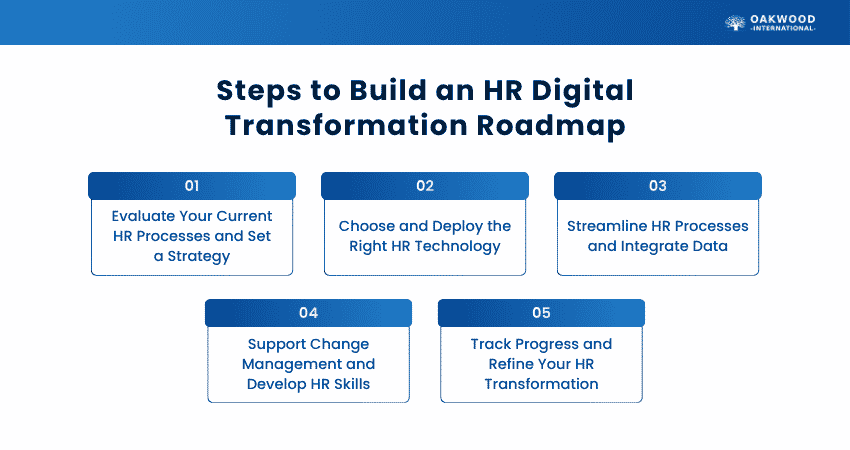
1) Evaluate Your Current HR Processes and Set a Strategy
A successful HR Digital Transformation starts with understanding your current HR environment and setting clear business objectives. To achieve this, focus on the following key steps:
a) Review the Current State: Assess existing HR systems, processes, data quality, and team capabilities to identify inefficiencies.
b) Set Clear Goals: Define measurable objectives, such as improving efficiency, employee experience, or workforce visibility.
c) Identify Gaps: Determine where technology, skills, data, or governance need improvement.
d) Align Stakeholders: Bring HR, IT, and business leaders together to establish shared priorities and expected outcomes.
2) Choose and Deploy the Right HR Technology
The right technology should support your HR strategy while improving productivity and user experience. To achieve this, focus on the following key steps:
a) Assess the Available Options: Evaluate HR platforms based on business needs, scalability, and integration capabilities.
b) Prioritise Ease of Use: Select intuitive solutions that employees can adopt with minimal disruption.
c) Test Before Full Deployment: Run pilot programmes to identify and resolve potential issues early.
d) Implement in Phases: Roll out technology to support smoother adoption and change.
3) Streamline HR Processes and Integrate Data
Streamlining processes and connecting workforce data improves efficiency and enables better decision-making. To achieve this, focus on the following key steps:
a) Simplify Workflows: Remove unnecessary steps and improve HR processes.
b) Automate Routine Tasks: Reduce manual work to improve speed, consistency, and accuracy.
c) Integrate HR Data: Connect data across systems to create reliable reporting and a unified workforce view.
d) Use Workforce Analytics: Turn workforce data into actionable insights for planning and decision-making.
4) Support Change Management and Develop HR Skills
Successful transformation depends on preparing employees to embrace new ways of working. To achieve this, focus on the following key steps:
a) Develop a Change Management Plan: Clearly communicate the transformation and provide ongoing support.
b) Train HR Teams: Equip employees with the knowledge and confidence to use new technologies.
c) Strengthen Digital Skills: Build capabilities in data analysis, digital tools, and modern HR practices.
5) Track Progress and Refine Your HR Transformation
HR Digital Transformation should evolve alongside changing business needs. To achieve this, focus on the following key steps:
a) Measure Performance: Track progress against adoption rates, efficiency improvements, and business objectives.
b) Gather Feedback: Collect input from employees and managers to identify improvement opportunities.
c) Refine Continuously: Regularly update processes, technologies, and skills to maximise long-term value.
Start your HR journey and build a rewarding career with the HR Course – Join now!
Key Benefits of HR Digital Transformation
HR Digital Transformation helps organisations improve efficiency, enhance employee experiences, and support strategic decision-making. It also enables HR functions to become more agile, data-driven, and aligned with overall business objectives. Let's look at some of its key benefits below:
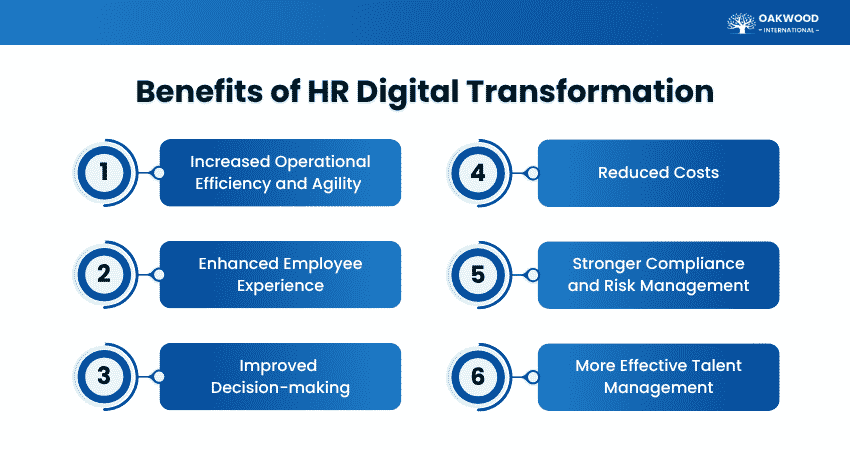
1) Increased Operational Efficiency and Agility
Automation reduces the time spent on repetitive administrative tasks, such as recruitment, onboarding, and record management. This allows HR teams to focus on strategic initiatives that drive business growth. Also, it improves workflow consistency, reduces errors, and increases productivity across HR operations.
2) Enhanced Employee Experience
Digital HR tools provide employees with self-service portals, faster support, and personalised experiences throughout their employment journey. This improves employee satisfaction, engagement, and productivity. A seamless digital experience also strengthens employee retention and workplace satisfaction.
3) Improved Decision-making
Integrated HR systems and workforce analytics provide real-time insights into employee performance, skills, and workforce trends. This enables HR leaders to make informed, data-driven decisions and improve workforce planning. Data-driven insights also support predictive analytics and long-term workforce strategy.
4) Reduced Costs
By automating processes, reducing paperwork, and eliminating duplicate systems, organisations can lower administrative costs and allocate resources effectively. These cost savings allow businesses to invest more in strategic HR initiatives, employee development, and workforce innovation.
5) Stronger Compliance and Risk Management
Digital HR platforms help organisations maintain compliance by automating policy enforcement, tracking regulatory requirements, and maintaining accurate records. They also identify potential risks early through continuous monitoring.
6) More Effective Talent Management
Advanced recruitment platforms and workforce analytics help organisations attract, develop, and retain top talent. Also, personalised learning and career development opportunities support employee growth and long-term employee retention. Effective talent management strengthens organisational capability and supports sustainable growth.
Develop essential HR skills to lead people effectively with the HR Skills for Non-HR Managers Training – Join now!
Key Six Stages of HR Digital Transformation
HR Digital Transformation is a gradual journey that helps organisations modernise HR functions and improve workforce management. As digital maturity increases, HR evolves from managing routine administrative tasks to becoming a strategic partner that supports business growth. Let's look at its key stages below:
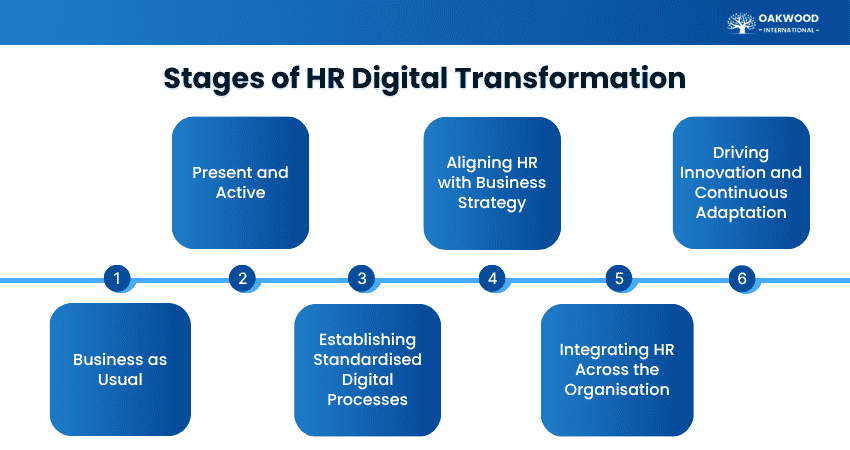
Stage 1: Business as Usual
At this initial stage, HR continues to rely on traditional systems and manual processes, with limited adoption of digital technologies. As a result, operations are fragmented, making it difficult to improve efficiency or respond quickly to changing business needs. To achieve this, focus on the following key actions:
a) Limited Digital Awareness: Leadership has minimal awareness of the need for HR Digital Transformation.
b) Fragmented HR Systems: HR technologies and processes operate independently, creating inefficiencies.
c) Manual HR Processes: Most HR activities remain paper-based or lack standardisation.
Stage 2: Present and Active
Organisations begin exploring digital technologies to improve HR operations and employee experiences. HR teams start identifying opportunities for transformation while laying the foundation for future digital initiatives. To achieve this, focus on the following key actions:
a) Develop a Shared Vision: Align leaders around a common digital HR strategy.
b) Create a Technology Roadmap: Plan future HR technology investments and initiatives.
c) Define Transformation Goals: Identify priorities for redesigning HR processes.
Stage 3: Establishing Standardised Digital Processes
Digital transformation becomes structured as organisations invest in modern HR technologies and gain stronger leadership support. Standardised processes and automation improve efficiency and create a more consistent HR function. To achieve this, focus on the following key actions:
a) Secure Executive Support: Obtain leadership commitment and resources for transformation.
b) Modernise HR Systems: Replace outdated technologies with scalable digital solutions.
c) Standardise and Automate Processes: Simplify workflows by removing repetitive manual tasks.
Stage 4: Aligning HR with Business Strategy
At this stage, HR shifts from operational support to strategic partnership. Greater collaboration across departments ensures HR contributes directly to business success. To achieve this, focus on the following key actions:
a) Align Digital Roadmaps: Ensure HR technology supports business objectives.
b) Build Digital Capabilities: Train HR teams in digital tools and modern working methods.
c) Strengthen Cross-functional Collaboration: Work closely with business and IT teams to deliver transformation.
Stage 5: Integrating HR Across the Organisation
HR systems, data, and processes become connected across the organisation, providing greater visibility and a seamless employee experience. Also, integrated platforms support better collaboration and informed decision-making. To achieve this, focus on the following key actions:
a) Integrate HR Platforms: Connect systems to improve data sharing and collaboration.
b) Align with Business Needs: Continuously adapt HR strategies to organisational priorities.
c) Use Employee Feedback: Gather workforce insights to refine HR services and processes.
Stage 6: Driving Innovation and Continuous Adaptation
Digital transformation becomes part of everyday HR operations, with continuous improvement embedded into the organisation. HR regularly adopts new technologies and adapts its strategies to meet evolving business needs. To achieve this, focus on the following key actions:
a) Enhance Employee Experience: Deliver seamless and personalised HR services.
b) Drive Continuous Innovation: Establish dedicated resources to evaluate and adopt new technologies.
c) Adapt to Changing Needs: Continuously improve HR strategies, processes, and digital capabilities to support business growth.
Step into senior HR roles with confidence and expertise with the Certified HR Manager Course – Sign up now!
Common HR Digital Transformation Challenges
While HR Digital Transformation delivers long-term value, organisations may face several obstacles during implementation. Identifying these challenges early helps minimise risks and ensures a smoother transformation journey. Let's look at the key challenges below:
1) Lack of Clear Transformation Goals
Without clear business transformation goals, digital transformation initiatives can lose direction and fail to deliver meaningful results. Organisations should define measurable objectives that align with business priorities before investing in new HR technologies.
2) Skill Gaps Within HR Teams
HR professionals need the right digital capabilities to successfully lead transformation initiatives. A lack of skills in HR technology, data analysis, AI tools, and change management can slow adoption and reduce the effectiveness of digital initiatives.
3) AI Ethics and Responsible Use
The growing use of AI in HR raises concerns around data privacy, bias, transparency, and regulatory compliance. Organisations should establish clear AI governance policies to ensure responsible and ethical use of digital technologies.
4) Driving User Adoption
Employees and managers may be hesitant to adopt new HR systems if they do not understand their purpose or benefits. Effective communication, training, and change management are essential to encourage adoption and maximise the value of digital transformation.
5) Obtaining the Required Resources
Implementing new HR technologies requires sufficient financial investment, skilled personnel, and leadership support. Budget constraints and resource shortages can delay transformation projects and affect long-term success. Strong leadership commitment and proper resource planning are critical to overcoming these challenges.
Essential Technologies for HR Digital Transformation
Modern technologies are at the core of HR Digital Transformation, helping organisations automate processes, improve employee experiences, and make informed decisions. Some of the essential technologies are mentioned below:
1) Core HR Management Systems
Cloud-based Human Capital Management (HCM) platforms centralise employee data and support essential HR functions like payroll, benefits administration, and workforce management. They integrate with other HR systems to create a connected digital ecosystem.
2) Artificial Intelligence and Machine Learning
AI and ML automate tasks such as resume screening, workforce planning, and personalised learning recommendations. They provide predictive insights that help organisations improve AI in Recruitment, employee retention, and talent management.
3) AI Agents and Virtual Assistants
AI-powered agents and virtual assistants provide instant support for employee queries, automate routine HR requests, and guide employees through processes. This improves service quality while reducing the workload on HR teams. They also enhance employee experience by providing quick and consistent support.
4) Robotic Process Automation (RPA)
RPA automates repetitive, rule-based tasks, such as data entry, payroll processing, and record management. By reducing manual effort and errors, it increases operational efficiency and allows HR professionals to focus on strategic activities. RPA also improves process consistency and reduces operational risks.
5) HR Analytics and Business Intelligence
HR analytics and business intelligence tools convert workforce data into actionable insights. They help organisations monitor workforce performance, identify skills gaps, forecast future talent needs, and make data-driven HR decisions. These insights support strategic workforce planning and long-term organisational growth.
Learn how to turn HR strategy into measurable business results with the HR Strategy Training – Sign up today!
Best Practices for an HR Digital Transformation Strategy
A successful HR Digital Transformation strategy goes beyond implementing new technologies. Following the right practices helps organisations maximise adoption, improve employee experiences, and achieve sustainable business outcomes. Let's look at them below:
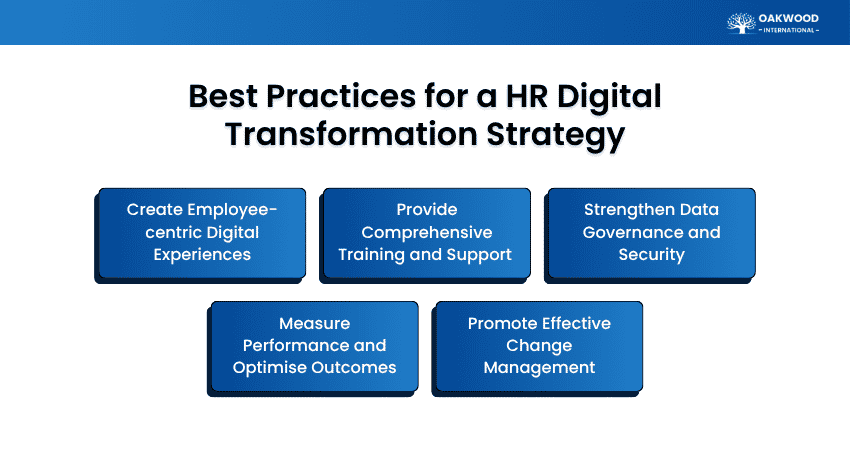
1) Create Employee-centric Digital Experiences
Design HR processes and digital tools around employee needs to improve usability and adoption. Start with high-impact initiatives, such as self-service portals, before expanding to more advanced digital solutions, and gather regular feedback to refine the experience.
2) Provide Comprehensive Training and Support
Equip employees and HR teams with the knowledge and confidence to use new technologies. Offer a combination of practical training, online learning, and ongoing support to encourage successful adoption across all skill levels.
3) Strengthen Data Governance and Security
Establish clear policies for data ownership, access control, and privacy before implementing digital HR solutions. Regular audits and compliance checks help protect sensitive employee data while ensuring data accuracy and regulatory compliance.
4) Measure Performance and Optimise Outcomes
Measure Key Performance Indicators (KPIs) like user adoption, process efficiency, and employee satisfaction to evaluate progress. Use these insights to optimise HR systems and continuously improve digital initiatives as business needs evolve.
5) Promote Effective Change Management
Successful transformation depends on effective leadership, clear communication, and active stakeholder engagement. Encourage a culture that embraces digital change and supports employees throughout the transformation journey to ensure long-term success.
Real-world Examples of HR Digital Transformation
Organisations across industries are using digital technologies to modernise HR operations, improve employee experiences, and support strategic decision-making. Let's look at some notable examples of successful HR Digital Transformation initiatives below:
Example 1: ATOS
Atos implemented a cloud-based HR solution that integrated employee records with its recruitment system across 70 countries. This streamlined HR operations, automated offer letter generation, and enabled managers to complete hiring processes more efficiently.
Example 2: Heidelberger Druckmaschinen AG
Heidelberger Druckmaschinen AG partnered with Deloitte Germany and Workday to launch a cloud-based HR platform for 10,000 employees across 40 countries. The transformation standardised HR processes, improved employee self-service, and provided real-time workforce insights through a centralised HR system.
Example 3: Healthcare Provider in the UK
A leading UK healthcare provider replaced multiple HR systems with a single digital platform featuring employee self-service capabilities. This reduced administrative workload, improved process consistency, and enabled employees to manage HR tasks more efficiently.
Example 4: Nikkei Inc.
Nikkei Inc. established a Digital Transformation Committee and implemented Workday Human Capital Management (HCM) to modernise HR operations. The company uses workforce data to personalise employee learning, strengthen skills development, and support continuous organisational growth.
Example 5: A Large South American Bank
To address digital skills shortages, the bank adopted a skills-based talent strategy supported by upskilling programmes and digital recruitment. This reduced the internal talent gap, accelerated hiring, and enabled HR to play a strategic role in business transformation.
The Future of HR Digital Transformation
The future of HR Digital Transformation will be shaped by emerging technologies, changing workforce expectations, and the need for greater organisational agility. As HR continues to evolve, it will play an even more strategic role in supporting business growth and workforce development. Some key trends shaping the future of HR Digital Transformation include:
a) Greater Adoption of AI: AI will automate HR processes, improve workforce planning, and enhance employee support through intelligent, data-driven solutions.
b) Increased Use of Predictive Analytics: Predictive analytics will help organisations forecast workforce needs, identify skills gaps, and reduce employee turnover.
c) More Agile Workforce Models: HR will adopt flexible processes and systems to support hybrid work, evolving roles, and changing business priorities.
d) Rising Employee Expectations: Organisations will focus on delivering personalised experiences, seamless HR services, and better career development opportunities.
e) Greater Focus on Continuous Learning: Continuous upskilling in AI, digital tools, data analytics, and change management will become essential for future-ready HR teams.
Conclusion
As workplaces continue to evolve, HR Digital Transformation is becoming crucial for building Agile, efficient, and employee-focused organisations. By adopting the right technologies, following best practices, and embracing continuous improvement, businesses can strengthen their HR capabilities and enhance workforce experiences.
Build the leadership skills every modern HR professional need with the HR Leadership Courses – Join today!
Frequently Ask Questions
What are the Four Pillars of Digital Transformation?
The four pillars of digital transformation are:
a) Technology: Adopts modern digital tools
b) Data: Supports data-driven decisions
c) Process: Streamlines workflows
d) People: Builds digital skills and adaptability
How Long Does HR Digital Transformation Take?
Generally, HR Digital Transformation takes 3 to 12 months for initial implementation, while full adoption may take 1 to 3 years. The timeline depends on the organisation's size, existing processes, and the complexity of technologies.
How Does AI Support HR Digital Transformation?
AI supports HR Digital Transformation by automating tasks like resume screening, employee support, and performance tracking. It provides data-driven insights, enabling HR teams to reduce manual work, improve decision-making, and focus on strategic initiatives.
Related Blogs
Didn’t Find What You’re Looking For?

Our commitment to excellence ensures an exceptional learning experience tailored to your professional development needs.


© Copyright 2026 - Oakwood International ™ - All rights reserved.


SUPER SALE
 Get Amazing Discounts
And Deals
Get Amazing Discounts
And Deals