

 Back
Back


 Back to Catagories


Table of Contents


 + 44 7452
122728
+ 44 7452
122728
 07-Sep-2026
Maria Thompson
HR departments were mainly responsible for recruitment, payroll, and maintaining employee records. Today, HR teams play a far more influential role in business success. From improving employee engagement to supporting organisational change and workforce planning, the Evolving Role of HR has transformed the function into a key driver of modern workplace growth and development.
As businesses continue to adapt to digital transformation and changing employee expectations, HR professionals are becoming more involved in strategic decision-making than ever before. In this blog, you will learn about the Evolving Role of HR, key drivers behind this evolution, and more. Let's begin!
The Evolution of HR and Its Evolving Role
The Human Resources function has evolved from handling administrative tasks to becoming a strategic part of business growth and organisational success. Let's look at some of the most important HR roles shaping today's workplace below:
1) Chief Human Resources Officer (CHRO)
The
CHRO
role has evolved from managing administrative responsibilities to shaping organisational strategy and workplace culture. CHROs focus on leadership development, employee wellbeing, workforce planning, and aligning HR strategies with long-term business goals.

2) Human Resources Business Partner (HRBP)
HRBPs act as a link between HR and business departments. They help align HR initiatives with organisational objectives while supporting workforce planning, employee performance, and business growth.
3) Talent Management Manager
This role has expanded from recruitment to overseeing the complete employee lifecycle. Talent Management Managers now focus on succession planning, employee engagement, leadership development, and future workforce readiness.
4) Learning and Development Specialist
Learning and Development Specialists focus on continuous learning, reskilling, and digital learning platforms. Their role is essential in helping employees adapt to changing technologies and evolving business requirements.
5) Talent Acquisition Manager
Recruitment has become more strategic in modern organisations. Talent Acquisition Managers focus on employer branding, candidate experience, digital recruitment tools, and attracting skilled professionals who align with company culture and goals.
6) Compensation and Benefits Specialist
This role now goes beyond salary planning to designing competitive and flexible employee benefits. Specialists focus on employee wellbeing, market trends, and creating inclusive compensation packages that support workforce satisfaction and retention.
7) HR Technology/HRIS Specialist
As organisations depend more on technology, HRIS Specialists manage and improve HR systems, digital tools, and workforce data platforms. Also, their role includes supporting automation, data security, and AI-driven HR processes.
8) Diversity, Equity, and Inclusion (DEI) Manager
DEI Managers help organisations create fair, inclusive, and diverse workplaces. Their responsibilities include reducing bias, improving workplace equality, and developing inclusive policies that support employee belonging and organisational culture.
9) HR Analytics and Data Specialist
HR Analytics Specialists use workforce data and employee insights to support decision-making. They help organisations improve recruitment, engagement, retention, and workforce planning through data-driven HR strategies.
10) Employee Experience Manager
This role focuses on improving every stage of the employee journey. Employee Experience Managers work to strengthen workplace culture, employee satisfaction, wellbeing, and long-term engagement.
Strengthen people management skills and build practical HR skills with the
HR Course
– Join now!
How the Role of HR is Evolving: From Administrative Functions to Strategic Partner
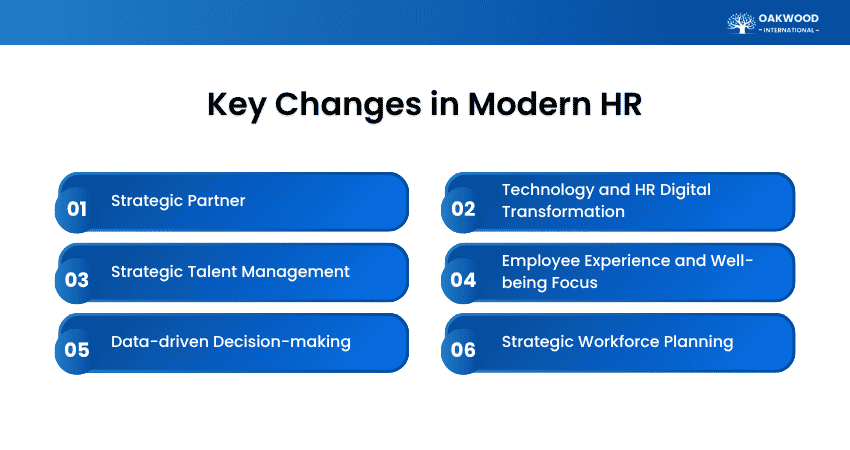
The role of Human Resources has evolved significantly over the years. As workplaces continue to evolve, HR professionals now play an important role in supporting business strategy, improving employee experience, and managing workforce transformation. Let's explore the Evolving Role of HR below:
1) Strategic Partner
Traditionally, HR focused on payroll, recruitment, compliance, and maintaining employee records. Today, HR teams work closely with leadership to align workforce strategies with business goals, support organisational growth, and improve overall business performance.
2) Technology and HR Digital Transformation
Technology has transformed modern HR practices by automating routine tasks and improving efficiency. Now, HR professionals use digital tools, AI-driven analytics, performance management systems, and remote collaboration platforms to make data-driven decisions and manage employees effectively.
3) Strategic Talent Management
HR plays a major role in attracting, developing, and retaining skilled employees. This includes succession planning, leadership development, workforce planning, and identifying future skill requirements to help organisations remain competitive in changing business environments.
4) Employee Experience and Well-being Focus
Modern HR is increasingly focused on creating a positive employee experience. Today, organisations prioritise employee wellbeing, personalised development, workplace flexibility, and inclusive cultures to improve engagement and productivity.
5) Data-driven Decision-making
Modern HR teams increasingly use data and analytics to support business decisions. Analysing employee performance, engagement, retention, and workforce trends enables HR professionals to make informed decisions that improve productivity, talent management, and organisational planning.
6) Strategic Workforce Planning
Now, HR plays a key role in planning future workforce needs and ensuring organisations have the right talent and skills to achieve business goals. This includes forecasting workforce demands, identifying skills gaps, supporting succession planning, and preparing employees for future workplace changes.
Align HR strategies with long-term business success goals by joining the
HR Strategy Training
now!
Key Drivers Changing the Evolution of HR
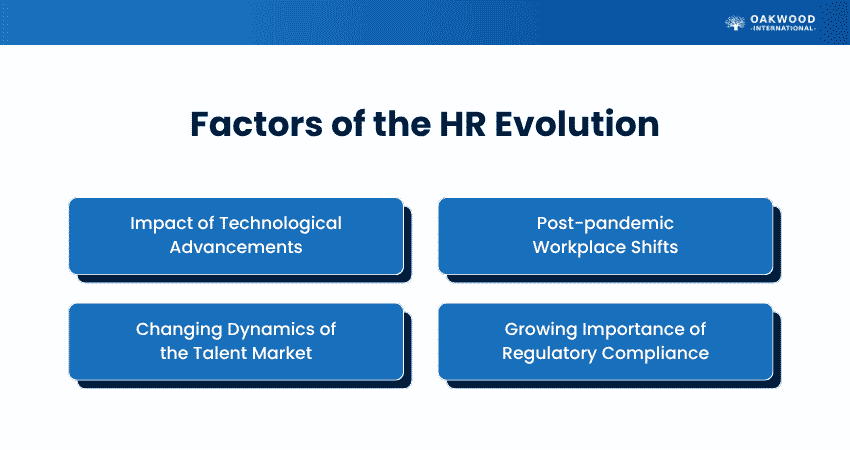
Several factors have contributed to the transformation of HR from an administrative function to a strategic business partner. Let's look at the key drivers behind this change below:
1) Impact of Technological Advancements
The adoption of AI, HR analytics, automation tools, and digital platforms has transformed HR operations. Technology helps HR teams improve recruitment, employee engagement, workforce management, and decision-making efficiency.
2) Post-pandemic Workplace Shifts
The rise of remote and hybrid working models after the pandemic changed workplace structures. HR professionals now focus on flexible work policies, employee wellbeing, virtual collaboration, and maintaining employee engagement across distributed teams.
3) Changing Dynamics of the Talent Market
Increasing competition for skilled talent has pushed HR to focus more on talent acquisition, employee retention, workforce planning, and leadership development. Organisations now depend on HR to address skills gaps and prepare employees for future workplace demands.
4) Growing Importance of Regulatory Compliance
Evolving employment laws, workplace regulations, and diversity requirements have increased the importance of HR compliance. HR teams help organisations maintain ethical workplace practices, manage employee relations, and reduce legal risks.
Turn workforce data into smarter HR business decisions with the
HR Analytics Course
– Join now!
Technology and the Future of HRM
Technology has been a driving force in HR's evolution, enabling efficiency and empowering strategic decision-making.
1) Current Impact of Technology
a) Tools like Human Resource Information Systems (HRIS) handle repetitive tasks, freeing up HR professionals to focus on strategic priorities.
b) Data-driven tools provide insights into workforce trends, helping HR optimise recruitment, engagement, and retention strategies.
c) Real-time feedback and collaboration tools improve employee experience and communication.
2) Future of Technology in HR
a) Predictive analytics will enable HR to anticipate workforce trends and proactively address challenges.
b) These technologies will enhance training and onboarding experiences.
c) Secure, transparent systems will streamline credential verification and payroll processes.
Conclusion
As workplaces continue to evolve, HR has become a crucial part of organisational success. From improving workplace culture to driving strategic decisions, the Evolving Role of HR now helps organisations build a more productive, adaptable, and future-ready work environment while supporting long-term business growth.
Build influential HR leadership skills and lead modern workplaces with confidence by signing up for the HR Leadership Courses today!
Frequently Ask Questions
How has the Role of HR Evolved in Recent Years?
The role of HR has evolved from focusing on administrative tasks to playing a more strategic role. HR now helps align with business goals and improves employee experience. It also supports organisational change, integrates technology, and focuses on employee well-being for long-term success.
What is the Role of HR in Supporting Organisational Change?
HR supports organisational change by ensuring clear communication, addressing skill gaps, and keeping employees engaged. They provide training, align the workforce with new goals, and help guide the company through transitions to ensure change is successful.
What are the Four Phases of HRM Evolution?
The four phases of the HRM evolution include:
a) Administrative Phase: Focused on payroll and record-keeping
b) Welfare Phase: Emphasised employee welfare and industrial relations
c) Human Relations Era: Improved productivity through employee motivation
d) Strategic Integration Phase: Aligns HR strategies with business goals
Related Blogs
Didn’t Find What You’re Looking For?

Our commitment to excellence ensures an exceptional learning experience tailored to your professional development needs.


© Copyright 2026 - Oakwood International ™ - All rights reserved.


SUPER SALE
 Get Amazing Discounts
And Deals
Get Amazing Discounts
And Deals