

 Back
Back


 Back to Catagories


Table of Contents


 + 44 7452
122728
+ 44 7452
122728
 21-Sep-2026
James Smith
Hiring employees is easy. Keeping them engaged, productive and loyal is the real challenge for modern businesses. Traditional Human Resource (HR) support cannot provide all of these together. Organisations need professionals who can connect workforce management with business success and this is where an HR Business Partner (HRBP) becomes important.
They work alongside organisational leaders and HR departments to enhance employee engagement, strengthen workplace culture and support business growth. In this blog, we will explore what is an HR Business Partner, their roles and responsibilities and why they are becoming valuable in modern organisations. Let's get started!
What is an HR Business Partner?
An HR Business Partner (HRBP) is a senior HR professional who works alongside business leaders to align HR strategies with organisational objectives. Unlike traditional HR roles that mainly focus on administration, HRBPs contribute to business decisions and workforce planning.
HR Business Partners also guide managers on employee relations, performance improvement, leadership development and organisational changes. Their role focuses on creating a balance between employee well-being and company success.

HR Business Partner Role and Responsibilities
An HR Business Partner plays a vital role in helping organisations manage their workforce while aligning people's strategies with overall business goals. Unlike traditional HR roles, HRBPs focus on strategic impact, ensuring that workforce decisions directly support business growth and performance. Here are the key roles and responsibilities:
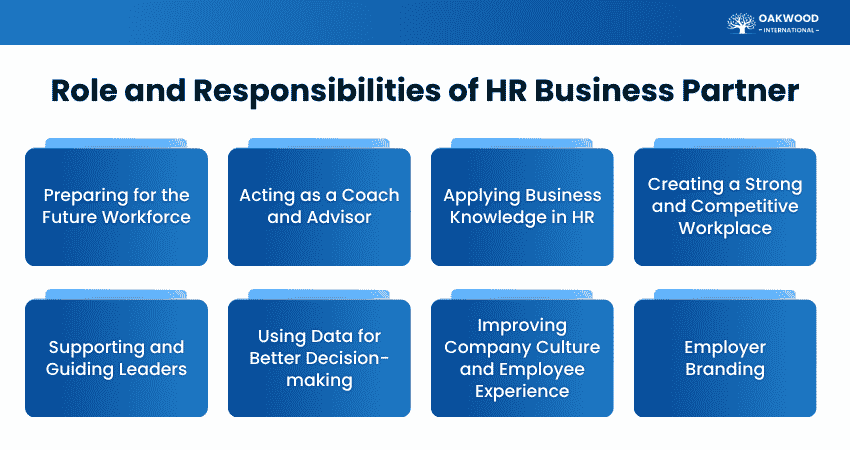
1) Preparing for the Future Workforce
The business workplace is changing rapidly because of technology, remote working, automation and evolving employee expectations. HRBPs help organisations prepare for these changes by planning future workforce needs.
They identify skills gaps, recommend training programmes and support workforce transformation. HRBPs also ensure HR policies remain relevant in changing business environments. Their strategic planning helps organisations stay competitive and adaptable.
2) Acting as a Coach and Advisor
HR Business Partners guide managers and leaders on people-related decisions. They provide advice on conflict management, team performance, employee well-being and leadership development.
They take care of employment laws and regulations and suggest how companies can stay compliant. By acting as trusted advisors, HRBPs help managers make fair and effective decisions. They also support leaders in handling sensitive workplace situations in a professional manner.
3) Applying Business Knowledge in HR
A successful HRBP understands both HR practices and business operations. They use business knowledge to create HR strategies that support company goals. Instead of focusing only on employee-related tasks, they consider how workforce decisions can impact productivity, profitability and business performance.
For example, if a company plans to expand into new markets, the HRBP may develop hiring and training plans to support growth. This combination of HR expertise and business understanding makes the role highly strategic.
4) Creating a Strong and Competitive Workplace
HRBPs play an important role in building strong workplaces with policies to improve employee satisfaction, productivity and retention. They also help companies remain competitive by balancing business goals with employee well-being and development.
Moreover, HRBPs help organisations adapt to changing business needs by improving workforce planning and organisational structures. These efforts increase productivity and help businesses deliver better products or services.
5) Supporting and Guiding Leaders
Managers often rely on HR Business Partners for support during organisational changes such as restructuring, mergers or rapid growth. HRBPs guide leaders through these transitions while ensuring employee concerns are addressed.
HRBPs also play an important role in leadership development. They identify skill gaps, recommend training opportunities and support leaders in becoming effective leaders. This helps organisations build strong leadership teams that can support employee growth and contribute to long-term business success.
6) Using Data for Better Decision-making
Modern HR practices rely heavily on data and analytics to make informed decisions. HR Business Partners use workforce data to understand employee behaviour, identify workplace trends, and improve overall business performance.
Instead of depending only on assumptions, HRBPs use real information to create effective people management strategies. For example, they may analyse employee turnover rates to identify why staff are leaving. By using data effectively, HRBPs can recommend targeted solutions that improve retention and performance.
7) Improving Company Culture and Employee Experience
Company culture plays a major role in employee satisfaction and overall business success. HR Business Partners help organisations create positive workplaces where employees feel respected, valued and supported.
HRBPs also focus on improving the employee experience throughout the employee lifecycle, from recruitment and onboarding to career development and retention. They gather employee feedback, identify workplace concerns and recommend improvements that keep employees connected to the organisation.
8) Employer Branding
Employer branding refers to how a company is viewed as a workplace by current employees and potential candidates. HR Business Partners help organisations build a strong employer brand that attracts skilled professionals and improves the company’s reputation in the job market.
HRBPs support employer branding by improving recruitment processes and promoting company values. In addition, HRBPs gather employee feedback and identify areas where the workplace experience can be improved. These can further strengthen the company’s reputation and ability to attract top talent.
Support employee growth and workplace learning with the
CIPD Level 5 Associate Diploma in Organisational Learning and Development Training
– Register today!
How to Become an HR Business Partner?
Becoming an HR Business Partner requires a combination of education, practical HR experience, and strong strategic thinking skills. It is a progressive career path that involves developing both People Management expertise and business understanding over time. Let’s explore the steps involved:
1) Earn a Relevant Degree
Start by completing a degree in Human Resource Management, Business Administration, Psychology, or related field. A strong academic foundation helps build essential knowledge of HR practices and organisational operations. This educational background provides the base needed to understand workforce management and business strategy effectively.
2) Gain HR Experience
Most HR Business Partners begin their careers in entry-level HR roles such as HR Assistant, Recruiter or HR Executive. Practical experience helps professionals understand recruitment, employee relations, training and performance management.
3) Develop Business Knowledge
HRBPs need to understand how businesses operate. Learning about company goals, workforce planning, financial performance, and organisational strategy helps professionals connect HR practices with business success.
4) Improve Communication and Leadership Skills
Strong communication, problem-solving and leadership skills are essential for HR Business Partners. They regularly work with managers, employees, and senior leaders to solve workplace challenges and support decision-making.
5) Build Data and Technology Skills
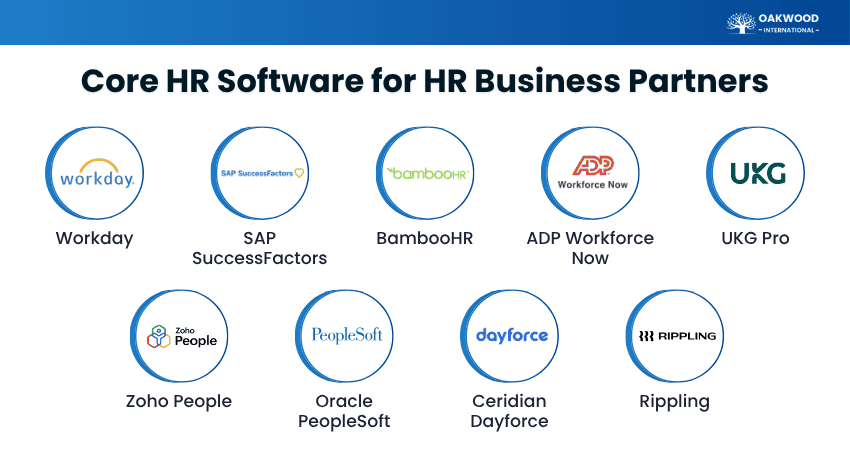
Modern HR relies on data and digital tools. Learning HR analytics, reporting systems, and HR software enhances decision-making capabilities. These skills enable HRBPs to use data-driven insights and adapt to evolving HR technologies, including AI-powered tools.
6) Earn Professional HR Certifications
Professional certifications can improve credibility and career growth. Certifications like CIPD can help professionals strengthen their HR knowledge and stay updated with industry practices.
7) Gain Experience in Strategic HR Roles
Before becoming an HRBP, professionals often work in roles related to talent management, employee engagement, workforce planning or organisational development. These roles help build strategic thinking and business understanding.
8) Apply for HR Business Partner Roles
Once you have gained HR experience, business knowledge and leadership skills, you can apply for HR Business Partner positions. Organisations look for professionals who can balance employee needs with business goals effectively.
HR Business Partner Skills and Competencies
HR Business Partners work closely with employees, managers, and leadership teams. They require a strong combination of analytical, interpersonal, and strategic skills to handle workplace challenges effectively. Below are the key competencies:
1) Data Literacy
HRBPs must interpret workforce data and use insights to support decision-making. Understanding metrics such as turnover rates, engagement levels, and productivity trends is essential. Data literacy enables HRBPs to identify risks, measure performance, and recommend evidence-based improvements.
2) Business Acumen
Business acumen means understanding how organisations operate and generate value. HRBPs need knowledge of company goals, financial performance and industry trends. This understanding allows them to align HR initiatives with organisational objectives and contribute to business growth.
3) Digital Agility
Technology continues to change and this transforms HR operations. HRBPs should be comfortable using HR software, analytics tools and digital communication platforms. Digital agility also includes adapting to new technologies such as AI-powered recruitment tools and platforms and workforce management systems.
4) People Advocacy
HR Business Partners have to balance business goals with employee well-being. Strong people advocacy skills help them support employees fairly while maintaining business priorities. They also need empathy, communication skills and conflict resolution abilities to build trust across the organisation.
Explore the core principles of people management and workplace practices with the
CIPD Level 3 Certificate in People Practice Course
– Sign up soon!
HR Business Partner Career Path
Many HRBPs begin their careers in general HR positions and gradually gain expertise in recruitment, employee relations and development processes. The following roles can help professionals build the skills and experience needed to become a successful HR Business Partner:
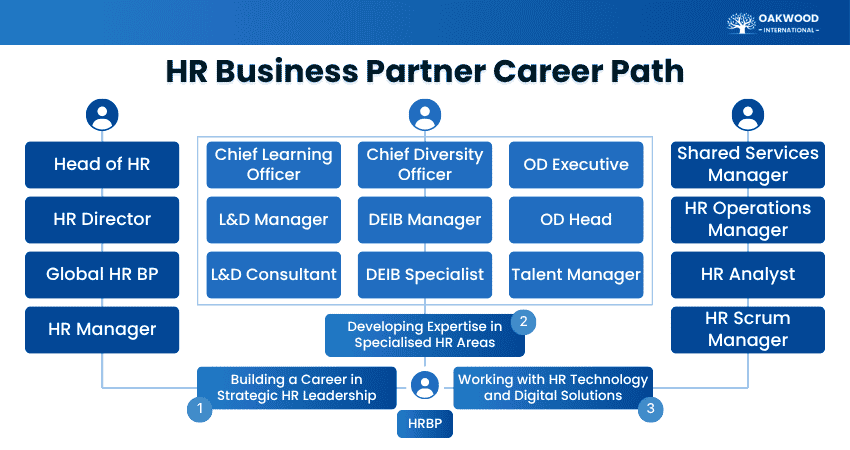
1) Strategic HR Consultant
Working as a Strategic HR Consultant helps professionals develop strong business understanding and strategic thinking skills. In this role, individuals gain experience in workforce planning, organisational development, employee engagement and business improvement strategies. This knowledge helps build the ability to align HR practices with company goals, which is an important responsibility of an HR Business Partner.
2) HR Specialist
An HR Specialist role helps professionals gain practical experience in specific HR functions such as recruitment, training, compensation, employee relations or performance management. This experience builds a strong foundation in HR operations and employee management. Understanding different HR areas helps professionals handle the broad responsibilities involved in an HR Business Partner role.
3) HR Technology Expert
Working with HR technology and workforce analytics helps professionals understand how digital tools support modern HR practices. HR Technology Experts gain experience using HR software, workforce data and employee management systems to improve HR processes and decision-making. These technical and analytical skills are highly valuable for HR Business Partners in today’s technology-driven workplaces.
Benefits of an HR Business Partner
HR Business Partners provide significant value to organisations by improving workforce management and supporting business objectives. Below are some of the benefits of having them:
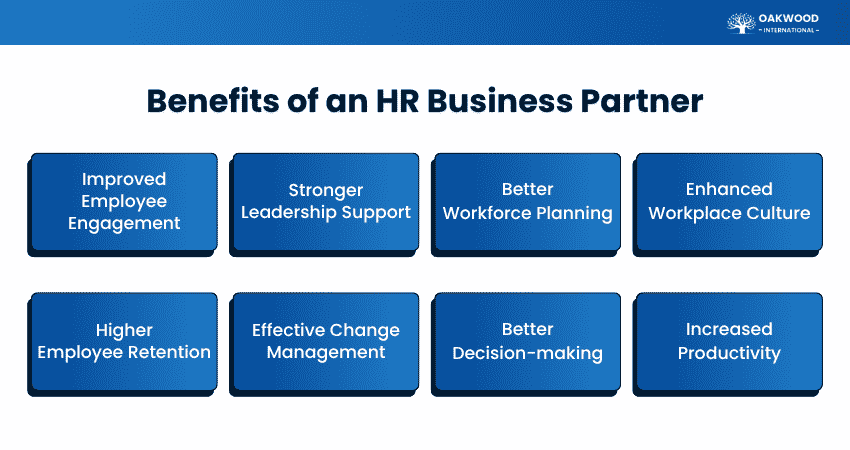
a) Improved Employee Engagement: HRBPs focus on employee well-being and workplace culture. Their efforts help employees feel valued and connected to the organisation.
b) Stronger Leadership Support: HR Business Partners guide managers and leaders in handling employee challenges and making better workforce decisions.
c) Better Workforce Planning: HRBPs help organisations identify future hiring needs, skill gaps and workforce challenges. This allows businesses to prepare for growth effectively.
d) Enhanced Workplace Culture: By supporting positive communication, teamwork, and employee well-being, HRBPs help create healthier and productive work environments.
e) Higher Employee Retention: HRBPs support career development, employee recognition and workplace improvements that encourage employees to stay with the organisation for longer periods.
f) Effective Change Management: During organisational changes, HRBPs help businesses manage transitions smoothly while supporting employees throughout the process.
g) Better Decision-making: HR Business Partners use workforce data and employee insights to identify trends, solve workplace issues and support smarter business decisions.
h) Increased Productivity:
By improving employee performance and workforce strategies, HRBPs contribute to higher productivity and overall business performance.
What is the Salary of an HR Business Partner?
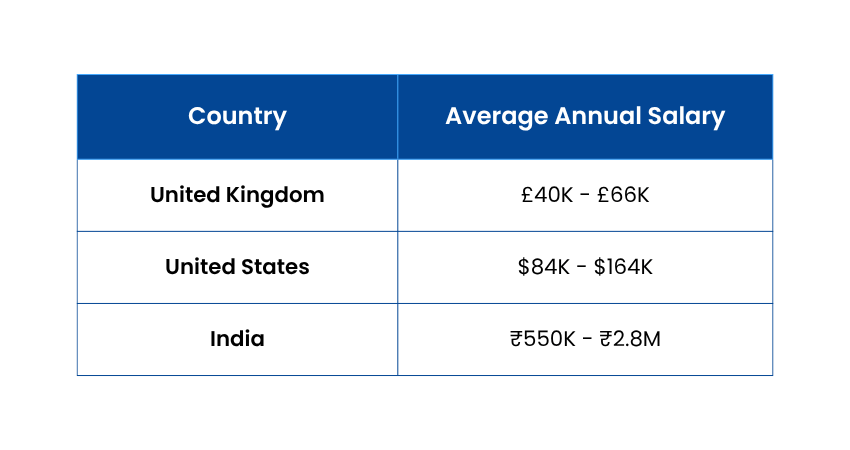
The salary of an HR Business Partner (HRBP) can differ based on experience, location, industry and company size. Let's check their average annual salary in different locations with reference to Glassdoor :
Tips and Best Practices of HR Business Partners
Successful HR Business Partners combine strategic thinking with strong relationship management. Here are some useful tips and best practices that you can follow:
1) Develop strong communication skills to build trust with employees and leaders
2) Stay updated on HR trends, employment laws and workplace technologies
3) Use workforce data to support recommendations and decisions
4) Build collaborative relationships across departments
5) Encourage continuous learning and leadership development
6) Listen actively to employee concerns and feedback
Conclusion
An HR Business Partner creates stronger and more productive workplaces with their ability to combine HR knowledge with business understanding. As workplaces continue to grow, the demand for skilled HRBPs is expected to expand across different industries. Professionals with strong communication, leadership and problem-solving skills can build rewarding careers in this field while making a positive impact on both employees and business performance.
Gain valuable HR knowledge and practical workplace skills with CIPD Qualifications – Join now!
Frequently Ask Questions
Is HR a High Paying Job in the UK?
Yes, HR can be a well-paying career in the UK, especially in senior and strategic roles. Positions such as HR Business Partner, HR Director, and Talent Management Lead are often offered with competitive salaries.
Is a HR Business Partner Higher Than a Manager?
What is HR Business Partnering Model?
The HR Business Partnering model focuses on aligning HR strategies with business goals. It involves HR professionals collaborating with business leaders to drive performance, improve culture and support organisational growth.
Related Blogs
Didn’t Find What You’re Looking For?

Our commitment to excellence ensures an exceptional learning experience tailored to your professional development needs.


© Copyright 2026 - Oakwood International ™ - All rights reserved.


SUPER SALE
 Get Amazing Discounts
And Deals
Get Amazing Discounts
And Deals