

 Back
Back


 Back to Catagories


Table of Contents


 + 44 7452
122728
+ 44 7452
122728
 05-Oct-2026
Maria Thompson
Have you ever noticed how some companies make employees feel supported, motivated, and excited to grow, while others struggle with unhappy teams and constant resignations? A positive workplace does not happen by chance. Behind successful organisations, there is often a strong HR leader helping employees and businesses grow together. This leadership role is known as the Chief Human Resources Officer (CHRO).
Today, companies expect CHROs to contribute far beyond hiring and HR policies. They act as strategic leaders who help shape workplace culture, employee experience, leadership development, and people-focused business strategies. In this blog, you will learn what a CHRO is, their responsibilities, and the growing importance in modern organisations. Let's begin!
What is a Chief Human Resources Officer?
A Chief Human Resources Officer (CHRO) is the most senior Human Resources executive in an organisation. They are responsible for developing and overseeing workforce strategies, employee relations, organisational culture, and HR policies that align with and support overall business goals.
A CHRO works closely with senior leadership teams to improve employee engagement, talent development, and organisational growth. They also help businesses adapt to changing workplace trends and create a productive work environment.

Key Responsibilities of a CHRO
From shaping workforce strategy to fostering a positive workplace culture, a CHRO touches every aspect of the employee journey. The following responsibilities highlight how Chief Human Resource Officers drive meaningful impact across the organisation:
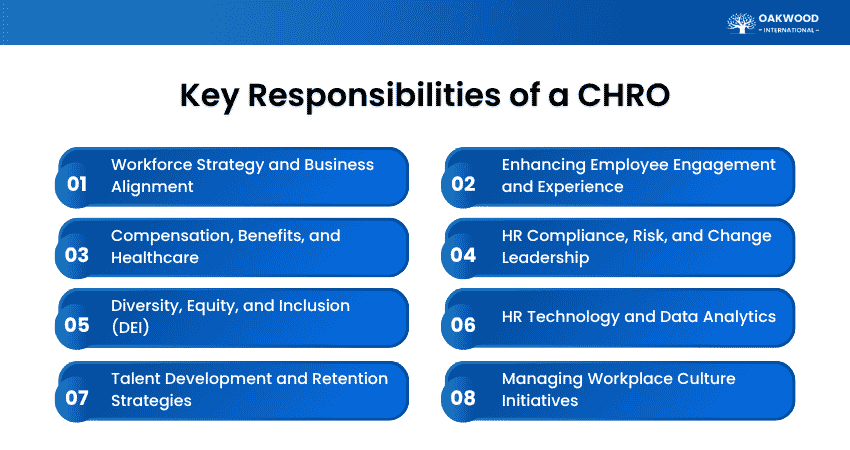
1) Workforce Strategy and Business Alignment
A CHRO leads workforce planning and ensures HR strategies support wider business objectives. They identify skill gaps, improve talent acquisition processes, and create succession plans to prepare future leaders within the organisation.
2) Enhancing Employee Engagement and Experience
Improving employee experience is one of the key responsibilities of a CHRO. They oversee onboarding, employee engagement initiatives, performance management, and workplace well-being to create a supportive and high-performing work environment.
3) Compensation, Benefits, and Healthcare
CHROs manage compensation and benefits programmes to ensure they remain competitive, fair, and aligned with employee needs. This includes salaries, bonuses, healthcare benefits, insurance, pensions, and reward systems that improve satisfaction and retention.
4) HR Compliance, Risk, and Change Leadership
A CHRO ensures the organisation follows employment laws, workplace regulations, and ethical HR practices. They also lead change management initiatives during mergers, restructuring, and organisational transformation processes.
5) Diversity, Equity, and Inclusion (DEI)
CHROs promote diversity, equity, and inclusion across the organisation. They support fair hiring practices, inclusive leadership development, and workplace initiatives that encourage equality and respect for all employees.
6) HR Technology and Data Analytics
Modern CHROs use HR technology and workforce analytics tools to improve decision-making and operational efficiency. These tools help track employee performance, recruitment success, retention rates, and workforce trends.
7) Talent Development and Retention Strategies
CHROs invest in employee development through training programmes, leadership initiatives, mentoring, and upskilling opportunities. Strong talent development strategies help organisations retain skilled employees and prepare future leaders.
8) Managing Workplace Culture Initiatives
A CHRO helps build a positive workplace culture that aligns with business values and employee expectations. They gather employee feedback and introduce initiatives that encourage collaboration, inclusivity, and employee well-being.
Gain essential HR knowledge to support modern workplace and business needs with the CIPD Level 3 Certificate in People Practice Training – Register today!
How to Become a Chief Human Resources Officer?
The journey to becoming a Chief Human Resources Officer (CHRO) involves developing both Human Resources expertise and strong leadership capabilities. Below are the steps that can help professionals build a successful career path towards becoming a CHRO:
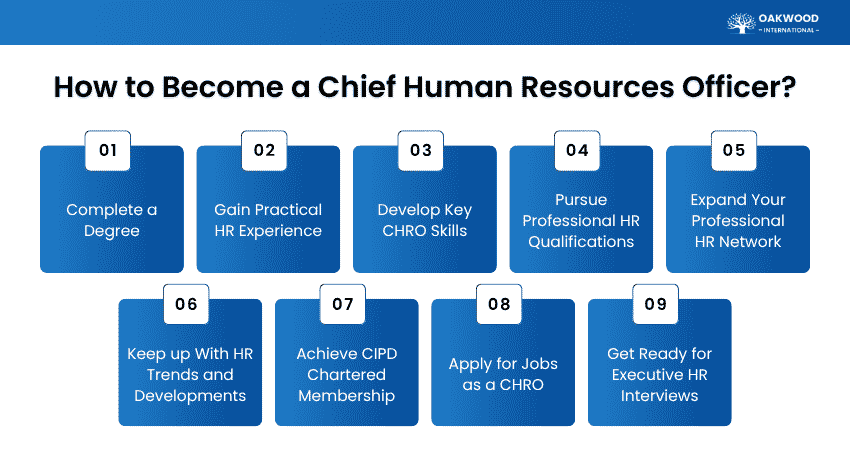
1) Complete a Degree
Although a degree is not always mandatory, many employers prefer CHRO candidates with qualifications in Human Resources or Business Management. A degree helps professionals build theoretical knowledge and practical skills related to workforce management and organisational operations.
2) Gain Practical HR Experience
Practical HR experience is essential for becoming a CHRO. Many professionals begin in entry-level positions, such as HR Assistant or HR Coordinator, before progressing into senior HR leadership roles. Working across different HR functions helps build strong workforce management knowledge and leadership capability.
3) Develop Key CHRO Skills
A successful CHRO requires several hard and soft skills. Important skills include strategic thinking, leadership, communication, business understanding, analytical ability, and problem-solving. These skills help CHROs make effective business decisions and manage people strategies successfully.
4) Pursue Professional HR Qualifications
Professional HR qualifications can improve career opportunities and professional credibility. Certifications such as CIPD qualifications help HR professionals develop advanced knowledge in people management, strategy, and organisational development.
5) Expand Your Professional HR Network
Networking with other HR professionals helps individuals expand their knowledge, keep updated with industry trends, and discover new career opportunities. Attending HR conferences, professional events, and online communities can support long-term career growth.
6) Keep up With HR Trends and Developments
CHROs must stay informed about changing workplace trends and industry developments. Reading HR publications, attending seminars, and following HR thought leaders can help professionals understand new challenges, emerging technologies, evolving workforce expectations, and opportunities within Human Resources.
7) Achieve CIPD Chartered Membership
Becoming a Chartered Member of the CIPD demonstrates professional expertise and commitment to career development. Chartered membership can improve employability, increase professional recognition, strengthen industry credibility, and support progression into senior HR leadership positions.
Develop practical people management skills for growing HR leadership responsibilities with the CIPD Level 5 Associate Diploma in People Management Training – Register now!
8) Apply for Jobs as a CHRO
After gaining sufficient HR experience and leadership skills, professionals can apply for CHRO positions. Tailoring CVs, building leadership experience, developing executive-level communication abilities, and using professional networks can improve opportunities for securing executive HR roles.
9) Get Ready for Executive HR Interviews
The CHRO interviews usually focus on strategic thinking, workforce planning, leadership ability, and organisational management. Preparing practical leadership examples, researching industry trends, improving executive communication skills, and understanding business challenges can help candidates perform confidently during interviews.
The Evolving Role of the CHRO
The role of a Chief Human Resources Officer (CHRO) has evolved significantly over time. Earlier, CHROs mainly focused on administrative responsibilities such as recruitment, payroll, and HR policy management. Today, they play a strategic role in workforce planning, organisational growth, and business decision-making.
Modern CHROs work closely with senior leadership teams to improve employee experience, workplace culture, and long-term business performance. They also use HR analytics, Artificial Intelligence (AI), and automation tools to support workforce management, leadership development, and organisational transformation.
Conclusion
A Chief Human Resources Officer plays a vital role in shaping workforce strategies, improving employee experience, and supporting business growth. With the right mix of education, HR expertise, leadership skills, and continuous development, professionals can build a successful CHRO career and help organisations create stronger, more productive workplace environments.
Build strategic people management skills for long-term workplace leadership success with the CIPD Qualifications – Join now!
Frequently Ask Questions
How Does a CHRO Differ from a Chief People Officer (CPO)?
A CHRO mainly focuses on HR strategy, compliance, workforce planning, and business alignment. A Chief People Officer (CPO) focuses more on employee experience, workplace culture, engagement, and employee well-being within the organisation.
How do CHROs Work with CEOs?
A CHRO works closely with the Chief Executive Officer (CEO) as a strategic advisor who connects business goals with workforce strategies. They help turn the CEO’s vision into effective leadership practices, strong workplace culture, and people-focused organisational growth.
Is CHRO a Big Position?
Yes, a CHRO is a senior executive leadership position within an organisation. They oversee all Human Resources functions, influence business strategy, manage workforce planning, and work closely with the CEO to support organisational growth and employee success.
Didn’t Find What You’re Looking For?

Our commitment to excellence ensures an exceptional learning experience tailored to your professional development needs.


© Copyright 2026 - Oakwood International ™ - All rights reserved.


SUPER SALE
 Get Amazing Discounts
And Deals
Get Amazing Discounts
And Deals