

 Back
Back


 Back to Catagories


Table of Contents


 + 44 7452
122728
+ 44 7452
122728
 28-Jul-2026
James Smith
Managing a workforce is more complex than it seems. Shifting demands, hybrid work models, and rising employee expectations make it challenging to maintain smooth operations without the right structure. This is where Workforce Management plays a crucial role, helping organisations coordinate people, time, and resources efficiently.
Understanding how this structured approach works can help organisations manage their workforce more confidently and consistently. So, in this blog, you will learn what is Workforce Management, its importance, benefits, and more. Let's begin!
What is Workforce Management?
Workforce Management (WFM) refers to the set of strategies, processes, and tools utilised by organisations to optimise employee productivity and ensure work is completed efficiently. It involves managing the workforce lifecycle, including forecasting workload, scheduling employees, tracking time and attendance, and ensuring compliance with labour laws and workplace regulations.
At its core, WFM ensures that the right employees with the right skills are available at the right time to meet business needs. It takes a structured approach to allocating resources, improving operational efficiency, and aligning staffing levels with demand for smoother operations.

Why is Workforce Management Important?
Workforce Management is important because it enables organisations to operate efficiently while maintaining control over labour costs. By aligning staffing levels with actual demand, businesses can avoid overstaffing, which wastes resources, and understaffing, which can disrupt operations. This balance ensures smoother operations, consistent service delivery, and improved overall performance.
It is especially valuable in environments that rely on mobile or field-based teams. Workforce Management helps organisations coordinate employees effectively through real-time scheduling, task allocation, and progress tracking. This enables managers to respond quickly to changes, optimise resource utilisation, and maintain productivity in fast-paced work settings.
Key Components of Workforce Management Software
Workforce Management software is built on several key components that work together to improve planning, coordination, and overall workforce efficiency. Let’s look at the components below:
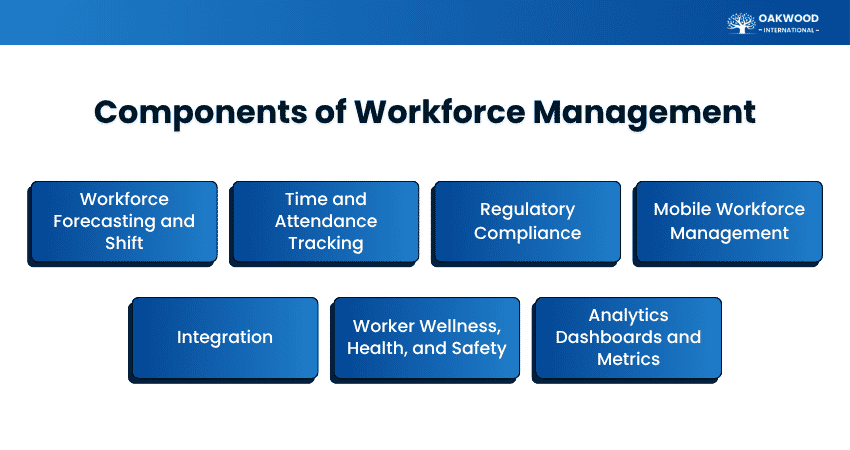
1) Workforce Forecasting and Shift
Uses historical data to predict staffing requirements and create efficient schedules, ensuring the right number of employees are available while controlling labour costs. This helps organisations respond proactively to demand changes and avoid disruptions in daily operations.
2) Time and Attendance Tracking
Workforce Management records employee work hours, manages leave, and ensures accurate payroll while maintaining compliance with labour regulations. Also, it improves transparency and reduces errors associated with manual timekeeping processes.
3) Regulatory Compliance
Workforce Management helps organisations adhere to labour laws, industry standards, and union agreements through centralised and configurable compliance tracking. This reduces legal risks and ensures consistent adherence to regional and organisational policies.
4) Mobile Workforce Management
Workforce Management provides secure access to systems for remote and field teams, enabling real-time updates, coordination, and improved productivity. It ensures seamless communication and better control over distributed or on-the-go employees.
5) Integration
Workforce Management connects with HR and other business systems to provide unified data, support reporting, and enable better workforce planning decisions. This integration allows organisations to gain deeper insights and improve cross-functional efficiency.
6) Worker Wellness, Health, and Safety
Workforce Management supports monitoring of employee health, safety, and workload through data-driven insights, helping maintain a productive work environment. This promotes employee satisfaction while reducing risks related to burnout or unsafe conditions.
7) Analytics Dashboards and Metrics
Workforce Management offers real-time insights into performance, scheduling efficiency, and workforce trends to support informed decision-making. It enables continuous improvement by identifying gaps and optimising workforce strategies.
Hire smarter, build winning teams, and attract top talent by joining the
Talent Acquisition Training
today!
Key Benefits of Workforce Management
Workforce Management offers several benefits that help organisations operate more efficiently while improving employee experience. Let’s look at some of the key benefits below:
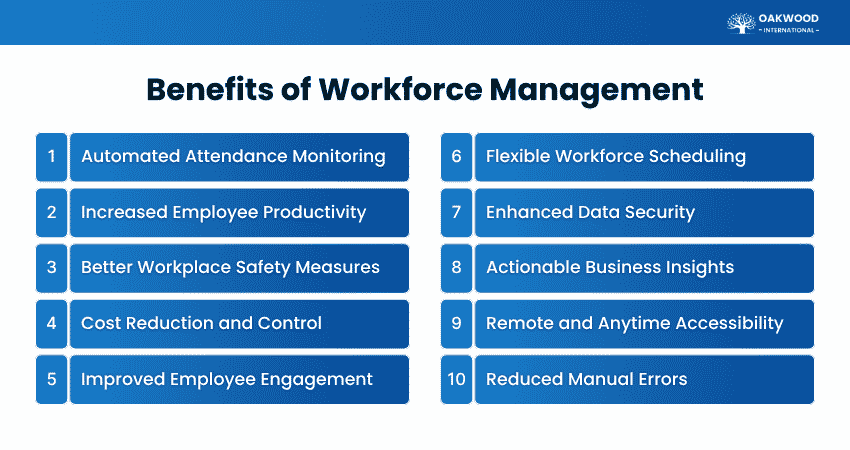
1) Automated Attendance Monitoring
Workforce Management systems automate attendance tracking, improve accuracy and reduce payroll errors. This ensures real-time recording of work hours and absences, minimising manual effort and discrepancies.
2) Increased Employee Productivity
Workforce Management reduces manual tasks and provides better visibility into workforce data, leading to enhanced productivity across teams. This helps managers respond quickly to changes and ensure staffing levels meet operational needs.
3) Better Workplace Safety Measures
Workforce Management supports health and safety by streamlining incident reporting and compliance processes. This helps organisations maintain accurate records and promote a culture of workplace safety.
4) Cost Reduction and Control
Through Workforce Management, processes are streamlined, leading to better workforce visibility and minimal unnecessary labour expenses. This prevents various issues like overstaffing, overtime costs, and inefficient resource allocation.
5) Improved Employee Engagement
Workforce Management tools enhance engagement by giving employees greater visibility and control over their schedules. This improves work-life balance, encourages participation through feedback, and increases overall job satisfaction and motivation.
6) Flexible Workforce Scheduling
Workforce Management enables organisations to create schedules based on demand and employee availability. This improves efficiency while giving employees more control over their working hours.
7) Enhanced Data Security
Advanced systems in Workforce Management use features, such as biometric authentication and location-based access, to prevent time fraud. Also, they monitor unusual activities to ensure accurate and secure workforce data.
8) Actionable Business Insights
Workforce Management systems centralise data and provide real-time reporting for deeper visibility into workforce performance. This enables organisations to identify trends, measure impact, and make more informed strategic decisions.
9) Remote and Anytime Accessibility
Cloud-based access in Workforce Management allows employees and managers to use workforce tools from any location and device. This improves flexibility, speeds up routine tasks, and keeps teams connected across different work environments.
10) Reduced Manual Errors
In Workforce Management, automation reduces manual input in time tracking, payroll, and compliance processes. This improves data accuracy, prevents costly mistakes, and ensures reliable workforce records.
Learn how to unlock potential, retain top talent, and develop talent that drives success with the
Talent Management Training
– Sign up now!
The Future of Workforce Management
The future of Workforce Management will be driven by technological advancements, changing workforce expectations, and dynamic business environments. As hybrid and remote work become more common, WFM will evolve into a predictive, data-driven, and flexible function.
Future systems will use artificial intelligence, automation, and analytics to optimise scheduling, improve workforce planning, and identify risks proactively. Greater integration with HR, payroll, and employee wellbeing systems will enable faster decision-making and personalised support. Overall, Workforce Management will play a vital role in building agile, resilient, and future‑ready organisations.
Conclusion
Workforce Management is essential for improving efficiency, controlling costs, and driving better workforce performance. With the right approach, organisations can enhance employee experience, make informed decisions, and stay adaptable, helping organisations build a resilient, productive, and future-ready workforce.
Lead people, drive real results, and turn teams into high performers with the People Management Courses – Sign up today!
Frequently Ask Questions
What is the Difference Between HR and Workforce Management?
Human Resources (HR) focuses on the full employee lifecycle, including hiring, development, and compliance, with a long-term strategic view. In contrast, Workforce Management focuses on daily operations like scheduling, time tracking, and labour cost control, ensuring the right employees are available at the right time.
What is an Example of Workforce Management?
An example of Workforce Management is a retail store using automated software to create schedules during peak shopping seasons. This ensures sufficient employees are available when demand is high, helping to optimise labour costs, prevent understaffing, and improve productivity through features like time tracking and demand forecasting.
What is Contingent Workforce Management?
Contingent Workforce Management is the process of sourcing, onboarding, and managing non-permanent workers such as freelancers, contractors, and temporary staff. It helps organisations maintain flexibility, control costs, and access specialised skills while ensuring compliance with employment and labour regulations.
Related Blogs
Didn’t Find What You’re Looking For?

Our commitment to excellence ensures an exceptional learning experience tailored to your professional development needs.


© Copyright 2026 - Oakwood International ™ - All rights reserved.


SUPER SALE
 Get Amazing Discounts
And Deals
Get Amazing Discounts
And Deals