

 Back
Back


 Back to Catagories


Table of Contents


 + 44 7452
122728
+ 44 7452
122728
 08-Sep-2026
Grace Mitchell
Think about what makes employees stay with an organisation. While meaningful work and career growth matter, fair pay and valuable workplace support play an equally important role. This is where Compensation and Benefits become essential, helping organisations retain skilled professionals, boost engagement, and build a motivated workforce.
A strong employee value proposition strategy is a key driver of business success. When designed effectively, it can improve employee satisfaction, strengthen retention, and drive long-term success. In this blog, we will explore what are Compensation and Benefits, their importance, types, examples, and more. Let's dive in!
What are Compensation and Benefits?
Compensation and Benefits are the rewards employees receive in exchange for their work. Together, they form an important part of an organisation's employment package, helping attract, motivate, and retain talent. While some benefits are legally required, many organisations offer additional rewards to enhance employee satisfaction.
Compensation refers to the financial remuneration provided to employees, such as salaries, bonuses, commissions, and other monetary incentives. On the other hand, benefits are non-cash advantages that support employees' well-being and financial security like healthcare coverage, pension contributions, paid leave, and other workplace perks.

Why are Compensation and Benefits Important?
Compensation and Benefits are important because they help organisations attract talented professionals, retain valuable employees, and create a positive work environment. Here are some key reasons why they are important:
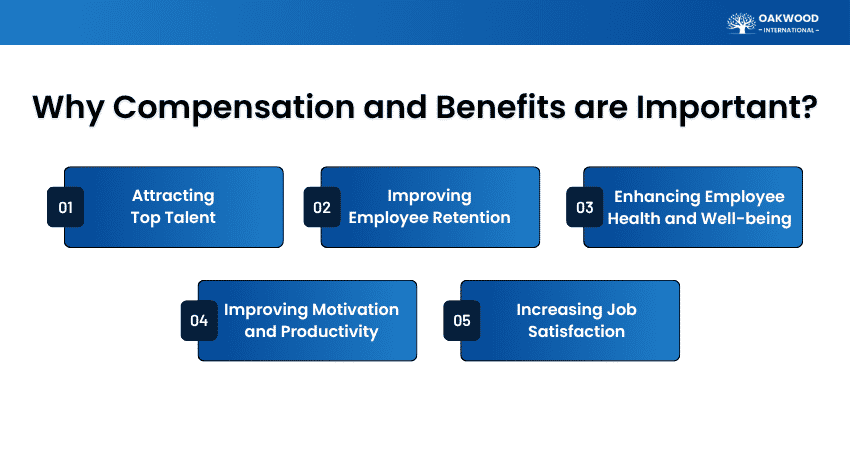
a) Attracting Top Talent: Compensation and Benefits packages help organisations stand out in the job market. They make roles more appealing to skilled professionals and increase the chances of attracting top talent.
b) Improving Employee Retention: Employees are more likely to stay with organisations that offer fair Compensation and Benefits. This helps reduce staff turnover, recruitment costs, and the time required to train new employees.
c) Enhancing Employee Health and Well-being: Benefits such as healthcare, wellness programmes, and paid leave support employees' physical and mental well-being. Healthier employees are engaged and motivated at work.
d) Improving Motivation and Productivity: Employees who feel valued and supported are more productive and perform at their best. Effective Compensation and Benefits can increase engagement, improve performance, and contribute to better business outcomes.
e) Increasing Job Satisfaction:
A strong Compensation and Benefits package helps employees feel recognised and appreciated for their contributions. Higher job satisfaction can improve workplace morale, strengthen organisational culture, and enhance the employer's reputation.
Types of Compensation
Compensation can be divided into direct and indirect forms. Together, these rewards recognise employee contributions, support motivation, and help organisations attract and retain talent. Let's check the types of Compensation:
1) Direct Compensation
Direct compensation includes the cash payments employees receive for their work, such as salaries, wages, bonuses, and commissions. Let's look at its types below:
a) Base Pay: Base pay is the fixed amount an employee receives for their work. It may be provided as an annual salary, a monthly wage, or an hourly rate and is agreed upon during the hiring process.
b) Overtime Pay: Overtime pay is additional compensation provided to employees who work beyond their regular working hours. It rewards extra effort and ensures employees are fairly compensated for additional time worked.
c) Variable Compensation: Variable compensation is performance-based pay that rewards employees for achieving specific goals. Common examples include bonuses, incentives, and commissions.
d) Sales Compensation:
Sales compensation is a specific application of variable pay tailored to sales professionals. It typically combines a base salary with performance-related rewards such as commissions and bonuses, designed to encourage stronger business results.
2) Indirect Compensation
Indirect compensation refers to rewards that have financial value but are not paid directly in cash, such as health insurance, pension plans, equity, stock options, and other workplace benefits. Let's learn more about it below:
a) Equity: Equity gives employees a stake in the organisation through company shares. It is commonly used as a long-term incentive to align employee and organisational goals. This integrates employee interests with business success.
b) Stock Options: Stock options allow employees to purchase company shares at a predetermined price. They provide an opportunity to benefit from the organisation's future growth.
c) Employee Protection Benefits: These benefits support employees' financial security and well-being. Common examples include health insurance, life insurance, pension plans, and other protection-focused programmes.
d) Non-monetary Incentives: Non-monetary incentives are rewards that enhance the employee experience without direct cash payments. Examples include flexible working arrangements, wellness programmes, additional leave, etc.
e) Total Compensation: Total compensation is the complete package of rewards offered to an employee. A well-structured total compensation package helps organisations remain competitive and attract top talent.
Build essential HR knowledge to manage people with the
HR Course
– Join now!
Types of Employee Benefits
Employee benefits can be categorised into four main groups. Together, these benefits support employee well-being, improve job satisfaction, and strengthen retention. Here are the types of employee benefits:
1) Benefits at Work
Benefits at work are designed to improve employees' day-to-day experience in the workplace. They include:
a) Flexible Working Hours: Flexible working hours allow employees to have greater control over their schedules, helping them balance work with personal responsibilities.
b) Skills Development : Many employers support professional growth by funding training courses, certifications, workshops, and other learning opportunities that help employees develop new skills.
c) Leave Benefits: Organisations may offer various types of leave, including sick leave, parental leave, bereavement leave, study leave, and public holidays, depending on company policies.
d) Paid Time Off (PTO): Paid time off enables employees to take annual leave while continuing to receive their regular pay. It supports work-life balance and helps prevent burnout.
e) Food, Beverages, and Workplace Perks: Free snacks, drinks, and other workplace perks can enhance the employee experience and contribute to a positive work environment.
f) Gifts and Recognition Activities:
Employee rewards, team events, recognition programmes, and small gifts help boost morale, enhance engagement, and foster a positive workplace culture.
2) Benefits for Health
Health benefits focus on supporting employees' physical and mental well-being. They include:
a) Healthcare Benefits: Healthcare benefits may include medical insurance, dental coverage, vision care, and other health-related services that support employee well-being.
b) Wellness Programmes:
Wellness initiatives focus on physical and mental health through services such as counselling, fitness support, well-being resources, and stress management programmes.
3) Benefits for Financial Security
Financial security benefits help employees protect their income and plan for their future. They include:
a) Retirement and Pension Plans: Retirement and pension plans help employees save for the future through employer-sponsored savings schemes and long-term financial planning support.
b) Insurance Benefits: Organisations may provide life insurance, disability insurance, and other protection plans that offer financial security during unexpected circumstances.
c) Financial Growth Benefits: Benefits like stock options, employee share schemes, and profit-sharing plans allow employees to share in the organisation's success.
d) Personal Finance Support:
Financial well-being programmes, budgeting resources, and earned wage access options can help employees manage their finances effectively.
4) Lifestyle Benefits
Lifestyle benefits help employees achieve a better balance between their professional and personal lives. They include:
a) Remote and Flexible Work: Remote and flexible work options allow employees to work from various locations and manage their schedules more effectively, offering greater flexibility and convenience.
b) Commuter Benefits: Commuter benefits may include travel allowances, subsidised public transport, parking support, or company transport services to reduce commuting costs.
c) Work-life Balance Benefits:
Benefits like childcare support, concierge services, and flexible work arrangements help employees balance professional and personal responsibilities effectively.
Steps to Build a Compensation and Benefits Programme
Building a Compensation and Benefits programme requires careful planning and alignment with both organisational goals and employee needs. Let's look at the steps that can help organisations create a competitive and sustainable Compensation and Benefits strategy:
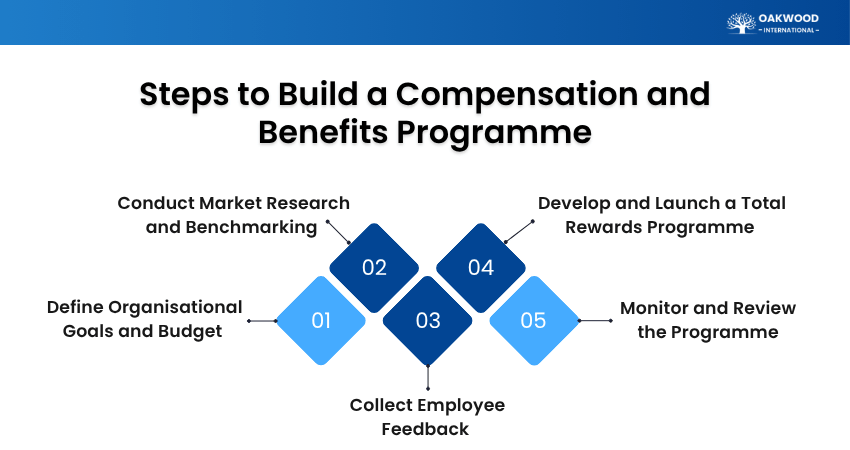
1) Define Organisational Goals and Budget
Begin by reviewing the organisation's objectives, workforce requirements, and available budget. This ensures the Compensation and Benefits programme supports business goals while remaining financially sustainable.
2) Conduct Market Research and Benchmarking
Analyse Compensation and Benefits offered by competitors and industry peers. Benchmarking helps organisations develop competitive reward packages that align with industry standards, helping to attract and retain top talent.
3) Collect Employee Feedback
Seek input from employees to understand their expectations and priorities. Surveys, feedback sessions, and employee discussions can help identify the benefits and rewards employees value most.
4) Develop and Launch a Total Rewards Programme
Create a comprehensive total rewards programme that combines compensation, benefits, recognition, and career development opportunities. Clearly communicating the full value of the package helps employees better understand and appreciate their rewards.
5) Monitor and Review the Programme
Regularly evaluate the effectiveness of the Compensation and Benefits programme by reviewing employee feedback, market trends, and business objectives. Periodic updates help ensure the programme remains competitive, relevant, and aligned with organisational goals.
Learn how to use AI to enhance recruitment and workforce planning by joining the
Certified Artificial Intelligence (AI) for HR Managers Training
now!
Key Compensation Metrics
Key compensation metrics help organisations evaluate pay structures, maintain internal equity, and ensure compensation remains competitive. The following are some of the most commonly used Compensation metrics:
1) Salary Range Penetration
Salary range penetration measures how far an employee's salary has progressed within the established pay range for their role. It helps organisations assess pay progression and compare compensation levels across the workforce.
2) Compa Ratio
The compa ratio compares an employee's current salary to the midpoint of a defined salary range. It helps determine whether employees are being paid below, at, or above market-aligned compensation levels and supports fair pay decisions.
3) Range Spread
Range spread refers to the difference between the minimum and maximum salary within a pay band. It provides a framework for managing pay progression, promotions, and salary growth while maintaining consistency across similar roles.
4) Range Maximum
The range maximum is the highest salary an organisation is willing to pay for a specific position. It is typically associated with employees who have extensive experience, consistently strong performance, or advanced expertise within their role.
5) Market Ratio
Market ratio compares an employee's salary or a salary range midpoint to the prevailing market rate for a similar role. It helps organisations evaluate compensation competitiveness and make informed pay decisions.
6) Total Cost of Workforce (TCOW)
Total Cost of Workforce measures the overall cost of employing and supporting a workforce, including salaries, benefits, recruitment, training, and other workforce-related expenses. It helps organisations understand labour costs and make informed workforce planning decisions.
HR's Role in Compensation and Benefits
Human Resources (HR) plays a prominent role in designing, managing, and improving Compensation and Benefits programmes. Let's look at their key roles below:
Formulating a Compensation Philosophy: HR develops a compensation philosophy that guides pay structures, benefits, and reward practices. It helps ensure fairness, pay equity, compliance, and employee trust.
Designing Compensation Strategy: HR works with leadership to create a compensation strategy aligned with business goals, culture, and market conditions. This includes decisions on salaries, incentives, and overall reward structures.
Creating an Employee Benefits Strategy: HR designs benefits programmes that support employee needs and organisational objectives. A strong benefits strategy helps attract talent, improve retention, and enhance employee satisfaction.
Addressing Compensation Issues: HR identifies and resolves compensation challenges, such as pay equity concerns, salary disparities, and market competitiveness, to maintain fair and effective reward practices.
Managing Compensation Planning: HR manages compensation planning by developing salary structures, pay ranges, bonus schemes, and reward policies to ensure consistency, internal equity, and cost-effectiveness.
Ensuring Compliance with Employment Laws: HR ensures that Compensation and Benefits practices comply with labour laws, tax regulations, equal pay requirements, and other legal obligations. This helps minimise risks and maintain ethical employment practices.
Turn workforce data into insights that improve organisational performance with the
HR Analytics Course
– Sign up now!
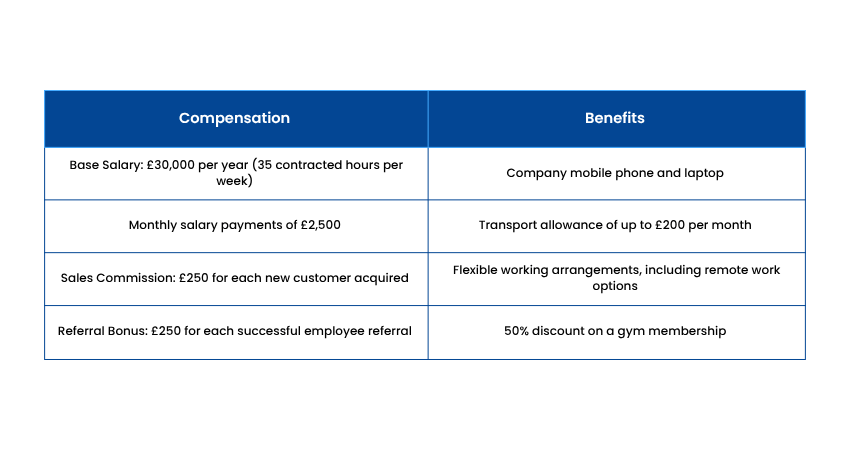
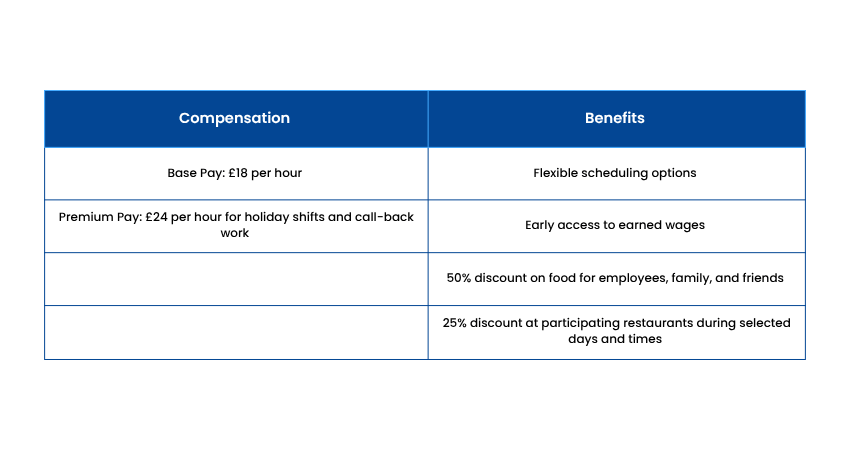
Compensation and Benefits Examples
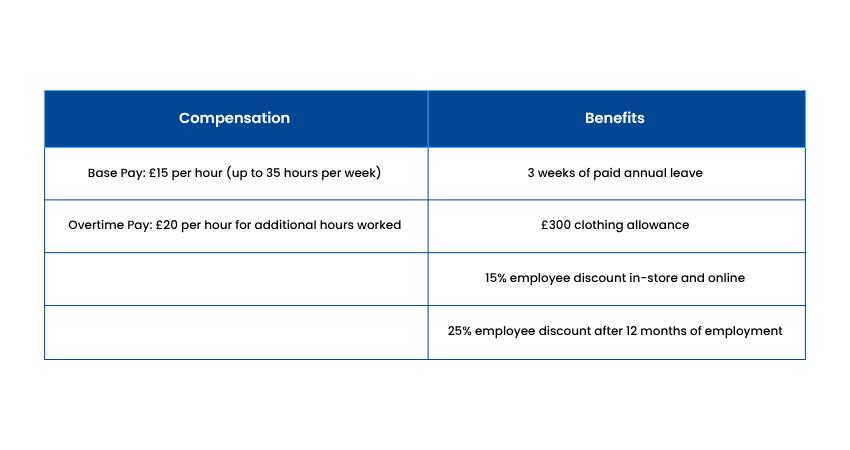
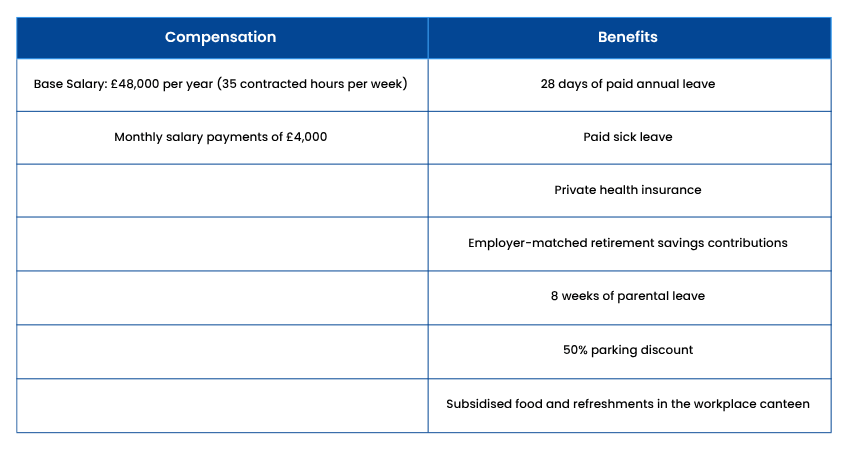
The package of Compensation and Benefits vary depending on the role, industry, and employment type. Let's look at some examples that illustrate how organisations combine financial rewards and employee benefits below:
1) Full-time Hourly Employee in Retail
2) Salaried Employee in a Large Business
3) Sales Employee in a SaaS Company
4) Part-time Employee in a Restaurant
Trends in Compensation and Benefits for Modern Businesses
As employee expectations continue to evolve, organisations are adapting their Compensation and Benefits strategies to remain competitive. Some important trends include:
a) Flexible and Remote Work Benefits: Flexible schedules, hybrid working models, and remote work support have become important benefits that help improve employee satisfaction and work-life balance.
b) Financial Wellness Programmes: Many organisations now offer financial well-being support, such as financial planning resources, savings programmes, and other tools that help employees manage their finances.
c) Employee Well-being and Mental Health Support: Benefits like counselling services, wellness programmes, and mental health resources help support employee well-being and create a healthier workplace.
d) Personalised Benefits: Personalised benefits allow employees to choose rewards and support that best match their individual needs, preferences, and lifestyles.
e) Sustainability and Social Responsibility Benefits: Organisations are introducing benefits that align with environmental and social responsibility goals. Examples include volunteer leave, sustainable commuting incentives, and programmes that support Diversity, Equity, and Inclusion (DEI) initiatives.
Conclusion
A strong Compensation and Benefits strategy helps organisations attract talent, improve retention, and increase employee engagement. By combining competitive pay with meaningful benefits, businesses can create a positive workplace culture, support workforce well-being, and drive long-term organisational success.
Build the leadership skills to inspire teams and drive organisational success with the HR Leadership Courses – Join today!
Frequently Ask Questions
What is the Compensation of Employees?
The compensation of employees refers to the total rewards they receive in exchange for their work. It includes direct financial payments like salaries, wages, and bonuses, as well as non-monetary benefits like healthcare, retirement plans, and other perks.
Does Compensation Include Salary and Benefits?
Yes, compensation includes salary and other financial payments such as bonuses and commissions. Benefits are often considered part of a total compensation package, covering non-cash rewards like healthcare, pension plans, and paid leave.
What is the Difference Between Compensation and Total Rewards?
Compensation refers to the direct financial rewards employees receive, such as salary, bonuses, and commissions. In contrast, total rewards is a broader concept that includes compensation alongside benefits, recognition, career development opportunities, flexible working arrangements, and other elements.
Related Blogs
Didn’t Find What You’re Looking For?

Our commitment to excellence ensures an exceptional learning experience tailored to your professional development needs.


Contact Us


© Copyright 2026 - Oakwood International ™ - All rights reserved.


SUPER SALE
 Get Amazing Discounts
And Deals
Get Amazing Discounts
And Deals