

 Back
Back


 Back to Catagories


Table of Contents


 + 44 7452
122728
+ 44 7452
122728
 15-Sep-2026
Veronica Davis
Every business needs the right people in the right roles at the right time. However, achieving this requires more than simply filling vacancies. This is where understanding Workforce Management vs Workforce Planning becomes important. Although these terms are sometimes used interchangeably, they serve different purposes in improving productivity, efficiency, and long-term workforce success.
So, what sets them apart? While Workforce Management focuses on current staffing needs, Workforce Planning prepares organisations for future workforce demands. The following sections explore the key differences between Workforce Management and Workforce Planning and how both work together to support better staffing decisions and business performance. Let’s get started!
What is Workforce Management?
Workforce Management (WFM) is the process of planning, scheduling, and optimising employees to ensure the right people are available at the right time to meet business demands. It focuses on managing day-to-day workforce operations, helping organisations improve productivity, control labour costs, maintain compliance, and deliver consistent service levels.
Key Workforce Management activities include employee scheduling, time and attendance tracking, demand forecasting, performance monitoring, and resource allocation. By aligning staffing levels with operational requirements, WFM helps organisations improve efficiency, minimise operational disruptions, and maintain a productive workforce.

Key Workforce Management Strategies
After assessing workforce requirements, organisations can implement Workforce Management strategies that help optimise employee performance, improve productivity, control labour costs, and support business objectives. The following strategies serve as the foundation of an effective Workforce Management approach:
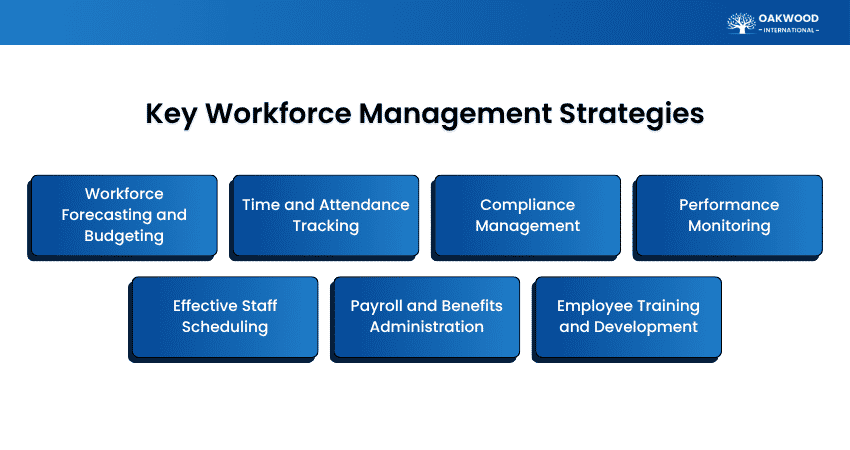
1) Workforce Forecasting and Budgeting: Analyse historical workforce data to predict staffing requirements, allocate resources effectively, and control labour costs while meeting operational demands.
2) Time and Attendance Tracking: Monitor employee working hours, attendance, and absences to improve workforce visibility, support accurate payroll processing, and ensure effective workforce utilisation.
3) Compliance Management: Ensure workforce practices align with labour laws, workplace regulations, and organisational policies to reduce risk and maintain compliance.
4) Performance Monitoring: Track employee performance and productivity metrics to identify improvement opportunities, support workforce development, and enhance operational efficiency.
5) Effective Staff Scheduling: Create schedules that align employee availability, skills, and business demand to maintain productivity while supporting work-life balance.
6) Payroll and Benefits Administration: Manage employee compensation, benefits, paid leave, and labour costs efficiently to ensure workforce satisfaction and operational accuracy.
7) Employee Training and Development: Provide ongoing training, onboarding, and development opportunities to help employees build skills, improve performance, and adapt to changing business needs.
What is Workforce Planning?
Workforce Planning is the strategic process of forecasting an organisation’s future workforce needs and ensuring it has the right people, with the right skills, in the right roles at the right time. Unlike Workforce Management, which focuses on daily operations, Workforce Planning takes a long-term view by aligning workforce capabilities with business objectives and future growth plans.
It involves analysing current workforce capacity, identifying future skill requirements, predicting talent gaps, and developing strategies for recruitment, training, succession planning, and workforce development. By proactively preparing for future workforce demands, organisations can improve agility, reduce talent shortages, and support sustainable business success.
Build Organisational Learning Skills with CIPD Level 5 Associate Diploma in Organisational Learning & Development Course – Register now!
Key Workforce Planning Strategies
A successful workforce optimisation strategy requires strategic planning and continuous improvement. The following practices can help organisations build an effective workforce plan.
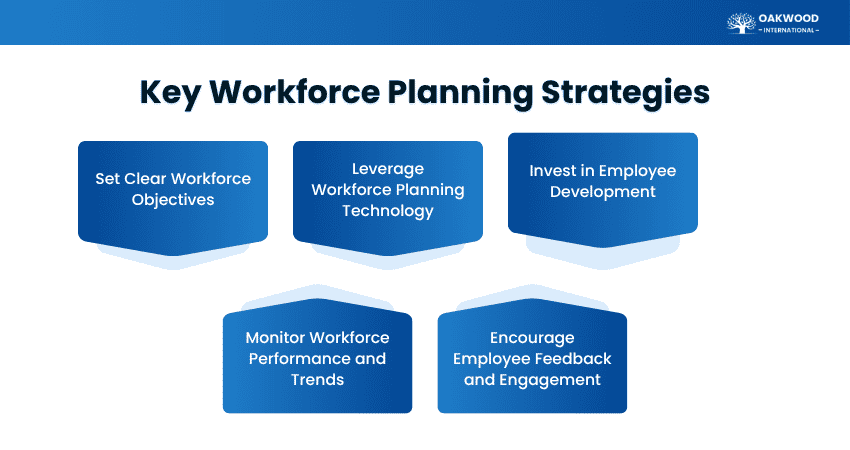
1) Set Clear Workforce Objectives: Establish measurable workforce goals that align with business priorities. Clear objectives help organisations identify staffing requirements, address workforce challenges, and track progress effectively over time.
2) Leverage Workforce Planning Technology: Use Workforce Planning software and analytics tools to improve forecasting accuracy, streamline workforce decisions, and gain better visibility into workforce capabilities, trends, and future needs.
3) Invest in Empoyee Development: Focus on training, upskilling, and professional development to ensure employees have the skills required to meet future organisational demands. This helps close skill gaps and improve workforce readiness.
4) Monitor Workforce Performance and Trends: Regularly analyse workforce data, including productivity, turnover, and workforce utilisation metrics. These insights support informed decision-making and help organisations adapt workforce plans as business needs evolve.
5) Encourage Employee Feedback and Engagement: Create channels for employee feedback through surveys, meetings, and discussions. Understanding employee perspectives can improve Workforce Planning decisions, strengthen retention efforts, and support a more engaged workforce.
Key Differences Between Workforce Management and Workforce Planning
Although both processes aim to ensure an organisation has an effective workforce, they differ in focus, timeframe, and objectives. In the table below, you will find the key differences between Workforce Management and Workforce Planning.
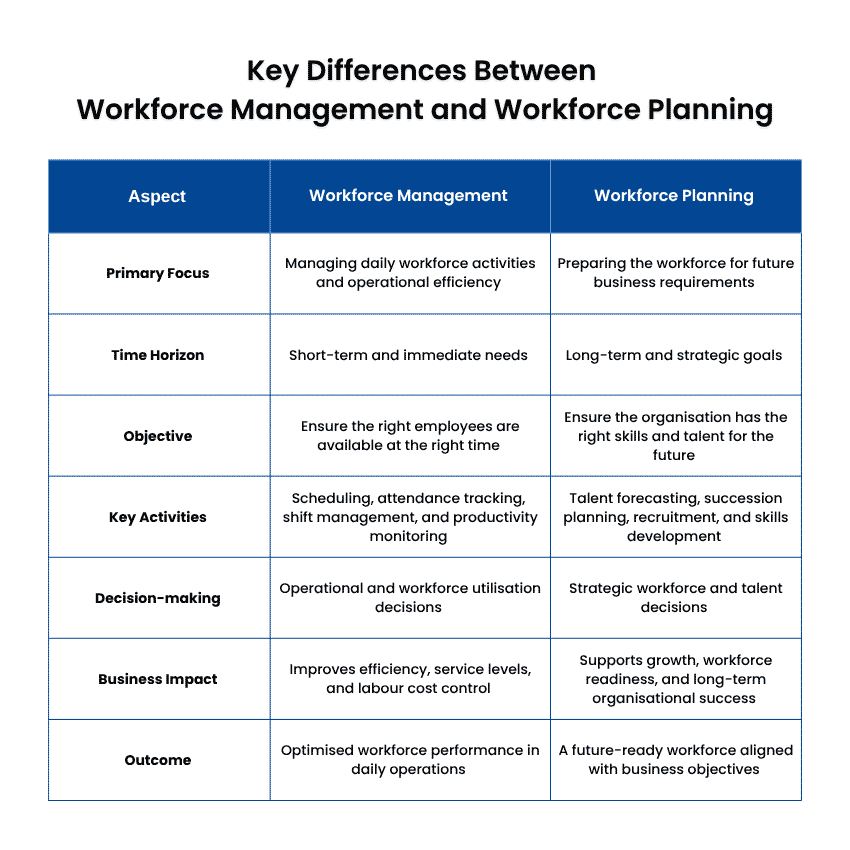
Workforce Management concentrates on optimising day-to-day workforce operations and meeting current business demands, while Workforce Planning focuses on preparing the workforce for future challenges, opportunities, and organisational growth. Together, they create a balanced approach to workforce optimisation and long-term business success.
How do Workforce Management and Workforce Planning Work Together?
Workforce Planning and Workforce Management are closely connected processes that help organisations align their workforce strategy with operational needs. Below, you can explore a few points on how Workforce Management and Workforce Planning work together.
1) Workforce Planning Identifies Future Staffing Needs
Workforce Planning helps organisations forecast future workforce requirements by analysing business goals, workforce trends, and skill demands. It determines how many employees will be needed, the skills required, and how workforce capacity should evolve to support future growth and organisational objectives.
2) Workforce Management Implements Workforce Plans
Once workforce requirements have been identified, Workforce Management puts those plans into action. This includes scheduling employees, allocating resources, monitoring attendance, and ensuring staffing levels align with operational demand. Effective Workforce Management helps organisations maximise productivity while maintaining service quality and efficiency.
3) Continuous Feedback Loop
Workforce Management generates valuable operational data, including workforce utilisation, productivity levels, and staffing performance. This information feeds back into Workforce Planning, enabling organisations to refine forecasts, identify workforce challenges, and improve future decision-making. This continuous feedback loop ensures workforce strategies remain aligned with changing business needs.
Conclusion
Understanding Workforce Management vs Workforce Planning helps organisations balance immediate workforce needs with long-term business goals. Workforce Management focuses on daily operations, while Workforce Planning prepares for future talent requirements. Together, they help organisations improve efficiency, maintain workforce readiness, and support sustainable growth.
Enhance your employability with the best CIPD Qualification Courses – Join now!
Frequently Ask Questions
Can Workforce Planning and Workforce Management be Integrated Into One System?
Yes, Workforce Planning and Workforce Management can be integrated into a single system. Combining strategic workforce forecasting with day-to-day workforce operations enables organisations to align staffing needs, optimise resource allocation, improve decision-making, and respond more effectively to changing business demands.
What is Another Name for Workforce Management?
Workforce Management is commonly shortened to WFM. It is sometimes discussed alongside Workforce Optimisation (WFO), a broader concept that builds on WFM by adding performance and engagement tools.
Is Workforce Planning an HR Function?
Related Blogs
Didn’t Find What You’re Looking For?

Our commitment to excellence ensures an exceptional learning experience tailored to your professional development needs.


Contact Us


© Copyright 2026 - Oakwood International ™ - All rights reserved.


SUPER SALE
 Get Amazing Discounts
And Deals
Get Amazing Discounts
And Deals