

 Back
Back


 Back to Catagories


Table of Contents


 + 44 7452
122728
+ 44 7452
122728
 07-Sep-2026
Hailey Davis
Professional growth becomes easier when employees receive the right support and guidance at the right time. Coaching and mentoring help individuals improve skills, build confidence, and achieve career goals. Understanding Coaching vs Mentoring helps organisations and professionals choose the right approach for workplace learning and development.
Although both focus on professional development, they differ in their purpose, structure, and style of guidance. In this blog, you will explore What is Coaching vs Mentoring, their key differences, benefits, and more. Let’s begin!
What is Coaching?
Coaching refers to the structured process that helps individuals improve specific skills, enhance performance, and achieve short-term professional goals. In a coaching relationship, a coach works closely with an individual to provide guidance, feedback, and support based on their development needs.
Coaching mainly focuses on solving current challenges and improving job-related performance. It encourages continuous learning, builds confidence, and helps individuals achieve measurable results through regular support and clear goal setting.
What is Mentoring?
Mentoring is a long-term professional relationship where an experienced person provides guidance, advice, and support to help another individual grow personally and professionally. It is developed on trust, shared experiences, and continuous learning.
In mentoring, the mentor shares knowledge and insights to help the mentee develop leadership skills, overcome challenges, and achieve long-term career goals. The relationship mainly focuses on growth and professional development over time.
Key Differences Between Coaching vs Mentoring
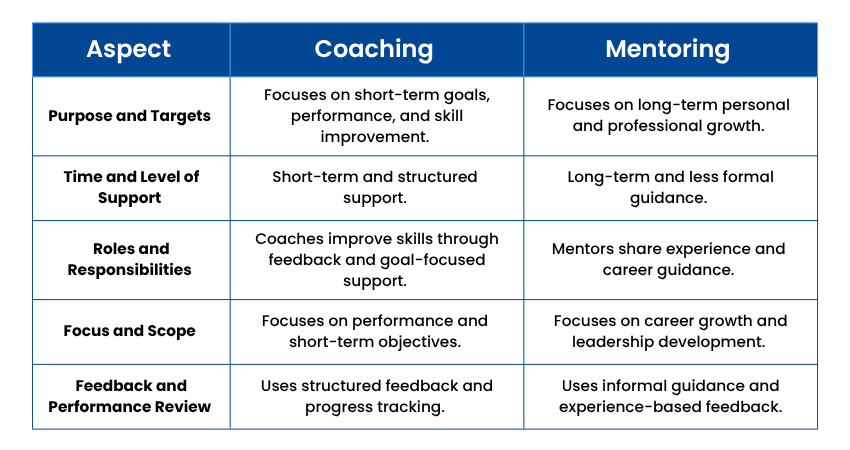
Coaching and mentoring both support employee development, but they differ in their goals, duration, responsibilities, and approach. Let's look at the main differences between coaching and mentoring below:
1) Purpose and Targets
Coaching focuses on achieving specific goals, improving performance, and developing skills within a short period. A coach works closely with an employee or leader to achieve measurable outcomes. This goal-oriented approach ensures faster results and targeted performance improvement.
In contrast, mentoring focuses more on long-term professional and personal growth. The relationship is built on guidance, trust, and shared experiences that help mentees grow throughout their careers. It supports continuous development by focusing on long-term success rather than immediate outcomes.
2) Time and Level of Support
Coaching is usually short-term and highly structured, with regular sessions focused on solving immediate challenges or achieving defined objectives. This approach helps employees achieve faster improvements in specific performance areas.
In contrast, mentoring is generally long-term and less formal. Mentoring relationships may continue for months or even years, helping employees grow steadily over time. This long-term guidance supports continuous learning and professional development.
3) Roles and Responsibilities
A coach is responsible for helping individuals improve specific skills and performance areas through guidance, feedback, and goal-focused support. Coaches mainly focus on helping employees achieve measurable improvements and defined outcomes. Their role is performance-driven and centred around achieving specific results.
In contrast, mentors mainly share knowledge, experiences, and practical insights to help mentees learn, grow, and make informed career decisions. Mentors support overall career growth by providing advice based on real-world experience. They act as advisors who guide long-term career and personal development.
4) Focus and Scope
Coaching mainly focuses on performance improvement, skill development, and achieving short-term objectives. Both the coach and the employee share responsibility for achieving the desired results.
In contrast, mentoring has a broader focus that includes career growth, leadership development, and personal improvement. The mentor provides guidance, while the mentee remains responsible for applying the advice.
5) Feedback and Performance Review
Coaching often involves regular feedback, performance reviews, and measurable progress tracking to help employees improve in specific areas. This structured feedback helps individuals identify strengths, weaknesses, and areas for improvement.
In contrast, mentoring feedback is usually more informal and based on experience and advice. Mentors provide suggestions and guidance, but mentees decide how to apply them in their professional journey. This informal approach encourages independent thinking and long-term learning.
Inspire growth through effective coaching and mentoring skills with the ILM Level 5 Diploma in Effective Coaching and Mentoring Training – Join now!
Similarities Between Coaching vs Mentoring
Although coaching and mentoring differ in their purpose and structure, both play an important role in employee development, career growth, and workplace engagement. Let’s look at their key similarities below:
1) Creating Strong Relationships
Both coaching and mentoring help employees build stronger professional relationships within the workplace. They encourage individuals to connect with others outside their immediate teams and improve collaboration across departments. These relationships build a more supportive work environment and help employees expand their professional networks.
2) Confidentiality
Confidentiality is important in both coaching and mentoring relationships. Employees are more likely to share challenges, goals, and career concerns when they know their conversations will remain private. This sense of confidentiality helps employees feel supported, valued, and comfortable in discussing professional development needs.
3) Building Trust and Respect
Both coaching and mentoring are built on mutual trust and respect. These relationships build a safe environment where individuals can communicate openly and express their thoughts honestly. Strong trust and respect encourage better learning experiences, stronger connections, and continuous personal and professional growth.
4) Good Communication and Listening Skills
Coaching and mentoring both improve communication and active listening skills through regular discussions and meaningful conversations. These interactions help employees express ideas clearly and understand others effectively. Also, improved communication and listening skills support teamwork, workplace collaboration, and long-term career progression.
Benefits of Coaching and Mentoring
Both coaching and mentoring offer valuable support for both personal and professional development. Let’s look at their key benefits below:
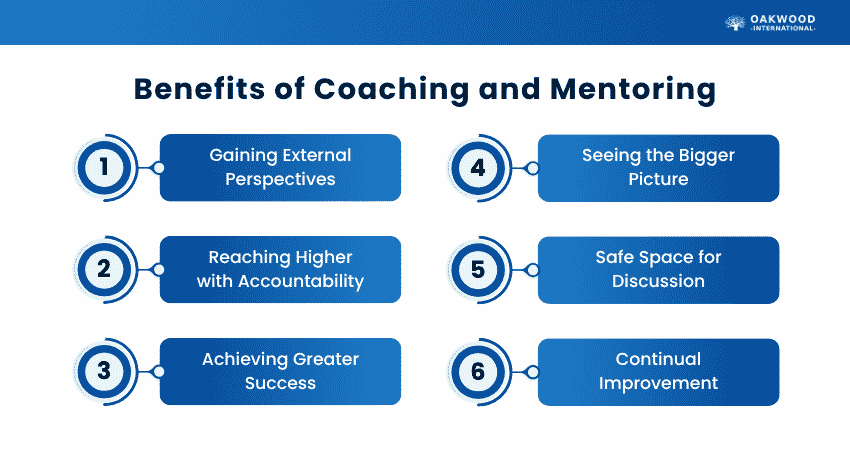
a) Gaining External Perspectives: Coaches and mentors provide fresh perspectives that help individuals identify hidden challenges, improve decision-making, and discover new opportunities for growth.
b) Reaching Higher with Accountability: Coaching and mentoring encourage individuals to stay focused on their goals and remain accountable for their progress. This support increases motivation and commitment towards achieving success.
c) Achieving Greater Success: Positive guidance and continuous encouragement help employees improve performance, overcome obstacles, and move forward confidently in their careers.
d) Seeing the Bigger Picture: Mentors and coaches help individuals look beyond immediate challenges and understand long-term career goals, professional growth, and future opportunities clearly.
e) Safe Space for Discussion: Both approaches create a supportive environment where individuals can openly discuss concerns, challenges, and career decisions without fear of judgement.
f) Continual Improvement: Coaching and mentoring encourage continuous learning, self-improvement, and professional development by motivating individuals to improve their skills and performance over time.
Gain essential leadership skills for professional growth with the ILM Level 5 Award in Leadership and Management Training – Sign up now!
Coaching vs Mentoring: Which One is Right for You?
Choosing between coaching and mentoring depends on your personal goals, professional needs, and the challenges you want to overcome. If you need help improving specific skills, achieving short-term goals, or enhancing workplace performance, coaching may be the better option. On the other hand, mentoring is more suitable for individuals seeking long-term career guidance, professional growth, and support from experienced professionals.
In many cases, organisations and employees can benefit from a combination of both coaching and mentoring. Together, these approaches help improve employee performance, strengthen workplace relationships, and encourage continuous learning and development. Selecting the right approach can create a more supportive and growth-focused work environment for sustaining long-term success.
Conclusion
Understanding Coaching vs Mentoring helps individuals and organisations choose the right approach for professional growth and workplace success. While coaching improves specific skills and performance, mentoring supports long-term career development through guidance and shared experience. Both encourage continuous learning and employee growth.
Build the core skills needed to lead high-performing teams by joining the ILM Level 5 Training today!
Frequently Ask Questions
What are the Types of Coaching?
Some common types of coaching include:
a) Executive Coaching
b) Leadership Coaching
c) Career Coaching
d) Sales Coaching
e) Team Coaching
f) Life Coaching
g) Wellness and Health Coaching
h) Financial Coaching
i) Relationship Coaching
j) Spiritual or Mindset Coaching
What are the Five Skills of Coaching?
The five skills of coaching are:
a) Active Listening
b) Asking Powerful Questions
c) Emotional Intelligence
d) Goal Setting
e) Encouraging Accountability
When to Utilise Mentoring?
Mentoring is suitable during career transitions, leadership development, and long-term professional growth. It creates a trust-based relationship where experienced mentors provide guidance, share insights, and help individuals achieve their long-term career goals.
Related Blogs
Didn’t Find What You’re Looking For?

Our commitment to excellence ensures an exceptional learning experience tailored to your professional development needs.


© Copyright 2026 - Oakwood International ™ - All rights reserved.


SUPER SALE
 Get Amazing Discounts
And Deals
Get Amazing Discounts
And Deals