

 Back
Back


 Back to Catagories


Table of Contents


 + 44 7452
122728
+ 44 7452
122728
 27-Jul-2026
Hailey Davis
Managing people is not just about hiring talent and paying salaries. It also means understanding the rules that protect both employers and employees. That is where HR Compliance becomes essential. From recruitment and payroll to workplace safety and fair treatment, every HR decision carries legal responsibility. Ignoring these obligations can quickly lead to penalties, disputes, or reputational damage.
As labour laws change and workplace expectations evolve, staying compliant is more important than ever. Strong HR Compliance builds trust, protects your organisation from risk, and creates a fair environment where employees feel safe and respected. In this blog, you will learn What is HR Compliance and how to manage it effectively.
What is HR Compliance?
HR Compliance is the ongoing process of ensuring that a company’s policies, procedures, and workplace practices align with national, regional, and local employment laws and regulations. It forms the foundation of effective People Management by protecting the organisation from legal penalties and employees from unfair treatment, discrimination, and unsafe conditions.
HR Compliance has two key dimensions. First, it involves developing, updating, and maintaining policies and procedures so employment practices remain aligned with current legal requirements. Second, it requires HR teams to monitor adherence to those policies, intervene when necessary, and enforce standards consistently.

Why is HR Compliance Important?
HR Compliance is important because it protects organisations from legal, financial, and reputational risks. Employment laws are complex and constantly changing, and failing to follow them can result in fines, lawsuits, audits, and even business disruption. By staying compliant, employers reduce the risk of penalties and ensure that their operations remain stable and legally secure.
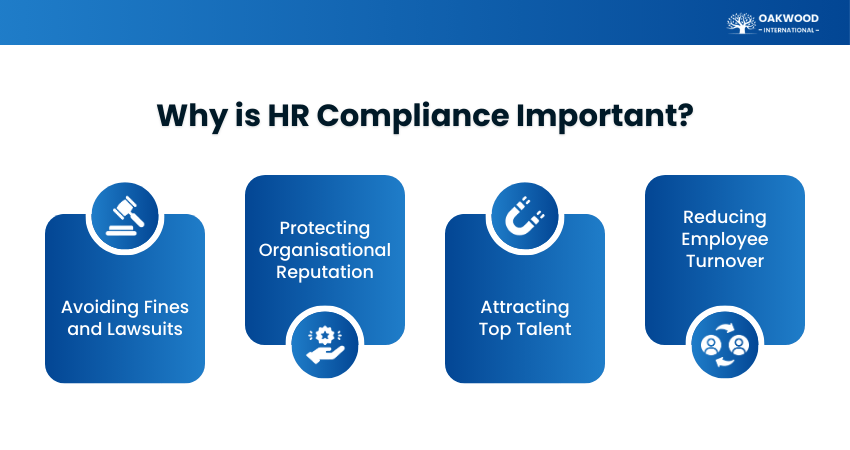
HR Compliance promotes fairness and trust in the workplace while protecting the organisation’s long-term interests. By preventing fines and legal disputes, protecting reputation, and reducing employee turnover, compliance strengthens business stability. It also helps attract quality talent, as professionals are drawn to organisations known for ethical, lawful, and responsible practices.
Who is Responsible for HR Compliance?
HR Compliance is led by HR but shared across the organisation. While HR develops and monitors frameworks, effective implementation relies on leadership and managers. Clear accountability ensures policies are properly enforced.
Responsibility is shared among the following roles:
1) HR Department:
Develops, updates, and enforces policies in line with local, state, and national labour laws. Manages fair recruitment practices, employee training, payroll compliance, and essential documentation such as contracts and statutory forms.
2) Business Owners/Directors:
Hold ultimate accountability for compliance failures. They set the ethical direction of the organisation, allocate resources, and ensure that governance standards are maintained.
3) Line Managers:
Apply policies in daily operations. They are responsible for fair treatment, workplace safety standards, performance management, and addressing issues promptly and consistently.
4) Compliance Officers (in larger organisations):
Monitor regulatory adherence and oversee compliance programmes. They ensure alignment with labour laws, safety regulations, and anti-discrimination requirements.
Types of HR Compliance
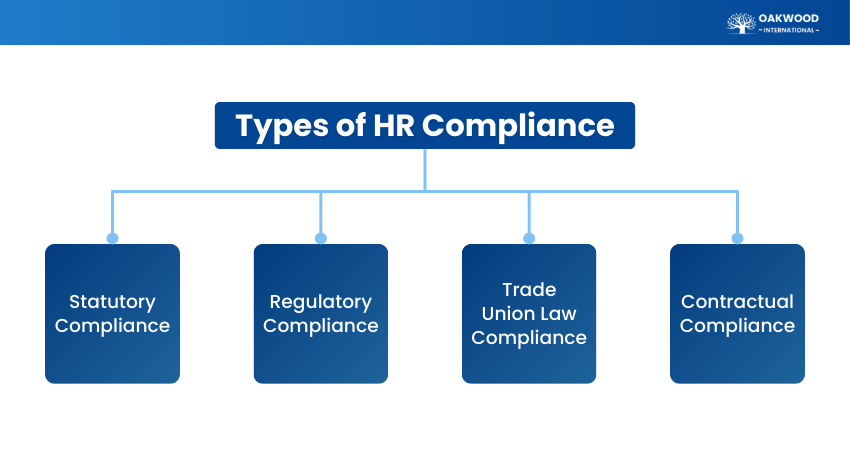
HR Compliance can be categorised into different types based on legal and operational requirements. Each type addresses a specific area of responsibility that organisations must manage to remain lawful and ethical. Here are the types of HR Compliance:
1) Statutory Compliance
Statutory Compliance refers to the employment laws enacted by government authorities. These laws typically cover minimum wage, working hours, overtime pay, leave entitlements, anti-discrimination rules, and termination procedures. Organisations must strictly adhere to these legal requirements to avoid penalties, legal action, or regulatory scrutiny.
2) Regulatory Compliance
Regulatory Compliance involves meeting standards set by regulatory bodies or industry authorities. This may include workplace health and safety regulations, data protection requirements, and sector-specific employment guidelines. It ensures organisations operate within approved safety, governance, and operational frameworks.
3) Trade Union Law Compliance
Trade Union Law Compliance ensures that employers respect employees’ rights to join trade unions and participate in collective bargaining. It includes recognising unions where legally required, engaging in lawful negotiations, and avoiding retaliation against union members. Proper Compliance helps maintain fair industrial relations.
4) Contractual Compliance
Contractual Compliance refers to fulfilling obligations outlined in employment contracts and collective agreements. This includes paying agreed salaries, providing promised benefits, honouring notice periods, and maintaining stated working conditions. Failure to meet contractual terms can result in disputes, grievances, or legal claims.
Learn to identify and prevent workplace discrimination effectively with our
Direct and Indirect Discrimination Training
– Join now!
HR Compliance Issues
HR Compliance issues can arise at any stage of the employee lifecycle, from recruitment to termination. They often result from outdated policies, inconsistent enforcement, or limited awareness of legal requirements. Below are some common HR Compliance issues organisations should closely monitor and address:
1) Discriminatory Job Advertisements
Job advertisements must avoid language that directly or indirectly favours candidates based on protected characteristics such as age, gender, religion, disability, or ethnicity. Even subtle wording can create bias. Employers should use neutral, skills-focused descriptions to ensure equal opportunity and legal compliance.
2) Workplace Disputes
Workplace disputes can arise from harassment claims, unfair treatment, or unresolved grievances. If not managed properly, these conflicts may escalate into legal claims. Employers must follow structured grievance procedures, investigate complaints fairly, and document actions to minimise legal and reputational risks.
3) Unpaid Final Wages
Failure to pay final wages on time can result in penalties and legal claims. Employers must comply with local laws regarding termination payments, including unused leave and bonuses. Accurate payroll processing and timely updates help ensure employees receive their entitled compensation.
4) Late New Hire Reports
Many jurisdictions require employers to report newly hired or rehired employees within a specific timeframe. Delayed reporting may result in fines. Maintaining organised onboarding processes and tracking compliance deadlines ensures the timely submission of required information to authorities.
5) Unsecure Documents
HR departments handle sensitive personal and financial data. Leaving documents unsecured or granting unauthorised access can breach privacy regulations. Organisations must store records securely, restrict access, and implement data protection measures to safeguard employee information and prevent legal exposure.
6) Unfair Pay Practices
Unfair pay practices include unequal wages for similar roles, improper overtime calculations, or hidden pay gaps. Even unintentional discrepancies may violate equal pay laws. Regular pay audits and transparent compensation policies help organisations maintain fairness and compliance.
7) Inadequate Health Coverage
Employers may be legally required to provide health insurance based on workforce size and jurisdiction. Offering plans that fail to meet affordability or minimum standards can trigger penalties. Reviewing benefit policies regularly ensures compliance with applicable healthcare regulations.
8) Inadequate Training and Onboarding
Poor onboarding and insufficient compliance training increase the risk of misconduct, safety violations, and policy breaches. Employees must understand workplace rules, reporting procedures, and safety standards. Structured training programmes reduce legal exposure and promote responsible behaviour.
9) Unlawful Background Checks
Background checks must comply with legal standards regarding timing, consent, and fairness. Conducting checks too early in the hiring process or misusing criminal history information may violate employment laws. Employers should follow structured screening guidelines to remain compliant.
10) Incorrect Payroll and Tax Processing
Errors in wage calculations, overtime payments, or tax deductions can lead to audits, financial penalties, and employee dissatisfaction. Accurate payroll systems and timely tax filings are essential for maintaining trust and compliance. Automated solutions and regular internal reviews help maintain accuracy and meet regulatory requirements consistently.
11) Inappropriate Interview Practices
Interview questions must focus strictly on job-related skills and qualifications relevant to the role. Asking about marital status, pregnancy, religion, or political views may be discriminatory and legally risky. Structured interviews and interviewer training help prevent biased questioning and significantly reduce legal risk.
6 Ways to Maintain HR Compliance
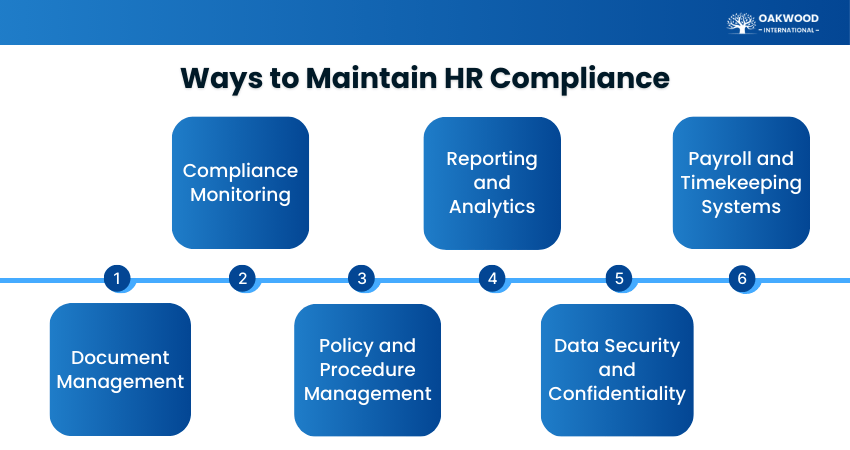
Maintaining HR Compliance requires clear processes and ongoing oversight. By combining strong policies, regular reviews, and reliable systems, organisations can significantly reduce legal risks. The following six approaches help ensure compliance is managed consistently across the organisation:
1) Document Management
Effective document management is essential for strong HR Compliance. All employee records, contracts, policies, and compliance forms must be securely stored and easily accessible. Centralised digital systems reduce errors, support audit readiness, and help organisations meet legal retention requirements efficiently.
2) Compliance Monitoring
Consistent monitoring strengthens HR Compliance by tracking regulatory deadlines, certifications, and mandatory training renewals. Automated reminders reduce missed obligations. Regular reviews ensure employment practices remain aligned with evolving labour laws and regulatory standards.
3) Policy and Procedure Management
Updated policies and procedures form the backbone of HR Compliance by ensuring organisational practices align with current labour laws and regulations. Digital platforms enable efficient creation, distribution, and tracking of policy acknowledgements. Regular reviews promote consistency, reduce legal risks, and strengthen accountability across departments.
4) Reporting and Analytics
Reporting and analytics strengthen HR Compliance by offering clear visibility into payroll accuracy, workforce diversity data, and training completion rates. Customised reports and audit trails demonstrate regulatory adherence. Data-driven insights help organisations identify compliance gaps early and improve governance practices.
5) Data Security and Confidentiality
Data protection is a critical element of HR Compliance, as employee information must remain secure and confidential. Role-based access controls, encryption, and secure backups prevent unauthorised access. Strong security measures ensure compliance with privacy regulations and significantly reduce breach-related risks.
6) Payroll and Timekeeping Systems
Accurate payroll and timekeeping systems are essential for maintaining HR Compliance with wage and hour laws. Automated calculations minimise errors in overtime, deductions, and tax filings. Integrated systems enhance transparency, ensure timely payments, and reduce the likelihood of regulatory penalties.
Gain practical commercial law skills to confidently handle business legal challenges. Join our
Commercial Law Training
today!
Best Practices for Staying HR Compliant
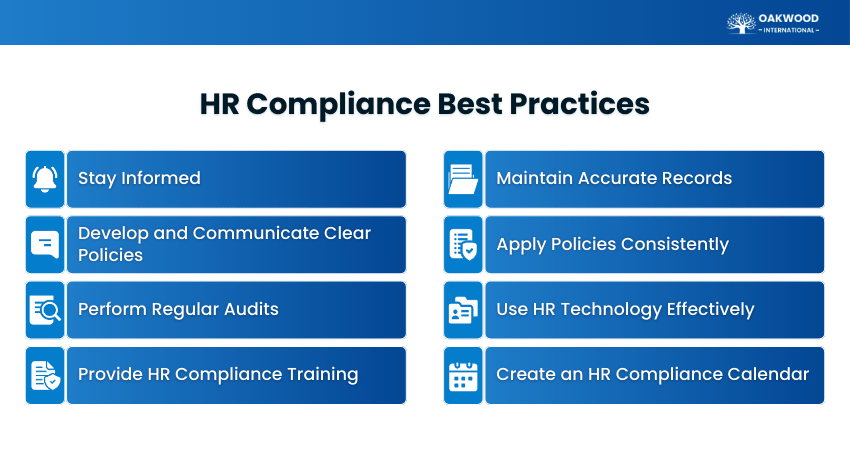
Staying HR compliant requires proactive planning and consistent review. Organisations must update policies, monitor practices, and educate employees to meet changing legal requirements. The following HR Compliance best practices support a strong, legally secure, and well-managed workplace:
1) Stay Informed
Employment laws and regulations frequently change at local, national, and international levels. HR professionals should regularly review legal updates, industry standards, and regulatory announcements. Staying informed ensures policies remain aligned with current requirements and helps prevent unintentional non-compliance.
2) Develop and Communicate Clear Policies
Organisations must establish clear, comprehensive HR policies that reflect legal standards and best practices. Policies should cover hiring, conduct, leave, safety, and disciplinary procedures. Communicating these clearly to employees ensures transparency and reduces misunderstandings or compliance violations.
3) Perform Regular Audits
Internal HR audits help identify compliance gaps before they become legal issues. Employers should review employee classifications, payroll practices, record-keeping, benefits administration, and workplace safety procedures. Regular audits strengthen accountability and demonstrate commitment to regulatory compliance.
4) Provide HR Compliance Training
Ongoing training ensures employees, managers, and HR staff understand relevant laws and company policies. Training should address anti-discrimination rules, wage regulations, safety standards, and reporting procedures. Educated employees are less likely to violate policies or create compliance risks.
5) Maintain Accurate Records
Accurate documentation is essential for demonstrating compliance during audits or disputes. Employers should maintain updated records related to payroll, benefits, employment contracts, safety incidents, and training completion. Proper documentation supports transparency and protects the organisation legally.
6) Apply Policies Consistently
Consistency is critical when enforcing HR policies. Disciplinary actions, leave approvals, and workplace investigations must follow standard procedures. Clearly written processes, proper documentation, and manager training help ensure policies are applied fairly and uniformly across the organisation.
7) Use HR Technology Effectively
HR technology can automate compliance tracking, payroll calculations, document storage, and reporting. Digital tools reduce manual errors, generate alerts for deadlines, and provide audit trails. Leveraging technology improves efficiency and strengthens overall compliance Management.
8) Create an HR Compliance Calendar
An HR Compliance calendar functions like a structured checklist for important deadlines. It tracks reporting requirements, training renewals, policy reviews, and document submissions. Linking key tasks, such as completing employment forms within required timelines, helps prevent costly penalties and missed obligations.
Conclusion
Understanding What is HR Compliance is essential for building a lawful, ethical, and well-managed workplace. By staying informed, applying policies consistently, and using effective systems, organisations can reduce legal risks and protect employees. Strong HR Compliance not only prevents penalties but also strengthens trust, transparency, and long-term business stability.
Learn essential employment law principles to protect your organisation and workforce. Join our
Employment Law Courses
now!
Frequently Ask Questions
How to Maintain HR Compliance in a Remote and Hybrid Work Environment?
HR Compliance in remote and hybrid environments can be maintained by updating remote work policies, tracking working hours accurately, and ensuring compliance with cross-border labour laws. Protect employee data with secure systems, provide virtual training, and document processes clearly to reduce legal and operational risks.
What is an HR Compliance Checklist?
An HR Compliance Checklist is a tool that helps organisations follow employment laws, regulations, and internal policies. It covers areas like payroll, tax filings, employee classification, benefits, documentation, and safety standards. Regular review helps track deadlines, identify gaps, and reduce legal risks.
What is Legal Compliance in HR?
Legal compliance in HR means following national, regional, and local employment laws and standards that govern the employer and employee relationship. It includes anti-discrimination laws, wage and hour regulations and data privacy standards to minimise legal risks and protect the organisation’s reputation.
Related Blogs
Didn’t Find What You’re Looking For?

Our commitment to excellence ensures an exceptional learning experience tailored to your professional development needs.


© Copyright 2026 - Oakwood International ™ - All rights reserved.


SUPER SALE
 Get Amazing Discounts
And Deals
Get Amazing Discounts
And Deals