

 Back
Back


 Back to Catagories


Table of Contents


 + 44 7452
122728
+ 44 7452
122728
 08-Sep-2026
Hailey Davis
A competitive salary may attract talent, but meaningful Compensation is what builds loyalty. Employees no longer look at salary alone when choosing where to work. They also value bonuses, benefits and career growth opportunities that make them feel motivated in the long term. This is where Payroll and Compensation become major parts of employee management.
Although both of them are closely connected, they serve different purposes within an organisation. Knowing how they differ can help businesses improve employee satisfaction, build employee trust and create a positive work culture. In this blog, we will explore Payroll vs Compensation, their key differences and the best ways organisations can manage both. Let's dive in!
What is Payroll?
Payroll is the process a business uses to calculate and pay employee salaries and wages. It includes managing employee earnings, tax deductions, bonuses and other financial payments. The main purpose of Payroll is to ensure employees are paid the correct amount on time and according to company policies and legal requirements.
Key Components of Payroll
Several elements work together to make Payroll Management effective and accurate. Below are the key components of Payroll:
1) Employee Information: Payroll systems store important employee details such as names, job roles, salary structure, tax information and bank account details to ensure accurate payments.
2) Salary and Wages: This includes fixed salaries, hourly wages, overtime payments and shift allowances calculated according to employee work records.
3) Tax Deductions: Employers deduct taxes, pension contributions and other statutory deductions before processing employee salaries.
4) Bonuses and Incentives: Additional earnings such as bonuses, commissions, rewards and incentives are included in Payroll calculations.
5) Payslip Generation: Payroll systems create payslips that provide employees with a breakdown of earnings, deductions and net salary received.
6) Attendance and Leave Tracking: Employee attendance, leave records and working hours are monitored to calculate accurate salary payments.
7) Compliance Management:
Payroll processes must follow employment laws, tax regulations and company policies to avoid legal or financial issues.

What is Compensation?
Compensation refers to the total rewards and benefits employees receive in return for their work and contributions to an organisation. It includes not only salary or wages but also bonuses, incentives, benefits, allowances and non-financial rewards provided by the employer. The non-financial benefits can include flexible working hours, recognition programmes, training opportunities and career growth support.
Different Types of Compensation
Compensation can be divided into several categories depending on the type of reward employees receive. Here are the most common types:
1) Direct Compensation
Direct compensation refers to the monetary payments employees receive for their work. Examples include:
a) Basic salary
b) Hourly wages
c) Overtime pays
d) Bonuses
e) Commission
2) Indirect Compensation
Indirect compensation includes additional benefits provided by employers beyond salary. These benefits may include:
a) Health insurance
b) Pension schemes
c) Paid holidays
d) Maternity and paternity leave
e) Gym memberships
3) Performance-Based Compensation
Some organisations reward employees based on performance or achievements. This may involve:
a) Annual bonuses
b) Profit-sharing schemes
c) Incentive programmes
d) Stock options
4) Non-monetary Compensation
Not all Compensation involves money. Employees also value recognition and work-life balance. Examples include:
a) Flexible working hours
b) Career development opportunities
c) Employee recognition programmes
d) Positive workplace culture
Build effective workforce strategies and drive business growth with
HR Strategy Training
– Register today!
Payroll and Compensation: Key Differences
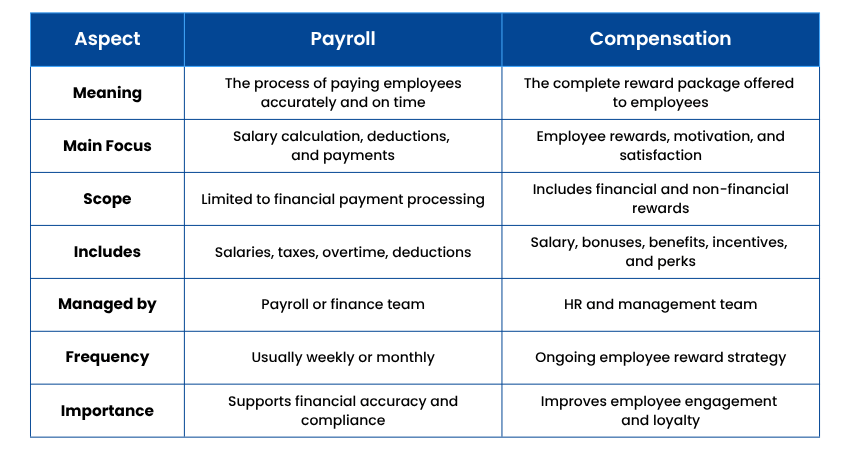
Even though Payroll and Compensation are closely connected, they are not the same. Payroll mainly focuses on processing employee salaries, while Compensation covers the complete range of rewards and benefits employees receive for their work. Let's check how Payroll vs Compensation works to motivate employees:
Best Ways to Manage Payroll and Compensation Together
Managing Payroll and Compensation together helps organisations maintain employee satisfaction and financial accuracy. A well-aligned approach ensures timely payments, fair compensation practices, and improved overall workforce management. Here are some effective ways businesses can align both functions:
1) Use Integrated HR and Payroll Software
Modern Human Resources (HR) systems combine Payroll and Compensation management into one platform. This reduces manual work, minimises errors and improves efficiency. These integrated systems can:
a) Automate salary calculations
b) Track bonuses and incentives
c) Generate payslips
d) Ensure tax compliance
2) Create Transparent Compensation Policies
Employees appreciate clarity regarding how salaries, bonuses, and benefits are determined. Transparent Compensation policies build trust and reduce confusion. To maintain that, businesses can clearly communicate:
a) Salary structures
b) Bonus criteria
c) Promotion policies
d) Benefit eligibility
e) Overtime payment rules
Develop the skills needed to create accurate HR budgets with
Human Resource Budgeting Training
– Sign up soon!
3) Conduct Regular Compensation Reviews
Employee expectations and market salaries change over time. Organisations should review and do proper calculating of Compensation packages to remain competitive. Regular reviews help businesses:
a) Retain skilled employees
b) Improve employee satisfaction
c) Reduce turnover
d) Stay aligned with industry standards
4) Maintain Accurate Employee Data
When you check the difference between Payroll and Compensation, both rely heavily on employee information. Incorrect records can lead to payment mistakes, tax issues, and employee dissatisfaction. To avoid this, businesses should regularly update:
a) Employee salaries and tax codes
b) Attendance records
c) Bank details
d) Benefit selections
Conclusion
Managing Payroll and Compensation properly helps create a supportive and positive work environment. Organisations that manage both are more likely to attract skilled talent, maintain employee motivation and create a supportive workspace. By understanding Payroll vs Compensation and balancing them properly, businesses can improve both employee well-being and overall organisational success.
Enhance your leadership and people management skills with HR Leadership Courses – Join now!
Frequently Ask Questions
What is an Example of Compensation?
An example of Compensation is a package that includes a basic salary, annual performance bonus, health insurance, pension contributions, and paid holidays. Compensation may also include non-financial rewards such as flexible working hours or professional development opportunities.
What are the Four Types of Payroll Systems?
The four types of Payroll systems are manual payroll, where calculations are done using spreadsheets or paper records; in-house payroll using software; outsourced payroll handled by external providers; and cloud-based payroll systems through cloud software that automate processes and provide easy, real-time access to Payroll information.
Does Compensation Mean CTC?
Compensation does not exactly mean CTC. CTC, or Cost to Company, refers to the total cost incurred by an employer for an employee, including salary, benefits, and allowances. Compensation is broader and may also include non-monetary rewards like recognition and career development opportunities.
Related Blogs
Didn’t Find What You’re Looking For?

Our commitment to excellence ensures an exceptional learning experience tailored to your professional development needs.


© Copyright 2026 - Oakwood International ™ - All rights reserved.


SUPER SALE
 Get Amazing Discounts
And Deals
Get Amazing Discounts
And Deals