

 Back
Back


 Back to Catagories


Table of Contents


 + 44 7452
122728
+ 44 7452
122728
 07-Sep-2026
Hailey Davis
Every workplace functions better when employees understand company expectations and businesses follow structured processes to manage daily operations. Without proper guidelines, organisations may face communication gaps, inconsistent decisions, compliance risks, and workplace conflicts. This is why well-defined HR Policies and Procedures are essential for maintaining a fair, organised, and professional work environment.
These policies and procedures help businesses manage employees effectively while maintaining consistency across operations. In this blog, you will learn about what are HR Policies and Procedures, why they are important, how businesses can create and implement them, and more. Let's begin!
What are HR Policies and Procedures?
HR Policies and Procedures are formal guidelines that explain how an organisation manages employees and workplace practices. They help businesses make clear decisions related to recruitment, attendance, employee conduct, workplace safety, and performance management while HR policy helps employees understand workplace expectations clearly.
Well-defined company HR Policies and Procedures support clear communication and create a fair, organised work environment. They establish workplace standards, reduce misunderstandings, and help businesses maintain a positive workplace culture.

Why are HR Policies and Procedures Important?
HR Policies and Procedures play an important role in creating a structured, fair, and productive workplace. They act as a foundation for consistent decision-making, clear communication, and effective people management across the organisation. Let's look at some key reasons why they are important for every business:
a) Clarify Employee Rights and Responsibilities: HR Policies and Procedures define the rights, responsibilities, and expectations of employees and employers. This helps ensure transparency and clear workplace standards across the organisation.
b) Guide Workplace Behaviour: An HR policy establishes standards for employee conduct, communication, and performance. They help maintain a respectful and professional work environment across the organisation.
c) Support a Positive Work Environment: Well-defined policies encourage fair treatment, better communication, and employee trust. This helps create a healthier and more supportive workplace culture.
d) Simplify Conflict Resolution: HR procedures provide a structured approach for handling workplace disputes and complaints. This helps businesses resolve issues fairly and consistently.
e) Ensure Legal Compliance: HR policies help organisations comply with labour laws and workplace regulations. This reduces legal risks and helps prevent policy violations.
f) Support Employee Development: HR policies provide clear guidelines for employee training, learning, and career growth. This helps employees improve their skills and progress professionally.
g) Promote Fair Compensation: Compensation policies help ensure salaries, benefits, and incentives are managed fairly and transparently across the organisation.
h) Improve Organisational Efficiency: Standardised HR procedures streamline daily operations and improve consistency in HR processes and decision-making.
i) Demonstrate Employee Commitment:
Effective HR policies show that a business values employee well-being, fairness, and workplace support, helping improve trust and employee satisfaction.
Key Policies and Procedures Every Business Should Have
Every business needs clear HR Policies and Procedures to maintain consistency, support employees, and ensure smooth workplace operations. Let's look at some key policies and procedures every business should have in place:
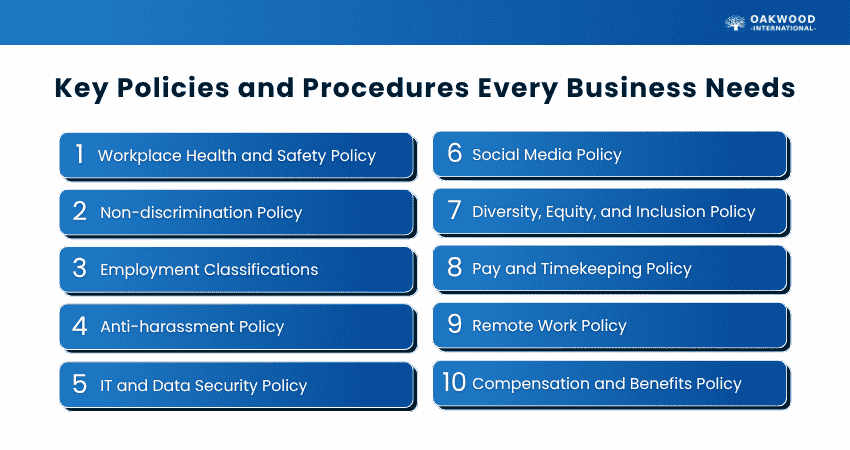
1) Workplace Health and Safety Policy
A health and safety policy helps businesses provide a safe working environment and reduce workplace risks. It outlines procedures for handling workplace incidents, maintaining safety standards, and ensuring employees understand health and safety responsibilities. A strong safety policy not only protects employees but also reduces operational disruptions and legal risks.
Key areas covered include:
a) Emergency response procedures
b) Near-miss reporting processes
c) Workplace safety facilities
d) Safety training for new employees
2) Non-discrimination Policy
A non-discrimination policy ensures all employees are treated fairly regardless of race, gender, age, religion, disability, or other protected characteristics. It promotes equality, supports workplace inclusion, and helps protect businesses from discrimination-related issues. This policy also supports diversity and helps build a respectful and inclusive organisational culture.
Key areas covered include:
a) Protected employee characteristics
b) Inclusive hiring practices
c) Fair promotion opportunities
d) Complaint handling procedures
3) Employment Classifications
This policy explains different employment types, such as full-time, part-time, casual, and contract roles. It helps employees understand their working terms, eligibility for benefits, overtime rules, and minimum work requirements. Clear classification policies reduce confusion and ensure fair treatment across different employment categories.
Key areas covered include:
a) Classification definitions
b) Benefit eligibility criteria
c) Minimum working hours
d) Overtime entitlements
4) Anti-harassment Policy
An anti-harassment policy helps create a respectful workplace by preventing bullying, harassment, and inappropriate behaviour. It explains how employees can raise concerns and how organisations address workplace complaints.
Key areas covered include:
a) Types of prohibited conduct
b) Confidential reporting channels
c) Investigation procedures
d) Employee protection measures
5) IT and Data Security Policy
This policy protects company systems, devices, and sensitive business information. It covers password management, data handling, acceptable technology use, and procedures for responding to cybersecurity threats or data breaches.
Key areas covered include:
a) Access control measures
b) Data encryption standards
c) Device usage guidelines
d) Cybersecurity incident response
Learn practical HR skills for workplace success with the
HR Course
– Sign up now!
6) Social Media Policy
A social media policy provides guidelines on responsible online behaviour when employees represent the company online. It helps protect business reputation, maintain confidentiality, and encourage professional communication on digital platforms. It ensures employees understand the impact of their online actions on the organisation's brand image.
Key areas covered include:
a) Acceptable online conduct
b) Confidential information protection
c) Brand representation standards
d) Disciplinary consequences for misuse
7) Diversity, Equity, and Inclusion (DEI) Policy
A DEI policy demonstrates a company's commitment to creating an inclusive and respectful workplace. It encourages equal opportunities, values diverse perspectives, and promotes fairness across all workplace practices.
Key areas covered include:
a) Diversity initiatives
b) Accessibility support measures
c) Inclusive communication practices
d) Workplace equality objectives
8) Pay and Timekeeping Policy
This policy explains payroll procedures, payment schedules, overtime rules, and methods for recording working hours. It helps employees understand pay-related processes and ensures accurate time tracking across the organisation.
Key areas covered include:
a) Payroll cutoff dates
b) Overtime approval procedures
c) Attendance recording methods
d) Bank holiday payment arrangements
9) Remote Work Policy
A remote working policy outlines the organisation's rules and expectations for employees working outside the office. It explains eligibility, communication requirements, productivity expectations, and any in-office attendance requirements. It helps maintain accountability, communication, and performance in flexible work environments.
Key areas covered include:
a) Eligible remote roles
b) Virtual communication expectations
c) Performance monitoring methods
d) Mandatory office attendance requirement
10) Compensation and Benefits Policy
This policy provides clear information about salaries, bonuses, insurance, leave benefits, and other employee perks. It helps ensure transparency, fairness, and consistency in compensation practices.
Key areas covered include:
a) Bonus and incentive structures
b) Health insurance coverage
c) Retirement benefit plans
d) Employee allowance details
Align HR goals with business success and build smarter HR strategies with the
HR Strategy Training
– Sign up now!
11) Drugs and Alcohol Policy
A drug and alcohol policy establishes workplace rules regarding substance use during working hours. It outlines prohibited behaviour, disciplinary actions, and support procedures related to substance misuse.
Key areas covered include:
a) Workplace substance restrictions
b) Drug testing requirements
c) Reporting procedures for violations
d) Employee assistance programmes
12) Data Protection Policy and Sample Template
A data protection policy explains how employee, customer, and business data is collected, stored, and protected. It helps organisations comply with data protection laws and reduce the risk of data breaches.
Key areas covered include:
a) Data storage procedures
b) Access permission controls
c) Third-party data sharing rules
d) Breach prevention practices
13) Equal Opportunity Policy
An equal opportunities policy ensures employees are treated fairly and protected from unfair discrimination. It supports workplace equality and promotes inclusive hiring and management practices.
Key areas covered include:
Recruitment equality standards
Fair career advancement practices
Bias prevention measures
Compliance with equality laws
14) Annual Leave and Holiday Policy
This policy explains employee holiday entitlements, leave approval processes, restricted leave periods, and rules regarding unused leave. It helps employees understand how to request and manage time off fairly.
Key areas covered include:
a) Holiday entitlement rules
b) Leave carry-forward conditions
c) Restricted business periods
d) Procedures for overlapping leave requests
15) Employee Discipline Policy
A disciplinary policy outlines the procedures for handling employee misconduct or policy violations. It explains workplace conduct expectations, disciplinary actions, and the steps involved in resolving behavioural issues fairly and consistently.
Key areas covered include:
a) Misconduct reporting procedures
b) Formal warning stages
c) Investigation and hearing processes
d) Employee appeal rights
Bring AI innovation into HR and lead smarter HR Management with the
Certified Artificial Intelligence (AI) For HR Managers Training
– Join now!
How to Write and Implement Effective HR Policies and Procedures?
Effective HR Policies and Procedures help businesses maintain consistency, improve communication, and support a fair work environment. Let's look at some important practices for writing and implementing effective HR Policies and Procedures below:
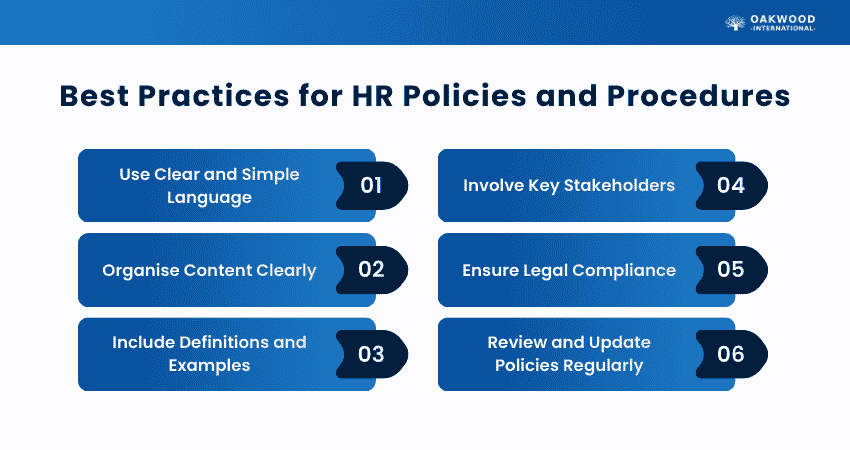
a) Use Clear and Simple Language: HR policies should be written in plain, easy-to-understand language without complex terms. Using clear and gender-neutral wording helps ensure employees can understand the policies correctly.
b) Organise Content Clearly: Well-structured HR policies are easier for employees to read and follow. Using headings, bullet points, numbered lists, and clear document names help employees quickly find important information.
c) Include Definitions and Examples: Defining important terms and providing practical examples can reduce confusion and improve understanding. Real-world examples help employees understand how policies apply in different workplace situations.
d) Involve Key Stakeholders: Businesses should involve managers, HR teams, and relevant stakeholders when creating policies. This helps ensure the policies are practical, relevant, and aligned with organisational goals.
e) Ensure Legal Compliance: HR policies should comply with local employment laws and workplace regulations. Regular legal reviews help businesses avoid compliance risks and keep policies updated with changing requirements.
f) Review and Update Policies Regularly:
HR Policies and Procedures should be reviewed regularly to ensure they remain accurate and effective. Updating policies based on organisational changes or legal updates helps maintain relevance and consistency.
Conclusion
HR Policies and Procedures form the foundation of a fair, organised, and productive workplace. They help businesses set clear expectations, maintain legal compliance, support employees, and improve daily operations. By implementing effective HR policies, organisations can strengthen workplace culture, build employee trust, and support long-term business success.
Lead people strategy with greater impact by joining the HR Leadership Courses now!
Frequently Ask Questions
What are the Main HR Policies in the UK?
Main HR policies in the UK protect employee rights and help businesses comply with employment laws. Legally required policies include Health and Safety, Disciplinary, and Grievance procedures, while many organisations also implement policies for annual leave, equality, family leave, and hybrid working.
What are the Seven Main Principles of HR?
The seven main principles of HR are:
a) Recruitment and Selection
b) Performance Management
c) Learning and Development
d) Succession Planning
e) Compensation and Benefits
f) HR Information Systems (HRIS)
g) HR Data and Analytics
What are the Four Pillars of HR?
The four pillars of HR are:
a) Talent Acquisition
b) Learning and Development
c) Performance Management
d) Rewards and Employee Experience
Related Blogs
Didn’t Find What You’re Looking For?

Our commitment to excellence ensures an exceptional learning experience tailored to your professional development needs.


© Copyright 2026 - Oakwood International ™ - All rights reserved.


SUPER SALE
 Get Amazing Discounts
And Deals
Get Amazing Discounts
And Deals