

 Back
Back


 Back to Catagories


Table of Contents


 + 44 7452
122728
+ 44 7452
122728
 21-Sep-2026
David Walter
Behind every successful business is a team of motivated employees, a strong workplace culture, and effective people management strategies. As workplaces continue to evolve, organisations are moving beyond traditional HR practices and focusing more on employee growth, skills, and long-term value. This makes Human Capital Management vs Human Resource Management an important discussion in modern workplaces.
Although Human Capital Management and Human Resource Management follow different approaches to employee management, both support organisational success. To explain this clearly, this blog explores their differences and similarities in detail. Read ahead to learn more!
What is Human Capital Management (HCM)?
Human Capital Management (HCM) is a strategic approach to managing employees by treating them as valuable business assets rather than administrative costs. It focuses on improving employee performance, development, engagement, and long-term workforce value. HCM also supports the complete employee lifecycle, from talent acquisition to retention and succession planning.
Key responsibilities include:
1) Workforce Acquisition: Attracting, recruiting, and onboarding processes for talented employees.
2) Workforce Management: Managing payroll, benefits, attendance, compliance, and workforce administration.
3) Workforce Optimisation: Supporting employee development through performance management, learning programmes, and career growth opportunities.

What is Human Resource Management (HRM)?
Human Resource Management (HRM) is the strategic process of recruiting, managing, and supporting an organisation’s workforce to improve employee performance and achieve business objectives. It focuses on maintaining smooth HR operations and creating an organised, productive, and compliant work environment.
Key responsibilities include:
1) Staffing and Recruitment: Managing hiring processes and selecting suitable candidates.
2) Training and Development: Supporting employee learning and skill improvement.
3) Compensation and Benefits: Managing payroll, incentives, and employee benefits.
4) Performance Management: Monitoring employee performance and providing feedback.
5) Employee Relations: Improving workplace communication, resolving conflicts, and ensuring alignment with employment laws and workplace policies.
HRM and HCM: Key Differences Explained
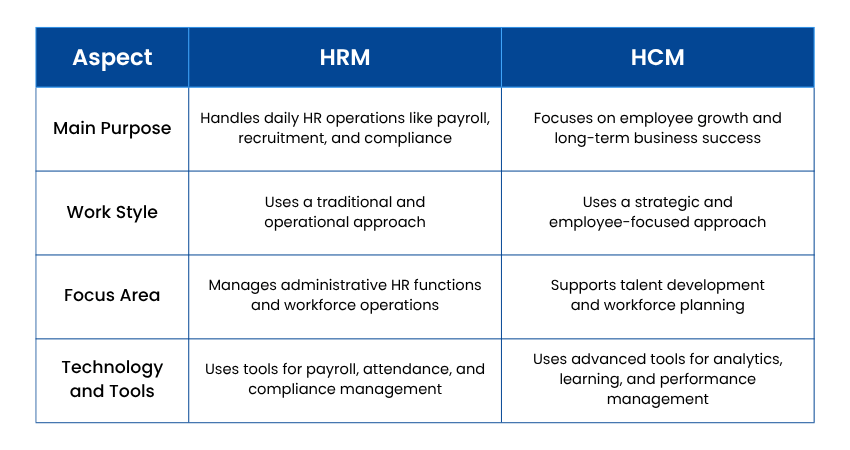
Although Human Capital Management and Human Resource Management both focus on employee management, their approaches differ. In Human Capital vs Human Resources, HRM handles daily HR operations, while HCM focuses on long-term workforce growth. Understanding these differences helps organisations choose the right approach:
1) Main Purpose
HRM mainly focuses on handling everyday employee management activities within an organisation. It supports recruitment, payroll, attendance, company policies, and compliance to ensure smooth workforce operations and maintain organisational stability across departments.
HCM focuses on improving employee value and supporting long-term business growth through workforce development. It helps organisations strengthen employee skills, leadership abilities, engagement, and overall productivity while aligning workforce strategies with business objectives.
2) Work Style and Method
HRM follows a traditional and operational approach that concentrates on managing routine HR responsibilities efficiently. It ensures employees follow organisational policies, workplace procedures, and compliance requirements while supporting day-to-day workforce administration activities.
HCM uses a strategic and employee-centred approach that focuses on continuous workforce improvement and talent growth. It encourages organisations to invest in employee learning, career development, and performance management to achieve long-term organisational success.
3) Primary Area of Focus
HRM primarily focuses on administrative HR functions that help organisations manage employees effectively and maintain operational efficiency. These functions usually include recruitment, payroll processing, attendance tracking, employee relations, and workplace compliance management.
HCM focuses more on employee development and strategic workforce planning to improve organisational performance. It supports talent management, succession planning, employee engagement, learning programmes, and leadership development to strengthen long-term business growth and workforce capabilities.
4) Technology and Tools
HRM systems mainly support basic HR operations by automating repetitive administrative tasks and improving workforce management efficiency. These systems commonly manage payroll, attendance records, employee databases, leave tracking, and compliance-related documentation processes.
HCM platforms provide advanced digital tools that help organisations improve workforce planning and employee performance management. These systems often include workforce analytics, learning platforms, AI-driven recruitment tools, employee engagement systems, and performance monitoring features.
Learn strategic employee management skills for stronger workplace performance with the CIPD Level 5 Associate Diploma in People Management – Register now!
Key Similarities Between HRM and HCM
Although Human Capital vs Human Resources involves different approaches, both focus on workforce management and organisational success. They help businesses improve productivity, employee management, and workplace efficiency. Understanding their similarities helps organisations use them more effectively:
1) Employee-focused Approach
Both HRM and HCM focus on supporting employees and creating a productive workplace environment within organisations. They help businesses improve employee satisfaction, strengthen communication, and maintain positive working relationships across different teams and departments.
Both approaches also encourage organisations to understand employee needs and improve workforce experiences effectively. By supporting employees properly, organisations can improve productivity, reduce employee turnover, and create a stronger organisational culture over time.
2) Use of Data and Insights
HRM and HCM both use employee data to enhance workforce management and support better organisational decision-making processes. Organisations use this information to monitor attendance, employee performance, workforce productivity, and overall employee engagement levels effectively.
These insights also help organisations identify workforce trends and improve planning strategies for future business growth. By analysing workforce data regularly, businesses can make informed decisions that support employee development and operational improvement initiatives.
3) Use of Automation
Modern HRM and HCM systems use automation tools to reduce manual tasks and improve operational efficiency significantly. Automation helps organisations manage payroll, attendance, employee communication, recruitment activities, and reporting processes more accurately and quickly.
Automation also helps HR teams save time and focus more on strategic workforce management activities. By reducing repetitive administrative work, organisations can improve productivity, minimise errors, and deliver better employee experiences across different business functions.
4) Compliance
Both HRM and HCM help organisations follow labour laws, workplace regulations, and internal company policies effectively. Maintaining compliance reduces legal risks, supports ethical business practices, and ensures organisations operate according to industry standards and requirements.
These systems also help organisations maintain accurate employee records and improve policy management processes efficiently. Strong compliance practices support workplace transparency, employee trust, and better organisational governance while reducing operational and legal challenges over time.
Learn practical HR skills for successful workplace and employee management with the CIPD Level 3 Certificate in People Practice – Join today!
When to Choose HRM vs HCM?
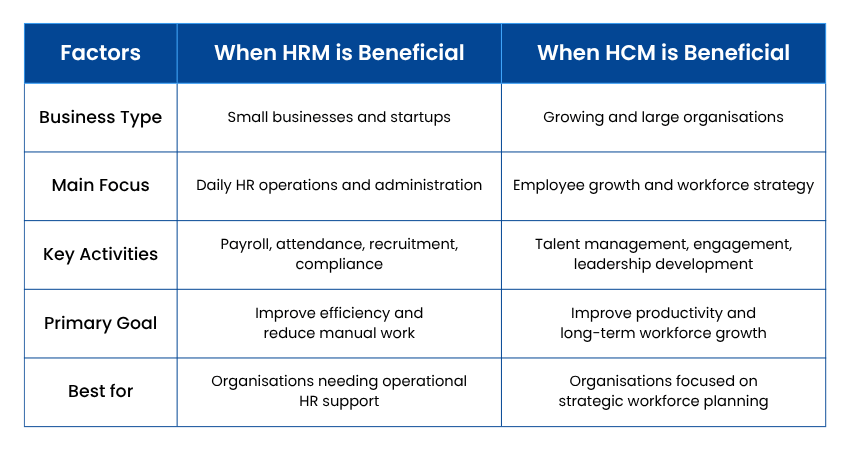
Choosing between HRM and HCM depends on an organisation’s goals and workforce needs. In Human Capital vs Human Resources, HRM focuses on daily operations, while HCM supports employee growth. Understanding Human Resource Management and Human Capital Management helps businesses choose the right approach:
When HRM is Beneficial
HRM is beneficial for organisations that need support with routine HR administration and operational workforce management. Small businesses and startup organisations often use HRM systems to automate tasks such as payroll, attendance tracking, employee records, recruitment, and compliance management.
HRM is also useful for organisations that want to improve efficiency, reduce manual work, and maintain compliance with labour laws. It helps businesses manage HR processes reliably while supporting smooth day-to-day organisational operations.
When HCM is Beneficial
HCM is beneficial for organisations that focus on employee growth, talent management, and long-term workforce planning. Businesses aiming to improve employee engagement, leadership development, and workforce productivity often benefit from adopting HCM strategies and technologies.
HCM is especially useful for growing organisations, multinational companies, and industries where skilled talent is highly competitive. It helps organisations develop employees strategically, improve retention, and align workforce capabilities with long-term business objectives.
Conclusion
Understanding Human Capital Management vs Human Resource Management can help organisations build stronger teams and achieve long-term success. While HRM keeps daily workforce operations running smoothly, HCM focuses on unlocking employee potential and future growth. Choosing the right approach can improve productivity, employee engagement, and overall business performance.
Strengthen employee management expertise through a globally recognised CIPD Qualification – Join today!
Frequently Ask Questions
What is the Highest Position in HR?
The highest position in HR is usually the Chief Human Resources Officer (CHRO) or Chief People Officer (CPO). These senior executives lead workforce planning, company culture, employee strategies, and HR operations while working closely with the Chief Executive Officer (CEO) to support business growth.
What is Another Name for HRMS?
Another name for the Human Resource Management System (HRMS) is the Human Resource Information System (HRIS). It is also sometimes referred to as Human Capital Management (HCM) software, as all these terms describe systems used to manage employee data, payroll, recruitment, and HR processes efficiently.
Is HR Replaced by AI?
AI will not completely replace HR, but it is transforming how HR teams operate. AI can automate routine tasks such as payroll, recruitment screening, and reporting. However, human skills such as empathy, conflict resolution, leadership, and workplace culture management still require human involvement.
Related Blogs
Didn’t Find What You’re Looking For?

Our commitment to excellence ensures an exceptional learning experience tailored to your professional development needs.


© Copyright 2026 - Oakwood International ™ - All rights reserved.


SUPER SALE
 Get Amazing Discounts
And Deals
Get Amazing Discounts
And Deals