

 Back
Back


 Back to Catagories


Table of Contents


 + 44 7452
122728
+ 44 7452
122728
 28-Jul-2026
James Smith
Is your organisation ready to balance employee expectations with increasing operational costs? As workplaces continue to evolve, businesses are facing high pressure to manage rising salaries, hiring expenses and employee wellbeing initiatives. This is your sign to implement Human Resources (HR) Budgeting.
It helps organisations allocate resources effectively, prepare for future workforce challenges and support long-term business growth. In this blog, we will explore what is HR Budgeting, why it is important and how to create it for better workforce planning. Let's get started!
What is an HR Budget?
A Human Resource (HR) Budget is a financial plan that outlines all expected costs related to managing and supporting employees within an organisation. It helps businesses estimate and control spending on recruitment, salaries, training, employee engagement, benefits, HR technology and workforce development.
Rather than focusing only on costs, modern HR Budgeting also measures the value HR initiatives bring to the business. Organisations increasingly view HR spending as an investment in productivity, innovation and employee satisfaction.

Why is HR Budgeting Important?
HR Budgeting is important because people are one of the largest and most valuable investments within any organisation. Here are the reasons why it is important:
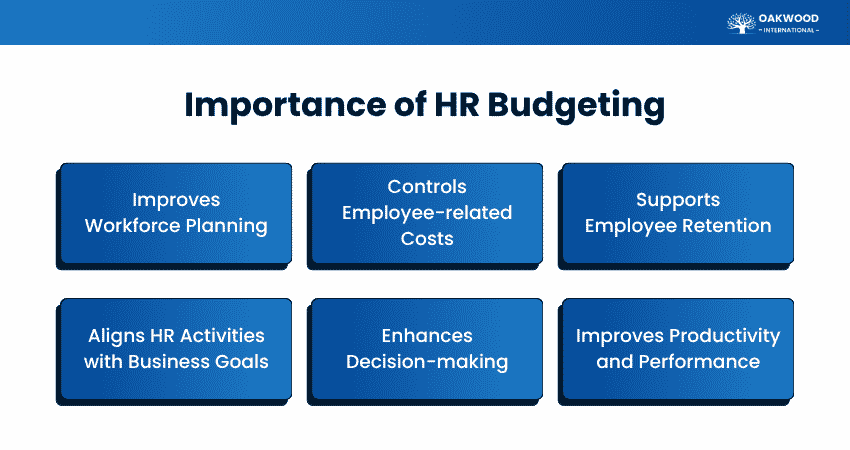
1) Improves Workforce Planning
HR Budgeting helps businesses plan future hiring needs, workforce expansion and skill requirements effectively. It ensures organisations have the right employees to support business growth.
2) Controls Employee-related Costs
A proper HR Budget helps companies manage expenses related to salaries, recruitment, training and employee benefits. This reduces unnecessary spending and improves financial stability.
3) Supports Employee Retention
Investing in employee development, wellbeing and engagement programmes through HR Budgeting helps businesses retain skilled employees and reduce turnover rates.
4) Aligns HR Activities with Business Goals
HR Budgeting ensures that hiring plans, training programmes and workforce strategies support the organisation’s overall objectives and long-term vision.
5) Enhances Decision-making
Using HR Budgets and workforce data allows businesses to make informed decisions regarding recruitment, compensation, employee development and resource allocation.
6) Improves Productivity and Performance
Proper investment in employees through training, technology and engagement initiatives can improve overall workforce productivity and business performance.
HR Budget Planning Process
Planning an HR Budget requires careful analysis, collaboration and forecasting. Below are the key steps involved in creating a successful HR Budget.
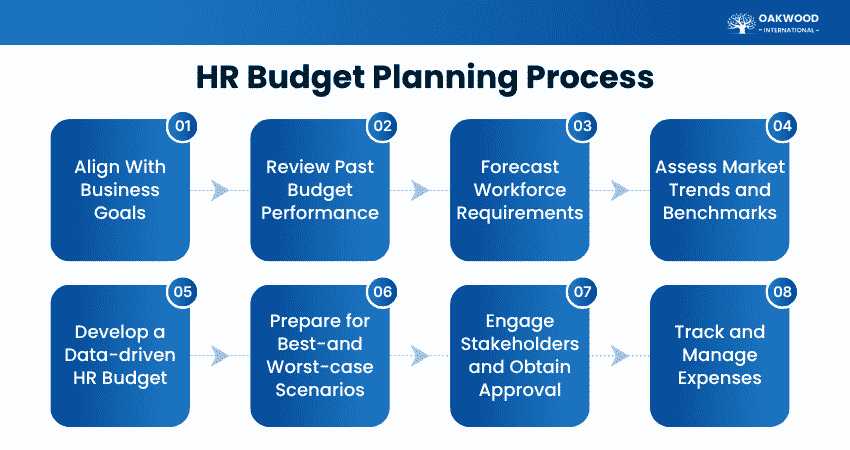
1) Align With Business Goals
The first step in HR Budgeting is understanding the organisation’s objectives. HR plans should support wider business priorities rather than operate independently. Questions to consider include:
a) Will the company expand or reduce its workforce?
b) Are new departments being created?
c) Will hybrid work policies continue?
d) Are there major retention challenges?
2) Review Past Budget Performance
Analysing previous HR budgets provides valuable insights into spending patterns, inefficiencies and areas requiring improvement. This review helps organisations understand which initiatives delivered strong returns and which areas exceeded or failed to meet expectations. Areas to review include:
a) Recruitment costs
b) Employee turnover rates
c) Training expenses
d) Benefit utilisation
e) Overtime spending
f) Technology investments
g) Budget variances
3) Forecast Workforce Requirements
Workforce forecasting is one of the most critical parts of HR Budgeting. Businesses must estimate future staffing needs based on projected growth, operational changes and market conditions. This includes forecasting:
a) New hires
b) Replacement hires
c) Temporary staff
d) Remote workers
e) Leadership positions
f) Contractor requirements
4) Assess Market Trends and Benchmarks
External market conditions can significantly influence HR Budgets. Businesses need to stay informed about trends that impact workforce costs and employee expectations. Important areas to monitor include:
a) Salary benchmarking
b) Inflation rates
c) Labour market conditions
d) Employee benefit trends
e) Industry hiring competition
f) Regulatory changes
5) Develop a Data-driven HR Budget
Modern HR Budgeting relies heavily on data and analytics rather than assumptions alone. Using workforce metrics improves budget accuracy and decision-making. It also helps HR teams to prioritise initiatives that provide measurable business outcomes. Useful HR metrics include:
a) Cost per hire
b) Employee turnover rate
c) Time-to-fill vacancies
d) Training Return on Investment (ROI)
e) Employee engagement scores
f) Productivity metrics
6) Prepare for Best-and Worst-case Scenarios
Business conditions can change quickly, making scenario planning essential for HR Budgeting. Organisations should prepare multiple budget scenarios, such as:
a) Best-case Scenario:
b) Business growth increases
c) Hiring targets are exceeded
d) Revenue improves
e) Worst-case Scenario:
f) Economic slowdown occurs
g) Hiring freezes are introduced
h) Workforce reductions become necessary
To tackle this situation, you can prepare contingency funds. They may be allocated for unexpected workforce expenses such as compliance updates, emergency hiring or restructuring initiatives.
7) Engage Stakeholders and Obtain Approval
HR Budgeting should involve collaboration across departments rather than being handled by HR alone. Engaging stakeholders in this improves transparency, aids quick budget approval and ensures budgets reflect actual business needs. Key stakeholders often include:
a) Finance teams
b) Department managers
c) Executive leadership
d) Operations leaders
e) Talent acquisition teams
8) Track and Manage Expenses
HR Budgeting does not end after approval. Ongoing monitoring is essential to ensure spending remains aligned with expectations. Monthly or quarterly budget reviews help organisations identify overspending early and make adjustments when necessary. HR teams need to regularly track:
a) Payroll expenses
b) Recruitment spending
c) Training budgets
d) Technology costs
e) Benefit usage
f) Employee engagement initiatives
Develop strong HR knowledge and leadership abilities with the
HR Course
– Register today!
Key Factors to Consider in an HR Budget
Creating an effective HR Budget requires more than estimating employee-related expenses. Businesses must consider several internal and external factors that directly impact their budget. Let's check those:
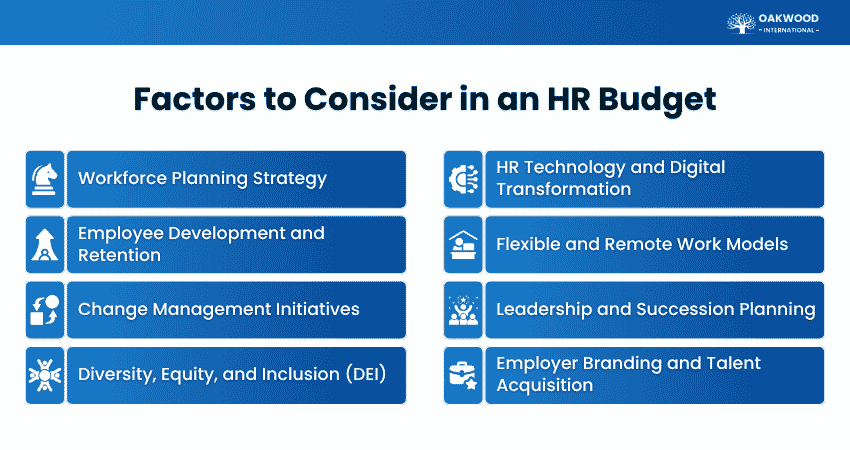
1) Workforce Planning Strategy
A workforce planning strategy helps businesses identify future hiring needs, skill gaps and staffing requirements. Thus, HR Budgets need to include costs related to recruitment, workforce expansion, succession planning and employee retention.
Proper workforce planning ensures organisations have the right employees to support future business goals while avoiding staffing shortages or unnecessary hiring expenses.
2) Employee Development and Retention
Employee development and retention are important factors in HR Budgeting because retaining skilled employees is more cost-effective than hiring new employees repeatedly. Businesses should allocate budgets for training programmes, leadership development, mentoring opportunities and employee engagement initiatives.
These investments help improve employee satisfaction, productivity and long-term retention. They also encourage employees to stay motivated and contribute to organisational success.
3) Change Management Initiatives
Businesses regularly experience organisational changes such as restructuring, digital transformation or process improvements. HR Budgets can include funding for communication programmes, employee training, coaching and transition support to help employees adapt to these changes.
Proper change management reduces workplace resistance and improves the success of new initiatives. It also helps employees adjust to changes smoothly with more confidence.
4) Diversity, Equity, and Inclusion (DEI)
Many organisations are increasing their focus on creating diverse and inclusive workplaces. HR Budgets should support DEI initiatives such as inclusive recruitment practices, diversity training, accessibility improvements and employee resource groups.
Strong DEI strategies help improve workplace culture, employee satisfaction and employer reputation. They also encourage innovation by creating a collaborative and supportive work environment.
5) HR Technology and Digital Transformation
HR Technology plays a major role in modern HR operations. Businesses should consider investing in HR management systems, payroll software, recruitment platforms, Learning Management Systems (LMS) and employee engagement tools.
Although these technologies may require significant investment initially, they can improve efficiency, automate HR processes and reduce long-term administrative costs.
6) Flexible and Remote Work Models
Hybrid and remote work models continue to shape workplace strategies. HR Budgets should include costs related to remote work equipment, collaboration software, cybersecurity tools and employee engagement activities for remote teams.
Supporting flexible work arrangements helps businesses improve employee satisfaction and maintain productivity. It also allows companies to hire talent from wider geographical locations.
7) Leadership and Succession Planning
Leadership development and succession planning are essential for long-term business stability. HR Budgets can allocate funds for leadership training, executive coaching and high-potential employee programmes.
Developing future leaders internally helps businesses reduce recruitment costs and maintain organisational continuity. It also makes it easier to handle future leadership transitions.
8) Employer Branding and Talent Acquisition
Competition for skilled employees remains high across many industries. HR Budgets should support employer branding activities such as recruitment marketing, careers website improvements, Social Media campaigns and candidate experience programmes.
A strong employer brand helps companies attract qualified candidates and improve hiring outcomes. It also builds employee trust and strengthens the company’s reputation in the job market.
Use workforce data effectively and make smarter business decisions with the
HR Analytics Course
– Sign up soon!
HR Budget Management Best Practices
Managing a proper HR Budget is important for controlling workforce expenses and supporting long-term business growth. Here are the best practices that you can follow:
a) Use Data for Budget Planning: Use HR analytics and workforce data to make accurate budgeting decisions and manage resources effectively.
b) Align HR Budget with Business Goals: Ensure HR Budgets support organisational objectives, workforce planning and long-term growth.
c) Review Budgets Regularly: Regular budget reviews help identify overspending and allow businesses to make timely adjustments.
d) Prioritise Employee Development: Allocate budgets for training, leadership development and employee engagement to improve retention and productivity.
e) Prepare for Unexpected Costs: Maintain contingency funds for emergency hiring, restructuring or other unexpected workforce expenses.
f) Invest in HR Technology: Use HR software and automation tools to improve efficiency and simplify HR operations.
g) Collaborate with Finance Teams: Work closely with finance and department managers to improve budgeting accuracy and resource allocation.
h) Monitor Return on Investment (ROI): Track HR initiatives regularly to measure their impact on employee performance and business growth.
i) Focus on Employee Wellbeing: Include wellness initiatives in HR Budgets to reduce burnout and improve employee satisfaction.
j) Maintain Budget Flexibility:
Keep HR Budgets flexible to adapt to changing workforce needs and business conditions.
Conclusion
HR Budgeting has become an important part of business planning. From hiring and employee development to technology investments and flexible work models, every HR decision can impact overall business performance. By following the right budgeting strategies and regularly reviewing workforce needs, organisations can create a stronger, more productive and future-ready workplace.
Enhance your ability to manage people, performance and workplace change with HR Leadership Courses – Join now!
Frequently Ask Questions
What are the Four Main HR Budgeting Methods?
The four primary types of HR Budgets are:
a) Incremental budgeting
b) Zero-based budgeting (ZBB)
c) Activity-based budgeting
d) Value proposition budgeting
How Does HR Budgeting Impact Business Growth?
HR Budgeting directly supports business growth by ensuring organisations can attract, develop and retain skilled employees. Proper budgeting improves workforce planning, employee engagement and operational efficiency. It also helps businesses prepare for expansion, manage labour costs effectively and adapt to changing market conditions.
What is the Difference Between an HR Budget and a Financial Budget?
An HR Budget focuses specifically on employee-related expenses such as recruitment, salaries, training, benefits and workforce development. A financial budget is broader and covers the organisation’s overall financial activities, including revenue forecasts, operational expenses, investments and cash flow management.
Related Blogs
Didn’t Find What You’re Looking For?

Our commitment to excellence ensures an exceptional learning experience tailored to your professional development needs.


© Copyright 2026 - Oakwood International ™ - All rights reserved.


SUPER SALE
 Get Amazing Discounts
And Deals
Get Amazing Discounts
And Deals