

 Back
Back


 Back to Catagories


Table of Contents


 + 44 7452
122728
+ 44 7452
122728
 24-Sep-2026
Maria Thompson
Imagine stepping into a busy office where the HR Manager juggles between a huge pile of paperwork and endless questions from the employees. Just as burnout looms, modern HR Tech swoops in! It works to automate tedious tasks, streamline data, and free HR professionals to focus on their core functions.
These solutions are not just the future but the foundation for long-term success. They help bring next-level efficiency, enable data-driven decisions, and create engaging workplaces. In this blog, we'll explore the importance of HR Tech, its diverse uses, and the hottest trends that will redefine HR dynamics for the foreseeable future.
Table of Contents
1) What is HR Technology?
2) Why is HR Technology Important?
3) Types of HR Technology
4) How to Implement HR Technology in Seven Steps?
5) What are the Benefits of HR Tech?
6) HR Technology Trends
7) Examples of HR Technology Across the Employee Life Cycle
8) Conclusion
What is HR Technology?
HR Technology (HR Tech) is a broad term for the hardware and software used for automating organisational HR functions. It helps HR professionals streamline time-consuming tasks by optimising their core functions. These include payroll, compensation, talent acquisition, HR Analytics, Performance Management, and benefits administration.
In recent years, HR Technology has evolved at a rapid pace. Large employers worldwide today are adopting core HR systems from big enterprise software companies like Oracle, Systems Applications and Products in Data Processing (SAP), and Workday, as well as from specialised HR Tech vendors.
Many organisations are shifting from traditional on-site systems to cloud-based solutions, including Software as a Service (SaaS) platforms used by both large enterprises and small to mid-sized businesses. They are also digitising their HR operations through SaaS tools or cloud-based HR outsourcing solutions.
Many of these companies are transforming from on-site systems to cloud-based solutions like Software as a Service (SaaS) and Small and Mid-size Businesses (SMBs). They are also digitising their HR functions, often using SaaS platforms or Cloud-based HR Tech outsourcing vendors.

Why is HR Technology Important?
HR Technology plays a vital role in modern organisations by streamlining various HR functions and improving overall efficiency. Here are some key reasons why HR Technology is important:

1) Streamlines Administrative Tasks: HR Technology enables routine administrative task automation, reducing the HR professionals' workloads and allowing them to focus on more strategic functions.
2) Enhances Recruitment Practices: With advanced talent acquisition tools, HR Tech helps improve the recruitment process. This makes it easier to find and hire the right candidates.
3) Increases Employee Engagement and Retention: By freeing up time for HR professionals, HR Technology enables them to focus on initiatives for employee engagement and retention boosting.
4) Improves Employee Response Time: HR Technology reduces the employee's time spent waiting for changes, updates, or requests responded to by HR. This leads to a more efficient and satisfying employee experience.
Revolutionise the realm of recruitment with our Certified AI for HR Managers Training – Sign up today!
Types of HR Technology
HR Tech companies come in various forms, each specialising in different aspects of Human Resources. Here are some types of HR Technologies:
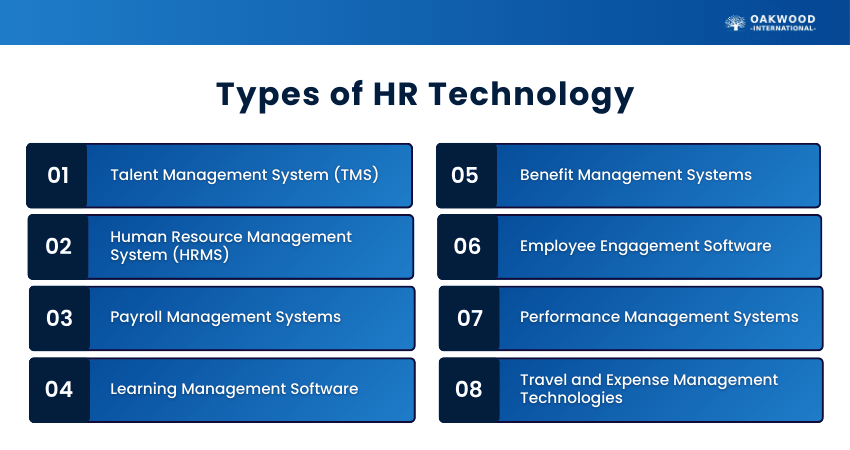
1) Talent Management System (TMS)
A Talent Management System (TMS) is an integrated software platform designed to support key Talent Management processes. These include recruitment, employee onboarding, Performance Management, learning and professional development, Compensation Management, and succession planning.
Typically, these processes are delivered through software modules. This allows businesses to begin with what they need and add more functionality as they grow. A TMS also helps align Human Resource Planning with business strategy by ensuring the organisation has the talent needed for current and future goals.
2) Human Resource Management System (HRMS)
In the past, HR departments were bogged down by paperwork and manual processes, which were extremely time-consuming. This leads to administrative overload, errors, and delays.
However, nowadays, modern HR leaders use Human Resource Management System (HRMS) platforms to manage their HR functions more efficiently and proactively. These platforms help HR professionals focus on the most important business (people) aspect.
3) Payroll Management Systems
Companies use Payroll Management systems to handle salaries, taxes, deductions, bonuses and allowances. These tools save time by automating tasks like calculating pay, creating payslips, tracking attendance and managing leave. They also reduce costs by removing the need for paper records.
Many systems automatically stay updated with statutory rules, helping businesses remain compliant. Because they are usually web-based, Managers can process payroll from anywhere, and employees can easily check their wages online.
4) Learning Management Software
Learning Management Software helps organisations create and manage online training materials for employees, thus ensuring they stay updated with industry trends and skills. These systems reduce training costs by supporting continuous online learning without the need for travel or physical sessions.
They improve employee satisfaction by allowing individuals to learn at their own pace and convenience. Additionally, these platforms streamline onboarding by giving new employees easy access to essential information from day one.
5) Benefit Management Systems
Benefit Management systems help organisations handle employee benefits such as retirement plans, paid time off, health insurance and parental or vacation leave. When the benefits are well-managed, companies are better positioned to attract talented employees. These systems save time by automating tasks like preparing benefit packages, entering data and responding to employee queries.
They also reduce errors that occur with manual data handling, provide remote access to benefits information for both staff and Managers, allow employers to track benefit enrolments in real time, and improve transparency by keeping all records in one central location.
6) Employee Engagement Software
Employee Engagement Software strengthens communication between organisations and their workforce. These tools gather employee feedback through surveys and polls, enable updates and announcements and foster collaboration through social features.
Many platforms include news feeds, online communities, onboarding resources, chat tools and recognition features. By improving communication, engagement software boosts retention, productivity and morale while helping employees feel more involved in the organisation's direction.
7) Performance Management Systems
Performance Management systems help organisations track and measure how well employees are performing. They make it easier to identify training needs by highlighting each employee's strengths and areas for improvement. These systems also support fair and transparent promotion decisions by showing who consistently delivers strong results and deserves career growth.
Additionally, Performance Management tools can boost staff morale by recognising high achievers and celebrating good work. They also help Managers assign tasks better by analysing performance data to understand each employee's strengths. Some systems even offer automatic task recommendations, making it simpler to match people to the roles where they can perform best.
8) Travel and Expense Management Technologies
When employees travel for work, they submit travel plans, track expenses and request reimbursements. Travel and Expense (T&E) Management Technologies automate this entire process.
T&E systems speed up reimbursement workflows, improve accuracy, manage corporate credit card data and ensure compliance with company travel policies. They also centralise all expense-related information for easier auditing and reporting.
Transform raw data into strategic insights – join our HR Analytics Course and lead your team with greater precision than ever!
How to Implement HR Technology in Seven Steps?
Here are the seven proven steps that will help you implement HR Technology flawlessly:
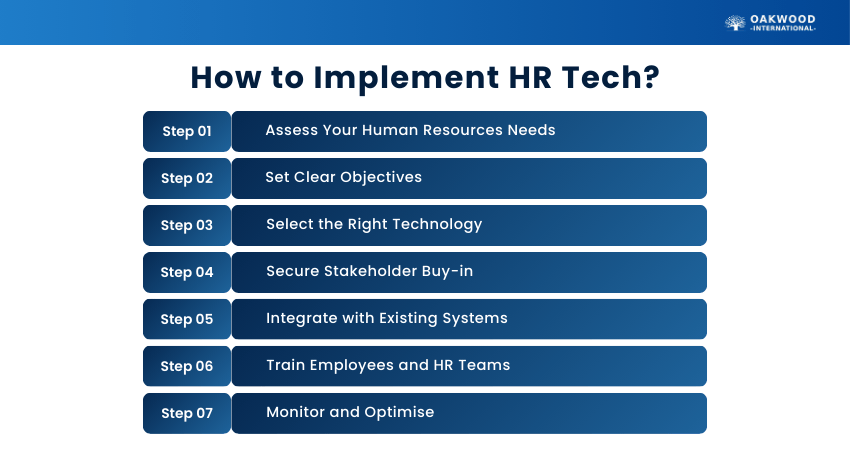
Step 1: Assess Your Human Resources Needs
Start by reviewing your current HR processes to spot pain points and inefficiencies. Gather input from HR teams, Managers and employees so you clearly understand their challenges. This helps you ensure that the HR Technology investment matches the organisation's real needs.
Step 2: Set Clear Objectives
Decide what you want HR Technology to help you achieve, such as automating payroll, improving hiring, boosting engagement or ensuring compliance. Clear goals make it easier to choose the right software and measure its success later on.
Step 3: Select the Right Technology
Explore different HR Tech options by comparing costs, features, ease of use, integrations and vendor reputation. Request demos, check reviews and make sure the system supports both current and future organisational needs.
Step 4: Secure Stakeholder Buy-in
Get support from leaders, HR staff and employees by explaining the benefits of the new system. Share a strong business case, address concerns and demonstrate how the technology will improve HR operations without disrupting operations.
Step 5: Integrate with Existing Systems
Make sure that the selected HR Technology works smoothly with your current tools and systems. This prevents data silos and supports a seamless workflow. Work with IT teams and vendors to maintain data security and reduce implementation issues.
Step 6: Train Employees and HR Teams
Provide detailed training so users feel confident with the new software. Offer resources, hands-on sessions and support. Address questions early to encourage strong adoption across the organisation.
Step 7: Monitor and Optimise
After implementation, regularly review system performance. Gather feedback, track key metrics and make necessary adjustments. Continuous optimisation ensures long-term value and maximises the impact of your HR Technology.
Bridge the gap between strategy and humanity and master the art of people-first leadership. Sign up for our HR Leadership Training now!
What are the Benefits of HR Tech?
HR Tech can streamline and optimise Human Resource operations in countless ways, leading to the following results:
1) Stronger Communication
HR Technology improves communication through integrated, Social-Media-style platforms.
Employees can access announcements, directories, updates and important company information.
It allows feedback sharing and completion of surveys on satisfaction or managerial effectiveness.
Clear, open communication helps employees feel valued and included.
This leads to stronger engagement and a more positive workplace culture.
2) Easier Compliance Management
HR compliance requires regular audits, monitoring law updates and adjusting internal policies.
It also involves creating channels for employees to report noncompliance.
HR Tech automates the payroll processing process and ensures accurate tax deductions.
It calculates correct pay based on hours worked, deductions and benefits.
HR Software tracks changes in tax laws and supports data security compliance.
It also promotes fair hiring by enforcing non-discriminatory practices.
3) Increased Efficiency and Accuracy
HR teams spend nearly 57% of their time on routine administrative tasks.
HR Technology automates activities like report generation, time and attendance tracking and onboarding.
Automation amplifies efficiency by reducing the time spent on admin work.
It also minimises errors in payroll, Benefits Management, employee Data Entry and compliance reporting.
4) Enhanced Learning and Development
1) Strong learning and development programmes sustain continuous employee growth and help retain top talent.
2) These programmes can include workshops, online training and on-demand learning modules.
3) HR Tech, such as Learning Management System (LMS) platforms, allows large-scale learning through custom course creation and personalised training.
4) HR teams can schedule sessions, assign courses, send reminders and track course completion.
5) Advanced LMS tools with Generative AI can even suggest development opportunities based on employees' existing skills.
5) Improved Data-driven Decision-making
1) HR Tech allows teams to analyse large amounts of data and uncover meaningful trends.
2) It helps create visual dashboards with clear, actionable insights instead of relying on assumptions.
3) Advanced analytics can:
a) Reduce biases in decision-making
b) Support strategic decisions that align HR initiatives with business goals
c) Improve workforce planning, Performance Management and succession planning
Develop advanced HR frameworks for organisational success – Join CIPD Level 7 Advanced Diploma in Strategic People Management Training today!
HR Technology Trends
As 2026 approaches, HR professionals are considering the top trends for their industrial reshaping. These HR leaders are driven by economic shifts, technological breakthroughs, and evolving workforce expectations to rethink their strategies. Here are the most pressing HR trends to watch out for:
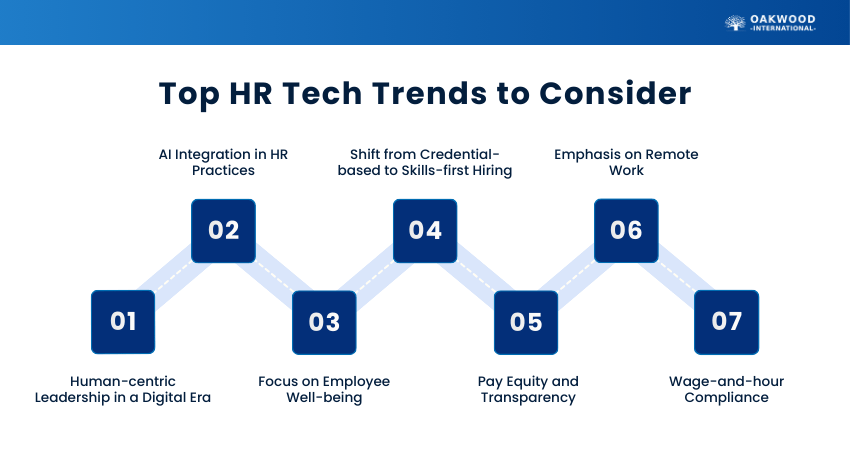
1) Human-centric Leadership in a Digital Era: Leadership development now focuses on empathy, emotional intelligence, and adaptability. The Role of Emotional Intelligence in Leadership is crucial, as it helps leaders understand and manage emotions, foster strong relationships, and make informed decisions. Organisations that prioritise these skills are more likely to excel in adapting to new opportunities and meeting strategic goals.
2) Integration of AI in HR Practices: Generative AI is transforming HR processes, from recruitment to employee engagement. AI in HR enables tools to automate tasks like resume screening and compliance monitoring, while AI in Recruitment specifically supports hiring activities such as candidate screening and selection.
3) Prioritising Employee Well-being: Employee well-being is becoming a central business priority. Programmes promoting physical, mental, and financial wellness are critical for productivity and burnout prevention.
4) The Rise of Skills-based Hiring: Organisations are moving on from credential-based hiring to a skills-first approach. This trend values practical experience and transferable skills over formal education, reducing mis-hires and improving job success.
5) Pay Equity and Transparency: Regulatory requirements and employee expectations are driving the focus on pay equity and transparency. Regular pay audits and transparent communication about pay structures can foster trust and strengthen employer-employee relationships.
6) The Shift Toward Geographically Dispersed Teams: Remote work is expanding talent pools beyond traditional geographic boundaries. Employers must implement tools and practices to maintain collaboration and ensure consistent employee experiences across multiple regions.
7) Wage-and-hour Compliance in a Dynamic Regulatory Landscape: Any change in wage-and-hour regulations can create new complexities for employers. Staying informed about regulatory updates and investing in compliance technology can mitigate risks and ensure fair treatment of employees.
Craft impactful strategies that drive organisational success – register for our HR Strategy Training.
Examples of HR Technology Across the Employee Life Cycle
Here are some examples of HR Tech solutions at work across the employee life cycle:
Example 1: Recruitment
Recruitment platforms streamline hiring by posting job ads, sourcing candidates and scheduling interviews.
They automate screening, reduce manual effort and help identify qualified candidates faster.
These tools enhance collaboration among hiring teams for quicker, more effective hiring decisions.
Example 2: Onboarding
Onboarding software automates and structures the onboarding process for new employees.
It organises documents, reduces errors and ensures compliance.
These tools help new hires settle in quickly and improve their early experience.
Example 3: Performance Management
Performance Management tools track individual, team and organisational productivity.
They enable real-time feedback, goal tracking and automated performance reviews.
These systems highlight skills gaps and support data-driven decisions to align efforts with organisational goals.
Example 4: Compensation and Benefits
Payroll systems automate salary calculations, tax deductions and labour law compliance.
They reduce administrative workload and ensure timely salary payments.
These tools centralise employee financial data, improve reporting and integrate with other HR systems for better decision-making.
Example 5: Employee Engagement
Engagement platforms improve communication, collect feedback and recognise employee achievements.
They monitor employee sentiment through surveys and polls.
Features like social feeds, collaboration tools and peer recognition programmes enhance morale, productivity and retention.
Example 6: Learning and Development (L&D)
L&D software provides digital tools for training, skill-building and knowledge sharing.
It includes personalised learning paths, on-demand courses and interactive content.
These systems monitor progress, identify skills gaps and support scalable, compliant training.
Example 7: Employee Exits
Offboarding tools automate exit tasks, documentation and system access removal.
They manage final payroll processing and support structured knowledge transfer.
Exit interviews capture feedback, helping improve future offboarding while protecting security and employer brand.
Conclusion
HR Technology has become essential for business success. By digitising administrative tasks and providing powerful analytics, HR Tech helps organisations better support their workforce. Furthermore, as digital solutions evolve, leaders need to stay agile and use these tools to boost Employee Engagement, ensure compliance, and stay competitive.
Strengthen leadership capabilities with the CIPD Level 5 Associate Diploma in People Management Course - Sign up today!
Frequently Ask Questions
What are HR Technology Tools?
HR Technology tools refer to those software solutions that help automate and improve HR tasks such as Performance Management, payroll, recruitment, and employee engagement and learning. They streamline processes, reduce manual work and support more profitable decision-making across the organisation.
What is an HR Tech Salary?
HR Tech salary refers to the earnings of professionals who work with HR Technologies, such as HRIS Analysts, HR Tech Specialists or HR Systems Managers. Salaries vary depending on skills, experience and location, but generally fall on the higher end. For example, an HR Systems Manager can earn an average yearly salary of £53K.
What Role Does AI Play in HR Practices?
AI helps:
1) Automate repetitive HR tasks
2) Improve hiring accuracy
3) Analyse employee data
4) Personalise learning
5) Screen CVs
6) Predict turnover risks
7) Enhance employee experiences
8) Ensure more data-driven HR operations
Related Blogs
Didn’t Find What You’re Looking For?

Our commitment to excellence ensures an exceptional learning experience tailored to your professional development needs.


© Copyright 2026 - Oakwood International ™ - All rights reserved.


SUPER SALE
 Get Amazing Discounts
And Deals
Get Amazing Discounts
And Deals