

 Back
Back


 Back to Catagories


Table of Contents


 + 44 7452
122728
+ 44 7452
122728
 08-Sep-2026
Maria Thompson
Behind every successful organisation is not just a strong strategy or cutting-edge technology, but a well-managed workforce driven by effective Human Resource leadership. An HR Manager plays a vital role in shaping workplace culture, hiring the right talent, and ensuring employees thrive. But what exactly does this role involve, and what does it take to succeed in it?
In this blog, you will explore everything related to the HR Manager Job Description you need to know from key responsibilities and essential skills to qualifications, experience, and career prospects helping you understand why this role is so critical in today’s dynamic business environment.
What Does an HR Manager Do?
An HR Manager plays a central role in managing an organisation’s most valuable asset its people. They are responsible for overseeing the entire employee lifecycle, from recruitment and onboarding to development, retention, and exit processes. Their primary objective is to ensure that employees are supported, motivated, and aligned with the organisation’s goals.
HR Managers act as a bridge between management and employees, ensuring smooth communication and resolving workplace concerns. They design policies, enforce compliance with labour laws, and create a positive workspace that promotes productivity and engagement.

Key Duties and Responsibilities of an HR Manager
HR Managers handle a wide range of responsibilities that contribute to organisational success. Their duties often include both strategic and operational tasks, ensuring that people-related processes run smoothly. The important responsibilities and duties of an HR Manager are mentioned below:
1) Recruitment And Talent Acquisition
HR Managers are responsible for attracting, screening, and hiring the right candidates for the organisation. They design job descriptions, manage interviews, and ensure the recruitment process is smooth and efficient. This helps build a strong and capable workforce.
2) Employee Onboarding and Training
They oversee the onboarding process to help new employees settle into their roles. HR Managers also organise training and development programmes to improve employee skills. This ensures continuous learning and growth within the organisation.
3) Performance Management
HR Managers monitor employee performance through appraisals and feedback systems. They set performance standards and help employees achieve their goals. This improves productivity and aligns individual performance with business objectives.
4) Training and Development
They organise training programmes to enhance employee skills and knowledge. HR Managers identify learning needs and provide development opportunities. This helps employees stay updated and contributes to overall organisational growth.
5) Employee Relations and Conflict Resolution
HR Managers handle employee concerns and resolve workplace conflicts. They act as a bridge between employees and management to maintain harmony. This helps form a positive and supportive workplace culture.
6) Maintaining Organisational Culture
They help shape and maintain a positive organisational culture by promoting company values and ethics. HR Managers encourage teamwork, inclusion, and open communication. This creates a supportive environment where employees feel valued and motivated.
Human Resources Manager Skills
To perform effectively, HR Managers must possess a combination of technical expertise and interpersonal abilities. These skills enable them to manage people, processes, and organisational challenges efficiently.
Hard Skills
a) Labour Law and Compliance Knowledge: A strong understanding of employment laws and regulations is essential to ensure organisational policies remain compliant and reduce legal risks.
b) Recruitment and HR Systems Expertise: Proficiency in recruitment tools, applicant tracking systems, and HR software enables efficient hiring processes and accurate management of employee data.
c) Performance Management Skills: The ability to use performance management systems helps in setting goals, evaluating employee performance, and driving continuous improvement.
d) Data Analysis and Reporting:
Interpreting HR metrics and generating reports supports data-driven decision-making and helps improve workforce strategies.
Soft Skills
a) Business and Management Skills: Strong leadership is essential, as you oversee the entire workforce. This requires initiative, organisation, and the ability to align daily operations with company goals to drive the best outcomes.
b) Interpersonal Skills: HR Managers must build strong relationships across all departments. You should be approachable and capable of handling confidential and sensitive matters with professionalism in one-to-one interactions.
c) Collaboration: Working closely with different teams is key. You need to integrate ideas into existing business frameworks, encourage teamwork, and often act as a mediator to maintain harmony within the organisation.
d) Communication: Clear and professional communication is vital. You must present data effectively and confidently negotiate the implementation of new policies and organisational changes.
Turn HR data into powerful business insights with our
HR Analytics Course
- Join now!
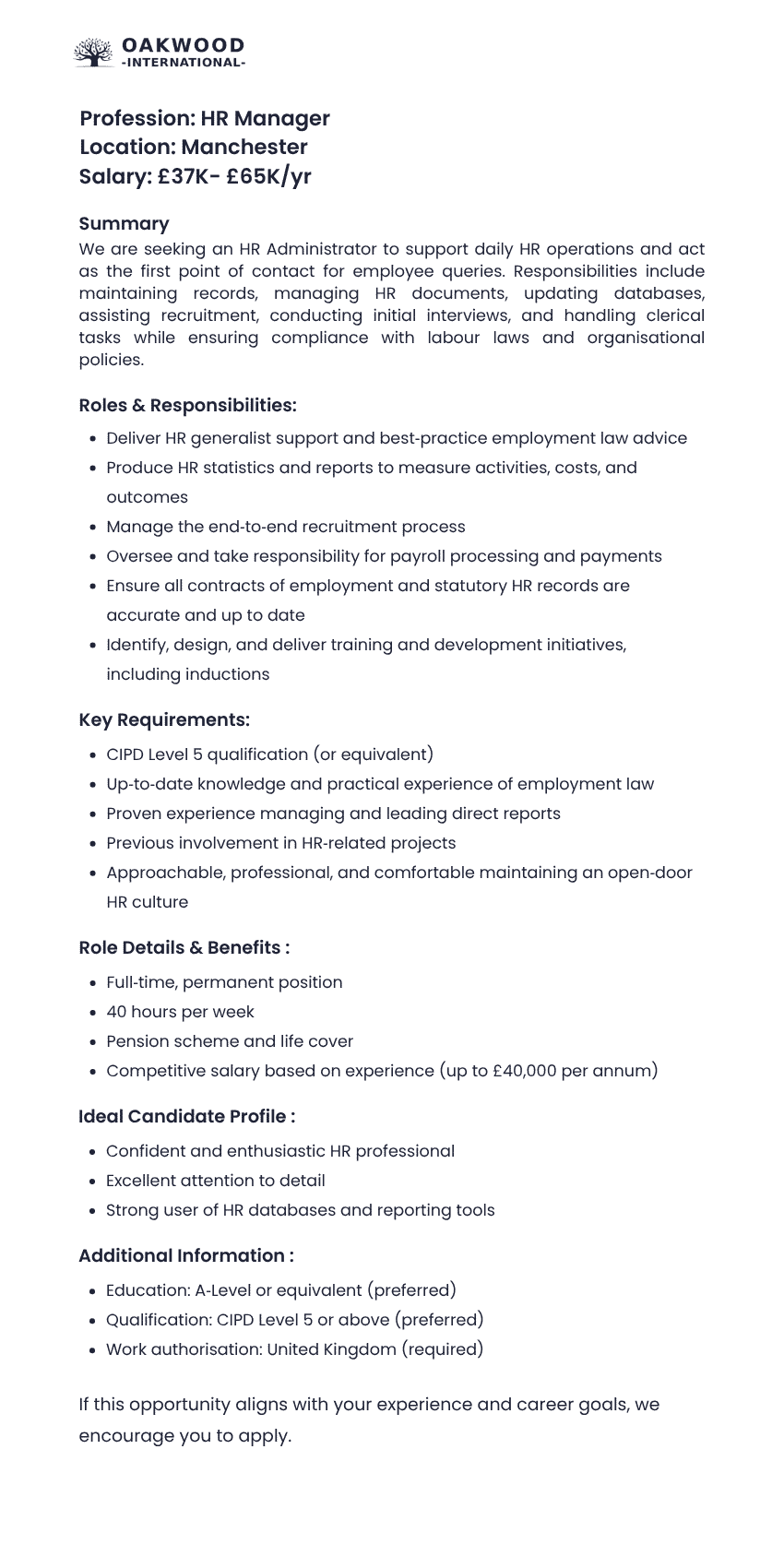
HR Manager Job Description Examples
Here are some of the examples of HR Manager Job Description:
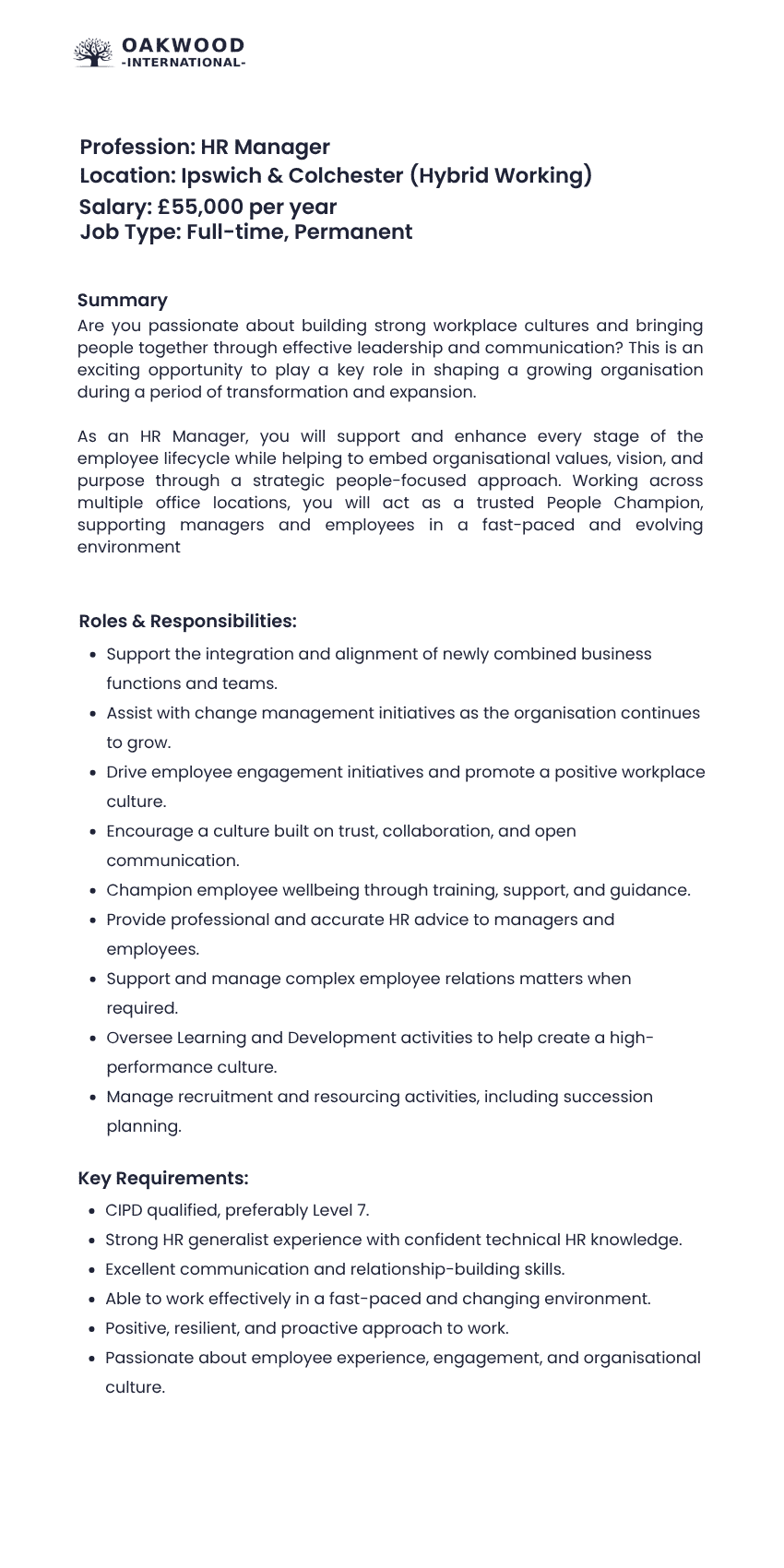
Now, let’s check one more example for the HR Manager Job Description:
HR Manager Qualifications Requirements
To become an HR Manager, individuals need a strong combination of academic qualifications, professional credentials, and practical knowledge. Employers typically look for candidates who not only meet educational requirements but also demonstrate a solid understanding of HR practices and evolving workplace trends. Let's check the qualification requirements for an HR Manager role:
1) Educational Background
a) Relevant Degree: A bachelor's degree in Human Resources, Business Administration, or a related field is typically required.
b) Advanced Qualifications:
Many organisations prefer candidates with a master’s degree in HR Management or an MBA with a Human Resources specialisation.
2) Professional Certifications
a) Boost Credibility: Certifications in HR practices, talent management, or employment law enhance professional standing.
b) Career Advancement: These qualifications demonstrate expertise and commitment, improving job prospects and growth opportunities.
c) Stay Updated:
Certifications like CIPD help professionals keep up with evolving industry trends and best practices.
3) Knowledge and Continuous Learning
a) Core HR Knowledge: A strong understanding of organisational behaviour, employment legislation, and HR policies is essential.
b) Adapt to Change: The HR field is constantly evolving with new technologies and workplace trends.
c) Lifelong Learning:
Continuous upskilling ensures HR Managers remain effective and competitive in their roles.
HR Manager Experience Requirements
Becoming an HR Manager requires a combination of practical experience, industry knowledge, and progressive responsibility within Human Resources roles. Employers typically look for candidates who have developed strong expertise through hands-on exposure and have demonstrated the ability to manage people, processes, and organisational challenges effectively. Below you will find the experience required to become an HR Manager:
1) Minimum Experience Required
Most companies prefer professionals who have gained practical experience in different HR functions before taking on a managerial position. Common expectations include:
a) Around three to five years of HR experience for mid-level HR Manager positions.
b) Approximately five to eight years of experience for roles in large organisations or specialised sectors.
c) Prior work experience in positions such as HR Executive, HR Coordinator, or HR Generalist.
Employers generally look for professionals who have a solid understanding of daily HR operations and employee management before progressing into leadership roles.
2) Leadership Experience
Since HR Managers supervise teams and support organisational decision-making, companies prefer candidates with leadership experience, including:
a) Managing HR teams
b) Coordinating with department heads
c) Handling confidential matters professionally
d) Leading organisational change initiatives
e) Supporting senior management decisions
3) Industry Exposure
a) Experience within specific industries (e.g., IT, finance, healthcare) can be advantageous.
b) It helps in understanding sector-specific challenges and workforce requirements.
4) Technical Experience
Modern HR roles often require familiarity with digital HR systems and tools such as:
a) HRMS software
b) Payroll systems
c) Recruitment platforms
d) Employee management tools
e) Data reporting and analytics software
Experience with HR technology can improve efficiency and decision-making.
5) Compliance and Labour Law Experience
Strong knowledge of employment legislation and compliance is essential. Employers often look for experience in:
a) Labour laws and statutory compliance
b) Employee relations and dispute resolution
c) Disciplinary processes and grievance handling
d) HR audits and regulatory documentation
What is the Expected Salary of an HR Manager?
HR Manager salaries vary based on experience, industry, location, and the size of the organisation. As a strategically important role, HR professionals are often offered competitive compensation packages, with higher salaries in high-demand sectors and senior positions.
Entry-Level HR Managers: Typically earn between £37K – £54K depending on skills and organisation size.
Mid-Level Professionals: For professionals with approximately 7-9 years of experience, salaries increase and range around £51K - £59K/yr significantly as responsibilities expand.
Senior HR Managers/HR Directors: With around 10–14 years of experience, salaries can range from £93K - £141K per year.
Industry & Location Impact: Sectors like IT, finance, and consulting, as well as regions with high demand, often offer higher salary packages.
Overall, HR management is a rewarding career path with strong earning potential and growth opportunities.
Conclusion
HR Managers play a prominent role in shaping an organisation’s workforce and culture. By combining technical expertise with interpersonal skills, they help organisations operate efficiently while supporting employee growth and wellbeing. As businesses grow, the role of HR Managers has become increasingly important to drive organisational success. For professionals interested in a dynamic and rewarding career, the HR Manager Job Description offers excellent opportunities for growth and development.
Master HR management and lead with impact through Certified HR Manager Training - Register now!
Frequently Ask Questions
What are the Seven Main Principles of HR?
The seven main principles of HR include:
a) Fairness
b) Transparency
c) Diversity and inclusion
d) Compliance
e) Confidentiality
f) Employee development
g) Organisational alignment
These principles ensure ethical practices, build trust, support employee growth, and align workforce management with overall business objectives.
What Personality is Best For HR?
The best personality for HR is being empathetic, approachable, and people-oriented. Strong communication, emotional intelligence, and problem-solving skills are also essential. An HR professional should be fair, adaptable, and discreet, with the ability to handle sensitive situations while maintaining professionalism and building trust.
Is HR Manager a Stressful Job?
No, an HR Manager role is not necessarily stressful, but it can be fast-paced and responsibility-driven at times. With strong communication and problem-solving skills, HR Managers can handle workplace challenges effectively while enjoying a rewarding career focused on employee wellbeing and organisational growth.
Related Blogs
Didn’t Find What You’re Looking For?

Our commitment to excellence ensures an exceptional learning experience tailored to your professional development needs.


© Copyright 2026 - Oakwood International ™ - All rights reserved.


SUPER SALE
 Get Amazing Discounts
And Deals
Get Amazing Discounts
And Deals