

 Back
Back


 Back to Catagories


Table of Contents


 + 44 7452
122728
+ 44 7452
122728
 07-Sep-2026
Grace Mitchell
Have you ever picked a brand because it uses less plastic, supports fair wages, or speaks openly about its values? Maybe you have seen companies switching to paper straws, using renewable energy, or promoting workplace diversity. These everyday choices show how businesses are being judged beyond just their products.
This is where ESG Performance comes in. It helps organisations measure how they impact the environment, treat people, and follow ethical practices. In this blog, you will explore what it means, its benefits, and how businesses improve it in real-world situations. Read on to learn how it drives sustainable success!
What is ESG Performance?
ESG Performance refers to how well an organisation manages Environmental, Social, and Governance factors. It evaluates a company's impact on sustainability, ethical practices, and internal controls, helping stakeholders understand long-term value, risk exposure, and responsible business behaviour.
Businesses today use ESG Performance as a framework to align operations with sustainability goals. It provides measurable insights into environmental impact, social responsibility, and governance practices, ensuring organisations remain accountable, transparent, and aligned with global expectations.

Importance of ESG Performance
ESG Performance plays a crucial role in modern business strategy by promoting responsible growth. It helps organisations identify risks, improve compliance, and strengthen trust among investors, customers, and employees while supporting sustainable decision-making across all business functions.
Organisations with strong ESG Performance often gain competitive advantages. They attract investors, enhance brand reputation, and ensure long-term resilience. By integrating ESG into operations, businesses can adapt to regulatory changes and evolving stakeholder expectations effectively.
Key Metrics and KPIs to Measure an ESG Performance
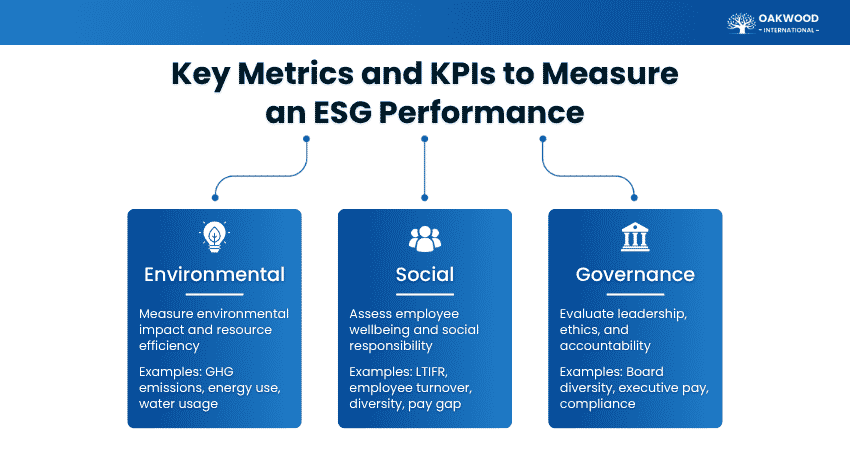
ESG Performance is measured using structured metrics and Key Performance Indicators (KPIs) across environmental, social, and governance areas. These indicators help organisations track impact, ensure compliance, and improve transparency. Below are the key ESG metrics used to evaluate performance:
1) Environmental KPIs
Environmental KPIs measure a company's impact on the natural environment. Key metrics include Greenhouse Gas (GHG) emissions across Scope 1, 2, and 3, along with energy and water consumption and waste management practices.
Indicators such as carbon intensity and renewable energy usage help organisations track efficiency and reduce environmental impact. These KPIs support sustainability goals, improve resource management, and ensure compliance with environmental regulations and global ESG standards.
2) Social KPIs
Social KPIs assess how organisations manage relationships with employees and communities. Metrics include Lost Time Injury Frequency Rate (LTIFR) for safety, employee turnover, diversity, and pay equality indicators such as the gender pay gap.
These KPIs reflect workforce wellbeing, inclusion, and ethical labour practices. They help organisations improve employee engagement, promote fairness, and build stronger relationships with stakeholders and the wider community.
3) Governance KPIs
Governance KPIs evaluate how a company is managed and controlled. Key indicators include board structure, diversity, executive compensation linked to ESG goals, and ethical compliance measures such as anti-corruption policies.
Metrics related to data security, including cybersecurity incidents and breaches, also play a key role. These KPIs ensure transparency, accountability, and effective leadership, helping organisations maintain trust and strong governance standards.
Learn HR analytics skills to predict trends and improve decisions with the
HR Analytics Course
– Join now!
How to Measure ESG Performance?
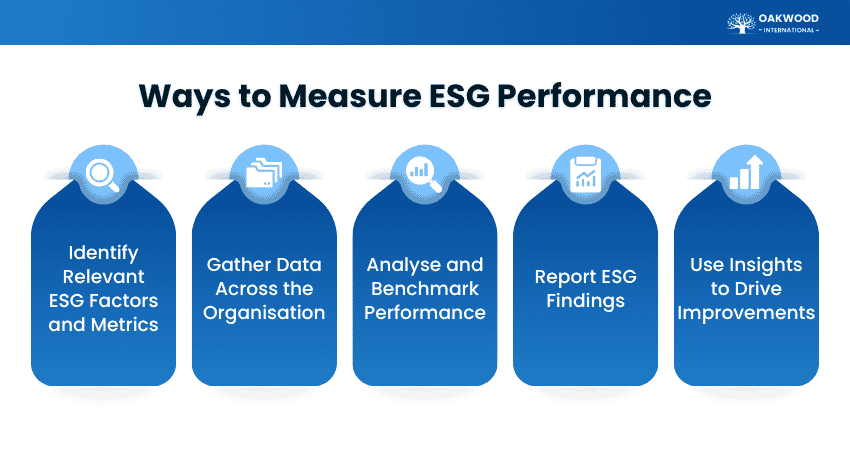
Measuring ESG Performance involves collecting, analysing, and reporting data to manage risks and track sustainability efforts effectively. Audits and continuous monitoring ensure accuracy and improvement. To apply this effectively, organisations can follow these key steps:
1) Identify Relevant ESG Factors and Metrics
The first step in measuring ESG Performance is identifying relevant factors and metrics aligned with organisational goals. Businesses must consider industry-specific risks, stakeholder expectations, and regulatory requirements to select meaningful ESG indicators for evaluation.
Selecting appropriate metrics ensures accurate tracking and reporting. Organisations should prioritise factors that directly impact operations, such as emissions, workforce diversity, and governance policies, to build a strong foundation for ESG measurement and improvement.
2) Gather Data Across the Organisation
Data collection is essential for evaluating ESG Performance accurately. Organisations must gather reliable information from various departments, including operations, HR, finance, and compliance, ensuring a comprehensive view of ESG-related activities and outcomes.
Effective data collection requires structured systems and tools. Businesses should standardise data processes, ensure accuracy, and maintain consistency across departments to create a reliable dataset that supports meaningful ESG analysis and reporting.
3) Analyse and Benchmark Performance
Analysing ESG data helps organisations understand performance trends and identify areas for improvement. Benchmarking against industry standards or competitors provides valuable insights into how well the organisation is performing relative to others.
Through analysis and benchmarking, businesses can identify gaps and opportunities. This process enables organisations to refine strategies, improve sustainability practices, and align ESG initiatives with broader business goals and industry expectations.
4) Report ESG Findings
Reporting ESG findings ensures transparency and accountability. Organisations must communicate their ESG Performance through structured reports, highlighting key metrics, achievements, and areas requiring improvement for stakeholders and regulatory bodies.
Clear and consistent reporting builds trust among investors and customers. It demonstrates commitment to sustainability while helping organisations comply with regulatory requirements and maintain credibility in the market.
5) Use Insights to Drive Improvements
The final step in ESG measurement is using insights to enhance performance. Organisations should leverage data findings to implement improvements, optimise processes, and address gaps identified during analysis and reporting stages.
Continuous improvement is essential for long-term ESG success. By acting on insights, businesses can strengthen sustainability strategies, improve operational efficiency, and ensure alignment with evolving ESG standards and stakeholder expectations.
Gain essential HR knowledge to support business success from day one with our
HR Course
– Register now!
What are the Benefits of ESG Performance for Business?
Strong ESG Performance provides a wide range of strategic and operational advantages for businesses. It not only improves sustainability efforts but also strengthens overall business performance. Key benefits include:
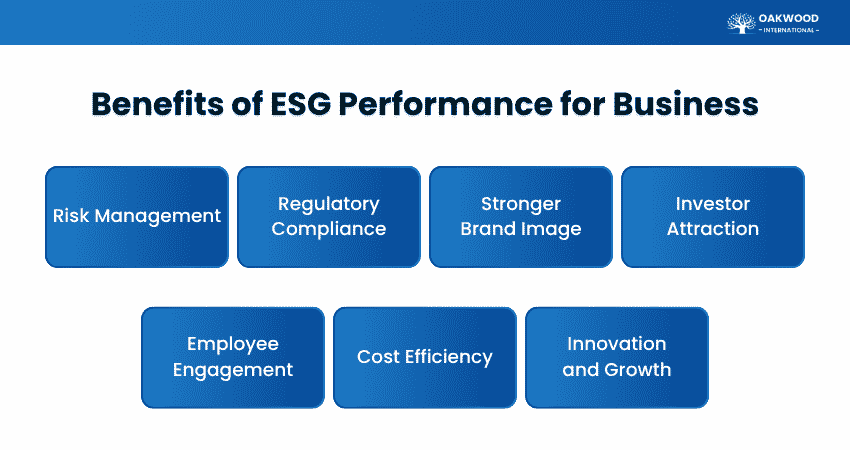
1) Risk Management: Helps identify and minimise regulatory, financial, and reputational risks, improving overall business resilience.
2) Regulatory Compliance: Supports adherence to evolving ESG regulations, reducing the risk of penalties and enhancing credibility.
3) Stronger Brand Image: Builds a responsible and trustworthy image, improving customer perception and market positioning.
4) Investor Attraction: Increases access to capital by appealing to investors concentrated on sustainable and responsible businesses.
5) Employee Engagement: Attracts and retains talent by aligning organisational values with employee expectations.
6) Cost Efficiency: Lowers operational costs through better resource use, energy efficiency, and waste reduction.
7) Innovation and Growth:
Drives sustainable innovation, helping organisations stay competitive and achieve long-term growth.
Key Challenges in ESG Performance
Although ESG Performance offers clear benefits, organisations often face several obstacles when implementing and measuring it effectively. These challenges can affect data accuracy, reporting consistency, and overall impact. Key challenges include:
1) Data Availability and Quality: Collecting reliable ESG data can be difficult, as information is often scattered across departments and relies on manual processes, increasing the risk of errors.
2) Lack of Standardised Frameworks: The absence of a single global standard means organisations must navigate multiple frameworks like GRI and SASB, leading to inconsistencies in reporting.
3) Subjectivity in Metrics: Many ESG factors, especially social aspects, are difficult to measure, making performance evaluation less precise compared to financial data.
4) Regulatory and Compliance Challenges: Evolving regulations and guidelines require organisations to continuously adapt, creating complexity and uncertainty in reporting.
5) Greenwashing Risks: Pressure to demonstrate positive ESG results can lead to overstated or misleading claims, affecting credibility and stakeholder trust.
6) Supply Chain Complexity: Managing ESG data across large and global supply chains is challenging due to limited visibility and varying standards among partners.
Build practical HR budgeting skills for smarter financial decision-making with our
Human Resource Budgeting Training
– Join now!
Ways to Enhance ESG Performance in Organisations
Improving ESG Performance requires embedding sustainability into core business practices, supported by strong governance, reliable data, and clear reporting. Organisations should focus on practical, high-impact strategies to drive measurable and long-term improvements. Key approaches include:
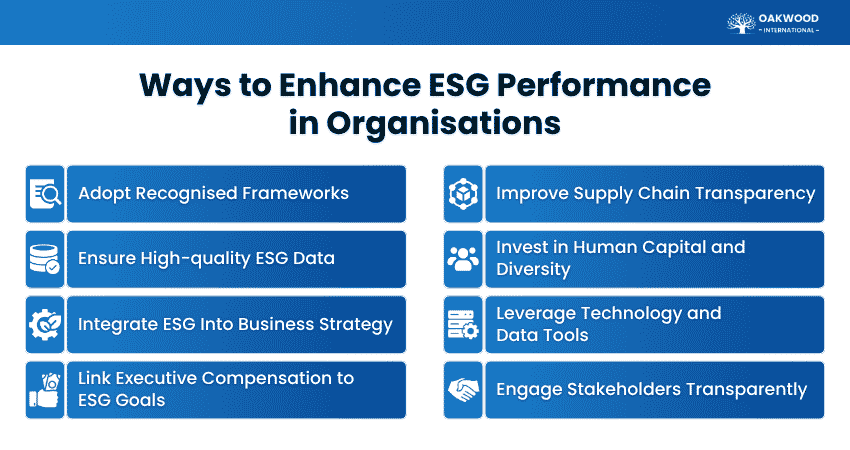
1) Adopt Recognised Frameworks: Use standards like Global Reporting Initiative, Sustainability Accounting Standards Board, and Task Force on Climate-related Financial Disclosures for consistent and credible reporting.
2) Ensure High-quality ESG Data: Build accurate, auditable, and investment-grade data systems aligned with financial reporting to enhance transparency.
3) Integrate ESG Into Business Strategy: Embed ESG into core operations by identifying key risks and opportunities that impact long-term value.
4) Link Executive Compensation to ESG Goals: Align leadership incentives with ESG targets to ensure accountability and strategic focus.
5) Improve Supply Chain Transparency: Monitor ESG risks across the supply chain to ensure ethical sourcing and better sustainability outcomes.
6) Invest in Human Capital and Diversity: Promote inclusion and provide ESG training to build a skilled and engaged workforce.
7) Leverage Technology and Data Tools: Use digital solutions to automate data collection, improve accuracy, and streamline reporting processes.
8) Engage Stakeholders Transparently:
Communicate ESG progress clearly and involve stakeholders to strengthen trust and alignment.
Conclusion
ESG Performance is no longer optional but a key driver of long-term success. By measuring, improving, and embedding ESG into core strategies, organisations can build trust, reduce risks, and create lasting value. A strong ESG approach not only supports sustainability but also strengthens competitiveness in an evolving business landscape.
Step into HR leadership roles with clarity and impact through the HR Leadership Courses – Join today!
Frequently Ask Questions
What are the Goals of ESG Performance?
ESG goals focus on managing sustainability risks, reducing environmental impact, promoting social responsibility, and ensuring ethical governance. They help organisations build trust, enhance reputation, attract investors, and support long-term sustainable growth.
Does ESG Performance Affect Financial Performance?
Yes, ESG Performance can improve financial results by attracting investors, reducing risks, and boosting efficiency. It also strengthens reputation and trust, leading to higher revenue, lower costs, and better long-term profitability.
What are the Four Major ESG Standards?
The four major ESG Standards are:
1) Global Reporting Initiative (GRI)
2) Sustainability Accounting Standards Board (SASB)
3) Task Force on Climate-related Financial Disclosures (TCFD)
4) International Integrated Reporting Council (IIRC)
Related Blogs
Didn’t Find What You’re Looking For?

Our commitment to excellence ensures an exceptional learning experience tailored to your professional development needs.


© Copyright 2026 - Oakwood International ™ - All rights reserved.


SUPER SALE
 Get Amazing Discounts
And Deals
Get Amazing Discounts
And Deals