

 Back
Back


 Back to Catagories


Table of Contents


 + 44 7452
122728
+ 44 7452
122728
 15-Oct-2026
Veronica Davis
In a world where the right talent is scarce, AI is becoming a recruiter's secret weapon. Recruiters often struggle to find suitable candidates quickly while ensuring they make the right hiring choices. Artificial Intelligence (AI) helps them overcome these challenges. From screening CVs and scheduling interviews to enhancing candidate communication, AI allows recruiters to focus more on strategic aspects of hiring.
In this blog, we will explore what is AI in Recruitment, why it matters, its benefits and how organisations can use it to hire smarter. Let's get started!
What is AI in Recruitment?
AI in Recruitment refers to the use of Artificial Intelligence (AI) technologies to support and improve various stages of the hiring process. This means that AI can be used for tasks such as candidate sourcing, CV screening, interview scheduling, candidate communication and recruitment analytics. Rather than replacing recruiters, AI acts as a powerful assistant that helps them work more efficiently.
AI systems use technologies such as Machine Learning (ML), Natural Language Processing (NLP), predictive analytics and automation to streamline recruitment activities. They analyse large amounts of recruitment data, recognise patterns and assist recruiters in making informed decisions.

Why is AI in Recruitment Important?
Recruitment teams today face increasing pressure to hire qualified candidates quickly while maintaining a positive candidate experience. At the same time, organisations receive hundreds or even thousands of applications for a single role.
Manual recruitment processes can lead to delays, inconsistent assessments and missed opportunities to identify top talent. AI helps address these challenges by improving efficiency and providing data-driven support throughout the hiring journey. Because of this, AI has become a significant advantage in attracting and selecting the best candidates.
Benefits of Artificial Intelligence in Recruitment
AI offers numerous benefits that can improve recruitment outcomes while reducing administrative burdens. The following are some of the benefits you can avail:
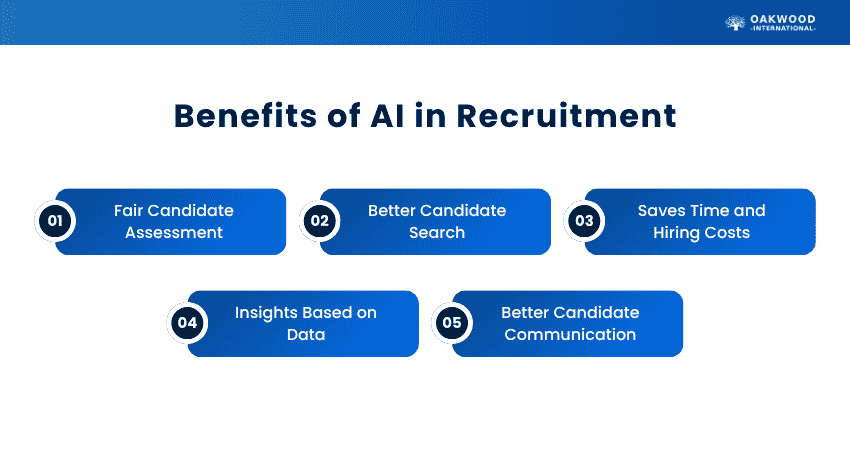
1) Fair Candidate Assessment
One of the biggest benefits of AI is that it can help create a consistent hiring process. Human decision-making can sometimes be influenced by unconscious bias, personal opinions or inconsistent evaluation criteria.
AI tools can assess candidates based on specific job requirements, qualifications and skills. This helps ensure that applicants are evaluated using the same criteria rather than subjective impressions. AI-powered assessments can:
a) Standardise candidate evaluations
b) Reduce inconsistencies in screening
c) Focus on job-relevant criteria
d) Support objective decision-making
2) Better Candidate Search
Finding qualified candidates can take a lot of time. Human Resources (HR) recruiters often need to search through job boards, databases, internal talent pools and professional networking sites to identify suitable candidates.
AI-powered sourcing tools can quickly search large numbers of profiles and identify candidates who match job requirements. These systems look beyond simple keywords and consider factors such as skills, qualifications and experience. This helps recruiters with:
a) Faster talent discovery
b) Improved matching accuracy
c) Access to passive candidates
d) Reach a larger talent pool
3) Saves Time and Hiring Costs
Recruitment involves many repetitive administrative activities. Screening hundreds of resumes, scheduling interviews, and sending follow-up communications can consume significant resources.
AI automates many of these activities, allowing recruiters to complete hiring processes more efficiently. This helps you reduce manual workload and speed up recruitment cycles. As a result, organisations can experience:
a) Faster recruitment cycles
b) Lower hiring costs
c) Reduced administrative work
d) Improved recruiter productivity
4) Insights Based on Data
AI tools can analyse recruitment information and provide useful insights that help improve hiring strategies. By reviewing large amounts of recruitment data, AI can find patterns and trends that may not be immediately visible through manual analysis.
For example, AI can help recruiters understand which sourcing channels bring the best candidates, where applicants drop out of the hiring process and AI can help organisations develop more effective Recruitment Strategies by
a) Identifying effective recruitment channels
b) Understanding candidate behaviour
c) Recognising hiring trends
d) Supporting informed decision-making
5) Better Candidate Communication
Candidates expect timely updates and clear communication throughout the hiring process. Delayed responses or lack of communication can create a poor candidate experience and negatively affect an organisation's employer brand.
AI-powered communication tools help recruiters stay connected with candidates by providing quick responses, sending application updates and answering common questions. This ensures a smoother recruitment experience while reducing the workload on hiring teams. For this, AI can:
a) Send timely updates
b) Automate query handling
c) Confirm interview schedules
d) Provide application status information
Equip yourself with modern recruitment practices with the
CIPD Level 3 Certificate in People Practice Course
– Register today!
How AI is Used in Recruitment?
AI is being used across various stages of the recruitment, from identifying suitable candidates to managing communication and administrative tasks. Here are some of the most common ways to use AI in recruiting:
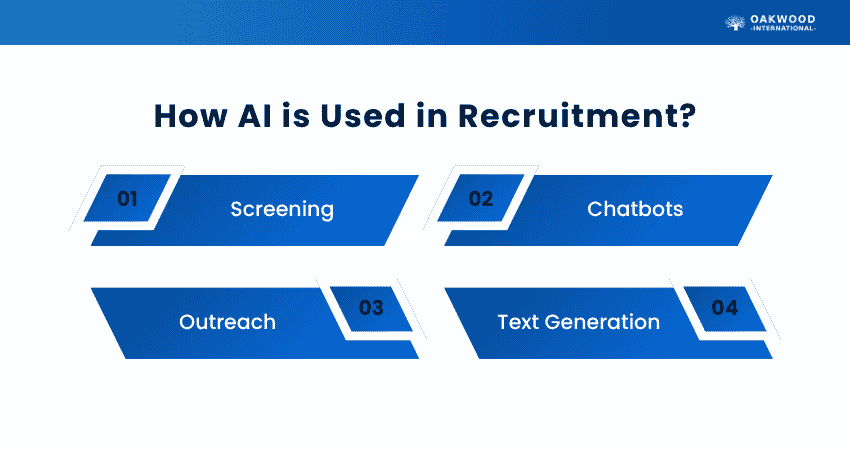
1) Screening
Application screening is one of the most common uses of AI in Recruitment. AI screening tools can review CVs and applications, compare qualifications against job requirements and rank candidates according to suitability. These systems can identify:
a) Relevant work experience
b) Alignment of skills
c) Educational qualifications
d) Relevant certifications
e) Industry knowledge and expertise
This enables recruiters to focus their attention on the most promising candidates while significantly reducing screening time.
2) Chatbots
AI chatbots are becoming increasingly popular in recruitment. These virtual assistants provide automated support to candidates throughout the hiring process. Recruitment chatbots can:
a) Answer frequently asked questions
b) Explain job requirements
c) Guide candidates through application processes
d) Schedule interviews
e) Provide application updates
Since chatbots are available 24/7, candidates receive immediate assistance without waiting for recruiter responses.
3) Outreach
AI can help recruiters identify and engage potential candidates through personalised outreach campaigns. Advanced systems can analyse candidate profiles and generate tailored messages based on skills, experience and career interests. This enables recruiters to:
a) Reach more candidates
b) Improve response rates
c) Personalise communication
d) Strengthen candidate engagement
e) Improve the quality of candidate matches
Automated outreach can significantly expand recruitment efforts and build stronger talent pipelines without increasing workload.
4) Text Generation
Creating recruitment content can take a lot of time. Recruiters regularly write content tailored to each role. AI text generation tools can assist by producing content quickly and consistently. It helps create:
a) Job advertisements
b) Candidate emails
c) Interview invitations
d) Assessment questions
e) Recruitment reports
By automating content creation, recruitment teams can focus more on candidate engagement and other strategic hiring activities.
What are the Challenges of AI Recruitment?
While AI offers many advantages, organisations must also understand its potential limitations and risks. Below are some of the challenges that you might face while implementing AI in Recruitment:
1) Data Security and Privacy Risk
HR recruitment involves collecting and storing personal information about candidates. This includes names, contact details, qualifications, work history, and assessment results. Since AI systems process large amounts of data, organisations must ensure that candidate information remains secure. Important considerations include:
a) Data protection policies
b) Secure storage systems
c) Controlled access to information
d) Compliance with privacy regulations
2) Discrimination and Bias
AI is often viewed as a way to reduce bias, but it can also create problems if not carefully managed. AI systems learn from existing data. If historical recruitment data contains bias, the AI may unintentionally repeat those patterns. To reduce this risk, organisations should:
a) Review AI decisions regularly
b) Use diverse training data
c) Conduct fairness audits
d) Maintain human oversight
3) Absence of Human Interaction
Recruitment is not only about assessing qualifications. Candidates often want to learn about company culture, career opportunities and team environments. Too much automation can make the recruitment process feel impersonal. AI should enhance human interactions such as:
a) Personal support
b) Relationship building
c) Career guidance
d) Emotional understanding
4) Reliance on Technology
While AI can be highly effective, it is not always accurate. Technical issues, system errors or incorrect recommendations can affect hiring outcomes. Recruiters should avoid depending entirely on AI-generated suggestions. Human judgment remains important when:
a) Evaluating candidates
b) Conducting interviews
c) Assessing cultural fit
d) Making final hiring decisions
Align HR strategies with business goals with the
CIPD Level 7 Advanced Diploma in Strategic People Management Training
– Sign up soon!
Best Practices to Integrate AI Tools into Your Existing Recruitment Process
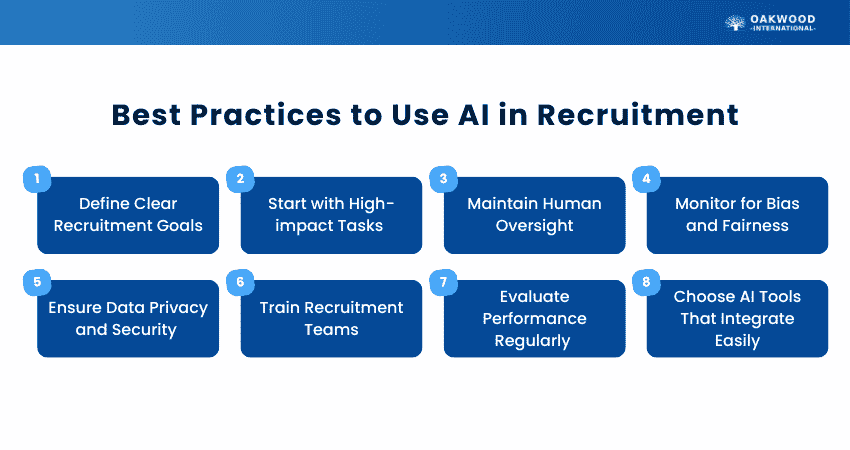
Implementing AI in Recruitment can offer several benefits, but success depends on how effectively the technology is integrated into existing hiring processes. The following best practices can help businesses maximise the value of AI tools and create a candidate-friendly hiring process:
 "
"
1) Define Clear Recruitment Goals
Before implementing AI tools, identify the specific recruitment challenges you want to address. Whether the goal is to reduce hiring time, improve candidate sourcing or enhance communication, clear objectives help ensure successful AI adoption.
2) Start with High-impact Tasks
Begin by using AI for repetitive and time-consuming activities such as CV screening, interview scheduling and candidate communication. This allows recruitment teams to see immediate benefits while gradually adapting to the technology.
3) Maintain Human Oversight
AI should support recruiters rather than replace them. Human involvement remains essential for evaluating cultural fit, conducting interviews, building relationships and making final hiring decisions.
4) Monitor for Bias and Fairness
Regularly review AI recommendations and hiring outcomes to ensure candidates are assessed fairly. Monitoring helps identify potential biases and supports diversity and inclusion efforts.
5) Ensure Data Privacy and Security
Recruitment AI tools often process sensitive candidate information. Organisations should follow data protection regulations and implement strong security measures to protect candidate data.
6) Train Recruitment Teams
Provide recruiters with proper training on how AI tools work, their capabilities and their limitations. Well-trained teams can use AI more effectively and make better hiring decisions.
7) Evaluate Performance Regularly
Track key recruitment metrics such as time-to-hire, cost-per-hire and candidate satisfaction. Regular evaluation helps organisations measure the effectiveness of AI tools and identify areas for improvement.
8) Choose AI Tools That Integrate Easily
Select AI solutions that work well with existing recruitment systems and workflows. Seamless integration reduces disruption and improves user adoption across the organisation.
Examples of AI in Recruitment
Many global organisations use AI-powered recruitment tools to improve hiring efficiency, identify top talent and enhance candidate experiences. Here are some well-known examples:
1) Unilever
Unilever uses AI to streamline its graduate recruitment process. Candidates complete online assessments and video interviews, which are analysed using AI tools to evaluate skills and suitability for specific roles. This approach helps the company process thousands of applications efficiently while reducing hiring time.
2) IBM
IBM uses AI-powered solutions to support talent acquisition and workforce planning. Its AI tools help match candidates to suitable roles based on skills, experience and career interests, enabling recruiters to make faster and more informed hiring decisions.
3) Hilton
Hilton uses AI-driven recruitment technology to improve candidate engagement and accelerate hiring. AI chatbots assist applicants by answering questions, providing updates and guiding them through the recruitment process, creating a smoother candidate experience.
4) L'Oréal
L'Oréal incorporates AI into its recruitment process through virtual assistants and digital assessments. These tools help engage candidates, evaluate skills and manage large application volumes while maintaining a positive hiring experience.
5) Vodafone
Vodafone uses AI-based recruitment solutions to improve candidate sourcing and screening. The technology helps recruiters identify suitable applicants quickly, reducing the time required to fill vacancies across multiple regions.
Is AI in Recruitment Replacing Human Recruiters?
No, AI in Recruitment is not replacing human recruiters. Instead, it is changing the way recruiters work by automating repetitive and time-consuming tasks such as CV screening, interview scheduling, candidate sourcing and communication. This allows recruitment teams to save time, improve efficiency and focus on activities that require strategic thinking and decision-making.
Human recruiters still play a vital role in the hiring process. Assessing cultural fit, building relationships with candidates, conducting interviews, negotiating job offers and understanding individual circumstances require Emotional Intelligence and human judgment that AI cannot replicate. Rather than replacing recruiters, AI acts as a support tool that helps them make better hiring decisions and create a more effective recruitment experience.
Conclusion
AI in Recruitment is rapidly reshaping the HR industry. From sourcing and screening candidates to generating recruitment insights, it supports recruiters throughout the hiring process. However, successful recruitment still requires a balance between technology and human expertise. By combining AI-powered tools with human judgment, organisations can create a faster and smarter recruitment process that attracts and retains top talent.
Build a strong foundation in people management with CIPD Qualifications – Join now!
Frequently Ask Questions
How Can AI in Recruitment Improve Diversity and Inclusion?
AI can reduce bias by anonymising candidate data, focusing on skills and experiences instead of personal details. It also widens talent pools by sourcing diverse candidates globally, ensuring fairer hiring decisions and promoting inclusive workplaces when algorithms are carefully designed and monitored.
Are There Data Privacy Regulations We Need to Consider?
Yes. Organisations using AI recruitment tools must follow data protection laws such as GDPR and other local regulations. Businesses should collect, store, and process candidate information securely while being transparent about how data is used.
How Can Companies Keep up With AI Hiring Trends?
Companies can stay updated by investing in continuous learning, attending HR tech conferences and adopting modern recruitment tools. Collaborating with AI vendors, monitoring industry reports and regularly upgrading hiring strategies help organisations remain competitive and leverage evolving AI technologies.
Related Blogs
Didn’t Find What You’re Looking For?

Our commitment to excellence ensures an exceptional learning experience tailored to your professional development needs.


© Copyright 2026 - Oakwood International ™ - All rights reserved.


SUPER SALE
 Get Amazing Discounts
And Deals
Get Amazing Discounts
And Deals