

 Back
Back


 Back to Catagories


Table of Contents


 + 44 7452
122728
+ 44 7452
122728
 21-Jul-2026
Maria Thompson
Consider this scenario: you have been assigned a new project and can't wait to bring your ideas to life. But before you can even begin, your manager hovers over every detail, rewriting sections and demanding constant updates. As a result, your creativity dwindles, and the joy of working vanishes. This is the reality of Micromanagement, a leadership style that stifles innovation, crushes morale, and drains productivity.
But why do some managers micromanage, and what damage does it really do? More importantly, how can employees and organisations address it? In this blog, we delve into the impact of Micromanagement, how to recognise its tell-tale signs, and practical strategies to address it, ensuring workplaces thrive instead of just surviving. Let's get started!
What is Micromanagement?
Micromanagement is a management style where a manager closely monitors, controls, or interferes with employees' work to an excessive degree. Instead of focusing on overall goals and outcomes, a Micromanager tends to concentrate on minor details, frequently checking progress, giving constant instructions, and requiring approval for small decisions.
Micromanagement involves supervising every step, often driven by the intention for perfection, control, or fear of mistakes. This may make employees feel that their skills are undervalued or that they lack independence. This can reduce motivation, creativity, and confidence, ultimately affecting productivity and workplace morale.

What Causes Micromanagement?
Micromanagement does not usually happen without a reason. In many cases, it comes from certain fears, habits, or pressures that influence a manager's behaviour. Here are the most common reasons why people micromanage:
1) Fear of Mistakes: Some managers are scared that things will go wrong. They think watching every small detail will stop errors from happening.
2) Perfectionism: Perfectionist leaders may feel that work will not be good enough unless they check and control it themselves.
3) Lack of Trust: If a manager does not fully trust their team's skills, they may keep a close eye on everything employees do.
4) Insecurity or Pressure: Managers who feel unsure about their own performance, or who face pressure from senior leaders, may micromanage to stay in control.
5) Unclear Roles and Expectations:
When job roles are not clearly defined, managers may step in too often because they are unsure who is responsible for what roles.
12 Signs of Micromanagement
Micromanagement can be a significant barrier to a healthy and productive work environment. Recognising the signs early can help address and mitigate their impact. Here are some of its common indicators:
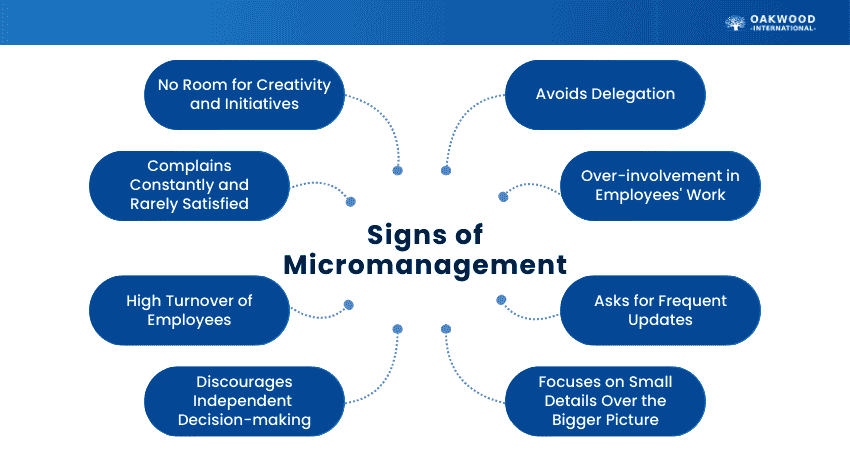
1) Avoids Delegation
Ever met someone who insists on doing everything themselves because "no one else can do it right?" That is a classic Micromanager. They refuse to delegate, assign tasks to others, and find it difficult to fully hand over responsibility.
In some cases, even after assigning a task, a Micromanager may stay heavily involved, frequently checking or redoing parts of the work themselves. This shows a lack of trust in the employee's ability. Over time, team members may feel that their skills are not valued, which can lower confidence and reduce their willingness to take ownership.
2) Over-involvement in Employees' Work
Micromanagers often get too involved in their employees' daily tasks. They may keep checking progress, step into small activities, or closely watch how the work is being done instead of letting employees handle it on their own.

Being constantly watched is not helpful and it can feel annoying for employees. Many people feel nervous or uncomfortable when someone is always observing them, which can cause stress and even lead to more mistakes instead of better results.
3) Asks for Frequent Updates
Asking for project or work updates once a week or at set times is normal. However, it is different for Micromanagers. They regularly request progress reports, sometimes multiple times a day. This constant checking can interrupt workflow and slow productivity.
Instead of feeling trusted, employees may feel pressured to prove themselves repeatedly. This can create anxiety and reduce job satisfaction. Over time, team members may spend more time preparing updates than actually completing meaningful work.
4) Focuses on Small Details Over the Bigger Picture
Micromanagers often concentrate on minor formatting errors, small wording changes, or tiny process steps. They may overlook larger goals and strategic priorities. Instead of evaluating overall results, they spend time correcting small issues that may not significantly impact the final outcome.
When attention stays fixed on small details, teams may lose sight of the overall objective. This can affect innovation and long-term planning. As a result, creativity and strategic thinking can slowly decline within the team.
Confidently lead transformative HR initiatives - Join our
CIPD Level 7 Advanced Diploma in Strategic People Management
now!
5) Discourages Independent Decision-making
In Micromanagement, employees are rarely allowed to make even small decisions without approval. Every action may require confirmation from the manager. This limits growth and learning opportunities. Over time, team members may become overly dependent and hesitant to act independently.
When people are not trusted to make decisions, they stop taking initiative. They may avoid suggesting ideas or solving problems on their own because they fear being corrected, which slows down progress and weakens team confidence.
Confidently lead transformative HR initiatives – Join the
CIPD Level 7 Advanced Diploma in Strategic People Management Course
now!
6) High Turnover of Employees
Teams led by Micromanagers often experience frequent resignations. A controlling work environment can increase stress levels. As a result, many employees may leave because they feel restricted, undervalued, or over-controlled.
When skilled employees start leaving, it creates high turnover and also damages team stability and organisational performance which, can cause
Employee Attrition
. Then the business spends more time hiring and training new staff instead of focusing on growth. Over time, this pattern can damage the company's reputation as a healthy place to work.
7) Complains Constantly and Rarely Satisfied
Micromanagers have a unique ability to find faults in everything. Praise is rare, but complaints are frequent, creating an atmosphere where employees feel constantly judged. This ongoing criticism can lower morale and increase frustration within the team.
When appreciation is missing, employees may start doubting their abilities. They can feel that no matter how hard they work, it is never enough. Over time, this mindset reduces motivation and weakens overall team performance.
8) No Room for Creativity and Initiatives
Micromanagers often limit employees to strict instructions, leaving little space for new ideas or different approaches. Instead of encouraging innovation, they prefer work to be done exactly their way. This can make team members hesitant to suggest improvements or try creative solutions.
Even more, a lack of creative freedom can seriously limit innovation and fresh thinking within a team. Instead of exploring new ideas or solutions, employees may simply follow instructions without questioning. Over time, this reduces innovation and prevents the team from reaching its full potential.
9) Sets Rigid Deadlines
Deadlines are important, but Micromanagers often set ones that are so rigid and unrealistic, without considering employee capacity, workload, complexity, or unexpected challenges. This makes employees focus on task speed rather than quality, leading to stress and burnout.
When there is no flexibility in the project timeline, employees may feel constantly pressured to meet impossible expectations. Over time, this can reduce morale and increase mistakes, as people rush to finish tasks instead of doing them properly.
10) Rarely Satisfied With Deliverables
Micromanagers are often not easily satisfied with completed work. Even when tasks meet the agreed standards, they may continue to request changes, revisions, or unnecessary improvements. This can make it difficult for employees to feel a sense of accomplishment.
Constantly questioning deliverables can create frustration and make employees feel unappreciated, demotivated, and doubt themselves. Employees may start second-guessing their work, fearing that it will never be good enough. Over time, this reduces confidence, slows progress, and affects overall team motivation.
11) Expects to be in CC of Every Email
Micromanagers often insist on being included in all email communications, even when the information does not directly require their involvement. They may want to monitor every conversation to stay fully informed about all team activities.
While staying updated is important, excessive monitoring through emails can signal a lack of trust. It may also overwhelm both the manager and employees, slowing communication, and creating unnecessary pressure.
12) Provides Over-complicated Instructions
Instead of giving clear guidance, Micromanagers provide overly detailed or lengthy instructions. This can make simple tasks feel complex with too many steps or conditions. This can confuse employees and make tasks seem more difficult than they actually are.
When instructions are too complicated, employees may feel unsure and keep asking for clarification before moving forward. This slows down work and reduces overall efficiency. This may prevent employees from independent thinking and cause them to depend too much on detailed directions.
Why is Micromanaging Toxic?
Micromanagement isn't just a minor annoyance; it creates an environment where motivation gets crushed, and creativity is put in a straitjacket. Here's a closer look at why this management style is so toxic:
1) Dent's Confidence: Imagine being told, even subtly, that you can't be trusted to do your job. That's the message Micromanagement sends, and it's no wonder employees start doubting their own abilities.
2) Innovation Gets Stuck in Neutral: With no room for independent thinking, teams can't dream up fresh ideas. Micromanagement turns workplaces into idea deserts.
3) Slows Everything Down: When every small decision requires a manager's approval, work gets slower. Tasks take longer to complete, and overall efficiency suffers as teams wait for constant confirmation before moving forward.
4) Breeds Frustration: No one likes feeling micromanaged, and constant nitpicking or interference can turn even the most enthusiastic employees into disengaged ones.
5) Pushes Good People Away: The best and brightest won't stick around if they feel shackled. They'll take their talents to places where they can actually spread their wings.
Become a pioneer in organisational learning - Register for the
CIPD Level 5 Associate Diploma in Organisational Learning and Development Course
today!
How to Deal with Micromanagers?
If you are stuck under a Micromanager's thumb, don't despair. Here are some strategies to navigate the situation:
1) Understand Their Behaviour
Micromanagers often act out of fear or insecurity. They might be under pressure themselves or haunted by past failures. Understanding their mindset can help you approach the problem with empathy rather than frustration.
Try to observe patterns in their behaviour. For example, do they micromanage everyone or only in specific situations? Recognising these triggers can help you address their concerns more effectively.
2) Build Trust
Consistency is key. Deliver quality work on time, every time, to build their confidence in your abilities. As trust grows, they may feel less compelled to hover over you.
Additionally, proactively seek their input at key moments to reassure them that their expertise is valued while also demonstrating that you can take the reins on your own.
3) Keep Communication Two-way
Strike a balance between providing updates and maintaining your autonomy. Regularly share progress without waiting for them to ask, but also make it clear that you're capable of handling tasks independently.
Be transparent about challenges and solutions, showing that you are proactive and reliable, which can help shift the dynamic over time.
4) Seek Feedback and Support
If Micromanagement becomes unbearable, don't hesitate to seek help from Human Resources (HR) or higher management. Document specific instances to make your case and focus on how the behaviour impacts team morale and productivity.
Present your concerns professionally, suggesting alternative ways of working that foster trust and efficiency while addressing the root causes of the issue.
5) Plan and Act Proactively
Try to think ahead and address questions before they are asked. Share progress updates regularly and inform your manager about possible risks early. This reduces uncertainty and builds confidence in your work.
When you stay one step ahead, managers feel less need to monitor every detail. It demonstrates that you can manage tasks responsibly without constant supervision.
6) Ask for the Necessary Changes
If Micromanagement is affecting your productivity, request a calm and professional discussion. Explain clearly how too much supervision impacts your focus and efficiency. Avoid blaming language and focus on improving workflow.
You can propose practical adjustments such as scheduled check-ins instead of frequent interruptions. Agreeing on fixed update times creates structure and reduces unnecessary monitoring.
7) Clarify Expectations
Make sure you clearly understand what success looks like for each task. Confirm deadlines, quality standards, and reporting requirements from the beginning. When expectations are unclear, managers tend to check more often.
Ask questions early if anything seems confusing and repeat key points to confirm alignment. This shows that you are attentive and serious about meeting expectations.
8) Recommend an Accountability Process
Suggest setting up a structured accountability system such as daily and weekly updates or milestone reviews. This gives your manager regular visibility into your progress. A planned reporting system can also replace constant monitoring.
When accountability is clearly defined, managers know they will receive updates at agreed-upon times and employees gain more independence and focus.
Benefits and Limitations of Micromanagement
Micromanagement is often viewed negatively, but like most
Management Styles
, it can have both benefits and limitations depending on the situation. Let's check them:
Benefits of Micromanagement
Below you can find the benefits of Micromanagement:
1) Maintains High-quality Standards: Close supervision helps ensure tasks are completed accurately and meet the required quality standards, reducing short-term errors.
2) Supports New Employees: Frequent guidance helps new team members understand their responsibilities, build confidence, and adapt more quickly.
3) Identifies Risks Early: Continuous monitoring allows Managers to detect mistakes, address issues promptly, and minimise potential risks.
4) Provides Clear Direction: Detailed instructions and regular feedback help employees stay aligned with expectations and complete tasks correctly.
5) Improves Control Over Critical Projects:
Micromanagement helps maintain consistency and oversight in high-risk or business-critical projects where accuracy is essential.
Limitations of Micromanagement
Below you will explore the limitations of Micromanagement:
1) Reduces Employee Morale: Constant supervision can make employees feel undervalued and distrusted, leading to lower job satisfaction and motivation.
2) Decreases Productivity: Excessive oversight can slow decision-making and workflows, causing delays and reducing overall efficiency.
3) Limits Creativity and Innovation: Employees may become reluctant to explore new ideas or solutions when every action is closely controlled.
4) Increases Workplace Stress: Continuous monitoring can create pressure and anxiety, negatively affecting employee well-being and performance.
5) Contributes to Higher Employee Turnover:
Persistent Micromanagement can drive talented employees to seek more empowering work environments elsewhere.
Micromanagement vs Accountability
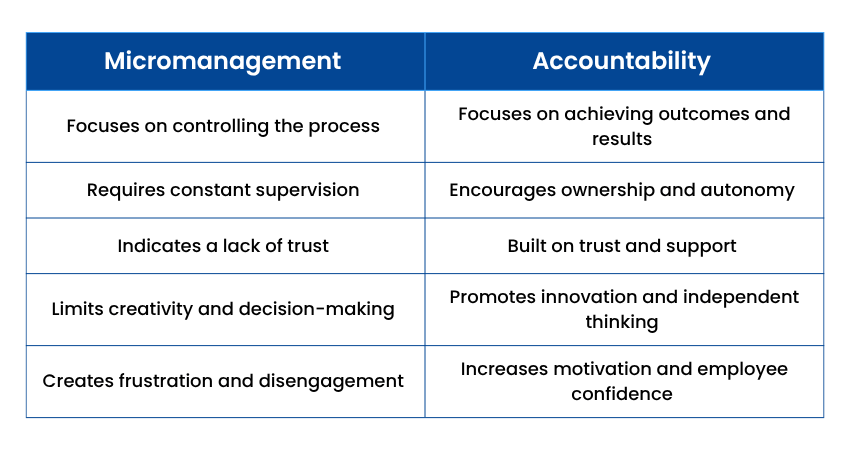
Although both Micromanagement and Accountability aim to improve performance, they differ significantly in how they approach employee management. Micromanagement focuses on controlling how work is completed, often involving excessive oversight and frequent intervention. This approach can signal a lack of trust, reduce employee autonomy, and negatively impact motivation and creativity.
Example of Micromanagement
A Team Leader may ask employees for hourly progress reports, repeatedly check their work throughout the day, and dictate exactly how each task should be performed. While the intention may be to maintain quality or control, this level of oversight can reduce trust, limit creativity, and lower employee confidence and engagement. Over time, it can create frustration and hinder productivity rather than improve performance.
Conclusion
Micromanagement may begin with good intentions, such as ensuring quality or avoiding mistakes, but its long-term impact can be challenging for both employees and organisations. While it can provide short-term control and structure, excessive supervision often reduces trust, limits creativity, and affects morale. A balanced approach that combines guidance with autonomy can lead to stronger performance, higher engagement, and sustainable success.
Navigate complex People Management challenges with the CIPD Level 5 Associate Diploma in People Management Course - Sign up today!
Frequently Ask Questions
How do You Tell if You're Being Micromanaged?
You may be being micromanaged if your manager constantly checks your work, requires approval for small decisions, asks for frequent updates, and rarely trusts you to complete tasks independently.
What Kind of Personality is a Micromanager?
A Micromanager is often detail-oriented, highly controlling, and focused on maintaining oversight of tasks and processes. They may struggle to delegate responsibilities, prefer direct involvement in decision-making, and seek reassurance that work is being completed according to their expectations and standards.
What are Common Micromanaging Behaviours?
Related Blogs
Didn’t Find What You’re Looking For?

Our commitment to excellence ensures an exceptional learning experience tailored to your professional development needs.


© Copyright 2026 - Oakwood International ™ - All rights reserved.


SUPER SALE
 Get Amazing Discounts
And Deals
Get Amazing Discounts
And Deals