

 Back
Back


 Back to Catagories


Table of Contents


 + 44 7452
122728
+ 44 7452
122728
 07-Sep-2026
Grace Mitchell
Modern workplaces are made up of people with different experiences, ideas, and ways of thinking. Employees no longer want to work in environments where their opinions are ignored or their contributions go unnoticed. This is where Inclusive Leadership plays an important role by helping organisations create a culture where everyone feels welcomed, respected, and confident enough to share their perspectives.
Strong leaders understand that great ideas can come from anyone in the team. In a dynamic business environment, leaders who encourage fairness, trust, and equal participation are more likely to inspire innovation and long-term success. In this blog, you will learn about What is Inclusive Leadership, its importance, examples, and more. Let’s get started!
What is Inclusive Leadership?
Inclusive Leadership is a leadership style that focuses on creating a workplace where every employee feels valued, respected, and included. Inclusive leaders encourage open communication, equal participation, and teamwork, helping employees feel confident in sharing their ideas.
This leadership approach strengthens teamwork, improves employee engagement, and encourages innovation through diverse thinking. It empowers diverse teams to take part in decision-making and problem-solving, helping organisations build a more connected and productive work environment.

Importance of Inclusive Leadership
Inclusive Leadership is important because it helps organisations create a workplace where different ideas, experiences, and perspectives are valued. Let’s look at the key reasons that demonstrate its importance below:
a) Encourages Diverse Perspectives: Inclusive leaders encourage employees from different backgrounds to share ideas and viewpoints, helping organisations solve challenges more effectively.
b) Drives Innovation and Growth: Diverse teams can generate more innovative ideas, helping businesses improve performance and long-term growth.
c) Helps Capture New Markets: Inclusive organisations have a better understanding of different customer needs, making it easier to reach wider markets successfully.
d) Improves Employee Confidence: Employees feel more confident and motivated when they are respected and included in discussions and decisions.
e) Strengthens Decision-making: Different perspectives help teams explore better solutions and make more effective business decisions.
f) Builds Stronger Teams:
Inclusive Leadership creates collaborative teams where employees feel empowered to contribute and grow.
Characteristics of Inclusive Leadership in Companies
Inclusive Leadership is built on key characteristics that help employees feel respected, supported, and encouraged to contribute their ideas. These qualities foster a positive workplace culture, strengthen collaboration, and drive better organisational performance. Let’s explore the important characteristics below:
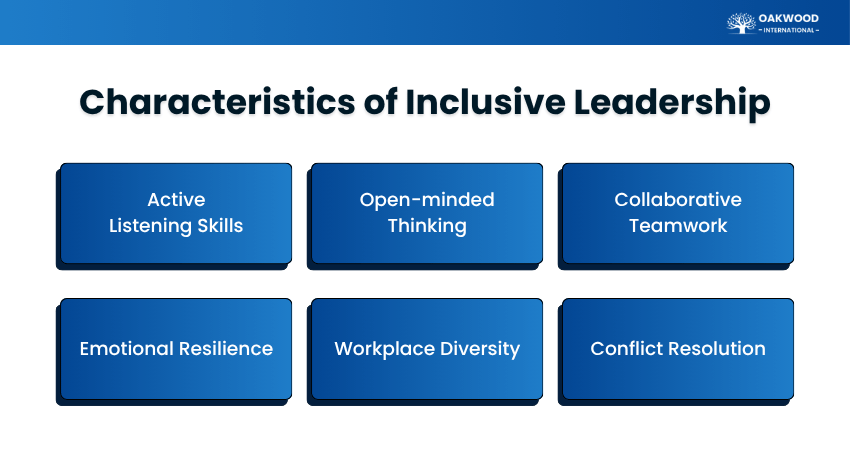
1) Active Listening Skills
Active listening is one of the most important qualities of Inclusive Leadership. Inclusive leaders pay close attention to employee’s ideas, feedback, and concerns. This makes employees feel valued, builds trust, and strengthens communication across teams.
2) Open-minded Thinking
Inclusive leaders remain open to different opinions, experiences, and perspectives. They actively challenge their own biases and stay willing to learn from others. This encourages innovation, improves decision-making, and creates a more adaptable and forward-thinking workplace.
3) Collaborative Teamwork
Inclusive Leadership promotes teamwork by creating an environment where employees feel comfortable sharing ideas and working together. When employees feel supported and included, collaboration improves, leading to higher creativity and better team performance.
4) Emotional Resilience
Inclusive leaders remain calm, supportive, and composed during workplace challenges. They demonstrate empathy and maintain a positive outlook even in difficult situations. This stability helps teams stay motivated, reduces stress, and fosters a supportive and productive work environment.
5) Workplace Diversity
A key characteristic of Inclusive Leadership is building diverse teams with different backgrounds, skills, and perspectives. Diverse teams help to bring fresh ideas, balanced decision-making, and a better understanding of customer and business needs.
6) Conflict Resolution
Inclusive Leadership involves managing conflicts in a constructive and respectful way. Inclusive leaders encourage open communication, active listening, and mutual respect to resolve disagreements while maintaining strong team relationships and collaboration.
Develop the required confidence to support and guide teams with the
ILM Level 2 Award in Leadership and Team Skills Course
– Sign up today!
How to Become an Inclusive Leader?
Becoming an inclusive leader starts with compassion and empathy. Inclusive Leadership focuses on understanding employees’ experiences and creating a workplace where everyone feels supported and valued. Compassionate leaders take meaningful actions that help people feel included, respected, and encouraged to contribute confidently.
Inclusive leaders create opportunities for employees to participate in discussions, share ideas, and work together effectively. By leading with empathy, respect, and positive actions, organisations can build a more inclusive work culture where employees feel connected, motivated, and empowered to succeed.
Seven Acts of Inclusive Leadership
Inclusive Leadership is built through intentional actions that help employees feel respected, supported, and valued in the workplace. These actions strengthen trust, encourage collaboration, and create a culture where everyone feels empowered to contribute. Let’s explore the seven key acts below:
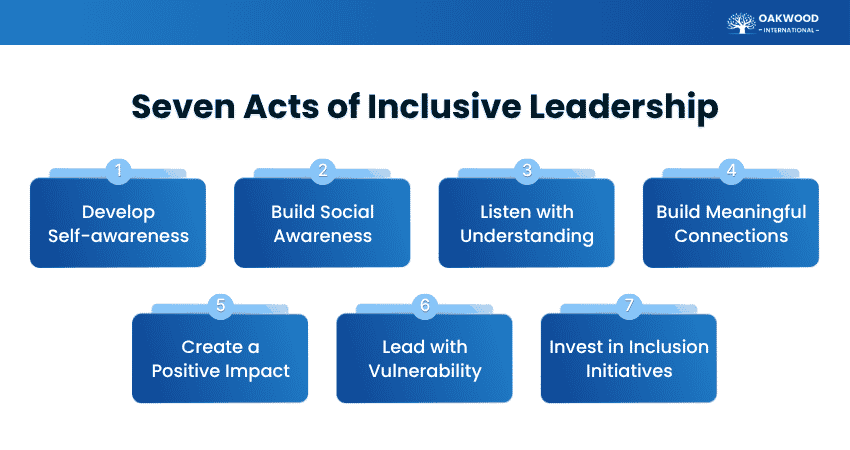
1) Develop Self-awareness
Inclusive leaders take time to understand their own strengths, weaknesses, values, and biases. They remain open to feedback and are willing to reflect on their behaviour. Strong self-awareness enables leaders to make fair decisions, improve their leadership style, and build more authentic relationships with employees.
2) Build Social Awareness
Inclusive Leadership requires understanding the experiences, emotions, and needs of the people around them. Leaders with strong social awareness communicate respectfully, recognise workplace challenges proactively, and create a culture where employees feel supported.
3) Listen with Understanding
Inclusive leaders focus on truly understanding employees instead of simply hearing their words. They pay attention to employees’ ideas, concerns, feelings, and perspectives, which improves communication, reduces misunderstandings, and strengthens trust within teams.
4) Build Meaningful Connections
Building strong relationships across teams is essential for Inclusive Leadership. Leaders encourage collaboration and interaction among diverse groups. This broadens perspectives, strengthens teamwork, and creates a more connected and inclusive work environment.
5) Create a Positive Impact
Inclusive leaders stay curious about experiences that may differ from their own and take meaningful actions to support fairness and equal opportunities. By understanding employees better, they can create positive changes that help individuals and teams grow confidently.
6) Lead with Vulnerability
Inclusive leaders are honest about their limitations and are willing to ask questions, seek support, and learn from others. By showing humility and openness, they create trust and encourage employees to share ideas and concerns without fear.
7) Invest in Inclusion Initiatives
Inclusive Leadership requires ongoing effort, resources, and commitment. Organisations must invest in training, development, and inclusive practices. This improves employee engagement, strengthens teamwork, and enhances the organisation’s ability to adapt and innovate.
Improve teamwork with practical leadership development skills by joining the
ILM Level 2 Certificate in Leadership And Team Skills Training
now!
Challenges of Implementing Inclusive Leadership
While Inclusive Leadership offers significant benefits, organisations may face challenges during implementation. Understanding these challenges helps organisations plan effectively and build sustainable inclusion strategies. Let’s explore some common challenges:
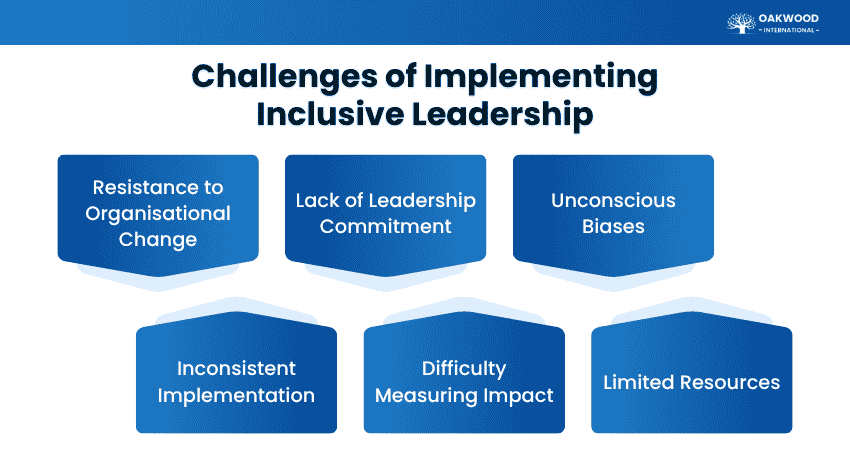
1) Resistance to Organisational Change
Employees and teams may resist new inclusive policies because they are comfortable with existing ways of working. Some individuals may not immediately understand the value of Inclusive Leadership, making it important for organisations to communicate its benefits clearly and consistently.
2) Lack of Leadership Commitment
Inclusive Leadership must begin with senior management and organisational leaders. If executives fail to actively support inclusion initiatives or demonstrate inclusive behaviour, employees may view these efforts as unimportant or ineffective.
3) Unconscious Biases
Unconscious biases can influence hiring decisions, promotions, communication, and workplace interactions without people realising it. Organisations need ongoing training, self-awareness activities, and fair workplace practices to help reduce the impact of these unconscious biases.
4) Inconsistent Implementation
In some organisations, Inclusive Leadership practices may be applied effectively in certain departments but neglected in others. Without consistent policies and leadership support, inclusion efforts may fail to create organisation-wide impact.
5) Difficulty Measuring Impact
Measuring the success of Inclusive Leadership can be difficult because inclusion is not always easy to quantify. Organisations may need a combination of employee feedback, workplace data, and business performance indicators to evaluate progress effectively.
6) Limited Resources
Successful Inclusive Leadership initiatives may require additional investment in training programmes, consulting, tools, and employee development. Organisations with limited budgets or resources can find it challenging to maintain long-term inclusion strategies effectively.
Inclusive Leadership Examples
Many global organisations have adopted Inclusive Leadership practices to create fair, supportive, and diverse workplaces. These companies focus on improving employee inclusion, reducing bias, and creating equal opportunities for growth and development. Let’s look at some popular examples of Inclusive Leadership in organisations:
1) Google
Google promotes Inclusive Leadership through initiatives that help employees recognise and reduce unconscious bias in the workplace. The company has introduced policies to improve the representation of women and minority groups in technical and leadership roles. Through diversity reports and inclusion-focused programmes, Google works to create a more transparent and supportive work environment.
2) Microsoft
Microsoft has developed several diversity and inclusion initiatives to support employees from different backgrounds. The company created employee resource groups, including support programmes for employees with disabilities, to encourage accessibility and inclusion. Also, Microsoft provides implicit bias training and regularly measures progress in diversity and inclusion efforts.
3) Salesforce
Salesforce promotes Inclusive Leadership by supporting gender equality and racial diversity within the organisation. The company introduced programmes that provide mentorship and professional development opportunities for employees from diverse backgrounds. Also, Salesforce conducts regular pay audits to help ensure fair and equal compensation for all employees.
Conclusion
Inclusive Leadership plays an important role in creating workplaces where employees feel respected, valued, and motivated to contribute their best ideas. As workplaces continue to evolve, this leadership approach will remain essential for building stronger teams, encouraging innovation, and creating positive and high-performing work environments.
Unlock your leadership potential and start leading teams confidently with the ILM Level 2 Training Courses – Sign up now!
Frequently Ask Questions
How can Organisations Develop Inclusive Leaders?
Organisations can develop inclusive leaders by providing leadership training, encouraging self-awareness, and promoting emotional intelligence. Building a culture of psychological safety, accountability, and cultural understanding helps leaders create workplaces where employees feel respected, supported, and included.
Can Inclusive Leadership Improve Workplace Culture?
Yes, Inclusive Leadership can greatly improve workplace culture by creating an environment where employees feel respected, valued, and safe to share ideas. By encouraging diverse perspectives and reducing bias, organisations can improve employee engagement, strengthen teamwork, boost morale, and support innovation.
What is the Difference Between Diversity and Inclusion?
Diversity focuses on having people from different backgrounds, such as gender, race, age, and culture, within an organisation. In contrast, inclusion focuses on creating a workplace where those individuals feel respected, valued, and supported. To put it simply, diversity is about representation, while inclusion is about belonging.
Related Blogs
Didn’t Find What You’re Looking For?

Our commitment to excellence ensures an exceptional learning experience tailored to your professional development needs.


© Copyright 2026 - Oakwood International ™ - All rights reserved.


SUPER SALE
 Get Amazing Discounts
And Deals
Get Amazing Discounts
And Deals