

 Back
Back


 Back to Catagories


Table of Contents


 + 44 7452
122728
+ 44 7452
122728
 21-Sep-2026
Jenny Morris
Imagine signing up for a big project and then realising that you don’t have enough skilled people to deliver it. Situations like this are common, and they can lead to project delays, increased costs, and unnecessary pressure on existing teams. This is exactly where Human Resource Planning (HRP) has its major contribution.
It helps organisations assess their current workforce, identify future talent needs, and prepare for changes before they happen. Instead of reacting to problems, HRP allows businesses to plan ahead. In this blog, we will explore what is Human Resource Planning, its types, steps involved, and best practices, giving you a clear idea of how it works in real-world situations. Let's dive in!
What is Human Resource Planning (HRP)?
Human Resource Planning (HRP) is the process of forecasting an organisation’s future workforce needs and expectations and developing strategies to meet those needs. It involves analysing the current workforce, identifying skill and talent gaps, and implementing plans to ensure the organisation has the right workforce to achieve its goals.
For example, if a company wants to expand its business or launch a new product, it will need more employees or new skills. HRP helps the company plan this in advance so that there are no delays or problems later.

What are the Objectives of Human Resource Planning?
The primary objective of Human Resource (HR) Planning is to ensure that an organisation always has the right number of employees with the appropriate skills to meet its goals. However, its purpose goes far beyond just staffing. HRP is about building a workforce that is adaptable, efficient, and aligned with long-term business strategies. Its common objectives are:
1) Provide employees with the required skills and competencies
2) Make effective use of the existing workforce
3) Identify and improve the skill and talent gaps
4) Reduce workforce shortages and avoid overstaffing
5) Support employee development and career planning
6) Enhance employee retention and reduce turnover
7) Align workforce planning with business goals
8) Ensure smooth business operations without disruptions
Types of Human Resource Planning
There are different types of HRP, and each one focuses on a specific area of Workforce Management. Let’s check those types of Human Resource Planning:
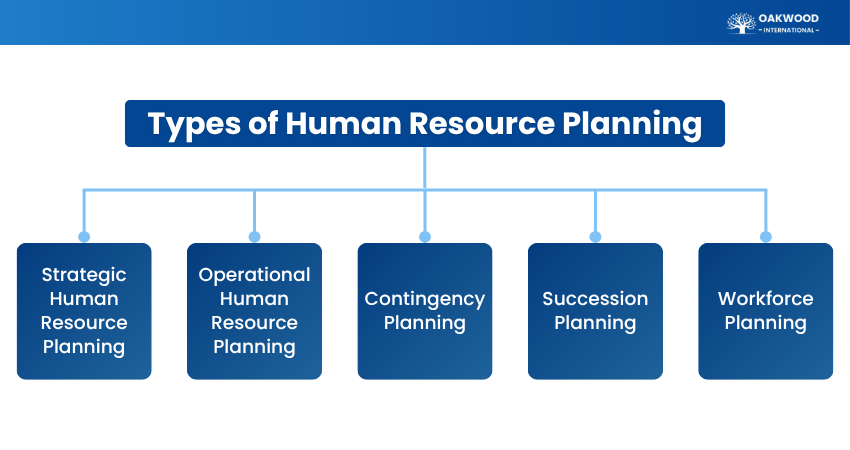
1) Strategic Human Resource Planning
Strategic HR Planning focuses on aligning the workforce with long-term organisational goals. It looks at future business plans and identifies the employees and skills needed to achieve those goals. For example, if a company plans to adopt new technology, strategic HR Planning will identify the need for specialised skills and training programmes.
2) Operational Human Resource Planning
Operational HR Planning deals with short-term workforce requirements. It focuses on day-to-day staffing needs, such as scheduling employees, workload distribution, and immediate hiring requirements. For example, a retail store may hire additional employees during festive seasons and adjust employee shifts to manage increased customer demand.
3) Contingency Planning
Contingency planning prepares organisations for unexpected situations, such as economic downturns, employee turnover, or sudden changes in demand. It involves creating backup plans to ensure business continuity. For example, having temporary workers or employees trained in multiple roles can help organisations handle sudden workforce shortages.
4) Succession Planning
Succession planning focuses on identifying and developing future leaders within the organisation. It ensures that key positions can be filled quickly when employees retire, resign, or move on. For example, a company may train a senior team member to take over a managerial role when the current manager leaves or retires.
5) Workforce Planning
Workforce planning involves analysing the overall workforce structure and ensuring it meets organisational needs. It includes forecasting workforce demand, identifying skill gaps, and implementing strategies to address them. For example, a company planning to expand its services may hire employees and train existing staff to meet future business requirements.
Make smarter workforce decisions with our
HR Analytics Course
– Register today!
Steps Involved in Human Resource Planning
HRP follows a structured process that helps organisations systematically analyse and address workforce needs. Here are the steps involved in the planning:
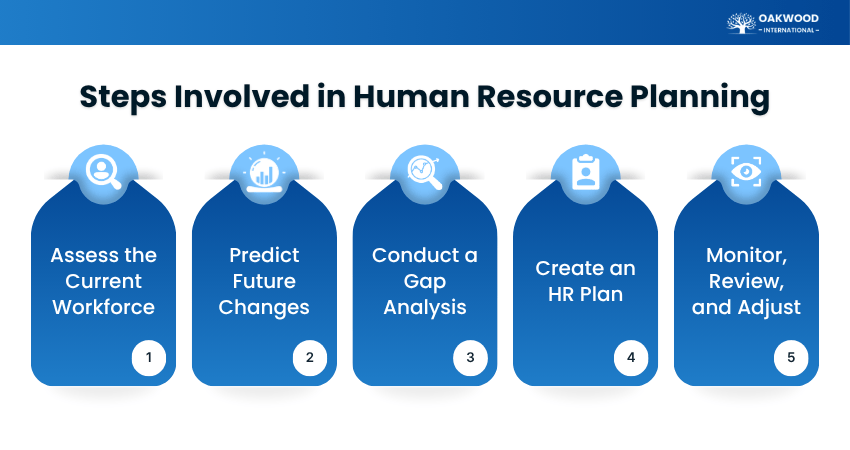
1) Assess the Current Workforce
The first step in HR Planning is to evaluate the existing workforce. This includes analysing employee skills, experience, performance, and demographics. Organisations need to understand what talent they currently have before planning for the future.
By doing this, businesses can identify strengths and weaknesses. For example, they may find that they have strong technical skills but need better leadership capabilities.
2) Predict Future Changes
The next step is to forecast future workforce requirements based on business goals and external factors. This involves analysing trends such as market demand, technological advancements, and industry developments.
By predicting these changes, companies can prepare their workforce in advance. This might include hiring new employees or training existing ones for new roles.
3) Conduct a Gap Analysis
Gap analysis involves comparing the current workforce with future requirements to identify discrepancies. These gaps may include skill shortages, excess staff, or mismatches between employee capabilities and organisational needs.
Once gaps are identified, businesses can develop strategies to address them. This may involve recruitment, training, or restructuring efforts to ensure alignment with business goals.
4) Create an HR Plan
Based on the gap analysis, organisations develop a detailed Human Resource Plan outlining the actions needed to meet workforce requirements. This plan may include hiring strategies, training programmes, and succession planning initiatives.
A good Human Resource Plan also provides clear steps and timelines, making it easier to achieve workforce goals and support business objectives.
5) Monitor, Review, and Adjust
Human Resource Planning is a continuous process rather than a one-time activity. Organisations need to continuously monitor their workforce and review the effectiveness of their HR plans.
Regular reviews help identify areas for improvement and allow businesses to adapt to changing conditions. They also enable organisations to make timely adjustments to their HR strategies.
Enhance employee performance and growth with the
Human Capability Development Program Course
– Sign up soon!
Benefits of Human Resource Planning
Human Resource Planning offers numerous benefits that contribute to organisational success. It not only improves Workforce Management but also enhances overall business performance. Here are some of the benefits of HRP:
1) Increasing the Value of Current Employees
HRP focuses on developing existing employees through training and skill enhancement. This increases their value to the organisation and improves overall productivity. When employees feel valued and supported, they are more likely to stay engaged and committed, reducing turnover rates and promoting a positive work environment.
2) Assisting Businesses in Adjusting to Changes in the Industry
Industries are constantly changing, and organisations need to adapt quickly to stay relevant. HRP helps businesses predict these changes and prepare their workforce accordingly. Whether it is adopting new technologies or entering new markets, HRP ensures that organisations have the necessary talent to handle these shifts.
3) Assisting Businesses in Maintaining a Competitive Edge
Having a well-planned workforce provides organisations with an edge over competitors. The right people enable companies to innovate, deliver quality services, and adapt quickly to market needs. It also helps organisations respond to challenges more effectively and maintain consistent performance.
4) Improving the Long-term Survival of the Business
HRP supports long-term success by ensuring that organisations always have skilled employees. It reduces the risk of disruptions caused by talent shortages. It helps organisations prepare for future challenges and supports improved decision-making by providing a clear understanding of workforce needs.
Develop effective and impactful workforce strategies with
HR Strategy Training
– Begin today!
Challenges in Human Resource Planning
Despite its benefits, Human Resource Planning has some challenges. Those include:
1) Difficulty in Predicting Future Needs: Uncertain market conditions make it hard to accurately forecast workforce requirements.
2) Rapid Technological Changes: Frequent advancements create skill gaps and require continuous employee training.
3) Lack of Accurate Data: Poor or outdated data can lead to ineffective HR decisions.
4) Resistance to Change: Employees and management may resist new strategies or changes.
5) Managing Workforce Diversity: Handling a diverse workforce with different skills, backgrounds, and expectations can make planning more complex.
6) High Employee Turnover:
Employee exits can disrupt plans and create unexpected workforce gaps.
Best Practices for Effective Human Resource Planning
To make HRP successful, organisations can follow certain practices to improve planning and ensure better results. Here are the best practices:
1) Tracking Your Progress
Regularly tracking progress helps organisations measure the effectiveness of their HR plans. This involves monitoring Key Performance Indicators (KPIs) such as employee turnover, productivity, and training outcomes. By analysing these metrics, organisations can identify areas for improvement and make data-driven decisions.
2) Periodic Review
HR plans should be reviewed periodically to ensure they remain relevant. Changes in business strategies or external conditions may require adjustments to the plan. Therefore, regular reviews help organisations adapt to changes and become responsive to evolving workforce needs.
3) Ongoing Improvement
Continuous improvement is essential for effective HR Planning. Organisations should regularly update their strategies based on feedback and performance analysis. By improving their processes over time, companies can ensure that their HR Planning remains effective and aligned with their goals.
Tools for Human Resource Planning
HR Planning can be more effective with the help of modern tools and technologies. These tools help organisations collect data, analyse trends, and make better decisions. The following are some of the most commonly used tools for Human Resource Planning:
1) HR Dashboards
HR dashboards provide a visual representation of key workforce metrics, such as employee performance, turnover rates, and recruitment data. They help HR professionals quickly identify trends and make informed decisions.
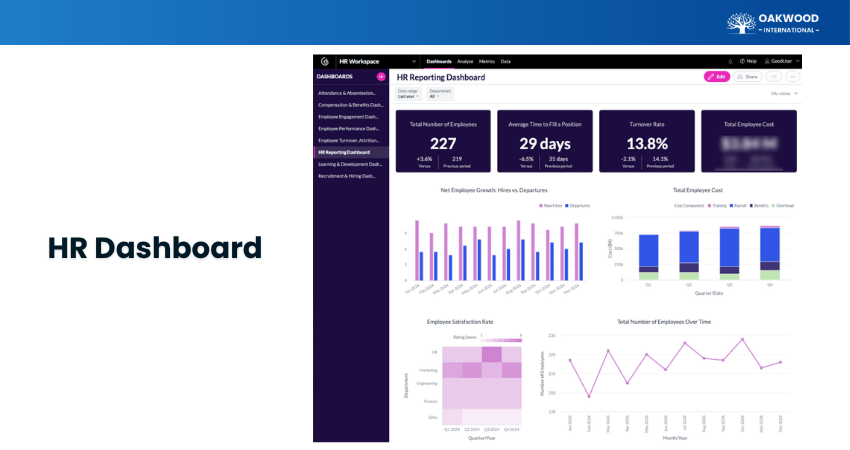
Key Features:
1) Real-time data tracking and updates
2) Visual reports with charts and graphs
3) Customisable dashboards based on needs
4) Data integration from multiple HR systems
5) Predictive analytics for workforce trends
6) Easy data filtering and segmentation
7) User-friendly interface for quick insights
2) Human Resource Information Systems (HRIS)
HRIS systems centralise employee data and automate HR processes, such as payroll, recruitment, and performance management. By providing accurate and up-to-date information, HRIS systems support effective HR Planning and improve overall efficiency.
Key Features:
1) Centralised employee database
2) Payroll and benefits management
3) Recruitment and onboarding tools
4) Attendance and leave tracking
5) Employee self-service portals
6) Reporting and analytics features
7) Data security and access control
3) Performance Management Systems
Performance management systems track employee performance and provide feedback for improvement. These systems help organisations identify high-performing employees, address performance issues, and connect individual goals with organisational objectives.
Key Features:
1) Goal setting and continuous performance monitoring
2) Real-time feedback and reviews
3) Employee appraisal management
4) Performance analytics and reports
5) Skill and competency tracking
6) Employee development planning
7) Automated performance reminders
4) Compensation and Benefits Analysis Software
This software helps organisations analyse compensation structures and ensure they remain competitive. By offering fair and attractive compensation packages, organisations can attract and retain top talent, supporting their HR Planning efforts.
Key Features:
1) Salary benchmarking and comparison
2) Compensation planning and modelling
3) Pay equity analysis, incentive and bonus planning
4) Budget and cost analysis
5) Data visualisation and reporting
6) Integration with payroll systems
7) Customisable compensation structures
Conclusion
Human Resource Planning is a strategic function that shapes the future of an organisation. By aligning workforce capabilities with business goals, HRP ensures that organisations are prepared for both current challenges and future opportunities. Whether you are a small business or a large enterprise, investing in HR Planning is a step towards building a resilient and competitive organisation.
Start your journey towards becoming an impactful HR leader with HR Leadership Courses – Join now!
Frequently Ask Questions
What is an Example of HR Planning?
An example of HR Planning is when a company plans its workforce for expansion. For instance, a technical firm entering a new market may hire specialists and train existing employees in advance to meet future business needs, improve efficiency, and ensure smooth operations without delays.
Is HR a High Paying Field?
Yes, HR can be a high-paying field, especially for experienced professionals in roles such as HR Managers, Talent Acquisition Leaders, and HR Directors. The salaries of these HR professionals can vary based on criteria like experience, industry, and location, but the field offers strong career growth and earning potential.
What Skills are Needed in HRM?
The key skills required in Human Resource Management (HRM) include communication, problem-solving, decision-making, leadership, organisational skills, recruitment, employee relations, and emotional intelligence. Additionally, knowledge of HR tools, Data Analysis, and employment laws is essential for managing workforce planning.
Related Blogs
Didn’t Find What You’re Looking For?

Our commitment to excellence ensures an exceptional learning experience tailored to your professional development needs.


© Copyright 2026 - Oakwood International ™ - All rights reserved.


SUPER SALE
 Get Amazing Discounts
And Deals
Get Amazing Discounts
And Deals