

 Back
Back


 Back to Catagories


Table of Contents


 + 44 7452
122728
+ 44 7452
122728
 21-Sep-2026
Richard Harris
Thinking about starting a career where you don’t just work with people, but truly make an impact on their growth and success? That’s exactly what makes the HR Career Path so exciting. Whether you’re a fresher exploring options or someone considering a switch, Human Resources (HR) offers a unique mix of people interaction, problem-solving, and real influence on workplace culture.
What makes the HR Career Path even more appealing is its flexibility and growth potential. There is no single route to success, and your journey can evolve based on your interests. In this blog, we explore types of roles, popular HR positions, and the key skills required. Let’s get started!
What is the HR Career Path?
The Human Resources Career Path refers to the structured journey of roles and responsibilities within the field of Human Resources, from entry-level positions to senior leadership roles. It includes key functions such as recruitment, onboarding, payroll, employee relations, and implementing policies that improve engagement and productivity across the organisation.
HR professionals typically start in entry-level roles to learn core processes and gradually move into specialised or generalist positions with greater responsibility. As they grow within the HR Career Path, they progress into leadership roles such as HR Manager, HR Director, and Chief Human Resources Officer (CHRO), contributing to strategic decision-making and organisational growth.
Why HR is a Strong Career Choice in 2026?
In 2026, HR has become a strategic and technology-driven function that plays a key role in business success. Organisations rely on HR professionals to manage talent, improve employee experience, and support growth in a changing work environment. This also highlights why the HR Career Path remains a strong career choice:
1) Strategic Business Role: HR aligns people with strategies with business goals and supports organisational growth.
2) Technology and AI Integration: Use of AI and digital tools improve hiring and decision-making.
3) Managing Hybrid Work: HR maintains culture and engagement in remote and hybrid teams.
4) Bridging Skills Gaps: Helps organisations hire and develop the right talent.
5) Focus on Employee Experience: Improves well-being, engagement, and retention.
6) High Demand and Growth:
Offers strong career opportunities and clear progression.
Understanding the HR Career Path
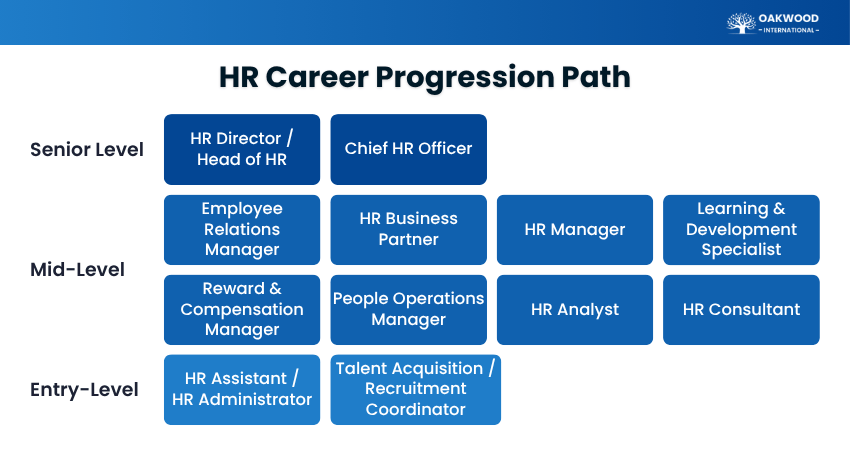
The HR Career Path is no longer strictly linear, as professionals can enter through different routes and grow based on their skills, interests, and experience. It progresses from entry-level to strategic roles, with opportunities to specialise or move across HR functions. These levels can be seen through roles at each stage:
Entry-level Roles (0–2 Years)
Entry-level roles such as HR Assistant or HR Administrator focus on supporting core HR activities like recruitment, onboarding, and handling employee queries. This stage helps build foundational skills in organisation, communication, and basic HR systems, making it an ideal starting point for beginners.
Mid-level Roles (2–5 Years)
Mid-level professionals work in roles like HR Advisor, Talent Partner, or People Operations Coordinator. They collaborate with managers, handle employee relations, and support hiring processes. At this stage, knowledge of employment law, problem-solving abilities, and coaching skills become increasingly important.
Senior-level Roles (5–10 Years)
Senior roles such as HR Manager, HR Business Partner, or Learning and Development Manager involve leading HR initiatives and managing teams. Professionals at this level focus on delivering people strategies, improving performance, and developing training frameworks. Strong leadership, stakeholder management, and strategic thinking are essential.
Executive and Strategic Roles (10+ Years)
At the highest level, roles such as Head of People, HR Director, or Chief Human Resources Officer (CHRO) focus on shaping organisational culture and driving long-term business strategy. These professionals are part of the leadership team and play a key role in organisational growth and transformation.
Learn HR Analytics to make data-driven decisions and improve workforce performance with our
HR Analytics Course
– Join now!
Types of HR Career Paths
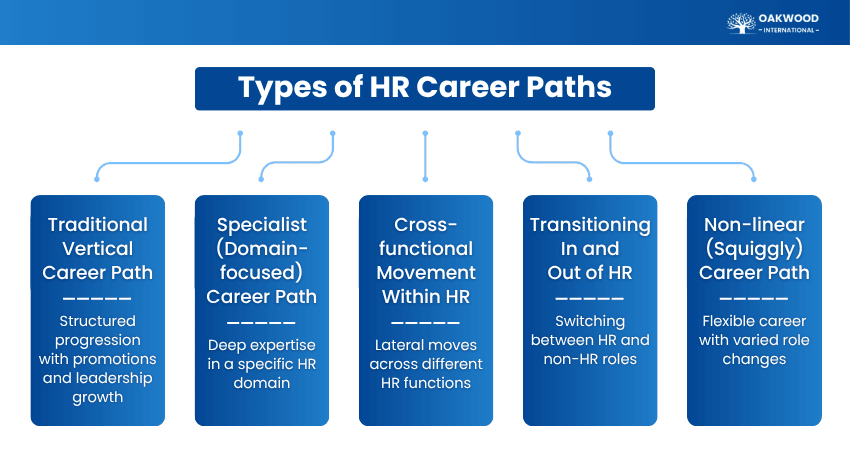
The HR Career Path offers multiple routes for growth based on skills and interests. It is flexible, with professionals entering from different backgrounds. These paths can be understood through the directions HR professionals take:
1) Traditional Vertical Career Path
This is a structured and linear path where professionals move step by step from entry-level roles to senior leadership positions. It focuses on promotions, increased responsibility, and leadership growth. While it offers clear progression and higher pay, it may also lead to pressure and burnout if growth is too rapid.
2) Specialist (Domain-focused) Career Path
In this path, professionals focus on a specific HR area such as compensation, employee relations, or people analytics. It is ideal for those who want to develop deep expertise and become subject matter experts. This path offers strong career opportunities but may limit flexibility across other HR functions.
3) Cross-functional Movement Within HR
Also known as a lateral or non-linear path, this involves moving across different HR functions such as recruitment, HR operations, or learning and development. Within the HR Career Path, this approach helps professionals gain diverse experience and a broader understanding of HR, though it may take longer to show career impact.
4) Transitioning In and Out of HR
This path involves moving between HR and non-HR roles across different industries. Professionals may enter HR from other fields or move out to gain broader business experience before returning later. It offers versatility and transferable skills but can sometimes make career direction appear less clear.
5) Non-linear (Squiggly) Career Path
A squiggly Career Path involves frequent changes across roles, departments, or even industries over time. Within the HR Career Path, it is driven by curiosity, flexibility, and personal interests. While it allows continuous learning and variety, it may also lead to challenges such as a lack of stability or a clear career identity.
Popular HR Roles
HR includes roles from entry-level positions to senior leadership, all supporting people management and organisational growth. These roles can be understood through key positions across the HR Career Path:
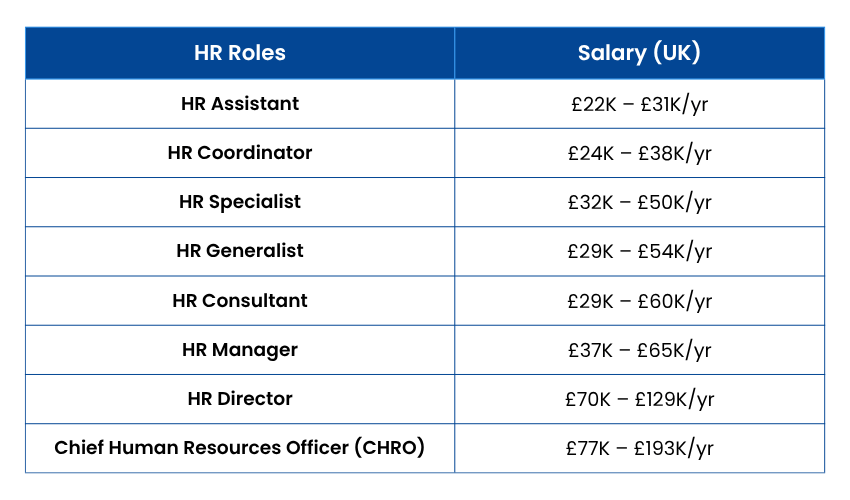
Source: Glassdoor
1) HR Assistant
Primary Duties: HR Assistants provide administrative support to the HR team, including maintaining employee records, scheduling interviews, and assisting with onboarding and documentation.
Requirements:
This is an entry-level role suitable for candidates with little or no experience. Strong organisation, teamwork, and communication skills are essential.
2) HR Coordinator
Primary Duties: HR Coordinators support recruitment, onboarding, payroll, and employee record-keeping. They organise interviews, communicate with candidates, and assist with HR operations.
Requirements:
Usually requires some HR experience and an undergraduate degree. Strong communication and organisational skills are important.
3) HR Specialist
Primary Duties: HR Specialists focus on a specific area such as recruitment, training, payroll, or employee relations within organisations. They handle specialised tasks and develop expertise in their chosen domain over time.
Requirements:
Requires a few years of HR experience and a strong interest in a chosen specialisation, along with technical, analytical, and problem-solving skills.
4) HR Generalist
Primary Duties: HR Generalists manage multiple HR functions, including recruitment, training, employee engagement, compliance, and payroll across departments. They support overall HR operations and ensure smooth day-to-day functioning.
Requirements:
Typically requires prior HR experience, along with strong communication, leadership, problem-solving, and decision-making skills in workplace settings.
5) HR Consultant
Primary Duties: HR Consultants provide expert advice on HR strategies, recruitment, employee relations, and policy development for different organisations. They help organisations improve HR practices and solve complex people-related challenges effectively.
Requirements:
Requires significant HR experience, strong communication skills, and the ability to work independently or collaboratively with clients across industries.
6) HR Manager
Primary Duties: HR Managers oversee HR operations, manage teams, ensure compliance with employment laws, and implement HR strategies across the organisation effectively. They also support employee development and organisational performance improvement initiatives.
Requirements:
Usually requires several years of HR experience, leadership abilities, and strong organisational, communication, and technical skills for managing teams successfully.
7) HR Director
Primary Duties: HR Directors lead the HR department, develop long-term strategies, manage budgets, and align HR activities with business objectives and organisational goals. They also guide senior HR teams and support leadership decisions.
Requirements:
Requires extensive HR experience, leadership expertise, and strong strategic thinking, decision-making, and stakeholder management skills across organisational functions.
8) Chief Human Resources Officer (CHRO)
Primary Duties: The CHRO oversees the entire HR function, shapes organisational culture, and works closely with executive leadership to drive business success and long-term growth. They influence high-level organisational decisions and workforce strategies.
Requirements: Requires many years of senior HR experience, advanced qualifications, and strong leadership, strategic thinking, and decision-making abilities at the executive level.
Build expertise in strategic HR planning and effective workforce management with our
HR Strategy Training
– Register now!
How to Start a Career in HR?
Starting an HR Career Path requires building the right knowledge, skills, and practical experience. As HR focuses on managing people and organisational processes, developing a strong foundation is essential. You can begin this journey by following these key steps:
1) Develop Relevant Education and Training
Begin by building foundational knowledge through formal education such as a degree in Human Resources, Business, Psychology, or related fields. You can also take short courses in areas like recruitment, employee relations, performance management, and employment law to strengthen your understanding.
2) Gain Hands-on Experience
Practical experience is important for starting a career in HR. You can gain experience through internships, part-time jobs, or by applying transferable skills from roles like administration, customer service, or operations. Look for opportunities to support HR tasks such as hiring, onboarding, or training within your current role.
3) Obtain Professional Certifications
Certifications help improve your credibility and demonstrate your commitment to HR. Entry-level certifications such as HR Coordinator or HR Generalist programmes can enhance your profile. It is also important to continue learning and upskilling to stay relevant in a changing work environment.
4) Apply for Entry-level HR Positions
Once you have gained the required knowledge and experience, you can apply for entry-level roles such as HR Assistant, HR Coordinator, or Recruiter. These roles provide a strong starting point and allow you to build experience, develop skills, and progress further in your HR career over time.
Key Skills Required for an HR Career
To succeed in an HR Career Path, professionals need a balance of technical knowledge, soft skills, and digital capabilities. As roles evolve, employers look for individuals who can manage people and use technology effectively. These skills can be seen across the key areas below:
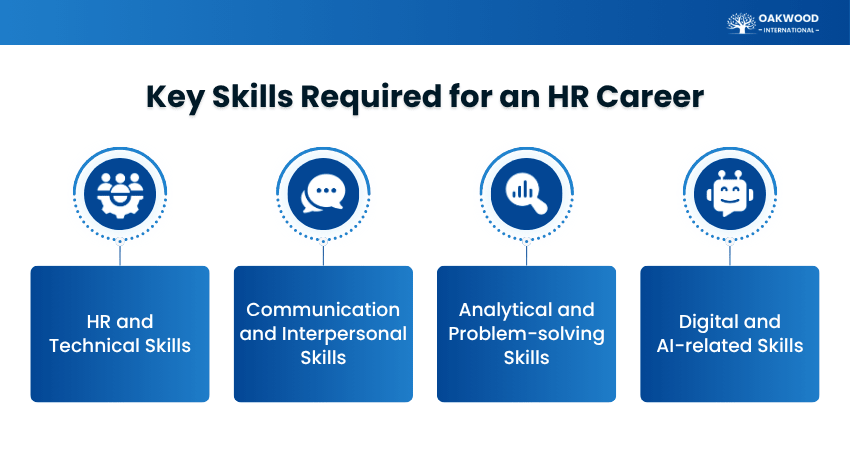
1) HR and Technical Skills
HR professionals must understand core HR processes such as recruitment, onboarding, and employee management. Knowledge of employment laws, contracts, workplace policies, and HR systems like HRIS tools is essential for ensuring compliance and efficient operations.
2) Communication and Interpersonal Skills
Strong communication is critical in HR, as professionals interact with employees at all levels. Skills such as empathy, active listening, conflict resolution, and teamwork help build trust, manage workplace issues, and maintain a positive work environment.
3) Analytical and Problem-solving Skills
HR involves analysing data, identifying trends, and solving workplace challenges. Skills in Data Analysis, reporting, and decision-making help HR professionals improve performance, manage change, and support organisational goals effectively.
4) Digital and AI-related Skills
With the rise of digital tools and AI in HR, professionals need to be comfortable using HR technology , applicant tracking systems, and automation tools. Confidence in using digital platforms and understanding people analytics are becoming essential for modern HR roles.
Understand key HR functions, policies, and practices for real-world applications through the
HR Course
– Join now!
How to Plan Your HR Career Growth?
Planning your HR career growth helps you stay focused and make informed decisions as you progress. A structured approach ensures you align your skills and goals with the right opportunities. You can plan your growth by reflecting on the following key questions:
Question 1: Who am I and Where do I Stand?
Start by reflecting on your current situation, including your education, work experience, skills, and achievements. Consider what has led you to this point, such as your interests, past roles, or learning experiences. It is also important to think about your personal circumstances, as these can influence your career decisions and priorities.
Question 2: What do I Want and Why?
Next, focus on your career goals and motivations. Identify the areas of HR that interest you the most and understand what drives you, whether it is career growth, stability, learning, or recognition. Exploring different HR roles and industry expectations can help you choose a path that aligns with your interests and long-term aspirations.
Question 3: How Will I Achieve it?
Once you have a clear goal, create a practical plan to achieve it. Identify the skills, experience, and qualifications required for your desired role. Consider taking courses, gaining certifications, building relevant experience, or seeking guidance from mentors. You can also look for stepping-stone roles that help you move closer to your target position.
Question 4: What do I Aspire to Become?
Finally, think about your long-term career vision. You may have a clear goal, such as becoming an HR Manager or CHRO, or you may prefer to explore different areas before deciding. Define what success means to you and set realistic goals that align with both your professional ambitions and personal life.
Conclusion
The HR Career Path offers diverse opportunities for growth, flexibility, and long-term success. By understanding roles, building key skills, and planning your progression carefully, you can shape a rewarding career. With the right approach and continuous learning, HR can help you make a meaningful impact on organisations and people’s lives.
Build strong HR leadership skills to drive people and business success with our HR Leadership Courses – Join today!
Frequently Ask Questions
What are the Seven Pillars of HR?
The seven pillars of HR:
a) Recruitment and Talent Acquisition
b) Compensation and Benefits
c) Performance Management
d) Learning and Development
e) Employee Relations and Engagement
f) HR Information Systems (HRIS)
g) HR Data and Analytics
What Industries Offer the Best Opportunities for HR Professionals?
Top industries for HR professionals include technology, finance, healthcare, consulting, and manufacturing, offering strong career growth and high salaries. Emerging sectors like renewable energy and AI are also increasing demand for strategic HR talent, especially in talent acquisition and employee experience.
How Long Does it Take to Build a Successful HR Career?
Building a successful HR Career Path typically takes 5 to 10+ years, progressing from entry-level roles to managerial or specialised positions. While entry is possible quickly, senior roles like HR Director or Vice President (VP) usually require over a decade of experience.
Related Blogs
Didn’t Find What You’re Looking For?

Our commitment to excellence ensures an exceptional learning experience tailored to your professional development needs.


© Copyright 2026 - Oakwood International ™ - All rights reserved.


SUPER SALE
 Get Amazing Discounts
And Deals
Get Amazing Discounts
And Deals