

 Back
Back


 Back to Catagories


Table of Contents


 + 44 7452
122728
+ 44 7452
122728
 08-Sep-2026
Maria Thompson
Have you ever wondered what keeps an organisation running smoothly behind the scenes? Is it just technology, or is there something more human at its core? The answer lies in understanding What is Human Resource Management. It's not just about hiring people; it's about shaping the very backbone of a company. But why is HRM considered the heart of every successful business?
In this blog, we will learn What is Human Resource Management, why it matters and how it supports people at work. Ready to uncover the secret power behind every thriving organisation? Let's dive in!
What is Human Resource Management?
Human Resource Management (HRM) is the strategic and proactive approach to managing people within an organisation to enhance performance and support long-term business goals. It involves recruiting, developing and supporting employees, while ensuring their well-being and aligning their contributions with organisational objectives.
HRM encompasses key functions such as
employee relations
, compensation, health and safety, and compliance with labour laws. By fostering a productive work environment, HRM plays a key role in developing organisational success and employee satisfaction, with a strong emphasis on
People Management Skills
to ensure effective leadership and support.

Why is Human Resource Management Important?
Human Resource Management plays an indispensable role in organisational success and sustainability. Here are some essential points describing its importance:
1) Aligning with Organisational Goals: HRM ensures employees' efforts align with the organisation's mission and culture.
2) Recruiting Skilled Talent: Attracts and hires qualified professionals to advance company objectives.
3) Training and Development: Provide employees with the necessary skills and knowledge to achieve organisational goals.
4) Maintaining Business Health: Supports employee well-being and productivity to sustain overall performance.
5) Monitoring Job Market Trends:
Ensures competitive benefits, prevents burnout, and adapts roles to market demands.
How HRM Works?
Human Resource Management ensures the efficient handling of employee-related processes and aligns them with organisational goals. Here's how HRM works:
1) Dedicated Department
HRM typically operates as an independent department within the organisation, responsible for managing all employee-related tasks. It manages recruitment, onboarding, training, benefits administration, and compliance with employment laws, ensuring smooth workforce operations.
2) Strategic Role
HRM works closely with senior leadership to align workforce management with the organisation's strategic goals. This includes planning for future staffing needs, developing policies that support business objectives, and fostering a strong
organisational culture
.
3) Day-to-Day Operations
On a daily basis, HR professionals manage essential tasks such as processing payroll, managing performance reviews, and addressing workplace issues like disputes or grievances. Implementing Effective
Performance Management
ensures smooth organisational operations and enhances
employee satisfaction.
4) Adaptability
HR team structures vary depending on company size and industry. Smaller organisations may rely on one HR professional or a small generalist team, while larger organisations have specialised roles such as Recruitment Specialists, Training Managers, or Compliance Officers, allowing for deeper expertise.
5) Employee Support
HRM acts as a critical support system for employees, addressing their concerns and providing resources to enhance their work experience. This includes resolving conflicts, offering Career Development opportunities, and ensuring a positive work environment that fosters motivation and engagement.
6) Technology Integration
Modern HRM integrates HR Technology to improve efficiency and accuracy. HR software systems, along with Artificial Intelligence (AI) in HR, Employee Engagement, automate tasks like payroll, performance tracking, and recruitment, enabling HR teams to focus on strategic initiatives,
employee engagement
, and Learning and Development Secrets for HR.
7) Legal Compliance
HRM ensures the organisation complies with labour laws and regulations, protecting both employees and the company. This includes health and safety compliance, anti-discrimination policies and data protection standards, ensuring ethical and lawful practices.
Become a confident HR and L&D professional through the
CIPD Level 5 Associate Diploma in Organisational Learning and Development
– Join now!
Types of Human Resource Management Objectives
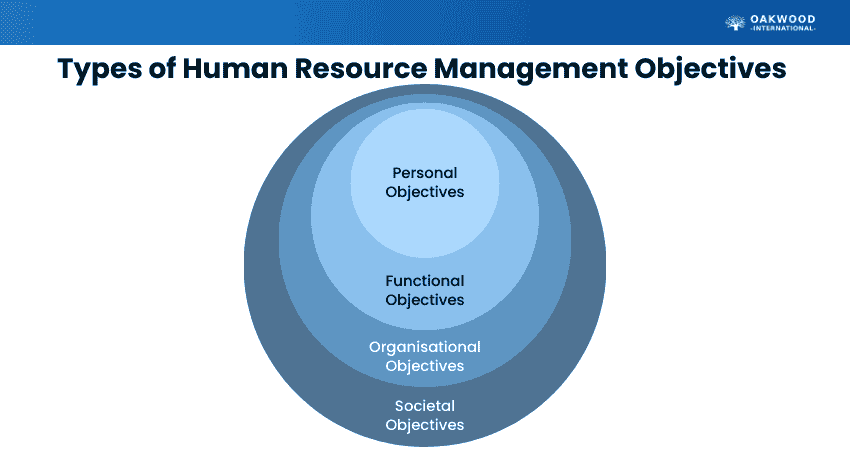
HRM has four main types of objectives that help both the organisation and its employees. Here are the types of HRM objectives:
1) Societal Objectives
These objectives focus on doing what is right for society and following the law. HRM works to provide equal job opportunities to everyone and ensures fair pay for equal work. It also protects employees from discrimination and supports ethical behaviour in the workplace.
2) Organisational Objectives
These objectives help the organisation run smoothly and meet its goals. HRM makes sure there are enough skilled employees for each job and that they receive the right training to work effectively. It also works to keep employees happy, so they stay with the organisation for a long time.
3) Functional Objectives
These objectives make sure that the HR department itself works in the best way. HRM uses its tools, time and staff wisely so that all HR activities support the success of the organisation. This keeps the HR function organised and effective.
4) Personal Objectives
These objectives focus on the needs and growth of employees. HRM supports learning, Career Development and personal goals. It works to keep employees satisfied, confident and well supported at work, which helps them perform better.
Principles of Human Resource Management
Human Resource Management has evolved from a task-oriented administrative function to a critical strategic component of every organisation. Here are some key HRM guiding principles given below:
Commitment
HR departments focus on job security by ensuring staffing levels meet the company's needs. This commitment is demonstrated through regular training, performance evaluations, and goal-setting activities, which assure employees of their long-term positions within the organisation.
Competence
Competence is crucial for a company's growth and development. HRM sustains workforce competency by providing training opportunities and orientation programmes. These initiatives improve employees skills, knowledge, and competency, leading to the production of reliable products and services. Without a high level of competence, a company risks legal issues with its products and services.
Develop real-world HR skills and boost your future through the
CIPD Level 3 Certificate in People Practice
– Join now!
Functions of Human Resource Management
Human Resource Management (HRM) plays an important role in supporting employees throughout their journey in the organisation. It ensures that the right people are hired, developed, rewarded, and protected while fostering a productive and positive workplace culture. Below are the core functions of Human Resource Management:

Employee Recruitment
Recruitment means finding and hiring the right people for the right jobs. HR looks at job needs, searches for candidates, checks their skills and invites the best ones to join the organisation. They may use job websites, social media and online interviews to find good talent.
Employee Orientation
Orientation is also called onboarding. It helps new employees learn about the company, their role and the people they will work with. It includes welcome sessions, meetings, simple training and support from a mentor so that new employees feel comfortable and ready to start work.
Employee Development
HRM helps
Employees Development
by offering training, learning courses, workshops and Career Development programmes. When employees learn new skills, they become more confident, and the organisation benefits from a stronger workforce. It also helps employees adjust when new systems or tools are introduced in the company.
Employee Health and Safety
HRM is responsible for keeping employees safe and protected. This includes preventing bullying, discrimination or harassment at work. It also covers health rules, fire and building safety, secure access and protecting personal information through strong security. A safe workplace helps employees feel valued and supported.
Compensation and Benefits
Compensation refers to salary, bonuses, holidays and other benefits an employee receives. HR ensures pay is fair and matches industry standards. They may use performance reviews to decide salary increases. A good compensation plan keeps employees satisfied and encourages them to stay with the organisation.
Career Opportunities in HRM
Human Resource Management offers a variety of career paths, each with its own array of responsibilities and requirements. Many roles in HRM typically require a Bachelor's degree in Human Resources or in an associated field. Here are some key careers in the HRM industry:

1) Payroll Specialist
Payroll specialists manage employee payment processes, ensuring accuracy and compliance. They handle timesheets, payroll documentation, and direct deposits. According to
Glassdoor
, the average salary is £29,913 per year.
2) Training and Development Manager
Training and Development Managers design and implement programmes to enhance employee skills and knowledge. They play a crucial role in organisational growth. According to Glassdoor, the average salary is £36,693 per year.
3) Human Resources Manager
Human Resources Managers
oversee recruitment, employee relations, and compliance with labor laws. They ensure effective HR practices within organisations. According to Glassdoor, the average salary is £46,095 per year.
4) Benefits Manager
Benefits Managers develop and manage employee benefits programmes, including health insurance and retirement plans. They ensure competitive and compliant benefits offerings. According to Glassdoor, the average salary is £58,430 per year.
Conclusion
Understanding What is Human Resource Management helps us see how HR supports people, strengthens workplace culture, and drives organisational success. By focusing on hiring, development, well-being, and fair practices, HRM creates an environment where employees thrive and businesses grow with confidence and stability.
Start your journey in HR excellence and advance your career with CIPD Qualifications – Register today!
Frequently Ask Questions
What are the 5 P's of HRM?
The 5 P’s help HRM are:
a) Purpose: Supports the organisation’s main goals
b) Principles: Encourages fairness and ethical behaviour
c) Processes: Uses effective systems for HR activities
d) People: Find and develop the right talent
e) Performance: Boosts results and growth
Is HR Higher Than the Manager?
Not always. HR is not automatically above other managers. It depends on the company structure. HR manages hiring and policies, while Department Managers lead their teams. Both roles are important and usually work together.
Can HR Become a CEO?
Yes, HR professionals can become CEOs. Their expertise in leadership, People Management and organisational strategy equips them with the skills required for top-level decision-making and business growth.
Related Blogs
Didn’t Find What You’re Looking For?

Our commitment to excellence ensures an exceptional learning experience tailored to your professional development needs.


© Copyright 2026 - Oakwood International ™ - All rights reserved.


SUPER SALE
 Get Amazing Discounts
And Deals
Get Amazing Discounts
And Deals