

 Back
Back


 Back to Catagories


Table of Contents


 + 44 7452
122728
+ 44 7452
122728
 24-Sep-2026
Hailey Davis
Hiring the right person can feel confusing and stressful. Applications pile up, interviews take time, and finding the right fit is not always easy. This is where Recruiters step in. They guide candidates through career changes and help organisations find people who truly belong in their teams.
To understand their real impact, it’s important to explore What is a Recruiter, what Recruiters does, the skills they depend on, and how they shape the hiring process. Read on to learn more!
What is a Recruiter?
A Recruiter is a professional who helps organisations find and hire the right people for open roles. They identify suitable candidates, assess their skills, and match them with jobs that fit both the role requirements and the company’s goals. Recruiters act as a link between employers and job seekers, making the hiring process smoother and more effective.
Recruiters may work within an organisation as part of the Human Resources (HR) team or externally through recruitment agencies. To succeed in this role, they rely on strong communication skills, knowledge of the job market, and the ability to identify talent that supports long-term business growth.

What Does a Recruiter do?
A Recruiter helps build an organisation’s workforce by managing the recruitment cycle, from identifying hiring needs to supporting new hires. Their focus is on finding the right talent to drive long-term business success. Key responsibilities include:
1) Job Analysis and Role Definition:
Working with Hiring Managers to clarify skills, experience, and cultural fit, while ensuring job descriptions match market standards.
2) Sourcing Candidates:
Identifying talent through job boards, professional networks, industry events, and recruitment systems such as applicant tracking tools.
3) Screening and Interviewing:
Assessing candidates through CV reviews, interviews, and skill evaluations to confirm suitability for the role.
4) Interview Coordination:
Managing interview schedules, guiding candidates through the process, and collecting feedback to support hiring decisions.
5) Offer Negotiation:
Supporting salary discussions and aligning candidate expectations with company policies and budgets.
6) Onboarding Support:
Assisting with pre-joining tasks, introductions, and initial training to help new hires integrate smoothly.
Where do Recruiters Work?
Recruiters work in different organisational settings depending on how hiring is managed. They may work directly for a company or for external firms that support multiple employers. This is usually seen in the following environments.
1) In-house Corporate Teams:
Recruiters are part of a company’s HR department and manage hiring only for that organisation.
2) External Recruitment Firms:
Recruiters support hiring needs for several businesses at the same time.
3) Staffing Providers:
Recruiters focus on filling temporary, contract, or short-term roles based on business demand.
Types of Recruiters
The recruitment field includes different types of Recruiters, each focusing on specific hiring needs, industries, or job levels. This specialisation helps organisations find suitable talent more efficiently and ensures candidates are matched to the right roles.
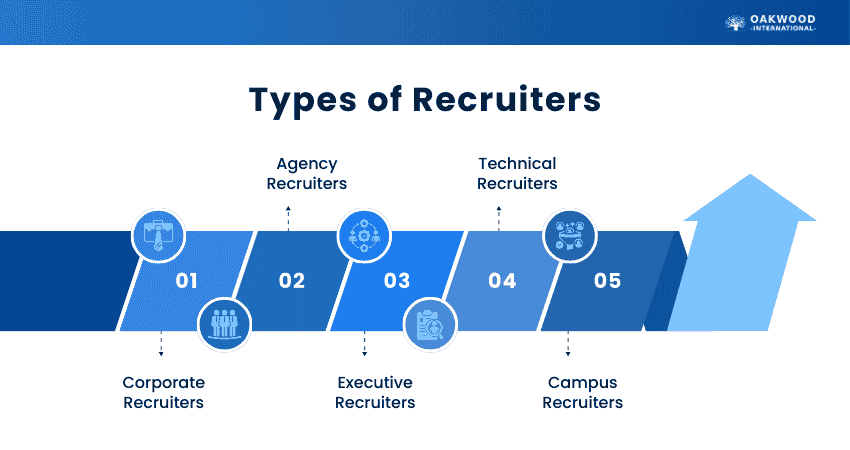
1) Corporate Recruiters:
Work within an organisation’s HR team and manage hiring across departments, ensuring candidates align with company goals and culture.
2) Agency Recruiters:
Employed by recruitment agencies, they hire candidates for multiple client organisations and often fill roles quickly across various industries.
3) Executive Recruiters:
Also known as headhunters, they specialise in sourcing senior leaders and executive-level talent using strong industry networks.
4) Technical Recruiters:
Focus on hiring for IT, engineering, and technology roles that require specialised technical skills.
5) Campus Recruiters:
Concentrate on recruiting graduates and interns by engaging with universities, colleges, and career events.
Gain practical workforce planning skills to align talent with organisational goals and demands through the
Workforce Resource Planning Training
– Join now!
How to Become a Recruiter?
Becoming a Recruiter involves building the right mix of knowledge, skills, and practical experience. There is no single fixed path, but following these steps can help you enter the field and grow with confidence.
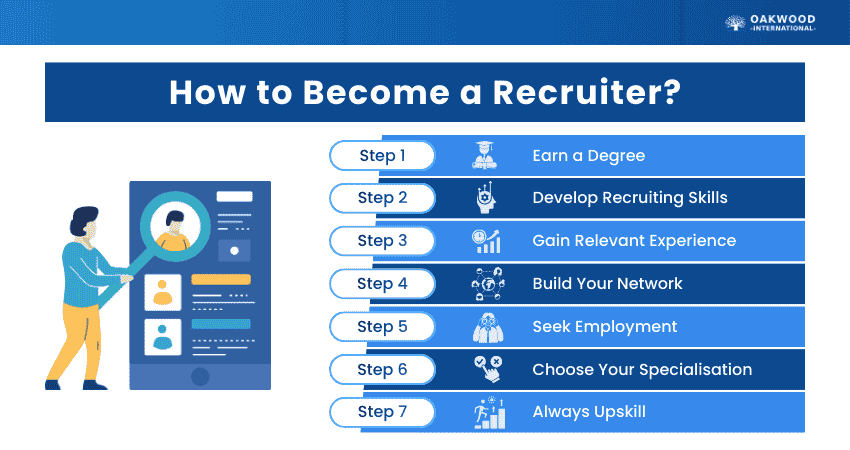
Step 1: Earn a Degree
While a specific degree is not always required, education in human resources, business, or psychology can be helpful. Professional certifications in recruitment or HR also strengthen your understanding of hiring practices and improve job prospects.
Step 2: Develop Recruiting Skills
Strong communication, interviewing, and candidate assessment skills are essential for Recruiters. Learning how to write clear job descriptions, evaluate CVs, and engage candidates effectively is key to success in this role.
Step 3: Gain Relevant Experience
Hands-on experience is important. Entry-level roles such as recruitment coordinator, HR assistant, or internships help you understand sourcing, screening, and interview coordination in real hiring situations.
Step 4: Build Your Network
Networking plays a major role in recruitment. Connecting with professionals, attending industry events, and staying active on platforms like LinkedIn help you access talent pools and career opportunities.
Step 5: Seek Employment
Once you have basic skills and experience, start applying for Recruiter roles. Highlight your people skills, hiring experience, and ability to manage candidates throughout the Recruitment Process.
Step 6: Choose Your Specialisation
As your career progresses, you may choose to specialise in areas such as technical recruitment, executive hiring, or campus recruitment. Specialisation helps you build expertise and stand out in the job market.
Step 7: Always Upskill
Recruitment continues to evolve with new tools and trends. Ongoing learning helps you stay updated with hiring technologies, market changes, and best practices, ensuring long-term career growth.
What Skills are Most Important for a Recruiter?
Recruiters rely on a blend of analytical thinking, interpersonal abilities, and personal resilience to manage hiring effectively. Each skill plays a key role in making better hiring decisions and building strong relationships.
1) Critical Thinking Ability
Recruiters must carefully assess candidates by comparing skills, experience, and job requirements. Critical thinking helps them analyse information objectively, avoid bias, and choose candidates who are most suitable for the role and organisation.
2) Strong Intuition
With experience, Recruiters develop intuition that helps them judge a candidate’s attitude, motivation, and cultural fit. This skill supports decision-making when soft skills or long-term potential are not obvious on a CV.
3) Desire to Help
Recruiters work closely with people during important career moments. A genuine desire to help candidates find the right opportunities builds trust, improves candidate experience, and strengthens professional relationships.
4) Will to Succeed
Recruitment often involves targets, deadlines, and competition. A strong will to succeed helps Recruiters stay focused, motivated, and persistent, even when roles are hard to fill or candidates drop out.
5) Resilience
Hiring processes can change quickly and involve rejection or setbacks. Resilience allows Recruiters to handle pressure, adapt to challenges, and remain professional while continuing to deliver results.
Learn proven Talent Management strategies to build strong teams and drive long-term business growth. Join our
Talent Management Training
today!
What are the Benefits of Being a Recruiter?
Being a Recruiter offers a range of professional and personal benefits, making it a rewarding career choice. Key benefits include:
1) Career Growth Opportunities:
Recruiters can advance into senior positions such as Talent Acquisition Manager, HR leadership roles, or transition into consultancy careers.
2) Varied and Engaging Work:
Recruitment involves different tasks each day, keeping the role dynamic and interesting.
3) Strong Professional Network:
Working closely with candidates and employers across industries allows recruiters to build extensive professional networks.
4) Job Satisfaction:
Helping candidates find suitable roles while supporting organisations with quality talent brings a strong sense of achievement.
5) Skill Development:
The role strengthens important skills such as communication, negotiation, problem-solving, and market awareness.
6) Flexibility and Autonomy:
Many recruiters benefit from flexible working arrangements, including hybrid or remote options, offering greater control over schedules and work location.
What is a Recruiter's Average Salary?
Recruiter salaries vary by experience, location, and role type. The table below compares average Recruiter salaries across countries.
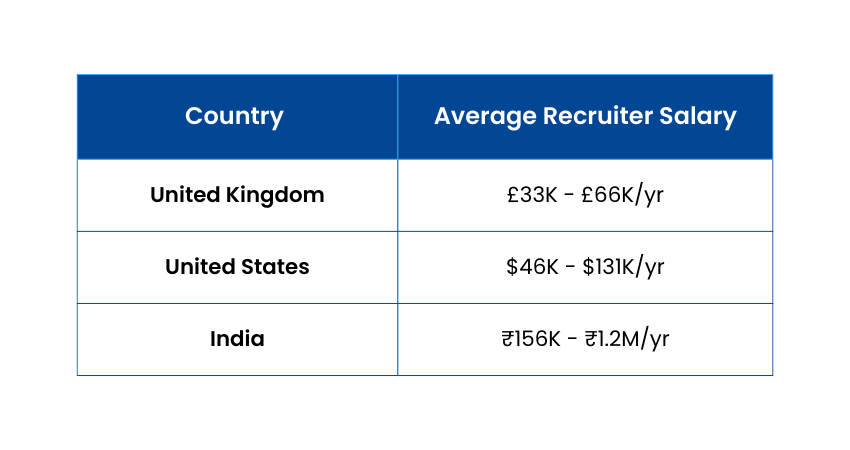
What's Challenging About Being a Recruiter?
Recruitment is demanding due to strong competition, changing expectations, and pressure. Recruiters must balance speed, fairness, and quality when managing hiring processes. Common challenges include:
1) Finding Qualified Talent:
Identifying candidates with the right skills can be difficult, especially in competitive or fast-changing industries.
2) Managing Candidate Expectations:
Recruiters often deal with offer rejections, candidate dropouts, and competition from other employers, which can delay hiring.
3) Balancing Employer Demands:
Hiring Managers may expect ideal candidates, even when the available talent pool is limited or timelines are tight.
4) Ensuring Fair and Inclusive Hiring:
Reducing bias and maintaining diversity requires structured processes and consistent effort.
5) Handling Pressure and Workload:
Managing high application volumes, tight deadlines, and frequent rejection can be stressful and demanding.
Develop practical appraisal skills to assess performance confidently and support your team’s success. Join our
Performance Appraisal Training
now!
What is the Recruitment Process?
The recruitment process has a structured approach to secure quality hires and the right fit for each role. It typically includes the following key steps:
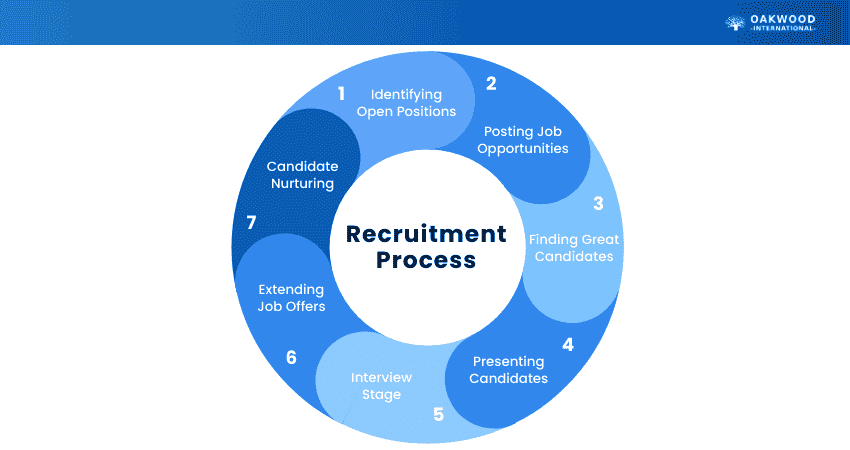
1) Identifying Open Positions
The recruitment process begins by identifying a hiring need. This may happen due to business growth, a new project, or an employee leaving. Recruiters work with managers to understand the role, responsibilities, and skills required.
2) Posting Job Opportunities
Once the role is defined, Recruiters create and publish job descriptions. These are shared on job boards, company websites, social media, or through recruitment agencies to attract suitable applicants.
3) Finding Great Candidates
Recruiters source candidates by reviewing applications, searching databases, using referrals, and reaching out directly to potential candidates. The aim is to build a strong pool of qualified applicants.
4) Presenting Candidates
After screening and shortlisting, Recruiters present the most suitable candidates to Hiring Managers or clients. This includes sharing CVs, interview notes, and suitability insights to support selection decisions.
5) Interview Stage
Shortlisted candidates attend interviews to assess their skills, experience, and cultural fit. Recruiters coordinate interviews, prepare candidates, and gather feedback after each stage to support hiring decisions.
6) Extending Job Offers
Once a candidate is selected, Recruiters manage the offer stage. This includes discussing salary, confirming employment terms, and issuing the formal job offer while ensuring alignment with company policies.
7) Candidate Nurturing
After hiring, Recruiters maintain relationships with both candidates and employers. This helps support onboarding, encourages retention, and allows Recruiters to recommend strong candidates for future roles.
Conclusion
Understanding What is a Recruiter shows how vital this role is in shaping careers and building strong teams. Recruiters connect talent with opportunity, balance business needs with people goals, and drive long-term success. For those who enjoy working with people and solving hiring challenges, recruitment offers a rewarding and future-ready career.
Build strong leadership and management skills to manage teams confidently through the
People Management Courses
– Join now!
Frequently Ask Questions
What is the Difference Between HR and a Recruiter?
Recruiters focus mainly on hiring and talent acquisition, while HR professionals manage a wider range of employee-related responsibilities such as training, performance, and employee relations.
How Much do Recruiters Get Paid in the UK?
According to Glassdoor, Recruiters in the UK earn an average salary of around £32K - £54K per year, with pay varying by experience, role type, and industry.
What is the Downside of Using a Recruiter?
Using a Recruiter can reduce direct control over the hiring process and may lead to miscommunication or varied service quality. There is also a risk that candidates may be considering multiple offers, which can delay decisions or lead to dropouts.
Related Blogs
Didn’t Find What You’re Looking For?

Our commitment to excellence ensures an exceptional learning experience tailored to your professional development needs.


Contact Us


© Copyright 2026 - Oakwood International ™ - All rights reserved.


SUPER SALE
 Get Amazing Discounts
And Deals
Get Amazing Discounts
And Deals