

 Back
Back


 Back to Catagories


Table of Contents


 + 44 7452
122728
+ 44 7452
122728
 08-Sep-2026
Maria Thompson
As new technologies are emerging with changing job roles, businesses can no longer rely on the same skills year after year. This is why employees look for opportunities to learn and progress, while businesses need capable, adaptable teams to keep up with change. This is where Talent Development becomes essential, helping organisations prepare for future demands and create meaningful career growth for employees.
It is about helping employees build the necessary skills, confidence, and mindset needed for tomorrow. When businesses invest in developing their workforce, they strengthen performance, improve retention, and create a workplace where growth is part of everyday success. In this blog, you will learn about What is Talent Development, its key components, benefits, tools, and more.
What is Talent Development?
Talent Development is the process through which organisations ensure their workforce has the right skills and abilities to perform effectively while also preparing for future challenges. It focuses on continuous learning and growth, helping employees build both technical and interpersonal capabilities to succeed in today’s work environments.
Organisations support Talent Development by investing in structured programmes and daily learning opportunities. It includes training, support, expert-led sessions, and skill-building incentives. Prioritising development is integral for a company to build an adaptable workforce that can respond effectively to evolving technologies and trends.

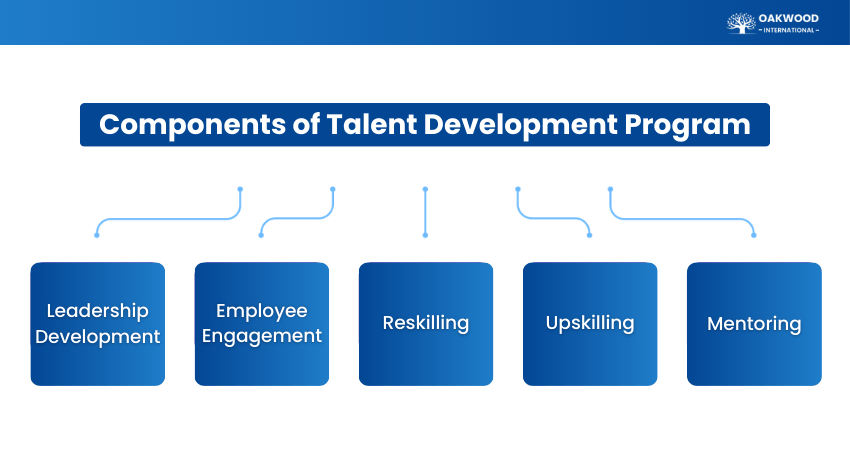
Key Components of a Talent Development Program
Businesses build Talent Development programmes based on several key components to support employee growth and achieve their business goals. Let’s look at the important ones below:
1) Leadership Development
Organisations support Leadership Development by identifying high-potential employees and creating clear pathways toward future leadership roles. Through succession planning and targeted training, employees build the skills required to manage teams and make strategic decisions. This approach helps organisations maintain a strong leadership pipeline for long-term stability and growth.
2) Employee Engagement
Employee Engagement initiatives encourage open communication and feedback between staff and leadership. When employees can share their experience, challenges, and ideas, organisations gain valuable insights that help to improve job satisfaction and performance. This creates a more motivated workforce that feels committed to organisational success.
3) Reskilling
Reskilling helps employees learn new methods, tools, and technologies needed to perform their roles as industries and technologies evolve. It ensures workers remain capable and relevant by adapting and changing their processes, such as adopting emerging AI tools. This helps organisations stay competitive while supporting employees through changing job demands.
4) Upskilling
Upskilling focuses on improving an employee’s existing abilities to help them prepare for more advanced responsibilities. It helps to close the skill gap and prepare them for high-value tasks, especially when a business looks beyond traditional job roles. This enables employees to grow within the organisation while increasing overall workforce capability.
5) Mentoring
Mentoring connects experienced professionals with employees who need guidance and support in their development. Through mentoring and job shadowing, employees gain practical knowledge, career guidance, and real-world exposure to accelerate their professional growth. This strengthens knowledge sharing and builds a culture of continuous learning across the organisation.
Turn feedback into growth and learn how to evaluate performance fairly with
Performance Appraisal Training
– Sign up now!
How to Create a Talent Development Strategy?
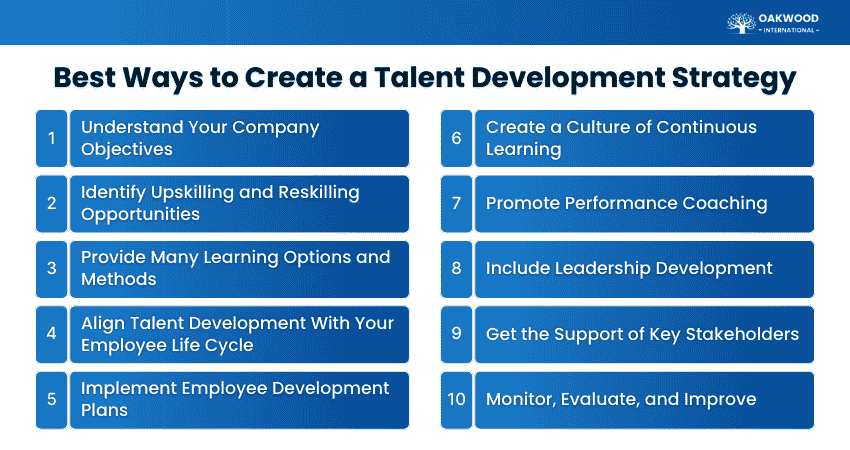
Creating an effective Talent Development strategy requires careful planning, collaboration, and continuous evaluation. Below are the core steps organisations can follow to build a structured and sustainable approach to developing their workforce:
1) Understand Your Company Objectives
Start by aligning Talent Development with your organisation’s long-term goals and overall business strategy. Identify what you aim to achieve, such as closing skills gaps, improving productivity, or increasing employee retention. This ensures development initiatives directly support strategic priorities and that resources are invested where they deliver the greatest value.
2) Identify Upskilling and Reskilling Opportunities
Assess present job roles and compare the skills needed with the skills your workforce already has. Here, use surveys, assessments, and interviews to identify gaps, underutilised expertise, and areas where employees can upskill or reskill for future job roles. This helps organisations prepare employees for evolving roles and future workforce demands.
3) Provide Many Learning Options and Methods
Offer a variety of learning opportunities, including formal training, mentoring, coaching, workshops, and e-learning programmes. Employees learn in different ways, so flexible learning formats improve engagement and knowledge retention. This approach makes learning more accessible, personalised, and effective for all employees.
4) Align Talent Development With Your Employee Life Cycle
Integrate learning opportunities at every stage of an employee’s lifecycle. This ensures professionals grow continuously and shows employees that development is a core long-term priority of the business. This supports long-term engagement and encourages continuous career progression.
5) Implement Employee Development Plans
Create personalised Talent Development plans that align employee career goals with organisational needs. Regular check-ins and structured progress tracking help employees remain focused while addressing skills gaps and improving performance. This provides clarity, accountability, and measurable progress for both employees and the organisation.
6) Create a Culture of Continuous Learning
Encourage ongoing learning by embedding skill development into daily work. Provide time, tools, and recognition for learning achievements so employees remain adaptable and open to change. A learning culture promotes innovation and helps the workforce stay future-ready.
7) Promote Performance Coaching
Companies must utilise regular feedback and coaching to connect learning with performance improvement. Here, managers can play their roles by guiding employees in developing specific skills and achieving measurable goals through continuous support. This strengthens accountability and drives consistent improvement in performance.
8) Include Leadership Development
Identify potential leaders early and prepare them through structured leadership training, mentoring, and stretch assignments. Building a leadership pipeline supports organisational stability and prepares the business for future challenges and succession needs.
9) Get the Support of Key Stakeholders
Successful Talent Development requires collaboration across the organisation. Strong stakeholder ensures support to help secure needed resources, align goals, and ensure strategy is effectively executed. This builds shared ownership and strengthens the overall effectiveness of development initiatives.
10) Monitor, Evaluate, and Improve
Track progress using performance metrics, such as engagement, retention, and skill development outcomes. Regular feedback and data analysis help to refine their Talent Development strategy and ensure continuous improvement. This ensures the strategy remains relevant, effective, and aligned with evolving business needs.
Hire the right people at the right time. Develop strategic recruitment skills that attract top talent with
Talent Acquisition Training
– Sign up today!
Benefits of Talent Development
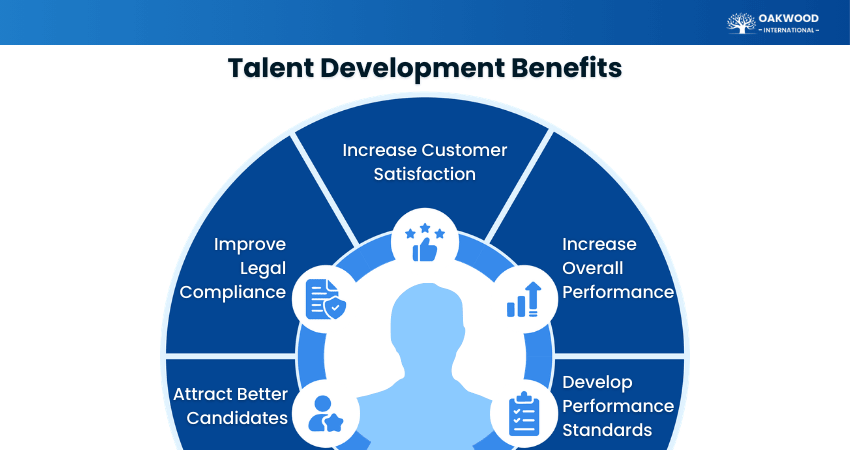
Talent Development creates value for both employers and the business by improving skills, engagement, and business performance. Let’s look at some of the key benefits it brings below:
1) Attract Better Candidates
Career growth opportunities are a major factor when candidates choose an employer. Organisations that invest in Talent Development attract skilled professionals who value learning and progression. A strong reputation for employee growth also encourages positive word-of-mouth and stronger employer branding.
2) Improve Legal Compliance
Talent Development often includes training on workplace policies, diversity and inclusion, and regulatory requirements. This helps businesses create a responsible work environment, set clear behavioural expectations, and ensure employees understand the legal and ethical standards they must follow.
3) Increase Customer Satisfaction
Employees who feel supported and engaged deliver better customer service. When the workforce is confident, skilled, and motivated, they interact positively with customers. This leads to building stronger customer relationships, improved customer experiences, and greater customer satisfaction.
4) Increase Productivity and Performance
Employees involved in Talent Development understand their roles more clearly and build the skills required to perform effectively. With defined goals and visible career pathways, they become more engaged and motivated. This leads to stronger performance and higher productivity across the organisation.
5) Develop Standards for Employee Performance
By continuously building employee capabilities, organisations raise the standard of performance for employees. Through personalised development, it helps employees grow in their current job role while improving team effectiveness. This is useful for creating a more skilled and capable workforce.
Plan smarter, allocate better, and optimise your workforce to align them with business goals with
Workforce Resource Planning Training
– Join now!
Challenges of Talent Development
While Talent Development brings significant benefits, it also faces challenges when implementing and maintaining effective programmes. Let’s look at the key challenges below:
1) Increased Budgets
Developing Talent Development programmes requires financial investment, time, and dedicated resources. Organisations must plan carefully to balance training with daily work responsibilities and measure Return on Investment through metrics, such as retention, skill development, and performance outcomes.
2) Prioritisation
Large businesses may not be able to train every employee at the same time. This makes the need for prioritisation important. Deciding who receives development opportunities can create tension amongst employees. This requires clear communication about selection criteria and equal access to help maintain fairness and transparency.
3) Executive Buy-in
Not every executive may recognise the value of investing in Talent Development. Some may prefer hiring new employees with the relevant skills instead of developing the current workforce. This approach can be costly and disruptive. This requires HR teams to demonstrate how development programmes support business continuity, performance, and long-term success.
4) Keeping Agile
Workplace skills and technologies evolve rapidly, meaning Talent Development programmes must be continuously updated. Organisations need to review regularly the training content, identify emerging skill needs, and ensure employees remain prepared for future trends and changing job requirements.
Lead with clarity, inspire performance, and manage teams effectively with the
Successful People Management and Team Leadership Course
– Register today!
Talent Development Tools and Approaches
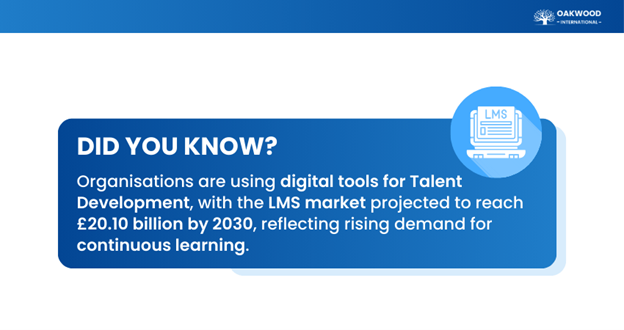
Modern Talent Development increasingly combines traditional learning methods with digital and flexible approaches. Let’s look at the key tools and approaches used below:
1) In-person Events
In-person events, such as seminars, workshops, and conferences, allow employees to step away from their desks and fully focus on learning. Inviting guest speakers or subject matter experts creates interactive sessions where participants can ask questions, exchange ideas, and gain deeper practical insights.
2) Webinars
Live or on-demand webinars are an efficient approach for delivering knowledge to a large group of employees. They enable flexibility, allowing employees to revisit recordings, pause, and focus on viewing the key sections that are most relevant to their roles and development goals.
3) Internal Newsletters
Regular newsletters support continuous learning by sharing updates, insights, and success stories on Talent Development initiatives. Organisations use them to emphasise training completed, newly developed skills, leadership messages, and useful learning resources that support ongoing engagement.
4) Online Courses
Online courses play a central part in many Talent Development programmes. They provide a structured learning experiences while measuring knowledge retention through assessments and quizzes. This is useful for organisations to track progress, identify skill gaps, and ensure employees are building the competencies required for long-term success.
Conclusion
Building a skilled and future-ready workforce is essential for ensuring long-term business success. Investing in continuous learning, strong leadership pipelines, and adaptable development strategies empowers employees to grow while staying competitive in an evolving business landscape. Eventually, Talent Development improves performance, supports innovation, and creates a culture where both employees and the organisation thrive together.
Build confident leaders and high-performing teams to drive real workplace success with People Management Courses – Sign up now!
Frequently Ask Questions
What is the Difference Between Talent Development and Talent Management?
Talent Development and talent management are closely related but differ in their scope and focus. Talent management covers the entire employee lifecycle, from recruitment to retirement. In contrast, Talent Development is a specific part of this process, focusing on developing employee skills and fostering career growth.
What is Talent Development in HR?
Talent Development in HR is the ongoing, strategic process of improving employee's skills and capabilities to align their growth with organisational goals. It focuses on long-term development through continuous learning and personalised plans. This leads to utilising employee potential, retaining talent, and enhancing performance.
What are the 3Cs of Talent Management?
The 3Cs of Talent Management include:
a) Competence: Ensuring employees have the right skills
b) Commitment: Building engagement and motivation to retain top talent
c) Contribution: Helping employees create meaningful business impact and value
Related Blogs
Didn’t Find What You’re Looking For?

Our commitment to excellence ensures an exceptional learning experience tailored to your professional development needs.


© Copyright 2026 - Oakwood International ™ - All rights reserved.


SUPER SALE
 Get Amazing Discounts
And Deals
Get Amazing Discounts
And Deals