

 Back
Back


 Back to Catagories


Table of Contents


 + 44 7452
122728
+ 44 7452
122728
 18-Sep-2026
David Walter
Have you wondered why some teams complete tasks smoothly while others struggle with delays and confusion? The difference resides in how effectively work is managed and organised. Understanding What is Workflow Management can help you see how tasks move from one step to the next, who is accountable, and how processes stay clear.
Businesses rely on structured processes to keep operations running efficiently. This is where Workflow Management becomes essential, helping organisations reduce bottlenecks, improve Team Collaboration, and deliver results consistently. In this blog, you will explore What is Workflow Management, its importance, types, benefits, and more.
What is Workflow Management?
Workflow Management is the process of designing, organising, executing, and monitoring how tasks move from one stage to another. It ensures the work flows in a clear and structured way to help teams complete tasks efficiently and consistently. Managing how tasks are assigned, tracked, and completed brings control over operations and improves business performance.
Also, it includes creating and enforcing documentation, keeping stakeholders informed, and generating reports to support Business Process Management (BPM). These activities help to maintain consistency, transparency, and continuous process improvement.

Why is Workflow Management Important?
Workflow Management is important since it brings structure and clarity to how work gets done. It assists organisations to answer four essential questions for every task: 1) What needs to be done? 2) Who is responsible? 3) When should it be completed? 4) How should it be achieved? Defining these questions helps teams to avoid confusion, reduce delays, and ensure tasks move forward smoothly.
When applied effectively, Workflow Management combines visibility, automation, and support tools to guide both people and processes. With a clear set of responsibilities and goals, teams understand each step of the process and ensure the right roles manage the right actions at the right time.
Types of Workflow Management
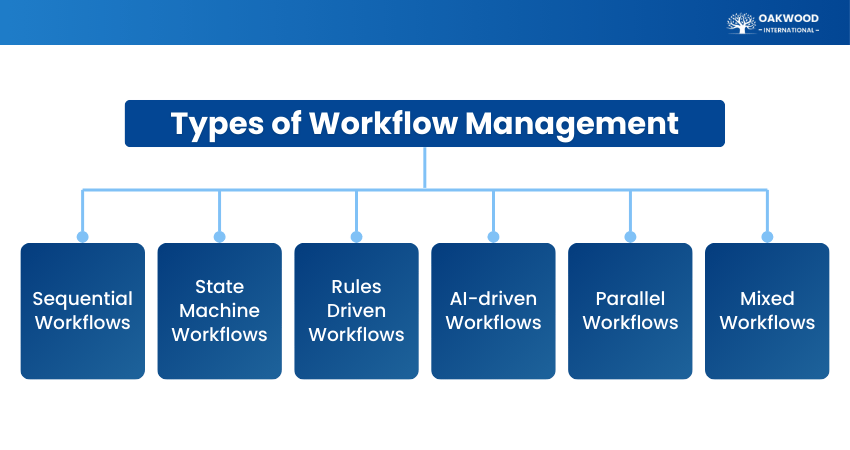
Workflow Management is organised into different types based on how tasks need to be completed and controlled. Let's look at its main types below:
1) Sequential Workflows
Sequential Workflows follow a fixed order where tasks are completed step by step. Each stage must be finished before the next one begins. This is the most common and straightforward amongst every type of workflow, ideal for processes that require a rigid structure and clear progression.
2) State Machine Workflows
State Machine Workflows enable tasks to be completed in different orders depending on the situation. While work may move through defined stages, the accurate sequence within those stages is flexible. This makes them suitable for dynamic environments where processes tend to change frequently.
3) Rules Driven Workflows
Rules-driven Workflows follow different paths based on specific conditions. The order of tasks can change depending on decisions, approvals, or other reasons. Due to the complexity, this type requires a dedicated Workflow Management software. Commonly, they are used in processes that depend on decision-based logic and multiple outcomes.
4) AI-driven Workflows
AI-driven Workflows use Artificial Intelligence (AI) to learn from data, adapt to change, and make decisions automatically. They help to optimise processes, automate tasks, and improve outcomes with minimal human involvement. This makes them highly effective for intelligent automation and continuous process improvement.
5) Parallel Workflows
Parallel Workflows run multiple tasks simultaneously instead of following a step-by-step sequence. Here, tasks are split into separate paths and merged again before the process continues. This allows different users, teams, or systems to work together at the same time, helps to reduce processing time and improves efficiency.
6) Mixed Workflows
Mixed Workflows combine sequential steps, parallel tasks, and automated or human review within a single process. They may begin in a linear flow, then branch into parallel activities, and merge back together eventually. This type offers both speed and flexibility with proper oversight.
Strengthen core leadership capabilities with the ILM Level 5 Award in Leadership and Management Course – Sign up now!
Elements of a Workflow Management
While Workflow Management can vary in structure and purpose, they all share the same set of core elements that define how work moves from one step to the next. Let's look at them below:
1) Stakeholders
Stakeholders are the individuals or groups affected by the workflow. They may perform tasks, make decisions, or review progress. Clearly identifying stakeholders helps to ensure accountability and seamless collaboration throughout the process.
2) Inputs
Inputs refer to the resources, materials, or information required for the entirety of a workflow. These can include data, documents, or instructions needed to carry out tasks effectively. Without the right inputs, the workflow cannot function.
3) Outputs
Outputs are the results produced by the workflow. They represent the completed outcome, such as a finished product, delivered service, or achieved objective. Outputs help to measure if the workflow has successfully met its desired outcome or not.
4) Steps
Steps are the specific tasks or actions performed to move the workflow forward. Each step contributes to progress and ensures the process follows a structured path from beginning to end. This helps to reduce delays and prevent confusion at any stage of the workflow.
5) Transformations
Transformation is the process of converting inputs to outputs. It shows how resources, information, or materials change as work progresses through each stage. These elements emphasise how value is created within the workflow.
6) Conditions
Conditions are the requirements that must be met for the workflow to begin and finish successfully. These may include approvals, resource availability, or external factors, like environment and market conditions. This ensures the workflow operates under the right set of circumstances.
Empower Others through effective coaching skills with the ILM Level 5 Certificate in Effective Coaching and Mentoring – Sign up today!
What are the Benefits of Workflow Management?
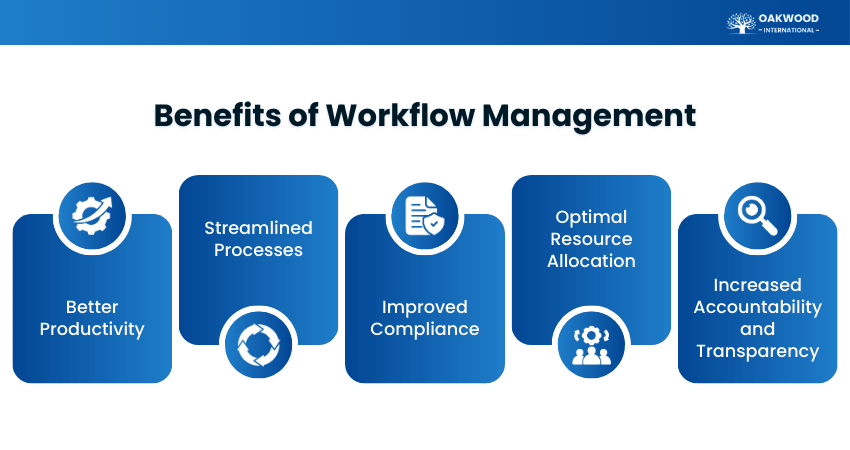
Workflow Management improves efficiency, strengthens collaboration and reduces costly errors. It comes with various benefits to help teams work effectively and complete tasks consistently. Let's look at the benefits below:
1) Better Productivity
Workflow Management provides clarity by defining tasks, dependencies, and responsibilities. This reduces confusion and downtime, enabling teams to focus on meaningful work. Also, automation frees employees to concentrate on higher-value tasks and reduces manual errors, leading to improved productivity.
2) Streamlined Processes
Through mapping workflows, it is useful for identifying inefficiencies and bottlenecks. This makes it easier to eliminate unnecessary steps. This results in faster task completion, reducing waste, and building more efficient operations. This continuous optimisation helps organisations operate seamlessly and respond quickly to change.
3) Improved Compliance
A structured Workflow Management helps organisations to follow legal and regulatory requirements consistently. This reduces the risk of non-compliance and makes auditing processes simpler and more reliable. Also, it maintains standardised procedures that support long-term regulatory alignment.
4) Optimal Resource Allocation
Workflow Management provides insights into how resources, such as time, staff, and equipment, are utilised. This helps organisations distribute workloads effectively, prevent bottlenecks, and ensure resources are used efficiently. This leads to better planning, balanced workloads, and improved operational performance.
5) Increased Accountability and Transparency
Workflow Management clearly documents the assigned responsibilities for each task and provides visibility into progress. Teams can track activities in real time, making it easier to spot issues and ensure work remains on schedule. This transparency strengthens trust, communication, and overall team coordination.
What are the Challenges of Workflow Management?
While Workflow Management offers various benefits, it comes with its own set of challenges during designing and implementing processes. Let's look at the key ones below:
1) Resistance to Change
Employees may be hesitant to adopt new workflows, especially if they are used to working with the existing ways. Clear communication about the benefits of Workflow Management along with involving stakeholders in the design process builds acceptance.
2) Unclear Processes
Poorly defined workflows can create confusion and inefficiency. Without clear documentation, teams may not understand their roles, responsibilities, or what is expected of them. Define each step, resources, and objectives to ensure smooth execution of the processes.
3) Communication Barriers
Lack of communication can disrupt workflow progress. Encouraging open and transparent communication, regular updates, and collaboration helps teams stay aligned and prevent any further misunderstandings.
4) Technology Limitations
Using complex tools or technology can slow down workflows instead of improving them. Choosing the right technology that supports automation and simplifies processes is essential for effective Workflow Management.
Workflow Management Best Practices
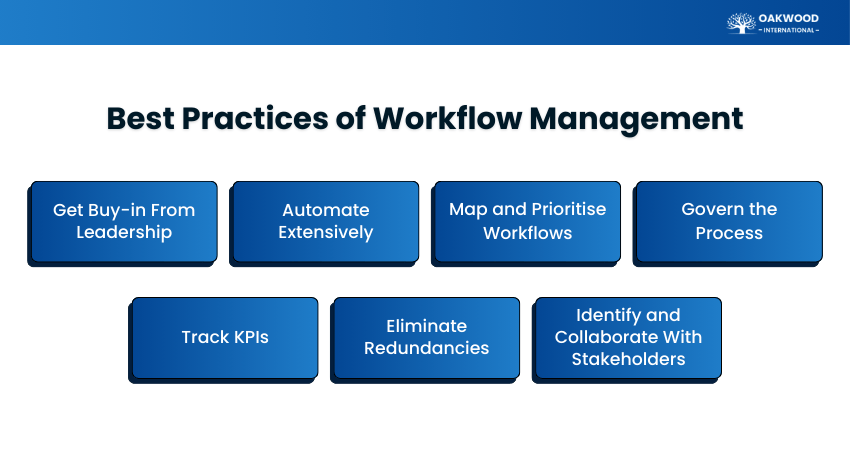
Workflow Management effectiveness is reliant on how well they are implemented and managed. Let's look at the best practices that support efficiency, collaboration, and continuous improvement below:
1) Get Buy-in From Leadership
Workflow changes often affect multiple departments, making support from senior leadership crucial. Securing approvals from managers and executives helps ensure alignment, resources, and long-term commitment.
2) Automate Extensively
Automation reduces manual work, reduces manually created errors, and improves efficiency. Identify repetitive or routine tasks that can be automated to save valuable time and allow teams to focus on higher-value activities.
3) Map and Prioritise Workflows
Every workflow is not equally important. Map out the existing processes to understand how they function and prioritise critical workflows, such as finance, IT, HR, and customer-facing operations first.
4) Govern the Process
Sometimes, even automated workflows require oversight. Regular monitoring and adjustments help ensure processes are aligned with business objectives and continue to perform effectively and consistently.
5) Track KPIs
Measure Workflow performance using Key Performance Indicators (KPIs). Monitoring KPIs is helpful in identifying bottlenecks, evaluating the effectiveness of processes, and guiding continuous improvements.
6) Eliminate Redundancies
It is important to review workflows to spot any duplicates or unnecessary tasks that do not add value. Removing these inefficiencies helps to streamline processes and improve overall operational productivity.
7) Identify and Collaborate With Stakeholders
Determine who is responsible for each part of the workflow and involve them in planning and implementation. Regular collaboration ensures processes are practical, clear, and effective from beginning to end.
Learn coaching and mentoring for lasting impact with the ILM Level 5 Diploma in Effective Coaching and Mentoring – Register now!
Workflow Management vs Project Management
Workflow Management and Project Management are closely related but they serve different roles in how work is organised and delivered. Let's look at their key differences in the table below:
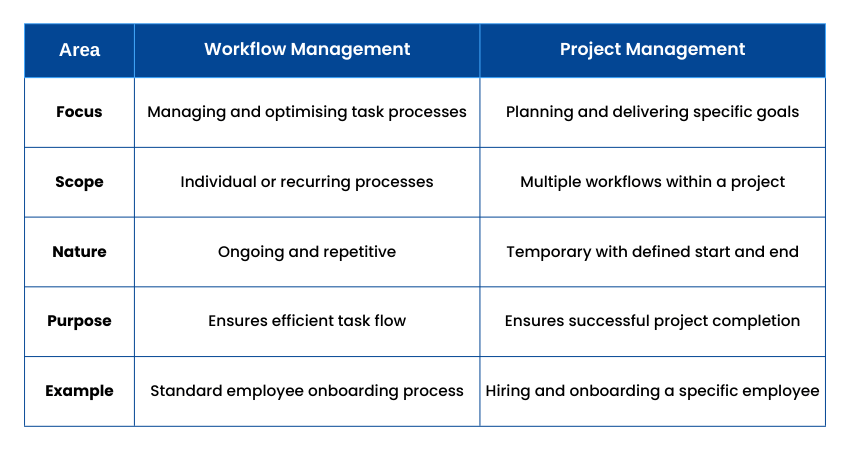
Workflow Management focuses on how tasks move through a process. It ensures work follows a structured sequence, responsibilities are clear, and activities are completed efficiently. It is used mainly for routine or repeatable operations that require consistency and seamless execution.
On the other hand, Project Management focuses on achieving a specific goal within a defined timeframe. It brings together multiple workflows, resources, and activities to deliver a specific outcome. While workflows handle the process, Project Management oversees the bigger picture and ensures everything works together to accomplish the business objective.
What is the Future of Workflow Management?
Workflow Management continues to evolve as technology reshapes how organisations operate, collaborate, and deliver results. As businesses transition towards digital and data-driven approaches, workflows are supposed to become smarter and more adaptable. Let's look at the emerging trends that will influence its future:
1) The Rise of AI: AI will play a major role in transforming workflows. It can automate routine tasks, analyse data patterns, and suggest process improvements. This will help workflows operate efficiently by continuously learning and optimising performance.
2) Greater Collaboration: Future workflows will rely heavily on integrated collaboration tools. With seamless communication, real-time document sharing, and connected project environments, teams of different departments and locations will work together effectively.
3) Increased Prioritisation: Workflow systems will become tailored to individual uses and roles. With AI-powered dashboards, customer task views, and intelligent recommendations, teams can manage their responsibilities to their fullest potential.
Conclusion
Understanding What is Workflow Management helps organisations create clarity, improve efficiency, and enable teams to work with purpose and confidence. It reduces delays, enhances collaboration, and supports consistent results. As it continues to evolve with emerging trends, Workflow Management helps organisations stay competitive and deliver meaningful outcomes.
Elevate your leadership to the next level with ILM Level 5 Courses – Sign up today!
Frequently Ask Questions
What are the Three Basic Workflow Management Practices?
The three basic Workflow Management practices include:
a) Document Processes: Record each step, responsibility, and need to create a clear reference for teams.
b) Analyse Metrics: Track KPIs to spot bottlenecks, measure performance, and improve efficiency.
c) Create Centralised Visuals: Use flowcharts or boards to show process flow clearly.
What is an Example of Workflow Management?
An example of Workflow Management is automated employee onboarding. When a new hire signs their contract, the system triggers tasks, such as creating user accounts or scheduling training. This ensures employees receive access, equipment, and guidance with minimal manual effort.
What is a Workflow Management System?
A Workflow Management System is software that helps organisations plan, automate, and monitor tasks. It streamlines workflows by assigning tasks, sending reminders, tracking progress, and measuring performance. This provides a clear overview of operations and ensures work is completed efficiently and consistently.
Related Blogs
Didn’t Find What You’re Looking For?

Our commitment to excellence ensures an exceptional learning experience tailored to your professional development needs.


© Copyright 2026 - Oakwood International ™ - All rights reserved.


SUPER SALE
 Get Amazing Discounts
And Deals
Get Amazing Discounts
And Deals