

 Back
Back


 Back to Catagories


Table of Contents


 + 44 7452
122728
+ 44 7452
122728
 27-Jul-2026
Hailey Davis
Strong careers are built not only on skills, but on relationships. While technical knowledge and qualifications may help you secure a job, it is your ability to connect with others that determines how far you grow. The way you communicate, listen, and respond in everyday interactions shapes how colleagues, managers, and clients perceive you. These are your Interpersonal Skills.
By developing them, you create positive environments, improve teamwork, and support long-term career success. In this blog, we will discover what are Interpersonal Skills, why they matter, and how to improve them for personal and career growth. Let's get started!
What are Interpersonal Skills?
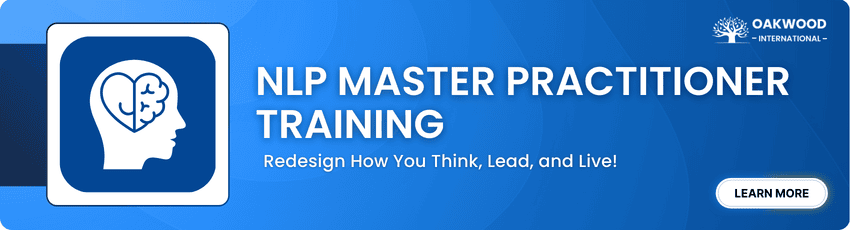
Interpersonal Skills refer to the behaviours and abilities that help individuals interact and communicate effectively with others in both personal and professional contexts. These skills determine how well you build connections, understand others’ perspectives, and collaborate in everyday situations.
In simple words, Interpersonal Skills are often referred to as people skills because they focus on human interaction. Strong Interpersonal Skills help you build trust and create healthy connections.
Why are Interpersonal Skills Important?
Interpersonal Skills are important because almost every job requires teamwork and communication. Even if you work independently, you still need to report tasks, share updates, or discuss plans. Here are several reasons why Interpersonal Skills matter:
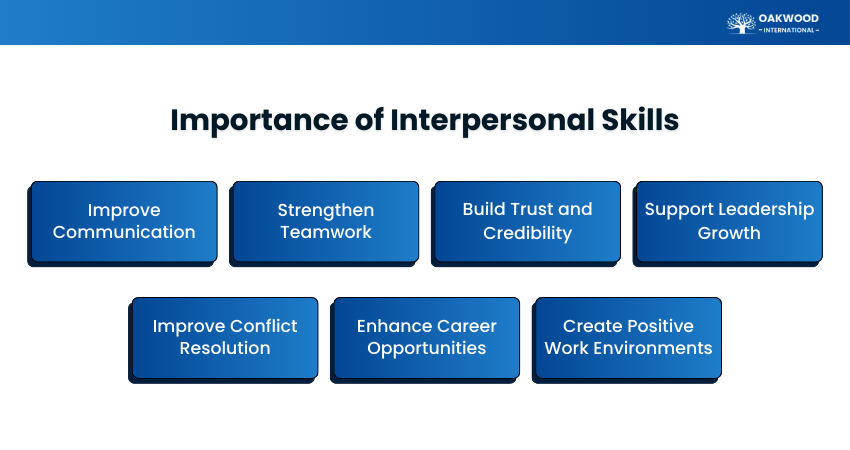
1) Improve Communication: They help you express ideas clearly and listen actively, reducing misunderstandings and confusion.
2) Strengthen Teamwork: They promote cooperation, mutual respect, and shared responsibility within teams.
3) Build Trust and Credibility: They encourage honest communication and consistent behaviour, strengthening professional trust.
4) Support Leadership Growth: They enable leaders to motivate, guide, and inspire others effectively.
5) Improve Conflict Resolution: They help manage disagreements calmly and find practical, respectful solutions.
6) Enhance Career Opportunities: They increase chances of promotions and long-term professional growth.
7) Create Positive Work Environments:
They foster supportive, respectful workplaces that improve productivity and morale.
How to Improve Your Interpersonal Skills?
Improving Interpersonal Skills is not about changing who you are. It is about becoming more aware of how you interact with others and making intentional improvements. Below are practical steps that shows how to improve Interpersonal Skills:
1) Assess Your Current Skill Set
The first step toward improvement is self-awareness. Begin by evaluating how you interact with others in daily situations. Think about how you communicate, handle disagreements, and respond to feedback. Ask yourself questions such as:
1) Do I listen carefully without interrupting?
2) How do I react when someone disagrees with me?
3) Am I open to feedback?
4) Do people feel comfortable talking to me?
You can also seek feedback from colleagues, friends, or supervisors to understand your strengths and areas for improvement. Honest input helps you identify habits that may need adjustment and highlights the skills you already perform well.
2) Create an Action Plan
Once you identify areas that need improvement, create a clear and realistic plan. Focus on one or two skills at a time rather than trying to change everything at once. For example:
1) If you struggle with listening, practise active listening
2) If you avoid difficult conversations, learn basic conflict resolution techniques
3) If you find it hard to speak clearly, work on organising your thoughts before speaking
4) If you find it challenging to work in teams, actively participate in group tasks
To steadily focus on this action plan, you can try reading books, attending workshops, or taking communication courses. Consistency is key when building stronger Interpersonal Skills.
3) Apply Your Interpersonal Skills for Career Success
Applying your Interpersonal Skills in real situations is the key to turning them into career advantages. These skills influence how you present yourself, collaborate with others, and handle professional challenges. Become confident to:
1) Maintain positive body language and confident eye contact
2) Adapt your communication style based on your audience and situation
3) Build professional networks by engaging thoughtfully
4) Demonstrate reliability by meeting deadlines and honouring commitments
Over time, achieving these Interpersonal Skills improves collaboration, increases your visibility within the organisation, and creates new responsibilities and opportunities. The more you apply them, the more natural and impactful they become in your career journey.
Unlock new ways of thinking and communicating with our
Introduction to NLP Course
– Register today!
Interpersonal Skills Examples
Let us look at some common examples of Interpersonal Skills that are highly valued in all situations:
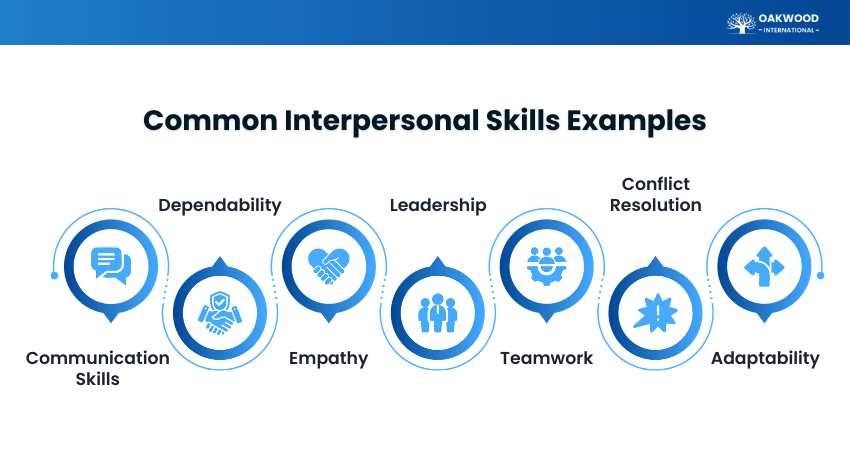
1) Communication Skills
Communication skills involve expressing ideas clearly and listening actively to others. They include written, verbal, and non-verbal communication, body language, tone of voice, etc. Strong communication reduces misunderstandings and helps teams work efficiently. It helps ensure expectations, feedback, and ideas are communicated clearly and understood properly.
2) Dependability
Dependability means being reliable and consistent in your actions. It involves completing tasks on time, keeping promises, and taking responsibility for your work. When you are dependable, colleagues and managers trust you. Your team feels confident that you will do your part. This capability strengthens professional relationships and builds credibility over time.
3) Empathy
Empathy is the practice of understanding and acknowledging the feelings of others. It is about putting yourself in someone else’s position. In the workplace, empathy helps create a supportive environment. When employees feel understood, they are more comfortable sharing ideas and concerns. Empathy also makes conflict resolution easier because it encourages understanding instead of blame.
4) Leadership
Leadership is the ability to guide, motivate, and influence others toward shared goals. It involves clear communication, confidence, and accountability. Leadership is not limited to managers; anyone can demonstrate leadership by taking initiative and supporting team success. Effective leadership builds trust and encourages individuals to work together toward common objectives.
5) Teamwork
Teamwork refers to working collaboratively with others to achieve common objectives. It includes sharing ideas, supporting colleagues, and respecting different viewpoints. It helps improve productivity and strengthen cooperation within a group. Through open communication, you can also reduce misunderstandings and encourage a supportive environment.
Strengthen your self-awareness and leadership presence with our
NLP Foundation and Practitioner Training
– Sign up soon!
6) Conflict Resolution
Conflict resolution is the ability to manage disagreements in a calm and constructive way. Instead of avoiding problems, individuals with strong Interpersonal Skills address them respectfully. It helps to listen to different perspectives, stay objective, and concentrate on solutions rather than blame. Over time, effective conflict resolution develops healthy working relationships.
7) Adaptability
Adaptability is the ability to adjust to new situations, challenges, or changes. It involves staying flexible, open-minded, and positive during uncertainty. Adaptable individuals help teams navigate change smoothly, maintain stability, and remain productive. They also remain calm when facing unexpected obstacles or shifting priorities.
How Do You Demonstrate Good Interpersonal Skills?
Demonstrating good Interpersonal Skills means showing them through your everyday actions and behaviour. It is not just about saying you communicate well or work well in a team, but proving it through how you speak, listen, and respond to others. Here is how you can show it:
1) Communicate Clearly and Respectfully: Express your ideas in a simple and professional manner. Use polite language, maintain a positive tone, and ensure your message is easy to understand.
2) Practise Active Listening: Give your full attention when others speak. Ask relevant questions, avoid interrupting, and respond thoughtfully to show genuine interest.
3) Maintain Positive Body Language: Use confident eye contact, open posture, and attentive gestures. Non-verbal communication often shows if you are interested in the conversation.
4) Handle Conflicts Calmly: Stay composed during disagreements and work on finding solutions instead of assigning blame. Respect different viewpoints while resolving issues.
5) Show Empathy: Acknowledge other’s feelings and perspectives. Respond with patience and sensitivity, especially in challenging situations.
6) Be Reliable and Accountable: Meet deadlines, keep commitments, and take responsibility for your actions. Reliability strengthens trust and credibility.
7) Collaborate Effectively:
Work cooperatively in teams, support colleagues, and contribute positively toward shared goals.
Conclusion
Interpersonal Skills are mandatory for both professional and personal success. They help you communicate clearly, build relationships, and work effectively with others. The best part is that these skills can be improved with proper practise. By understanding your strengths and weaknesses, creating a simple action plan, and doing it daily, you can strengthen your interpersonal abilities.
Learn to understand people better and communicate with impact with our NLP Training – Start now!
Frequently Ask Questions
Are Interpersonal Skills a Professional Skill?
Yes, Interpersonal Skills are necessary professional skills. They help employees communicate effectively, collaborate with teams, and build strong workplace relationships. Employers value them because they improve teamwork, reduce conflicts, and support a cooperative work environment.
Can You Put Interpersonal Skills on a Resume?
Yes, you can include Interpersonal Skills on your resume. However, it is better to support them with examples. Instead of just writing “good communication skills,” you can mention situations where you have actually led a team, resolved a conflict, or improved collaboration.
What is the Difference Between Technical Skills and Soft Skills?
Technical skills are specific abilities related to jobs, such as programming, accounting, or data analysis. Soft skills, including Interpersonal Skills, focus on behaviour and communication. Technical skills show what you can do, while soft skills show how well you work with others while doing it.
Related Blogs
Didn’t Find What You’re Looking For?

Our commitment to excellence ensures an exceptional learning experience tailored to your professional development needs.


© Copyright 2026 - Oakwood International ™ - All rights reserved.


SUPER SALE
 Get Amazing Discounts
And Deals
Get Amazing Discounts
And Deals