

 Back
Back


 Back to Catagories


Table of Contents


 + 44 7452
122728
+ 44 7452
122728
 24-Sep-2026
Maria Thompson
A team’s success is not about talent alone; it is about how that talent is managed. Even the most skilled employees can struggle when goals are unclear, communication is weak, or support is missing. This is why Team Management plays such an important role in today’s workplaces.
It creates interest by bringing structure, clarity, and purpose to everyday work. It helps people understand their roles, work better together, and stay motivated. In this blog, you can uncover what Team Management is, why it matters, the different styles used in real workplaces, the skills that make managers effective, and a lot more. Let's delve in!
What is Team Management?
Team Management is the process of guiding, supporting, and coordinating a group of people so they can work together effectively towards shared goals. It involves planning work, allocating responsibilities, motivating team members, resolving conflicts, and tracking progress over time.
At its core, Team Management is about balancing work and people. A Team Manager makes sure tasks are completed on time, but also ensures that team members feel supported and understood. This means listening to concerns, giving guidance, and helping people grow in their roles.
Why Team Management is Important?
Strong Team Management is important for how well organisations can perform. Here are some of its major importance:
1) Improves Overall Performance: Good Team Management makes daily work smoother and helps teams achieve better results.
2) Aligned With Business Goals: It ensures all team members know what they need to do and work towards shared objectives.
3) Provides Clarity and Direction: Managers provide clarity on priorities and deadlines, reducing confusion and mistakes.
4) Supports Employee Well-being: Clear communication, balanced workloads, and regular feedback reduce stress and create a healthier work environment.
5) Boosts Engagement and Retention: Employees feel valued and are more likely to stay when they receive proper support.
6) Enhances Productivity: Well-managed teams work efficiently and handle changes more confidently, which in turn enhances overall productivity.
Types of Team Management
Different situations need different management styles. There is no single way to manage a team that works everywhere. Below are common types of Team Management:
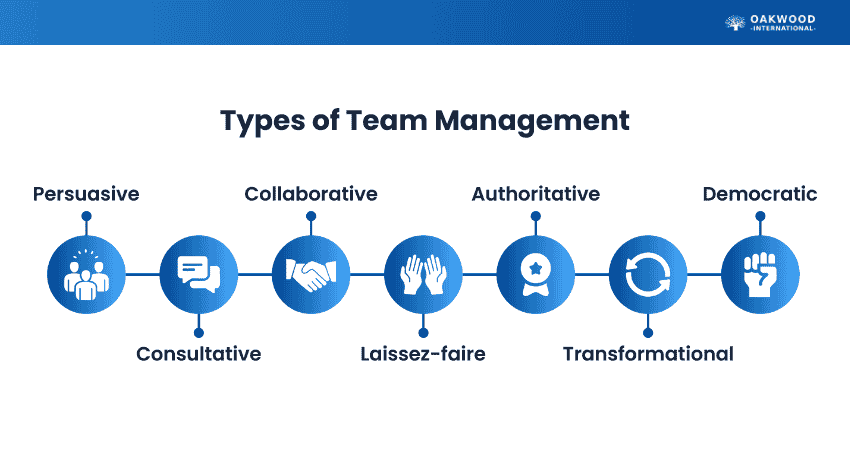
1) Persuasive
Persuasive Team Management focuses on influencing and motivating employees through clear explanations and motivation rather than giving strict instructions. Managers explain the reasons behind decisions to gain support and cooperation.
Key Traits:
1) Clear and logical communication
2) Encourages understanding before any action
3) Builds trust through explanation
4) Motivates rather than commands
5) Reduces resistance to change
Example: A manager explains why a new process is needed and how it benefits the team, encouraging everyone to support and follow the change willingly.
2) Consultative
Consultative Management involves asking team members for their opinions before making decisions. Employees feel valued because their input is considered, even though the manager decides in the end.
Key Traits:
1) Open to employee feedback
2) Encourages idea sharing
3) Builds mutual respect
4) Improves decision quality
5) Increases team involvement
Example: Before setting deadlines, a manager asks the team for suggestions and challenges, then finalises a realistic plan.
3) Collaborative
Collaborative Team Management treats the team as partners. Managers and employees work together to solve problems and make decisions as a group. It works best in environments where trust is high and team members are comfortable taking ownership of their work.
Key Traits:
1) Shared responsibility among every team member
2) Strong teamwork and collaboration
3) Open communication at all stages
4) High trust levels
5) Encourages employee creativity
Example: A Project Manager works alongside the team to plan tasks, solve issues, and share accountability for results.
4) Laissez-faire
Laissez-faire Management gives team members freedom to manage their own work. Managers step in only when guidance or support is needed. This style suits highly skilled and self-motivated teams. However, it can lead to confusion if expectations are not clearly defined from the start.
Key Traits:
1) High autonomy and flexibility
2) Minimal supervision
3) Trust in employee skills
4) Flexible working style
5) Suitable for experienced teams
Example: A manager allows skilled employees to plan their own schedules while staying available for support if required.
Develop the skills needed to manage people’s potential through
Talent Management Training
– Register today!
5) Authoritative
Authoritative Management is based on clear control and direction. Managers make decisions and expect the team to follow instructions closely. This style can be effective in high-pressure situations or where strict compliance is required. If overused, it may limit creativity and reduce employee engagement over time.
Key Traits:
1) Strong leadership control
2) Clear rules and expectations
3) Quick decision-making
4) Structured working style
5) Focus on discipline
Example: During a crisis, a manager gives direct instructions to ensure tasks are completed quickly and correctly.
6) Transformational
Transformational Management focuses on inspiring and developing employees. Managers encourage learning, growth, innovation, and continuous improvement. With this, employees often feel motivated because they see opportunities to grow alongside the business.
Key Traits:
1) Inspires employee motivation
2) Supports personal growth
3) Encourages innovation in doing tasks
4) Focuses on long-term goals
5) Builds strong team morale
Example: A manager motivates the team to improve skills and take on new challenges while supporting their career development.
7) Democratic or Participative
Democratic or Participative Management involves employees equally in the decision-making process. Here, ideas are discussed openly, and consensus is often sought before moving forward. This increases engagement and morale, though it may slow decision-making in fast-paced environments.
Key Traits:
1) Equal participation of managers and team members
2) Open discussions
3) Shared decision-making
4) High employee engagement
5) Strong team morale
Example: A manager holds team meetings where everyone votes or shares opinions before deciding on a new work approach.
Team Management Skills
Successful Team Management relies on many skills. Thus, below are some of the most important skills for managing teams:
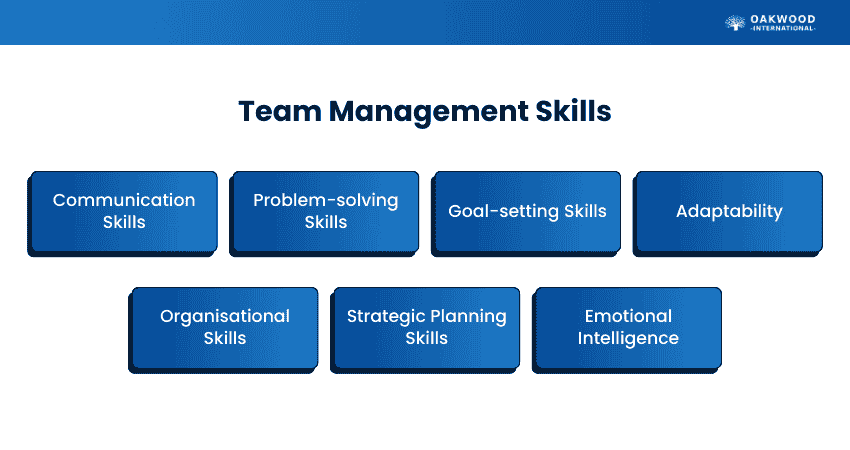
1) Communication Skills
Communication skills help managers share information clearly and ensure everyone understands their roles, tasks, and expectations. Good communication also involves listening. When team members feel heard, they are more likely to raise concerns early and share ideas that improve results.
How to Implement it:
1) Encourage open discussions and questions
2) Listen actively without interrupting
3) Use simple and direct language
4) Confirm understanding through follow-ups
2) Problem-solving Skills
Every team faces challenges, from workload issues to interpersonal conflict. Therefore, a strong problem-solving skill helps managers handle challenges calmly and find practical solutions without disrupting team progress. This includes analysing details, considering different perspectives, and making decisions that balance fairness with business needs.
How to Implement it:
1) Identify the root cause of issues early
2) Involve team members in finding solutions
3) Evaluate different options before deciding
4) Stay calm and focused during challenges
3) Goal-setting Skills
Goal-setting provides direction and keeps the team focused on clear outcomes. Setting clear and achievable goals gives teams purpose and direction. Effective managers break large objectives into manageable steps and ensure progress is tracked regularly. This helps make performance expectations clear, reduces confusion, and helps employees stay focused.
How to Implement it:
1) Set clear and realistic goals
2) Break goals into smaller tasks
3) Assign clear responsibilities for what is expected
4) Adjust goals as per your business needs
4) Adaptability
Adaptability helps managers respond effectively to change and unexpected situations, especially in fast-changing work environments. Managers who adapt well can respond to shifting priorities, new technologies, and unexpected challenges without losing control.
How to Implement it:
1) Stay open to new ideas and methods
2) Adjust plans when priorities change
3) Encourage flexibility within the team
4) Remain positive during change
5) Organisational Skills
Organisational skills help managers manage time, tasks, and resources efficiently. An organised manager reduces stress for the entire team by ensuring deadlines and responsibilities are clear. It also helps prevent last-minute confusion and missed priorities since you will be planning ahead.
How to Implement it:
1) Plan tasks and schedules in advance
2) Set clear deadlines and priorities
3) Use tools to track work progress
4) Balance workloads fairly
6) Strategic Planning Skills
Team Management is not only about day-to-day tasks. Strategic planning skills help you align daily work with long-term business goals. This skill involves predicting future needs, allocating resources wisely, and preparing teams for upcoming challenges.
How to Implement it:
1) Understand organisational objectives
2) Align team goals with business goals
3) Plan resources carefully
4) Review strategies regularly
7) Emotional Intelligence
Emotional intelligence helps managers understand emotions and manage relationships effectively. It supports empathy, conflict resolution, and trust building. Managers with strong emotional intelligence are often better at maintaining morale and handling sensitive situations.
How to Implement it:
1) Be aware of your own emotions
2) Handle conflict calmly and respectfully
3) Build trust through consistent behaviour
4) Support employee well-being
Improve productivity and reduce resource gaps with
Workforce Resource Planning Training
– Join now!
The Benefits of Strong Team Management
Now, let’s check the benefits that strong Team Management can offer:
Happier Employees
1) Employees clearly understand their roles and tasks
2) Balanced workloads help reduce stress
3) Supportive managers make people feel valued
4) A positive team environment improves job satisfaction
5) Employees feel motivated and confident at work
Reduced Employee Turnover
1) Employees feel supported and less pressured
2) Clear guidance reduces frustration and confusion
3) Growth opportunities encourage employees to stay longer
4) Trust in managers builds loyalty
5) A healthy work environment lowers the desire to leave
Tips and Strategies for Effective Team Management
In order to properly handle Team Management, you can consider trying out some useful tips. Here are those tips and strategies that you can implement:
1) Communicate Clearly and Transparently
Poor communication often causes confusion and stress. However, clear communication helps everyone understand their tasks, deadlines, and goals. Managers can share regular updates, explain decisions clearly, and encourage team members to ask questions. When communication is open and honest, teams work with more confidence and less confusion.
2) Provide a Compelling Vision
Teams can work better when they know their goals and what they are working towards. A clear vision helps employees understand both short-term tasks and long-term objectives. Managers should explain what success looks like and how each person’s work matters. This helps teams stay focused and motivated.
3) Encourage Team Collaboration
Team Collaboration helps teams finish tasks faster and avoid misunderstandings. Employees who feel connected to their team are usually more productive. Managers can support collaboration by encouraging teamwork, open discussions, and idea sharing. This also helps teams solve problems more easily.
4) Delegate Tasks Thoughtfully
Delegating tasks means giving the right work to the right people. Managers should consider each person’s skills and workload before assigning tasks. Fair delegation prevents burnout and helps employees feel trusted and confident in their abilities. It also improves productivity by ensuring tasks are completed more efficiently.
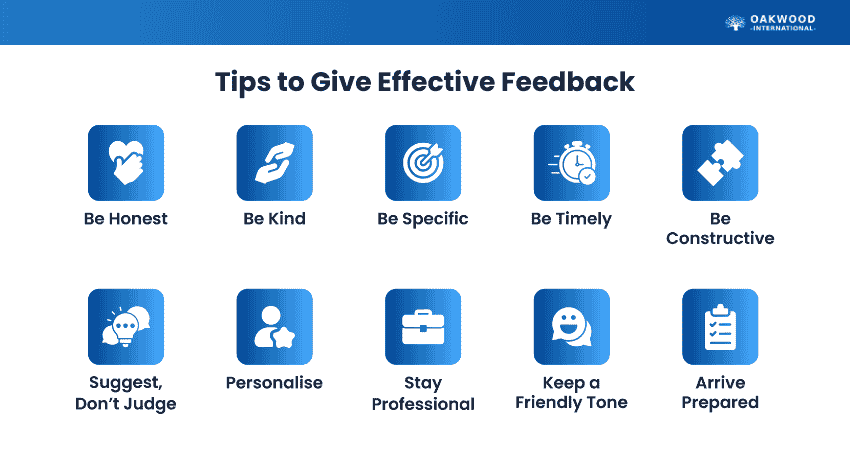
5) Focus on Feedback and Recognition
Feedback helps employees understand how they are doing and where they can improve. Regular check-ins help solve problems early. Recognising effort and achievements makes employees feel appreciated and motivated. Even small praise can make a big difference.
6) Overcome Remote Work Challenges
Managing remote teams requires extra attention to communication and connection. This is because without regular contact, employees can feel disconnected. To avoid that, managers can check in often, keep communication clear, and provide regular feedback. This helps remote employees stay engaged and productive.
Gain essential leadership and team skills with the
ILM Level 2 Award in Leadership and Team Skills
– Register now!
Career Opportunities in Team Management
Team Management skills open doors to a wide range of career paths across industries. Below are some common roles:
1) Chief Executive Positions
Chief Executive roles include senior leadership positions at the highest level of an organisation. People in these positions make major business decisions, set company goals, and create policies. These are often referred to as C-suite roles, such as Chief Executive Officer (CEO), Chief Financial Officer (CFO), Chief Operating Officer (COO), and other chief-level titles.
2) Managers
Managers work at different levels within a company. They may manage a small team, department, or large group of employees. They also help turn company plans into daily tasks for their teams. They work at different levels within an organisation, including junior, middle, and Senior Management.
3) Supervisors
Supervisors focus on daily work and report to managers. They guide employees, check progress, and make sure tasks are completed properly. They work closely with team members and help solve day-to-day problems.
4) Coordinators
Coordinator roles may include titles such as Project Coordinator, Marketing Coordinator, or Operations Coordinator. Their main responsibility is to organise people, tasks, and schedules to ensure work runs smoothly. They help teams work together smoothly and ensure deadlines are met.
5) Team Lead
Team leads support managers and guide team members in daily work. They often work alongside their team while offering guidance. Their role includes monitoring performance, motivating employees, and providing regular progress updates to management.
Team Management vs Team Leadership
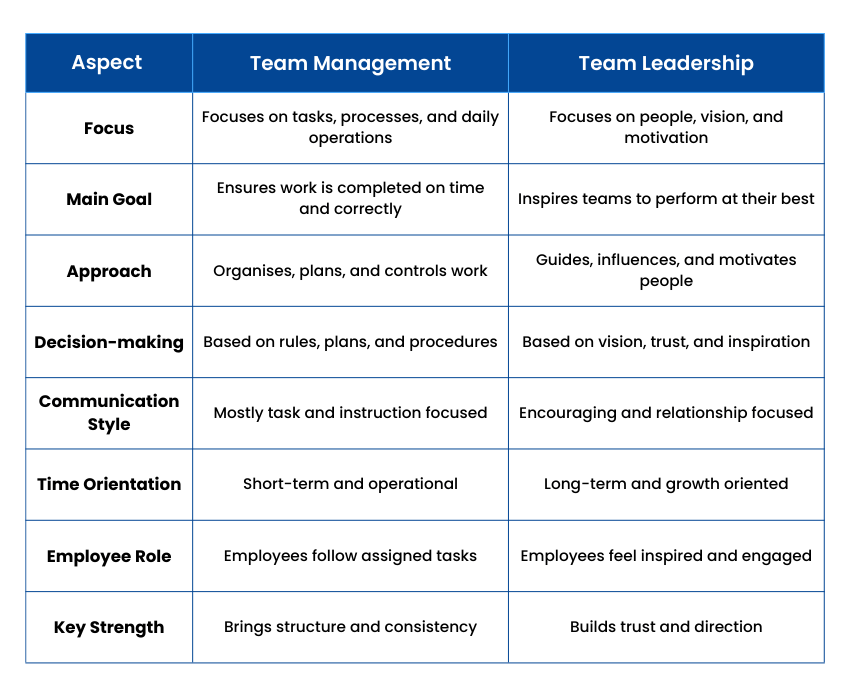
Although often used together, Team Management and Team Leadership are not the same. Team Management focuses on processes, structure, and delivery. It ensures work is organised and objectives are met. Team Leadership, on the other hand, focuses on inspiration, vision, and influence. Leaders motivate people and shape culture.
Here is a more detailed difference:
Conclusion
Team Management is a vital skill that shapes how people work together and how organisations perform. It combines clear communication, emotional awareness, strategic thinking, and practical organisation. By understanding different management styles, developing core skills, and applying thoughtful strategies, everyone can create environments where teams thrive for long-term success.
Turn management challenges into strengths with People Management Courses – Explore now!
Frequently Ask Questions
What is a Team Management Plan?
A Team Management plan explains how a team will work. It outlines roles, responsibilities, communication methods, and performance expectations to ensure clarity and consistency.
What Does it Take to be a Team Manager?
Being a Team Manager requires leadership skills, clear communication, empathy, decision-making ability, conflict resolution, and adaptability. It also involves the ability to motivate and guide team members towards shared goals.
How do You Effectively Manage a Small Team?
Managing a small team effectively involves setting clear expectations, clear communication, trust, and flexibility. Understanding individual strengths and providing regular feedback help small teams remain focused and productive.
Related Blogs
Didn’t Find What You’re Looking For?

Our commitment to excellence ensures an exceptional learning experience tailored to your professional development needs.


© Copyright 2026 - Oakwood International ™ - All rights reserved.


SUPER SALE
 Get Amazing Discounts
And Deals
Get Amazing Discounts
And Deals