

 Back
Back


 Back to Catagories


Table of Contents


 + 44 7452
122728
+ 44 7452
122728
 08-Sep-2026
James Smith
People are the driving force behind every successful organisation. From hiring the right talent to keeping employees motivated and engaged, HR plays a key role at every stage of the employee journey. This is where the Pillars of Human Resources come in, as they provide a clear structure for managing people effectively.
As work continues to evolve in 2026, HR teams face new challenges, such as remote work, skill gaps, and rising employee expectations. This is why understanding the Pillars of Human Resources is essential to help businesses stay prepared and people-focused. In this blog, you will learn about what Human Resources is and its important Pillars. Keep reading to learn more!
What is Human Resources?
Human Resources (HR) is a strategic function that shapes how organisations attract, manage, and support their people. It focuses on building a productive work environment where employees can perform effectively, develop their skills, and stay engaged, while directly supporting organisational growth, culture, and long-term success.
It can be understood in three key ways:
1) Function: HR designs and manages processes that attract, develop, and retain talent to ensure the organisation has the right skills at the right time.
2) Department: HR oversees daily activities, such as recruitment, onboarding, pay and benefits, learning, development, and more.
3) Workforce: It refers to the employees whose knowledge, skills, and effort drive the organisation's success.

Human Resources (HR) Pillars
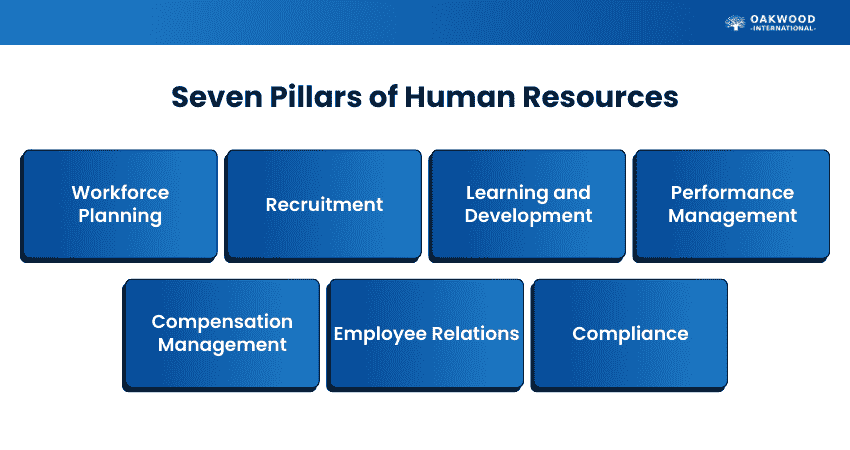
The Pillars of Human Resources are the core areas that support how organisations manage, develop, and protect their people. Together, they make sure HR activities are aligned with business goals. Let's look at them below.
1) Workforce Planning
Workforce Planning ensures organisations have the right number of people with the right skills to meet current and future business goals. HR works closely with senior teams to analyse workforce gaps, anticipate challenges, and plan for the business to grow its workforce. This helps organisations stay prepared for change and long-term growth.
Key Points:
1) Identifies current and future skill requirements
2) Aligns people strategy with business goals
3) Supports hiring, reskilling, and role planning
4) Reduces workforce risk and talent gaps
2) Recruitment
Recruitment focuses on attracting, selecting, and onboarding the right talent for the organisation. HR teams manage the entire process of hiring, from understanding role requirements to selecting candidates that fit the job and company culture. Strong recruitment builds the foundation of a skilled and diverse workforce.
Key Points:
1) Manages end-to-end hiring process
2) Sources candidates through multiple channels
3) Ensures practices are fair and unbiased
4) Builds skilled and diverse talent pools
3) Learning and Development
Learning and Development helps employees grow in their respective roles. Investing in continuous learning, organisations improve performance, retention, and prepare themselves for future responsibilities. This Pillar ensures that employees continue to grow alongside the organisation.
Key Points:
1) Designs training and development programmes
2) Supports mentoring, coaching, and upskilling
3) Encourages career growth and succession planning
4) Builds a culture of continuous learning
Build a strong foundation for your HR experience and advance your career with the
Certified HR Manager Course – Register today!
4) Performance Management
Performance Management focuses on measuring, guiding, and improving employee performance. Modern practices emphasise regular feedback and ongoing communication instead of relying on manual reviews. Effective management of performance keeps employees aligned, motivated, and productive.
Key Points:
1) Sets clear goals and performance expectations
2) Promotes regular feedback
3) Supports employee growth and accountability
4) Aligns individual performance with business goals
5) Compensation Management
Compensation Management ensures employees are fairly rewarded for their contributions. It includes both financial rewards and non-financial benefits. This supports employee engagement and employee retention. Fair compensation strengthens loyalty, trust, and employee motivation.
Key Points:
1) Develops fair pay structures and reward framework
2) Conducts salary benchmarking and market analysis
3) Manages bonuses, incentives, and employee benefits
4) Supports talent attraction and retention
6) Employee Relations
One of the Pillars of Human Resources, Employee Relations, refers to maintaining positive relationships between employers and employees. Its aim is to create a positive and supportive work environment, while addressing issues, concerns, and conflicts fairly. Healthy relations create a respectful and engaged workplace.
Key Points:
1) Promotes open and clear communication
2) Resolves workplace issues and disputes
3) Balances employee needs with business interests
4) Strengthens trust and fosters a positive workplace culture
Drive business with strategy and align people strategy with business growth with
HR Strategy Training – Join now!
7) Compliance
Compliance means to ensure that HR practices are in alignment with employment laws, regulations, and internal policies. This protects both the organisation and its employees by reducing legal risks and ensuring treatment is fair. This fosters a trustworthy, safe, and credible organisational culture.
Key Points:
1) Adheres to labour laws and regulations
2) Maintains accurate employee records
3) Supports workplace safety and ethical practices
4) Protects organisational reputation and employee rights
Conclusion
The Pillars of Human Resources provides a clear framework for how organisations must manage their people. When these Seven Pillars of HR work together, they support businesses in attracting the right talent, supporting employee growth, maintaining fairness, and staying compliant. These are essential for businesses to adapt to change, meet employee expectations, and align people strategies with overall business goals.
Learn how to lead people with confidence and build stronger leaders with HR Leadership Courses – Join today!
Frequently Ask Questions
What are the 10 Main Functions of HR?
The 10 main functions of HR include:
1) Recruitment and Selection
2) Training and Development
3) Performance Management
4) Compensation and Benefits
5) Employee Relations
6) Health and Safety
7) HR Planning
8) Compliance
9) Employee Engagement and Retention
10) HR Technology and Administration
What are the 3Ps of HR?
The 3Ps of HR include:
1) People: Hiring, developing, and supporting employees to help them succeed
2) Process: Using an efficient system to manage work
3) Performance: Tracking and improving results to meet business goals
What are the Three Most Important HR Laws?
The three most important HR laws include
1) Equal Employment Opportunity (EEO) Laws: Prevent workplace discrimination and promote fairness.
2) Leave and Employment Protection Laws: Protects jobs during approved employee leave.
3) Wage, Compensation, and Workplace Safety Laws: Ensures fair pay and safe working conditions.
Related Blogs
Didn’t Find What You’re Looking For?

Our commitment to excellence ensures an exceptional learning experience tailored to your professional development needs.


© Copyright 2026 - Oakwood International ™ - All rights reserved.


SUPER SALE
 Get Amazing Discounts
And Deals
Get Amazing Discounts
And Deals