

 Back
Back


 Back to Catagories


Table of Contents


 + 44 7452
122728
+ 44 7452
122728
 18-Apr-2026
Ever seen a team struggle after someone leaves, with missing files, unclear responsibilities, or last-minute chaos? That is exactly what happens when Offboarding is not handled properly. Employee exits are more than just a goodbye; they can impact productivity, security, and team morale if not managed effectively.
To manage this better, it is important to understand What is Offboarding and why it matters. A well-structured process helps organisations handle exits smoothly, protect important data, and ensure work continues without disruption, while also leaving employees with a positive final impression.
What is Offboarding?
Offboarding is the formal and structured process organisations follow when an employee leaves, whether the departure is voluntary or involuntary. It includes managing all necessary steps to ensure a smooth separation, such as completing documentation, handling communication, and coordinating with different departments.
This process also focuses on knowledge transfer, recovering company assets, and revoking system access to protect organisational data and operations. When handled effectively, Offboarding helps safeguard company interests while maintaining positive and professional relationships with employees who are departing.

Why is Offboarding Important?
Offboarding is important because it ensures a smooth and organised transition when an employee leaves an organisation. It helps complete essential tasks such as final documentation, asset recovery, and access removal, preventing disruptions to daily operations.
It also plays a key role in protecting company data, maintaining compliance, and preserving professional relationships. A well-managed Offboarding process allows organisations to gather valuable feedback, support team continuity, and reduce potential risks.
What is an Offboarding Policy?
An Offboarding policy is a detailed and formalised plan that outlines every step of the employee exit process, ensuring a smooth and consistent transition for both the organisation and the departing employee while reducing risks and maintaining professionalism.
An Offboarding policy helps organisations to:
1) Manage Workforce Changes: Reassign responsibilities and handle transitions smoothly
2) Ensure Consistency: Provide a standardised exit experience for all employees
3) Minimise Security Risks: Recover assets and revoke system access
4) Prevent Legal Issues: Avoid disputes related to contracts, pay, or termination
5) Maintain Relationships: Preserve positive connections with departing employees
6) Protect Brand Reputation: Ensure a professional and respectful exit experience
Unlock powerful HR insights using analytics, dashboards, and real data with the HR Analytics Course – Join now!
Key Steps in the Offboarding Process
The key steps in the Offboarding process ensure a smooth and secure employee exit. Each step helps manage responsibilities, protect assets, and maintain continuity. Let’s look at the essential steps involved:
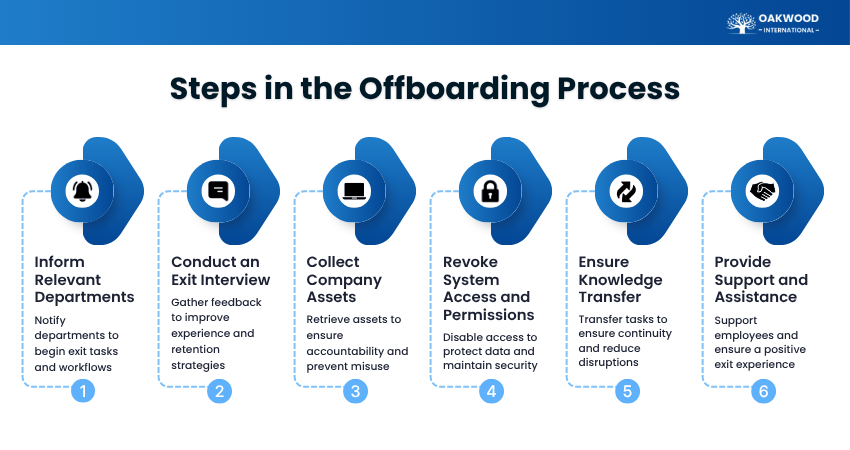
1) Inform Relevant Departments
As soon as an employee resigns or is terminated, departments like HR, IT, Legal, Payroll, and the employee’s team are informed. This helps initiate necessary workflows such as documentation, payroll processing, and access control.
2) Conduct an Exit Interview
An exit interview is conducted to understand the employee’s experience, reasons for leaving, and suggestions for improvement. The insights gained help organisations identify issues, improve retention strategies, and enhance overall workplace culture and employee satisfaction.
3) Collect Company Assets
All company-owned items, such as laptops, phones, ID cards, keys, and credit cards, are collected from the departing employee. This ensures accountability, prevents misuse, and safeguards organisational resources before the employee officially exits the company without any loss or operational disruptions.
4) Revoke System Access and Permissions
Access to email accounts, VPNs, software tools, and internal systems is immediately revoked once the employee leaves. This step is essential to protect sensitive data, maintain security, and prevent any unauthorised access to company systems or information at all times without any risk exposure.
5) Ensure Knowledge Transfer
The departing employee documents their tasks, completes pending work, and transfers responsibilities to team members or managers. This ensures continuity, reduces disruptions, and helps the organisation maintain productivity and efficiency after the employee exits without affecting ongoing operations or team performance.
6) Provide Support and Assistance
Organisations support the employee through final documentation, benefits processing, and sometimes career assistance or references. A respectful send-off helps maintain positive relationships and strengthens the employer brand while ensuring a positive and lasting final experience.
Benefits of Effective Employee Offboarding
Effective employee Offboarding ensures a smooth, secure, and professional exit. It helps protect assets, maintain continuity, and build positive relationships. Let’s look at the key benefits:
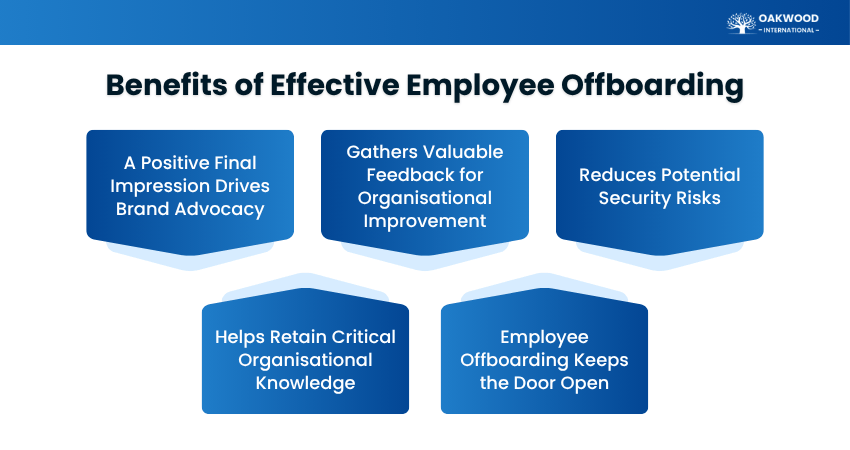
1) A Positive Final Impression Drives Brand Advocacy
A smooth and respectful Offboarding process ensures employees leave with a positive impression of the organisation. This encourages them to speak positively about the company, recommend it to others, and enhance employer branding, helping attract future talent and build trust.
2) Gathers Valuable Feedback for Organisational Improvement
Exit interviews provide honest feedback about employee experiences, challenges, and reasons for leaving. This information helps organisations identify gaps, improve policies, enhance workplace culture, and implement better strategies to increase employee satisfaction and long-term retention.
3) Reduces Potential Security Risks
Effective Offboarding ensures the timely revocation of system access and the recovery of company assets. This reduces the risk of data breaches, misuse of sensitive information, and unauthorised access, helping organisations maintain strong security and protect critical business operations.
4) Helps Retain Critical Organisational Knowledge
Proper knowledge transfer allows departing employees to document tasks, processes, and key information. This ensures that important knowledge remains within the organisation, supports team continuity, and prevents disruptions to workflows and productivity after the employee exits.
5) Employee Offboarding Keeps the Door Open
A positive Offboarding experience helps maintain good relationships with former employees. This creates opportunities for future collaboration, rehiring, or referrals, and strengthens the organisation’s professional network while reinforcing a respectful and supportive workplace culture.
Transform HR into a powerful driver of business success and innovation. Join the HR Strategy Training today!
Employee Offboarding Common Mistakes to Avoid
Common mistakes in employee Offboarding can disrupt operations, create security risks, and damage relationships. Avoiding these errors ensures a smooth and organised exit process. Let’s look at the key mistakes to avoid:
1) Lack of Proper Planning
Failing to plan the Offboarding process in advance can lead to missed tasks and confusion. Organisations should create a clear checklist covering documentation, asset return, and communication to ensure a smooth and consistent transition every time an employee leaves.
2) Ineffective Communication
Poor communication can create misunderstandings and uncertainty within the team. Informing employees about the departure and clarifying role transitions helps maintain transparency, ensures continuity, and keeps everyone aligned during the Offboarding process.
3) Failure to Revoke Access Rights
Not revoking access to systems, accounts, and data on time can expose the organisation to serious security risks. It is essential to promptly disable all access points to protect sensitive information and prevent unauthorised use.
4) Ignoring Proper Farewells
Skipping a proper farewell can leave a negative impression on departing employees. A respectful send-off, such as a team meeting or appreciation message, helps maintain positive relationships and reinforces a supportive organisational culture.
Best Practices for a Successful Offboarding Process
Best practices for a successful Offboarding process help organisations manage employee exits smoothly and securely. They ensure continuity, protect company interests, and support departing employees. Let’s explore the key best practices:
1) Notify Team Members in Advance
Inform team members and stakeholders about the employee’s departure in a timely manner. This helps manage expectations, avoids confusion, and ensures a smooth transition by clearly communicating how responsibilities will be handled moving forward.
2) Prepare Required Legal Documentation
Organisations should prepare essential documents such as resignation letters, termination papers, benefits information, and agreements. This ensures legal compliance, protects both parties, and provides clarity on final settlements and responsibilities during the exit process.
3) Facilitate Knowledge Transfer
Ensure the departing employee documents tasks, processes, and key responsibilities. Transferring this knowledge to team members or successors helps maintain continuity, reduces disruptions, and preserves valuable organisational expertise.
4) Recover Company Assets
Maintain a checklist of all company property, such as laptops, ID cards, and access badges. Recovering these items on time prevents financial loss and reduces security risks associated with unauthorised use.
5) Coordinate with the IT Team
Work closely with the IT team to revoke system access, deactivate accounts, and remove company data from devices. This step is crucial for protecting sensitive information and maintaining data security after the employee leaves.
6) Schedule an Exit Interview
Plan an exit interview to gather honest feedback about the employee’s experience. This helps organisations identify areas for improvement, enhance workplace practices, and strengthen employee retention strategies.
7) Express Appreciation
Recognise the employee’s contributions by organising a farewell or sharing appreciation messages. This creates a positive final impression and helps maintain a respectful and supportive organisational culture.
8) Recommend Outplacement Services
Offer guidance or outplacement support to help departing employees find new opportunities. This demonstrates care for their future, strengthens employer branding, and maintains positive long-term relationships.
Gain practical HR expertise to drive performance and organisational success with the Certified HR Manager Training – Register today!
Offboarding vs Onboarding
Onboarding and Offboarding are key HR processes at opposite stages of the employee lifecycle. Onboarding is the welcome phase, where new employees are integrated into the organisation, trained, and supported to understand their roles and become productive.
Offboarding is the farewell phase, which manages employee exits in a structured and respectful way. It ensures smooth transitions through knowledge transfer, asset recovery, and access removal while maintaining security, compliance, and employer reputation.
Conclusion
In essence, understanding What is Offboarding is essential for managing employee exits effectively. It ensures a smooth, secure, and respectful transition. By following structured steps and best practices, organisations can protect data, maintain continuity, and strengthen relationships while enhancing long-term success and employer reputation.
Build strong leadership capabilities to align HR strategies with business goals with the HR Leadership Courses – Join now!
Frequently Ask Questions
Is Offboarding Firing?
Offboarding is not the same as firing. It is a broader process that applies to all employee exits, including resignations, retirements, and terminations. While firing is one type of departure, Offboarding ensures a smooth, secure, and respectful exit regardless of the reason.
How Long Does Offboarding Take?
Employee Offboarding typically takes two to four weeks, often aligning with a standard notice period, but may extend to 1–2 months for senior roles. While system access is revoked on the final day, the process also includes documentation, knowledge transfer, and asset collection.
How to Handle Offboarding?
Offboarding should be handled with a structured approach to ensure a smooth and secure exit. Notify relevant teams, complete documentation, transfer knowledge, revoke access, and collect assets. Conduct an exit interview and communicate clearly to maintain continuity and positive relationships.
Didn’t Find What You’re Looking For?

Our commitment to excellence ensures an exceptional learning experience tailored to your professional development needs.


© Copyright 2026 - Oakwood International ™ - All rights reserved.


SUPER SALE
 Get Amazing Discounts
And Deals
Get Amazing Discounts
And Deals