

 Back
Back


 Back to Catagories


Table of Contents


 + 44 7452
122728
+ 44 7452
122728
 18-Apr-2026
Have you ever wondered why some organisations grow faster, keep employees happy, and handle change so smoothly? It’s not just luck. It’s a well-defined HR Strategy working behind the scenes. From hiring the right people to keeping them motivated and productive, a strong HR approach turns everyday tasks into real business results.
In today’s rapidly changing workplace, managing people well is no longer optional; it is essential. Employees expect growth, flexibility, and a positive experience, and organisations must keep up. This blog will help you understand what HR Strategy is, why it matters, and how to build one that truly works. Let’s dive into it!
What is HR Strategy?
An HR Strategy is a comprehensive, long-term plan that helps an organisation manage its people in a way that supports its overall business goals. It focuses on how employees are hired, developed, managed, and retained to improve performance and drive growth. It also provides a clear direction for managing workforce priorities effectively.
In simple terms, an HR Strategy ensures that the right people with the right skills are in the right roles at the right time. It connects key HR activities such as recruitment, training, and performance management with business objectives, helping organisations make better decisions and achieve long-term success.
Why is HR Strategy Important?
An HR Strategy is important because it aligns people with business goals and positions HR as a strategic partner that supports growth and long-term success. It also strengthens organisational performance and helps businesses respond effectively to change. Key reasons include:
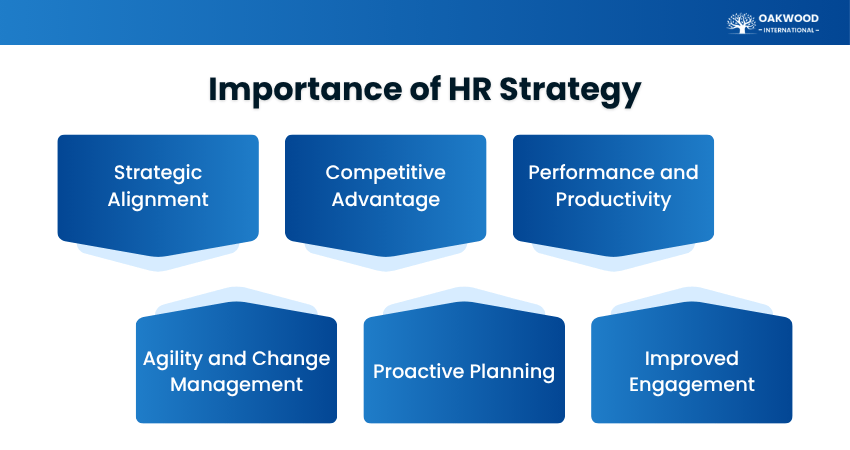
1) Strategic Alignment:
Ensures HR practices are aligned with business objectives. This helps organisations maintain focus and ensures all employee-related activities support overall goals.
2) Competitive Advantage:
Supports attracting and retaining skilled talent. A strong workforce gives organisations an edge in competitive markets and drives long-term success.
3) Performance and Productivity:
Ensures the right people are in the right roles. This improves efficiency, reduces errors, and enhances overall organisational output.
4) Agility and Change Management:
Helps organisations adapt to change and innovation. It prepares businesses to respond quickly to market shifts and technological advancements.
5) Proactive Planning:
Anticipates future workforce needs and challenges. This helps avoid skill gaps and ensures the organisation is prepared for growth.
6) Improved Engagement:
Encourages a motivated and high-performing workforce. Engaged employees are more efficient and contribute positively to organisational success.
Key Components of an HR Strategy
The key components of an HR Strategy outline how an organisation manages its workforce to achieve business goals and drive performance. These elements ensure that HR activities are well-aligned, consistent, and focused on long-term success. The main components include:
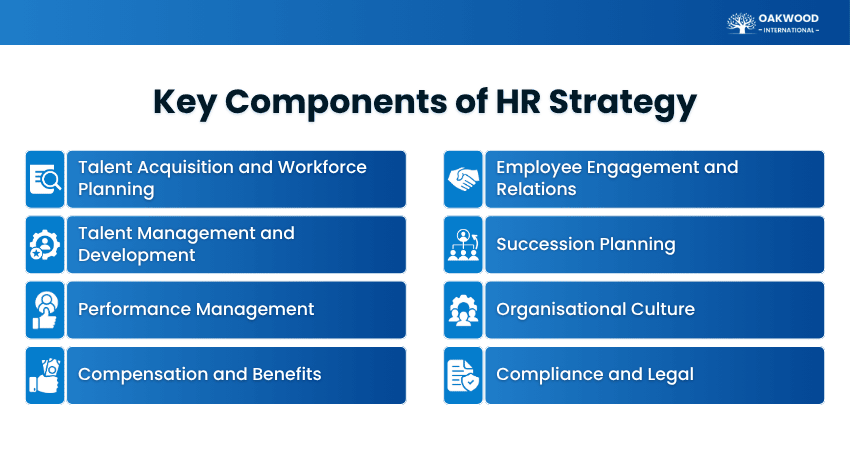
1) Talent Acquisition and Workforce Planning:
Focuses on identifying future workforce needs and hiring the right talent. It ensures the organisation has the necessary skills to meet business demands.
2) Talent Management and Development:
Involves continuous learning, training, and skill development. This helps employees grow and prepares them for future responsibilities.
3) Performance Management:
Establishes clear expectations, regular feedback, and evaluation systems. It ensures employee efforts contribute to organisational objectives.
4) Compensation and Benefits:
Covers salary structures, rewards, and employee benefits. Competitive offerings help attract and retain skilled professionals.
5) Employee Engagement and Relations:
Encourages a supportive work environment through communication and recognition. Engaged employees are more motivated and productive.
6) Succession Planning:
Focuses on preparing employees for future leadership roles. It ensures business continuity and reduces dependency on external hiring.
7) Organisational Culture:
Reflects the values and behaviours within the workplace. A strong culture supports collaboration and aligns employees with company goals.
8) Compliance and Legal:
Ensures all HR practices follow labour laws and regulations. This protects both the organisation and its employees while maintaining fairness.
Build HR analytics skills to transform decisions and drive growth with our
HR Analytics Course
– Register now!
HR Strategy Frameworks
HR Strategy Frameworks help organisations design and manage their Strategy effectively. They align people management with business goals and improve performance. Key frameworks include:
1) Deloitte Framework
The Deloitte Framework focuses on making HR a strategic partner. It starts with understanding business goals, defining HR Strategy, and aligning HR services with organisational needs. Key areas include:
1) Understanding Business Strategy:
Identifying goals and market conditions.
2) Defining HR Strategy:
Creating a clear HR roadmap.
3) Segmenting HR Customers:
Tailoring services to different employee groups.
4) Prioritising HR Investments:
Focusing on high-value initiatives.
5) Improving HR Operations:
Enhancing processes and capabilities.
2) McKinsey 7S Framework
The McKinsey 7S Framework consists of seven interconnected elements that work together to support an organisation’s overall business strategy. When applied to HR functions, it helps leaders strengthen the HR Strategy by identifying gaps, improving alignment, and enhancing organisational effectiveness. The seven key elements include:
1) Strategy:
The planned actions HR takes to achieve its goals and support business objectives.
2) Structure:
The way the HR function is organised to enable clear communication and coordination across teams.
3) Systems:
The processes and technologies that manage daily HR operations and workflows.
4) Shared Values:
The core beliefs that guide organisational behaviour and influence all other elements.
5) Skills:
The key capabilities and competencies required to achieve organisational goals.
6) Style:
The leadership approach used to motivate employees and drive engagement.
7) Staff:
The workforce needed to achieve business goals and how employees are developed and managed.
3) Balanced Scorecard
The Balanced Scorecard links HR Strategy with business performance by aligning HR policies with organisational goals and stakeholder needs. It helps define objectives, measure impact, and track results across key areas, including:
1) Financial:
Evaluates how HR initiatives impact financial performance, such as growth and profitability.
2) Customer:
Measures satisfaction levels of employees, managers, and leadership with HR services.
3) Internal Processes:
Assesses the efficiency and effectiveness of HR operations and workflows.
4) Learning and Growth:
Tracks how training and development initiatives improve employee skills and capabilities.
4) SWOT Analysis
SWOT Analysis is a simple framework used to evaluate and improve HR functions by assessing internal strengths and weaknesses alongside external opportunities and threats. It supports better decision-making and helps refine HR Strategy, focusing on four key areas:
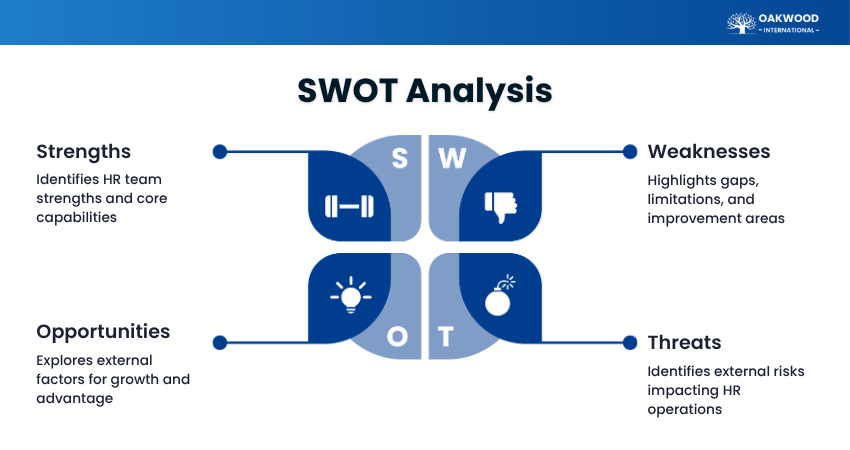
1) Strengths:
Identifies what the HR team does well, such as strong recruitment processes, effective people management, or a positive workplace culture.
2) Weaknesses:
Highlights gaps or limitations, such as skill shortages, limited diversity initiatives, or a lack of development opportunities.
3) Opportunities:
Examines external factors that can be leveraged, such as new technologies, emerging talent pools, or supportive policies.
4) Threats:
Recognises external challenges like talent shortages, rapid technological changes, or regulatory pressures that may impact HR operations.
Become a certified HR leader with practical skills and strategic expertise. Join our
Certified HR Manager Training
–Join now!
How to Develop an HR Strategy?
Developing an HR Strategy involves aligning people management with business goals through a clear and structured plan. It focuses on workforce needs, performance, and adaptability. To achieve this effectively, follow these key steps:
1) Recognise How HR Adds Value to the Company
The first step is to understand how HR contributes to business success within the HR Strategy. HR creates value by improving employee performance, engagement, and productivity. Aligning HR activities with business goals ensures better organisational outcomes.
By clearly defining this value, organisations can position HR as a strategic partner within the overall business strategy. This also helps justify investments in HR initiatives and ensures that all people-related decisions support overall business performance.
2) Consider Emerging HR Trends
Organisations must stay updated with trends such as digital transformation, flexible work, and employee well-being. These trends influence workforce expectations and help shape a future-ready HR Strategy.
Understanding these developments allows HR teams to adapt quickly and remain competitive. It also helps organisations design policies and practices that meet evolving employee needs and industry demands.
3) Perform a SWOT Analysis
A SWOT Analysis helps discover internal strengths and weaknesses, along with external opportunities and threats within the HR Strategy. This provides insights into gaps and areas for improvement in HR functions.
By analysing these factors, organisations can make informed decisions and prioritise key HR initiatives within their HR Strategy. It also helps in developing strategies that leverage strengths while addressing potential risks effectively.
4) Make Long-term Plans with Flexibility
An HR Strategy should focus on long-term goals while remaining adaptable and resilient. Flexibility allows organisations to respond effectively to changes in business needs, technology, and workforce dynamics.
This approach ensures that the strategy remains relevant over time. Organisations can adjust specific actions as needed while still maintaining alignment with overall business objectives and priorities.
5) Get Management Buy-in
Support from senior management is essential for the successful implementation of the HR Strategy across all levels. It ensures access to resources, alignment with business priorities, and commitment across the organisation.
Gaining leadership support also strengthens the HR Strategy by improving communication and accountability across departments. It ensures that HR initiatives are taken seriously and integrated into the broader business strategy.
6) Upskill Your HR Staff
HR teams must have the right skills to execute the HR Strategy effectively. This includes training in modern HR practices, technology, and leadership capabilities to improve performance and organisational success.
Upskilling ensures that HR professionals can handle complex challenges and deliver better outcomes. It also prepares the team to manage future changes and support organisational growth effectively.
7) Track Your Strategy Implementation Through KPIs
Tracking performance through KPIs helps measure the effectiveness of the HR Strategy. Regular tracking ensures continuous improvement and alignment with business goals and expectations.
Using metrics such as employee engagement, retention, and productivity provides valuable insights. This allows organisations to identify gaps, make improvements, and ensure long-term success and stability.
Best Practices for Implementing an HR Strategy
Implementing an HR Strategy requires a proactive approach to match business goals and ensure long-term success. Following best practices helps improve execution and achieve better outcomes. Key practices include:
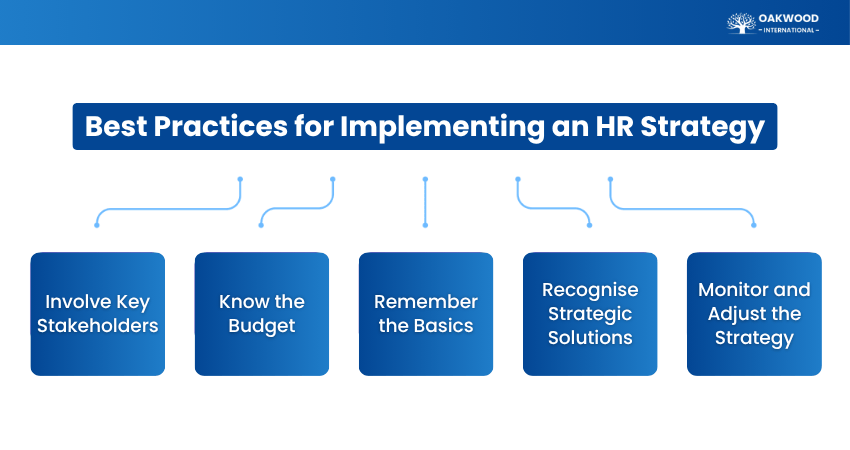
1) Involve Key Stakeholders:
Ensures collaboration and alignment across teams and leadership. Early involvement improves decision-making, builds accountability, and supports smoother implementation across the organisation.
2) Know the Budget:
Focuses on realistic initiatives within available resources. Understanding financial limits helps prioritise high-impact actions and ensures the strategy remains practical and sustainable.
3) Remember the Basics:
Maintain compliance and essential HR responsibilities. Strong foundational processes reduce risks and support the success of strategic initiatives.
4) Recognise Strategic Solutions:
Encourages long-term decisions over quick fixes. This helps address root causes and leads to more sustainable and effective outcomes.
5) Monitor and Adjust the Strategy:
Use KPIs to track performance and drive improvements. Regular monitoring ensures the HR Strategy stays relevant and aligned with business goals.
Lead with confidence using practical HR and people management strategies with our
HR Course
– Join now!
Examples of HR Strategies
Examples of HR Strategies show how organisations align HR Strategy with business goals to drive performance and growth. These real-world cases highlight people-focused initiatives that improve engagement and efficiency. Key examples include:
1) HR Mission Statement at the University of Marquette
The University of Marquette uses a clear HR mission statement as part of its HR Strategy to define its purpose and align HR activities with organisational goals. The statement emphasises excellence, leadership, and delivering strategic HR solutions that support the university’s mission.
This approach provides clear direction for HR teams and ensures consistency in decision-making. It also helps position the university as an employer of choice by focusing on employee development and engagement.
2) Digital Transformation Initiatives at Colgate
Colgate has integrated digital transformation into its HR Strategy to stay competitive in a changing business environment. The company focused on identifying key digital skills required across its workforce and developed learning programmes to upskill employees globally.
By investing in digital capabilities, Colgate improved efficiency, reduced operational errors, and increased e-commerce performance. This example shows how aligning HR Strategy with technology can drive measurable business results.
3) Talent Innovation Strategies at Canva
Canva has adopted a skills-first approach as part of its HR Strategy to support rapid growth. It focuses on key skill areas such as communication, leadership, strategy, and technical expertise across hiring and development processes.
Additionally, Canva builds a strong talent community by engaging candidates even after the recruitment process. This method helps attract and retain talent while strengthening employer branding and supporting continuous organisational growth.
Conclusion
A strong HR Strategy turns people into your greatest competitive advantage. By aligning talent with business goals, adopting the right frameworks, and continuously improving, organisations can boost performance, enhance engagement, and stay ahead in a fast-changing world while building a resilient and future-ready workforce.
Lead with confidence using practical HR and people management strategies with the HR Leadership Courses – Join now!
Frequently Ask Questions
What are the 7 Main Principles of HR?
The 7 HR principles include recruitment and selection, training and development, performance management, compensation and benefits, employee relations, compliance, and strategic HR planning. These ensure organisations attract, develop, and retain talent while aligning workforce practices with business goals.
What are the Types of HR Strategy?
Types of HR Strategy include talent management, recruitment, learning and development, performance management, compensation and benefits, and employee engagement strategies. Each focuses on a specific area to improve workforce performance and align HR practices with business goals.
What Defines a Successful HR Strategy?
A successful HR Strategy is defined by its alignment with business goals, ability to attract and retain talent, and measurable impact on performance. It improves employee engagement, supports workforce development, and adapts to change, ensuring long-term organisational growth and sustainable success.
Didn’t Find What You’re Looking For?

Our commitment to excellence ensures an exceptional learning experience tailored to your professional development needs.


© Copyright 2026 - Oakwood International ™ - All rights reserved.


SUPER SALE
 Get Amazing Discounts
And Deals
Get Amazing Discounts
And Deals