

 Back
Back


 Back to Catagories


Table of Contents


 + 44 7452
122728
+ 44 7452
122728
 13-Oct-2026
Maria Thompson
In today’s fast-changing workplace, attracting the right talent and keeping employees motivated requires more than basic policies. It demands thoughtful, people-focused HR Best Practices that help organisations remain competitive, compliant, and resilient.
This blog explores the most important HR Best Practices, including employee security, HR technology, fair compensation, and skill-focused development. Discover what truly makes HR effective in modern organisations. Let’s get started!
The 15 Most Important HR Best Practices
The 15 most important HR Best Practices highlight essential actions for managing people effectively, improving employee experience, ensuring compliance, and supporting business goals. The following sections explore each practice and explain how they contribute to a strong, people-focused organisation.
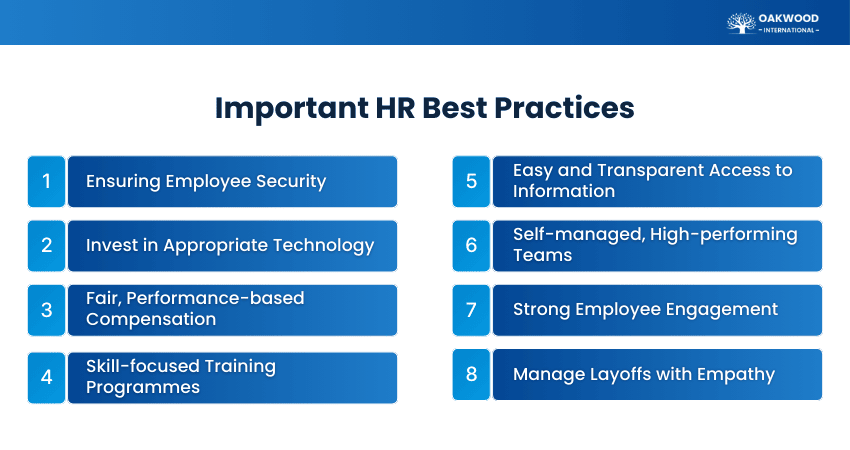
1) Ensuring Employee Security
Employee security goes beyond job stability and includes physical safety, mental wellbeing, data protection, and psychological trust. When employees feel secure, they perform better, collaborate openly, and remain committed to organisational goals.
Strong policies, transparent communication, and consistent leadership behaviour help build this sense of security. Human Resources (HR) plays a key role by ensuring fair treatment, safeguarding personal data, and promoting a workplace culture where concerns can be raised without fear.
Why it Matters: Employees who feel safe and supported are more engaged, productive, and loyal to the organisation.

2) Invest in Appropriate Technology
Modern HR relies heavily on technology to streamline processes, improve accuracy, and enhance employee experience. Investing in the right HR systems reduces manual work and allows HR teams to focus on strategic initiatives rather than administration.
Tools such as Human Resources Information System (HRIS) platforms, payroll software, learning management systems, and people analytics solutions help organisations make data-driven decisions while ensuring consistency, compliance, and efficiency across HR operations.
Why it Matters: The right
HR technology
improves efficiency, reduces errors, and enables better people-focused decision-making.
3) Establish a Clear and Well-structured HR Service Delivery Model
A structured HR service delivery model defines how HR services are designed, delivered, and supported. It clarifies responsibilities and ensures employees know where to go for help, advice, or information.
By combining shared services, HR business partners, and specialist teams, organisations can deliver consistent support while aligning HR activities with business needs, improving responsiveness and overall employee satisfaction.
Why it Matters: Clear service models reduce confusion and improve employee trust in HR support systems.
4) Fair, Performance-based Compensation
Fair and transparent compensation builds trust and motivates employees to perform at their best. Performance-based pay ensures rewards are aligned with contributions, encouraging accountability and continuous improvement.
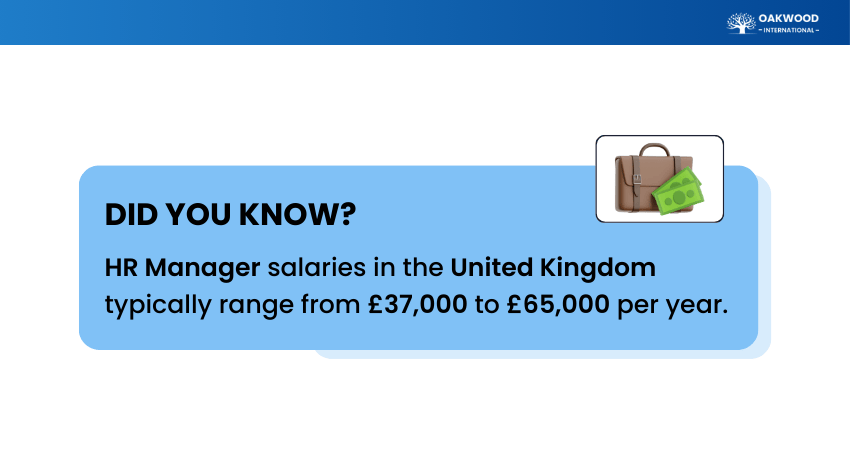
Human Resources Best Practices focus on clear salary structures, regular benchmarking, and objective performance criteria. This approach reduces bias, improves retention, and helps employees clearly understand how their efforts impact rewards.
Why it Matters: Fair pay linked to performance motivates employees and strengthens retention and trust.
5) Skill-focused Training Programmes
Skill-focused training ensures employees develop capabilities that directly support organisational goals. Rather than generic learning, effective programmes target current gaps and future skill requirements.
HR teams should regularly assess workforce skills, personalise learning pathways, and encourage continuous development. This approach boosts productivity, supports career growth, and prepares employees for evolving roles and technologies.
Why it Matters: Targeted training keeps employees skilled, adaptable, and prepared for future business needs.
Understand how to design and implement effective HR strategies that transform workplace performance with
HR Strategy Training
– Join now!
6) Easy and Transparent Access to Information
Employees perform better when they can easily access accurate and up-to-date information. Clear communication reduces confusion, saves time, and builds trust between employees and the organisation.
Best HR Practices include maintaining centralised knowledge platforms, clear policies, and consistent messaging. Transparency helps employees understand decisions, processes, and expectations, creating a more confident and informed workforce.
Why it Matters: Transparency builds trust and helps employees make informed decisions confidently.
7) Self-managed, High-performing Teams
Self-managed teams empower employees to take ownership of their work and decisions. This approach encourages accountability, innovation, and faster problem-solving, enabling teams to respond effectively to challenges and changing priorities.
HR supports self-managed teams by promoting autonomy, setting clear targets, and providing the right tools and training. When trust is established, teams collaborate better and consistently deliver strong, high-quality results.
Why it Matters: Empowered teams respond faster, collaborate better, and deliver stronger results.
8) Strong Employee Engagement
Employee engagement reflects how emotionally connected employees feel to their work and organisation. Engaged employees are more productive, loyal, and inspired to contribute beyond their basic responsibilities.
HR Best Practices include regular feedback, recognition, open communication, and opportunities for growth. By listening to employee needs and acting on insights, organisations can build a more committed and enthusiastic workforce.
Why it Matters: Engaged employees are more committed, productive, and willing to go beyond basic expectations.
9) Manage Layoffs with Empathy
Layoffs are difficult for both employees and organisations, but the way they are handled matters greatly. Empathetic approaches help preserve employee dignity, maintain trust, and protect the organisation’s reputation during challenging transitions.
HR should focus on transparent communication, fair processes, and emotional support throughout layoffs. Providing outplacement services, career guidance, and clear next steps helps affected employees move forward with confidence and respect.
Why it Matters: Empathetic layoffs protect employer reputation and preserve trust among remaining employees.
10) Support Flexible Remote Working Policies
Flexible working is now a core expectation rather than a perk in modern workplaces. Supporting remote and hybrid work improves work-life balance, boosts productivity, and increases overall employee satisfaction and retention.
HR Best Practices involve clear policies, outcome-based performance measures, and strong digital collaboration tools. This ensures flexibility supports accountability, clear communication, and consistent team cohesion across the organisation.
Why it Matters: Flexibility improves work-life balance while supporting productivity and employee satisfaction.
11) Effectively Manage Return-to-office (RTO) Policies
Return-to-office policies require careful planning and sensitivity to employee needs and expectations. A rigid approach can harm morale, while a thoughtful HR Strategy helps rebuild connection, collaboration, and trust across teams.
HR should balance business needs with employee preferences through flexibility, clear communication, and supportive transition plans. Successful RTO strategies focus on meaningful collaboration and outcomes, not simply physical presence.
Why it Matters: Thoughtful RTO policies rebuild collaboration without harming morale or trust.
Boost your HR career with the
HR Analytics Course
and lead data-driven talent strategies with confidence – Join now!
12) Simplify Recruitment and Hiring Processes
Lengthy and complex hiring processes can cause organisations to lose top talent in competitive markets. Simplifying recruitment improves candidate experience, reduces delays, and enables faster, more confident hiring decisions that support business needs.
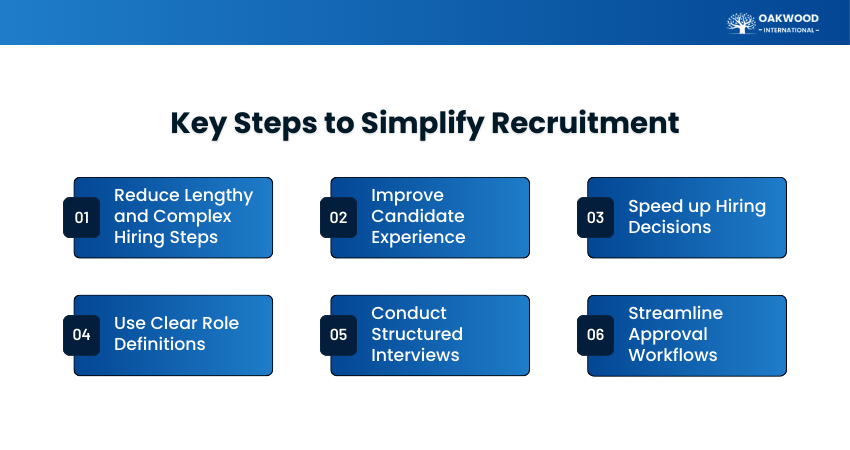
HR Best Practices include clear role definitions, structured interviews, and efficient approval workflows. A smooth hiring journey strengthens Employer Branding and helps attract skilled, motivated candidates who align with organisational values.
Why it Matters: Faster, simpler hiring improves candidate experience and helps secure top talent.
13) Prevent and Resolve HR Compliance Issues
Compliance protects both employees and the organisation by ensuring fair treatment and lawful practices. Failing to meet legal or ethical standards can lead to disputes, financial penalties, and serious reputational damage that affects trust and long-term stability.
HR must stay updated on employment laws, maintain accurate records, and provide regular compliance training. Proactive compliance management reduces organisational risk, prevents workplace issues, and helps build a fair, transparent, and trustworthy working environment.
Why it Matters: Strong compliance protects the organisation from legal risk and workplace disputes.
14) Deliver Role-specific HR Service Personalisation
Employees have different needs based on their role, career stage, and responsibilities within an organisation. Delivering personalised HR services helps ensure relevance, improves employee experience, and increases overall satisfaction and engagement at work.
HR Best Practices include tailored learning programmes, customised benefits, and role-specific support. This approach respects individual differences while maintaining consistency, fairness, and alignment with organisational policies and goals.
Why it Matters: Personalised HR support improves relevance, satisfaction, and employee engagement.
15) Implement an Effective Change Management Strategy
Change is constant in modern organisations due to technology, structure, or strategy shifts. Effective Change Management helps employees adapt confidently, reduces uncertainty, and ensures smooth, well-understood business transitions.
HR plays a critical role by communicating clearly, involving employees early, and providing training and ongoing support. A structured change approach reduces resistance, builds trust, and supports long-term organisational success.
Why it Matters: Structured Change Management reduces resistance and helps organisations adapt successfully.
Conclusion
Implementing strong HR Best Practices is not about following trends, but about creating a workplace where people feel secure, respected, and empowered to perform. When HR strategies align with employee needs and business goals, organisations build resilient cultures that support sustainable growth, engagement, and long-term success.
Transform your HR expertise with practical HR Leadership Courses designed for real-world success – Join now!
Frequently Ask Questions
What are the 4 C's of HR?
The 4 C’s of HR are:
1) Commitment: Builds employee loyalty and dedication to organisational goals
2) Competence: Develops skills through effective training and development
3) Congruence: Aligns employee goals with organisational values
4) Cost-effectiveness: Delivers HR value while managing costs responsibly
What is the Golden Rule of HR?
The golden rule of HR is to treat employees with fairness, respect, and consistency. This means listening actively, applying policies evenly, and balancing organisational needs with employee wellbeing at all times.
What is the 30-60-90 Rule for Managers?
The 30-60-90 rule helps managers set clear goals during the first three months in a role. It focuses on learning in the first 30 days, contributing in 60 days, and delivering measurable impact by 90 days.
Related Blogs
Didn’t Find What You’re Looking For?

Our commitment to excellence ensures an exceptional learning experience tailored to your professional development needs.


© Copyright 2026 - Oakwood International ™ - All rights reserved.


SUPER SALE
 Get Amazing Discounts
And Deals
Get Amazing Discounts
And Deals