

 Back
Back


 Back to Catagories


Table of Contents


 + 44 7452
122728
+ 44 7452
122728
 27-Jul-2026
Hailey Davis
Think about your workplace. There is always that one person people go to when things get messy, the one who calms everyone down, gives direction, and keeps the team moving. That is leadership in action, and it is not about titles; it is about how you make others feel and perform.
In this blog, we will explore what it means to be a leader, the characteristics that define good leadership, and practical ways on How to Become a Great Leader by improving your abilities step by step. Let's get started!
What is a Leader and What do They do?
A leader is someone who inspires and guides others towards achieving shared goals. They build trust, encourage collaboration, and motivate individuals to perform at their best while creating a positive and productive work environment.
Leaders provide direction, make informed decisions, and support their teams with the guidance and resources needed to achieve success. By leading with integrity and accountability, they drive both individual and organisational growth.

What Makes a Good Leader?
Good leaders possess qualities that inspire trust, encourage collaboration, and help teams achieve shared goals. They communicate effectively, share a clear vision, and make confident decisions to guide others in the right direction.
They also remain resilient during challenges and motivate their teams to perform at their best. By empowering others and maintaining a positive approach, Great Leaders create an environment where individuals and organisations can succeed.
What are the Characteristics of a Great Leader?
A Great Leader solves problems, supports the team, builds trust, and keeps the workplace positive. Some qualities like honesty are natural, while others like communication can be learned.
Here are the main qualities of a Great Leader:
1) Self-awareness: Understand your strengths, weaknesses, and leadership style to identify areas for improvement.
2) Integrity: Be honest, ethical, and consistent in your actions to earn the trust and respect of others.
3) Adaptability: Embrace change, remain open to new ideas, and adjust your approach to meet evolving challenges.
4) Empathy and Respect: Value different perspectives, support your team, and create an inclusive work environment.
5) Commitment to Continuous Learning: Seek feedback, learn from experience, and develop new skills to grow as a leader.
6) Collaborative Leadership: Empower others, recognise their contributions, and build a culture of teamwork and shared success.
Lead teams with confidence and skill with the
CMI Level 5 Diploma in Management and Leadership Training
– Register today!
How to Become a Great Leader?
Now you have got to know what makes a Great Leader. But how do you become one? Let’s break it down into some simple, practical steps you can start using right away.
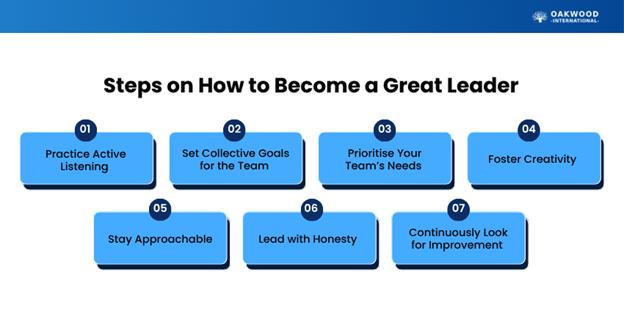
1) Practice Active Listening
Being a leader isn’t about controlling people; it’s about caring for them. Good leaders listen to their team, recognise individual strengths and ask for their thoughts and ideas. When people feel valued, they naturally want to give their best and put more energy into their work.
2) Set Collective Goals for the Team
A Great Leader knows the direction but also makes sure everyone feels included. Talk with your team about their personal goals and what matters to them, then connect those to the bigger mission. When people see meaning in their work, they feel motivated to go beyond just doing the basics.
3) Prioritise Your Team’s Needs
A good leader puts the team first. This means giving people the tools, support, and help they need to do their job well. When leaders care about their team, people feel safe, valued, and ready to do their best.
4) Foster Creativity
Great Leaders should encourage new ideas. Ask your team to share different ways of doing things and make them feel free to try. Even small suggestions can lead to big improvements. When people know their ideas matter, they feel more confident and creative.
5) Stay Approachable
If a leader is open and friendly, the team will feel comfortable talking to them. Simple things like asking, “How are you?” or “Do you need help?” make a big difference. Being approachable builds trust and helps solve problems quickly.
6) Lead with Honesty
Honesty is the foundation of trust. Leaders should be clear and open about what is happening, even if the news is not good. Admitting mistakes and being truthful make the team respect you and feel safe to share their own thoughts.
7) Continuously Look for Improvement Opportunities
Great Leaders always look for ways to grow and help their team get better. They learn from mentors, listen to feedback, and create open talks. When giving feedback, they share clear advice and resources so team members can build skills and use their strengths well.
Build strong leadership skills with our
CMI Level 5 Award in Management and Leadership
– Join today!
Tips to Improve Your Leadership Abilities
Leadership is not something people are born with. Even Great Leaders need to keep learning and getting better. A big part of being a leader is showing the same qualities you want your team to follow.
So, here are some of the tips to improve your leadership abilities:
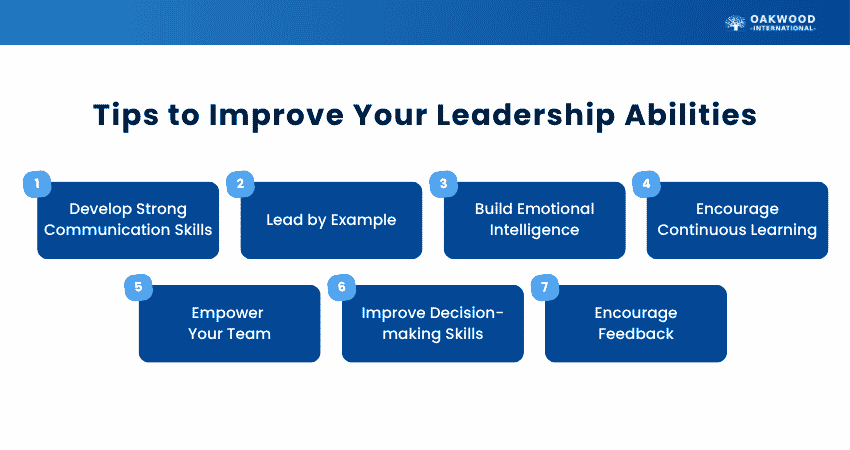
1) Develop Strong Communication Skills
Communicate your ideas, expectations, and feedback clearly to avoid misunderstandings. Active listening is important, as it helps leaders understand team concerns, encourage collaboration, and build stronger relationships.
2) Lead by Example
Inculcate the behaviours and values you expect from your team. Showing integrity, accountability, and professionalism encourages others to follow your example and creates a positive workplace culture.
3) Build Emotional Intelligence
Understand and manage your emotions while recognising the feelings of others. Strong emotional intelligence enables leaders to resolve conflicts, build trust, and form a supportive work environment.
4) Encourage Continuous Learning
Invest in your personal and professional development by attending training programmes, seeking feedback, and staying updated with industry trends. A commitment to learning helps leaders adapt to change and make better decisions.
5) Empower Your Team
Delegate responsibilities and give team members the authority to make decisions within their roles. Empowering employees builds confidence, encourages innovation, and promotes a sense of ownership over their work.
6) Improve Decision-making Skills
Gather relevant information, evaluate available options, and consider potential risks before making decisions. Thoughtful and timely decision-making helps leaders solve problems effectively and achieve organisational goals.
7) Encourage Feedback
Leaders should encourage honest feedback from colleagues, team members, and mentors to identify areas for improvement. Acting on constructive feedback demonstrates a willingness to grow and strengthens your leadership effectiveness.
Conclusion
Learning how to become a Great Leader takes time, practice, and patience. It is not about power but about guiding, supporting, and inspiring others. By listening, being honest, and helping your team grow, you can build trust and respect. Small steps every day will help you become the kind of leader people admire. Remember, leadership is a journey, not a destination, and anyone willing to learn can grow into a Great Leader.
Become a transformative leader with the CMI Level 5 Training – Join today!
Frequently Ask Questions
What are the Five Qualities of a Good Leader?
Great Leaders build trust, communicate a clear vision, and guide teams through change with confidence. They combine effective communication, integrity, empathy, decisive thinking, and resilience to inspire others, overcome challenges, and create an environment where both individuals and organisations can thrive.
What is Your Leadership Style?
A leadership style is the way you guide and support your team to get things done. To know your leadership style, think about what’s important to you, ask your team how they see you, and try different ways of leading. The best leaders mix different styles and adjust as their team’s needs change.
Why is it so Hard to be a Leader?
Being a leader isn’t about struggling with endless challenges; it’s about learning to guide people with balance and confidence. Leadership becomes smoother when you focus on clear communication, fair decision-making, and motivating others to grow together.
Related Blogs
Didn’t Find What You’re Looking For?

Our commitment to excellence ensures an exceptional learning experience tailored to your professional development needs.


© Copyright 2026 - Oakwood International ™ - All rights reserved.


SUPER SALE
 Get Amazing Discounts
And Deals
Get Amazing Discounts
And Deals