

 Back
Back


 Back to Catagories


Table of Contents


 + 44 7452
122728
+ 44 7452
122728
 29-Jun-2026
Maria Thompson
Conflicts are a natural part of any workplace. When deadlines are tight, opinions differ, and pressure increases, disagreements are inevitable. However, the way these situations are handled can have a significant impact on team performance. Conflict Management helps turn challenges into opportunities for stronger collaboration, improved communication, and better decision-making.
It focuses on addressing issues constructively, fairly, and professionally. When managed well, it strengthens working relationships, boosts productivity, and creates a more positive work environment. In this blog, you will explore what is Conflict Management, its styles, essential skills, practical tips, and more. Let’s get started!
What is Conflict Management?
Conflict Management refers to the process of managing disagreements or problems between people. It helps to find a solution that works for everyone involved. The goal is to reduce stress, keep relationships strong, and make sure the issue does not get worse.
For example, if two coworkers argue about how to finish a task, Conflict Management steps in to help. It involves listening to both sides, finding out what each person needs, and agreeing on a plan to move forward. A manager or team leader may step in to help. By staying calm and respectful, people can solve the issue and avoid bigger problems later.

Why is Conflict Management Important?
Conflict Management helps organisations address disagreements before they escalate into larger problems. Since conflicts are inevitable in any workplace, handling them promptly and fairly is essential for maintaining productivity, collaboration, and a positive work environment. Let’s look at the important reasons for effective Conflict Management below:Some key reasons why employing Conflict Management is essential are:
a) Faster Resolutions: Effective Conflict Management helps resolve disagreements quickly, reducing disruptions and keeping teams productive.
b) Better Employee Experience: It promotes a positive work environment by reducing stress and encouraging collaboration and open communication.
c) Improved Employee Retention: Employees who feel heard and respected are more likely to remain engaged and stay with the organisation.
d) Helps Manage Workplace Challenges: Since conflicts are inevitable, Conflict Management provides the skills needed to handle disagreements constructively.
Five Conflict Management Styles
Let’s look at the key Conflict Management styles:
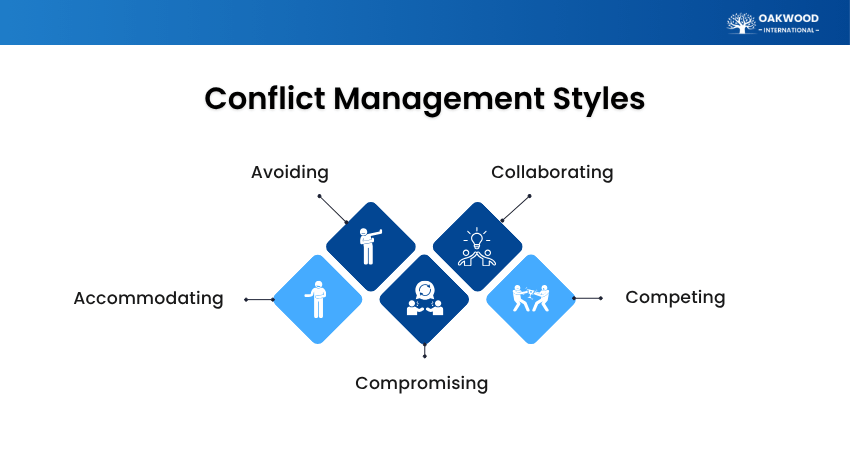
1) Accommodating
This style means giving in to the other person’s needs or wishes. It is often used when the issue is small or the relationship is more important than the outcome. People choose this when they want to keep the peace or avoid stress.
Examples:
a) Letting a teammate choose the project method to avoid arguments
b) Agreeing to a friend’s restaurant choice, even if it's not your favourite
c) Saying yes to a shift change at work to help a colleague
2) Avoiding
Avoiding means staying away from the conflict altogether. People use this when they feel the issue is not worth the time or may cause more trouble. It can help in short-term peace but may not solve the problem.
Examples:
a) Not replying to a rude comment to stop a fight
b) Walking away from a heated argument at work
c) Ignoring a small mistake that won’t affect the final result
3) Compromising
Compromising is when both sides give up something to find a middle ground. This style is helpful when both people have equal power or when time is short. It works well when you need a quick and fair solution.
Examples:
a) Sharing tasks equally, even if it’s not ideal for both
b) Choosing a meeting time that suits everyone a little
c) Splitting a budget between two departments fairly
4) Collaborating
Collaborating means working together to find a win-win solution. It takes time and effort but it gives the best results when both people want to solve the problem fully. This style builds trust and strengthens relationships.
Examples:
a) A team brainstorming to fix a project delay
b) Two departments are planning together to avoid future issues
c) A manager and employee create a plan that suits both
5) Competing
Competing is about standing firm and asserting your position to achieve a result. This style is used when the matter is urgent or very important. It can solve problems quickly but may hurt relationships if overused.
Examples:
A manager insisting on safety rules despite team complaints
A lawyer strongly defending their client in court
Telling a teammate no when their idea risks the project
Become the leader every organisation need with our
CIPD Qualification – Join today!
Tips for Choosing a Conflict Management Style
Some of the most helpful ways to choose the right Conflict Management style include:
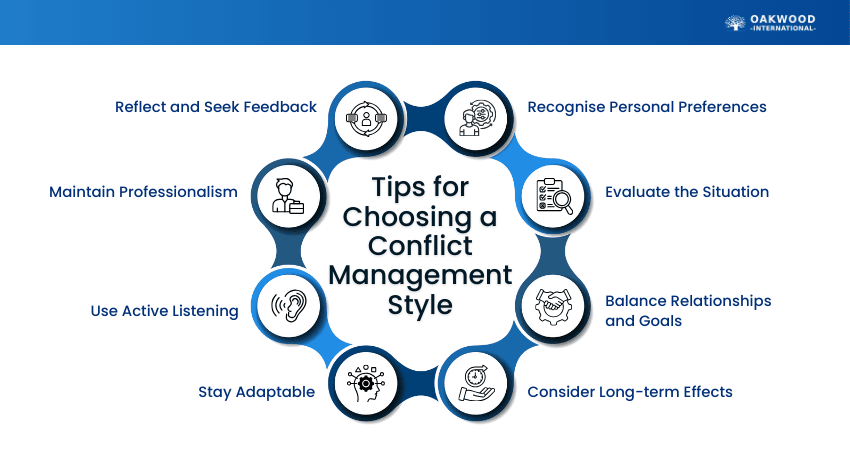
1) Recognise Personal Preferences
Everyone has a natural way of handling conflict. Knowing your usual response can help you decide if it's the best choice for the situation. Being aware helps you improve how you deal with others.
a) Notice if you usually avoid or confront conflict
b) Think about how your style affects others
c) Be open to learning new ways of managing conflict
2) Evaluate the Situation
Different problems need different solutions. You should think about how serious the conflict is and who is involved. Choose a style that fits the problem, not just what feels easy.
a) Ask yourself how important the issue really is
b) Look at who is affected by the conflict
c) Decide if the matter needs quick or careful action
3) Balance Relationships and Goals
Sometimes, keeping a good relationship is more important than winning. Other times, reaching your goal is the main thing. Good Conflict Management means finding the right mix between the two.
a) Think about how your choice affects the other person
b) Don’t ignore your own needs just to please others
c) Choose a style that helps both sides if possible
4) Consider Long-term Effects
A quick fix might not be the best in the long run. Think about how your actions today will affect future trust and teamwork. A calm and fair choice now can prevent bigger problems later.
a) Ask if your response builds or breaks trust
b) Think about how it will affect future teamwork
c) Choose a way that leaves room for better results later
Create an organisational culture where learning thrives by joining the CIPD Level 5 Associate Diploma in Organisational Learning & Development Training now!
5) Stay Adaptable
Not every conflict is the same. Be ready to change your approach if needed. Flexibility can help you find better solutions and work well with others.
a) Don’t stick to one style all the time
b) Be open to trying new methods when things change
c) Learn from past conflicts to improve your response
6) Use Active Listening
Listening well is one of the most powerful tools in conflict. It helps you understand the other person's view and calm the situation. People feel respected when they are truly heard.
a) Listen without interrupting or judging
b) Repeat what you heard to show understanding
c) Ask questions to make sure you get their point
7) Maintain Professionalism
Even in tough situations, staying calm and respectful is key. Avoid shouting, blaming, or personal attacks. Professional behaviour builds trust and keeps things under control.
a) Use polite and clear words during discussions
b) Focus on solving the problem, not blaming others
c) Keep your emotions in check during the conflict
8) Reflect and Seek Feedback
After a conflict, take time to think about what happened. Ask yourself what worked and what didn’t. Getting feedback can help you handle future problems better.
a) Think about how you responded to the situation
b) Ask others how they felt about the outcome
c) Use lessons learned to grow and improve
Implement workforce development plans with our
CIPD Level 5 Associate Diploma in People Management Course
– Join today!
How to Manage Conflict in the Workplace?
For effective Conflict Management, start by selecting the style that best fits the situation. Minor disagreements may benefit from a lighter approach, such as avoidance or accommodation, while more serious conflicts may require assertive methods like the competing style. The goal is to address the issue constructively to protect relationships and support team needs.
When you need to decide which Conflict Management to use, ask yourself the following questions:
a) How important are my wants and needs?
b) What happens if expectations are not met?
c) How much do I value the involved people?
d) How significant is the issue?
e) Have I considered the consequences of using different styles?
f) Do I have the energy and time to address the issue now?
Six Ways Managers Can Improve Their Conflict Management Skills
Conflict Management is a key leadership skill that helps managers maintain healthy workplace relationships and team productivity. Let’s look at six ways managers can strengthen their Conflict Management skills below:
1) Establish Clear Boundaries
Setting clear boundaries ensures conflicts are addressed appropriately. Managers should recognise which conflicts require their involvement, and which can be resolved independently by employees. However, intervention becomes necessary when disagreements begin affecting performance, team morale, collaboration, or productivity.
2) Identify the Root Cause of the Conflict
Effective Conflict Management starts with understanding the underlying issue. Managers should listen carefully to all parties involved, ask questions, and consider different perspectives. Focusing on the root cause rather than the visible symptoms helps create lasting solutions and prevents similar issues from recurring.
3) Gather the Facts Independently
To gain an objective understanding of the situation, managers should review relevant information like emails, meeting notes, project records, and performance feedback. Gathering facts independently helps eliminate assumptions, reduces bias, and supports fair decision-making.
4) Recognise Your Conflict Management Style
Different conflicts require different approaches. Managers should understand their preferred Conflict Management style and determine whether collaboration, compromise, or another approach is most suitable for the situation. Choosing the right style can improve communication and lead to more effective outcomes.
5) Bring Parties Together and Resolve the Issue
Once the conflict has been assessed, managers should facilitate a constructive discussion between the parties involved. The focus should be on finding solutions, clarifying expectations, and moving forward instead of revisiting past disagreements. Open communication and mutual respect are key to reaching a successful resolution.
6) Seek Constructive Feedback
After the conflict has been resolved, managers should seek feedback from those involved to evaluate the effectiveness of the process. Understanding what worked well and identifying areas for improvement can help managers refine their approach and strengthen their Conflict Management skills over time.
Conclusion
Conflict is a natural part of any workplace but managing it effectively can turn challenges into opportunities for growth. By addressing issues early, communicating openly, and applying the right strategies, organisations can strengthen relationships and maintain a positive work environment. Thus, strong Conflict Management skills improve teamwork, boost morale, and foster lasting collaboration.
Build a strong foundation in people management with our CIPD Level 3 Certificate in People Practice Course – Join today!
Frequently Ask Questions
What are the Five Cs of Conflict?
The five Cs of conflict include:
1) Communication: Sharing information openly to reduce misunderstandings
2) Collaboration: Working together to create effective solutions
3) Compromise: Balancing needs by meeting halfway
4) Control: Managing emotions to keep discussions productive
5) Consensus: Reaching an agreement everyone supports
What are the Four Rs of Conflict Management?
The four Rs of Conflict Management include:
a) Recognise: Identify signs of tension and issues proactively
b) Respond: Be calm and listen actively
c) Resolve: Utilising strategies, such as competitive or compromise
d) Reflect: Review what worked and what to improve in the future
What is the 555 Method of Conflict?
The 5-5-5 Method is a simple communication technique employed to help two people address a conflict. The method works in three timed stages:
a) Five minutes for Person A to speak without interruption
b) Five minutes for Person B to respond without interruption
c) Five minutes for both to discuss solutions together
Related Blogs
Didn’t Find What You’re Looking For?

Our commitment to excellence ensures an exceptional learning experience tailored to your professional development needs.


© Copyright 2026 - Oakwood International ™ - All rights reserved.


SUPER SALE
 Get Amazing Discounts
And Deals
Get Amazing Discounts
And Deals