

 Back
Back


 Back to Catagories


Table of Contents


 + 44 7452
122728
+ 44 7452
122728
 27-Jul-2026
Debra Jones
Workplace Discrimination often hides in plain sight; shaping experiences, limiting opportunities and silencing voices. It occurs when individuals experience unfair treat because of personal characteristics protected by law. Understanding how discrimination appears in daily work environments is essential for building fair and inclusive workplaces.
From subtle biases to clear policy violations, recognising these behaviours is the first step toward change. In this blog, we explore what is Workplace Discrimination, the different types it can take, and the practical steps organisations can follow to prevent it. So read on!
What is Workplace Discrimination?
Discrimination refers to treating an individual less favourably than others because of certain personal characteristics. These include disability, age, gender reassignment, pregnancy and maternity, marriage and civil partnership, race, religion or belief, sex and sexual orientation.
These characteristics are known as protected characteristics. Discrimination occurs when a person with any of these characteristics is treated unfairly or placed at a disadvantage in comparison to someone who does not share the same characteristic.

Types of Workplace Discrimination
Employment laws protect individuals from various forms of discrimination in the workplace. These are the main types:
1) Direct Discrimination
Direct discrimination refers to a situation when the employer treats an employee less favourably compared to another person because of a protected characteristic. For example, advertising a driving role exclusively to male applicants would constitute direct discrimination. However, in limited cases, an employer may justify such requirements if there is a genuine occupational need.
Preventing direct discrimination is essential for creating a fair and inclusive workplace. Employers should ensure recruitment, promotions, and workplace decisions are based on skills and merit rather than personal characteristics.
2) Indirect Discrimination
Indirect discrimination happens when a workplace policy, rule, or requirement disadvantages a particular group more than others. For example, requiring job applicants to be clean-shaven may place individuals from certain religious backgrounds at a disadvantage.
Indirect discrimination is unlawful whether intentional or not, unless the rule is essential for business operations and no reasonable alternative exists. For example, a clean-shaven requirement may be justified if the role involves handling food and facial hair presents a genuine hygiene concern.
3) Harassment
Employees have the right to work without being harassed or subjected to offensive behaviour in the workplace or during work-related events, such as company gatherings. Harassment includes intimidating, degrading or offensive actions, such as sexist remarks, racial abuse, sharing explicit materials or giving someone an insulting nickname that humiliates or undermines them.
Harassment can damage workplace morale, reduce employee confidence, and create a hostile work environment. Organisations must take clear steps to prevent such behaviour and ensure employees feel safe, respected, and supported at work.
4) Victimisation
Victimisation happens when someone receives unfair treatment because they made or supported, a complaint about discrimination. Examples include denying training opportunities, imposing unfair disciplinary actions or excluding the individual from workplace activities or social events.
This type of behaviour discourages employees from speaking up about unfair treatment. Employers must ensure that individuals who report discrimination are protected and treated fairly throughout the process.
Lead with transparency and zero tolerance for bribery. Learn how in our
Anti-bribery Training
- Sign up today!
Steps Taken by Employers to Prevent Discrimination
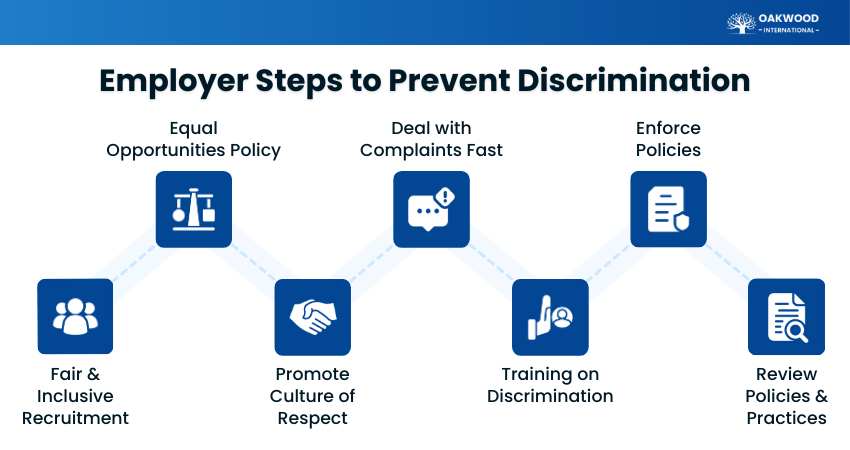
Employers play an important role in creating a fair, respectful, and inclusive workplace for all employees. By implementing clear policies, providing training, and encouraging open communication, organisations can reduce the risk of discrimination and promote equal opportunities. Here are the key steps involved:
1) Recruitment
Preventing discrimination begins during the hiring process. Job advertisements should avoid language that may suggest a preference for a particular group. For example, terms like "office girl" may imply that only women should apply. Similarly, requirements such as "highly experienced" should only be used when truly necessary, as they could disadvantage individuals who have not yet had the opportunity to gain experience.
2) Policy
Developing an equal opportunities policy is essential. This policy should clearly explain protected characteristics, outline examples of direct and indirect discrimination, and define acceptable workplace behaviour. It helps create a respectful and inclusive environment while guiding employees on their rights and responsibilities.
3) Respect
Organisations should promote a culture of respect where employees value diversity and recognise individual differences. Encouraging mutual respect helps build an inclusive environment where everyone feels valued.
4) Deal with Complaints Fast
If an employee raises a complaint regarding discrimination, it should be handled quickly, fairly, and confidentially. A clear and reliable complaint procedure ensures employees feel comfortable reporting concerns and confident that their issues will be taken seriously.
5) Training
In addition to general discrimination awareness training for employees, Managers and Supervisors should receive specialised training. This helps them identify potential discrimination issues and respond appropriately to maintain a fair workplace.
6) Enforcement
Policies alone are not enough; they must be actively enforced. Employers should ensure that anti-discrimination policies are applied consistently so employees trust that the organisation genuinely supports equality.
7) Review
Employers should regularly review their policies, procedures, and training programmes to ensure they remain effective and aligned with current UK discrimination laws. Regular evaluations also help organisations identify gaps, update practices, and maintain a fair, inclusive and legally compliant workplace environment.
Embed your decisions with the knowledge that keeps teams safe and compliant. Sign up for our
Employment Law Training
today!
Who is Responsible for Discrimination?
The core responsibility for preventing discrimination in the workplace rests with employers. By law, employers must do the following:
1) Ensure that no unfair discrimination occurs in any aspect of employment
2) Take proactive steps to prevent discriminatory behaviour
3) Do everything reasonably possible to protect employees from discrimination by others
4) Safeguard the wellbeing of their workforce, which is known as a duty of care
Employers may also be held accountable for discriminatory actions carried out by their employees. This legal principle is called vicarious liability.
Who is Protected Under Discrimination Law?
The Equality Act 2010 safeguards individuals from discrimination in the workplace. Protection applies to several groups, including:
1) Contractors and self-employed individuals hired to carry out work personally
2) Employees working for an organisation
3) People applying for jobs
4) Former employees who previously worked for the organisation
These protections help ensure fair treatment at every stage of employment.
Direct vs Indirect Discrimination: Key Differences
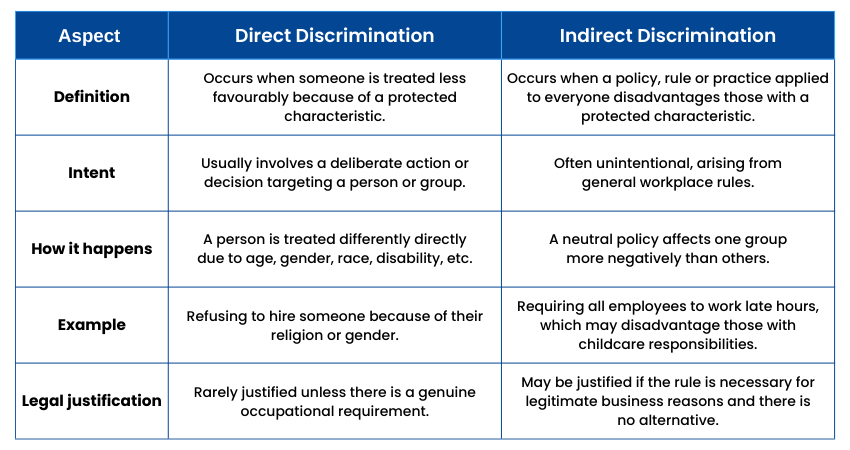
Direct discrimination happens when an employee gets unfairly treated, specifically because of a protected characteristic. Indirect discrimination occurs when a workplace rule, policy or practice that applies to everyone puts individuals with protected characteristics at an unfair disadvantage compared to others. Here are the key differences:
Conclusion
Workplace Discrimination isn't always obvious, but its impact is unmistakable. By understanding its definition, steps, and types, we gain the power to identify it and challenge it. Creating a fair workplace starts with awareness, followed by action. When organisations choose equity and accountability, they build spaces where everyone feels valued and free to succeed.
Learn the laws that shape modern work in our comprehensive range of Employment Law Courses - Register now!
Frequently Ask Questions
What is an Example of Workplace Discrimination?
An example of Workplace Discrimination is when an employee receives unfair treatment unfairly due to a protected characteristic like age, gender, race, disability, religion or sexual orientation. For instance, refusing to promote someone because they are pregnant would be considered discrimination.
What is Discrimination in Terms of Work?
In the workplace, discrimination means treating an employee or job applicant unfairly because of certain protected personal characteristics. This can occur during recruitment, promotions, training opportunities, pay decisions or everyday workplace interactions.
Can I be Sacked for Discrimination?
Yes, employees can be dismissed for discriminatory behaviour if it violates workplace policies or employment laws. Employers have the legal duty of maintaining a fair work environment, and discriminatory actions may lead to disciplinary measures, including dismissal, depending on the severity of the behaviour.
Didn’t Find What You’re Looking For?

Our commitment to excellence ensures an exceptional learning experience tailored to your professional development needs.


© Copyright 2026 - Oakwood International ™ - All rights reserved.


SUPER SALE
 Get Amazing Discounts
And Deals
Get Amazing Discounts
And Deals