

 Back
Back


 Back to Catagories


Table of Contents


 + 44 7452
122728
+ 44 7452
122728
 21-Sep-2026
Veronica Davis
Finding the right candidate can feel like searching for a needle in a haystack. With dozens or even hundreds of applications for a single role, many candidates may appear qualified on paper. This is why organisations rely on a well-defined Selection Process to carefully evaluate applicants and identify the candidate who truly fits the job requirements and organisational culture.
A structured Selection Process allows organisations to assess candidates through stages such as screening, tests, and interviews to make informed hiring decisions. This blog explores the key steps, important metrics, and best practices used to hire the right talent. Let’s read to know more.
What is the Selection Process?
The Selection Process is a structured method used by organisations to identify and choose the most suitable candidate from a pool of applicants. It involves evaluating candidates through stages such as application screening, employment tests, and interviews while eliminating those who do not meet the job requirements.
At each step, candidates are shortlisted, and only the most suitable individuals move forward until the right candidate is selected. The process begins with reviewing applications and continues through interviews, job offers, and even after the candidate joins, as organisations assess the employee’s potential to perform successfully in the role.

8 Key Steps in the Selection Process
The Selection Process includes several structured stages that help organisations evaluate candidates and choose the most suitable one for the role. The following are the key steps commonly followed in this process:
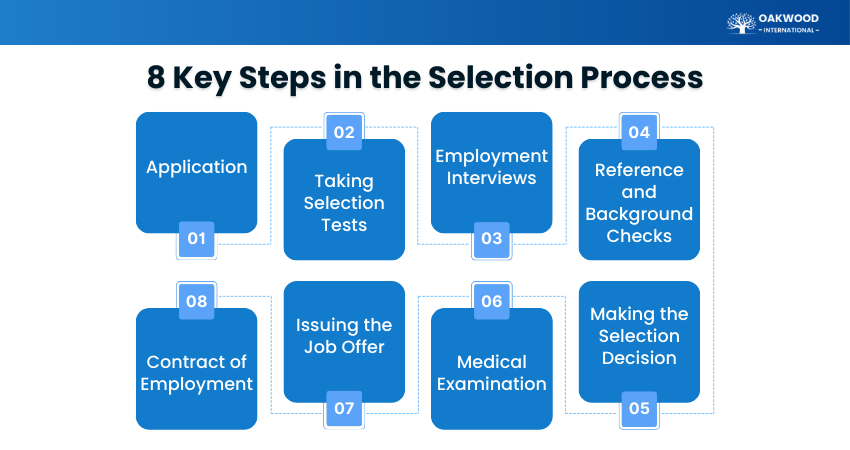
1) Application
The process begins with the application stage, where candidates submit their resumes, application forms, and cover letters. Recruiters review these documents to check whether applicants meet the basic job requirements such as qualifications, experience, and skills.
At this stage, employers often conduct preliminary screening to filter candidates who do not meet the basic requirements. This step helps reduce the applicant pool and ensures that only suitable candidates move forward to the next stage of the Selection Process.
2) Taking Selection Tests
After the initial screening, candidates may be required to take selection tests to evaluate their abilities and suitability for the role. These tests provide objective insights into a candidate’s knowledge, skills, and problem-solving capabilities.
Common types of tests include aptitude tests, intelligence tests, situational judgment tests, and personality assessments. Some roles may also require trade or technical tests to assess job-specific skills. These evaluations help employers compare candidates and identify those who are most capable of performing the job effectively.
3) Employment Interviews
The employment interview allows recruiters and Hiring Managers to interact directly with candidates. During interviews, employers assess the candidate’s communication skills, work experience, and overall fit for the position.
Interview questions often focus on past work experience, problem-solving abilities, career goals, and behavioural traits. Interviews also provide candidates a chance to learn more about the organisation, its culture, and job expectations.
4) Reference and Background Checks
Once interviews are completed, organisations conduct reference and background checks to verify the candidate’s information. Employers may contact previous supervisors or colleagues to understand the candidate’s work performance and professional behaviour.
Background checks also include the verification of employment history, educational qualifications, and other relevant details. This step helps organisations ensure the reliability and credibility of the candidate before making the final hiring decision.
5) Making the Selection Decision
After reviewing the results of tests, interviews, and background checks, the hiring team proceeds with making the selection decision. This step involves evaluating all shortlisted candidates and determining who best meets the job requirements.
Recruiters and Hiring Managers often discuss candidate performance and compare their strengths before selecting the most suitable individual. The final decision considers qualifications, experience, skills, and alignment with business goals.
Develop leadership skills to manage teams and drive workplace success with the
Successful People Management and Team Leadership Training – Join now!
6) Medical Examination
Some organisations require candidates to undergo a medical examination before confirming employment. This step ensures that the selected candidate is physically and mentally fit to perform the job responsibilities.
Medical examinations are particularly important for roles that involve physical work, safety responsibilities, or high levels of stress. This assessment helps organisations maintain workplace safety and reduce potential health-related risks.
7) Issuing the Job Offer
After successfully completing the evaluation stages, the organisation issues a job offer to the selected candidate. The offer letter typically includes important details such as job title, salary, benefits, responsibilities, and the proposed joining date.
Candidates review the offer and may accept it or negotiate certain terms. Once the candidate agrees to the offer, they officially proceed to the final stage of the Selection Process. This step confirms the candidate’s acceptance and prepares them for formal employment.
8) Contract of Employment
The final stage of the Selection Process is the contract of employment. This document formalises the agreement between the employer and the employee and outlines the terms and conditions of employment.
The contract usually includes information about job duties, salary, working hours, company policies, and termination conditions. By signing the contract, both parties confirm the agreed terms, establishing a clear and legally recognised employment relationship.
Metrics Used in the Selection Process
Recruitment metrics help organisations assess how effective their Selection Process is. By tracking these indicators, employers can identify gaps in hiring and improve decision-making. Some common metrics used to evaluate this process include:
1) Application Completion Rate:
This metric displays the percentage of candidates who complete and submit the application after opening it. A low rate may indicate that the application form is too long, complex, or has technical issues.
2) Time to Fill:
Time to fill measures the period from approving a job vacancy to when a candidate accepts the offer. A longer time may suggest delays or inefficiencies in the Selection Process.
3) 90-Day and One-year Attrition:
Early employee turnover may indicate weaknesses in the Selection Process. Employees leaving within 90 days often suggest poor candidate evaluation or mismatched expectations.
4) Candidate Experience:
This metric measures how candidates perceive the recruitment process. A positive experience strengthens an employer’s reputation and encourages candidates to apply again in the future.
5) Selection Process Funnel Effectiveness:
The Selection Process often follows a funnel structure where candidates move through several stages. The yield ratio measures how many candidates progress from one stage to the next and helps recruiters assess the effectiveness of the process.
6) Offer Acceptance Rate:
This metric measures the percentage of job offers accepted by candidates. A high rate suggests the organisation offers competitive compensation and attractive opportunities.
7) Quality of Hire:
This metric measures how well new employees perform after joining. Strong performance indicates an effective Selection Process.
Build strong hiring strategies and recruit the right talent effectively through the
Talent Acquisition Training – Register today!
Best Practices to Improve the Recruitment and Selection Process
Improving recruitment and Selection Processes helps organisations hire suitable candidates more efficiently. The following best practices can help strengthen the overall hiring process:
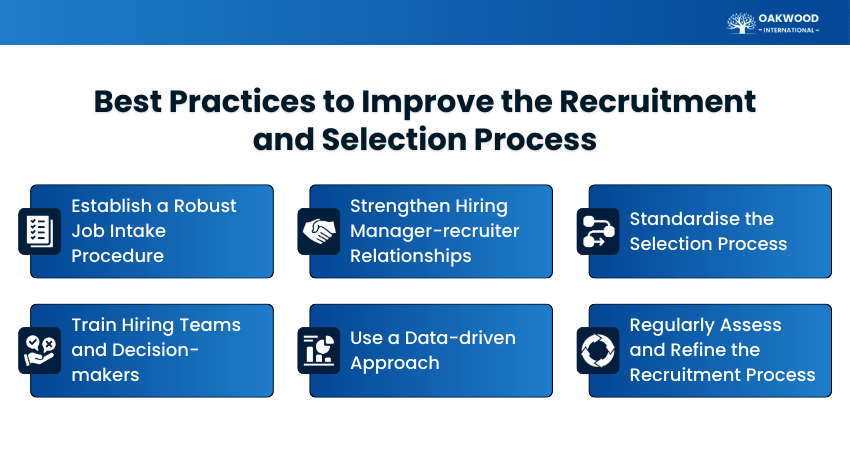
1) Establish a Robust Job Intake Procedure
A clear understanding of the role is essential for effective hiring. This involves defining the required qualifications, experience, and skills. Recruiters and Hiring Managers should work together to create a clear job profile outlining the role’s responsibilities and expectations.
Open communication between recruiters and Hiring Managers helps clarify the type of candidate required. By discussing the role in detail, recruiters can better understand the desired technical abilities, personality traits, and soft skills needed to succeed in the position.
2) Strengthen Hiring Manager-recruiter Relationships
A strong partnership between Hiring Managers and recruiters helps the Selection Process run more smoothly. Regular communication ensures that recruiters clearly understand the Hiring Manager’s expectations and can identify candidates who closely match the job requirements.
When Hiring Managers actively participate in the process, it improves decision-making and builds trust between both parties. This collaboration also enhances the candidate experience, as candidates receive clearer communication and faster feedback during the hiring process.
3) Standardise the Selection Process
Standardising the Selection Process helps maintain fairness and consistency across all hiring activities. When organisations follow the same structured approach for every recruitment cycle, it becomes easier to compare candidates objectively.
A standardised process may include structured interviews, consistent screening methods, clearly defined evaluation criteria, and the use of assessment tools. This approach reduces bias and ensures that every candidate is evaluated using the same standards.
4) Train Hiring Teams and Decision-makers
Hiring Managers and interviewers should receive training to evaluate candidates effectively. Proper training helps them understand how to assess candidates objectively and make informed hiring decisions.
Training may include guidance on structured interviewing techniques, recognising unconscious bias, and interpreting candidate responses accurately. Well-trained hiring teams can evaluate candidates more fairly and select individuals who best match the organisation’s needs.
5) Use a Data-driven Approach
Using data throughout the recruitment process helps organisations make more informed hiring decisions. Information collected from resumes, assessments, and interview evaluations can be used to compare candidates objectively.
Data Analysis can also reveal inefficiencies or bottlenecks in the Selection Process. By reviewing recruitment data, organisations can improve hiring strategies, reduce delays, and ensure that the most qualified candidates progress through each stage.
6) Regularly Assess and Refine the Recruitment Process
Recruitment strategies should be reviewed regularly to ensure they remain effective and aligned with organisational goals. Collecting feedback from candidates, recruiters, and Hiring Managers can provide valuable insights into how the process can be improved.
Continuous evaluation helps organisations identify areas that need improvement, such as assessment methods, communication, or selection criteria. Regular updates help maintain an efficient and effective recruitment process.
Conclusion
An effective Selection Process helps organisations identify and hire the most suitable candidates. By following structured steps and adopting best practices, employers can improve hiring accuracy, reduce recruitment risks, and enhance candidate experience, ultimately building a skilled workforce that supports long-term organisational success and growth.
Develop stronger leadership with professional People Management Courses for modern workplaces – Join now!
Frequently Ask Questions
What is Selection in Recruitment?
Selection in recruitment refers to the process of evaluating job applicants to determine which candidate is most suitable for a specific role. It involves multiple steps such as screening, testing, interviewing, and background verification before making the final hiring decision.
What is the Selection Rule?
The Selection Rule refers to predefined criteria used to evaluate applicants and choose the most suitable candidate. These criteria may include skills, qualifications, and experience required for the role, helping ensure fair and consistent hiring decisions.
What is the Limit of Selection?
The limit of selection refers to the number of candidates who can be selected from a pool of applicants based on available job positions and organisational needs. It helps recruiters determine how many candidates should proceed to the final hiring stage.
Didn’t Find What You’re Looking For?

Our commitment to excellence ensures an exceptional learning experience tailored to your professional development needs.


© Copyright 2026 - Oakwood International ™ - All rights reserved.


SUPER SALE
 Get Amazing Discounts
And Deals
Get Amazing Discounts
And Deals