

 Back
Back


 Back to Catagories


Table of Contents


 + 44 7452
122728
+ 44 7452
122728
 15-Oct-2026
Maria Thompson
Have you ever worked with a leader who clearly outlined expectations, tracked progress closely, and recognised achievements immediately? That leadership style is known as transactional leadership, and it thrives on structure, accountability, and results. So, why does transactional leadership appeal to professionals who value clarity, measurable goals, and predictable outcomes in their work?
In this blog, we’ll explore what transactional leadership really means, who typically uses it, its key characteristics, and practical implementation tips - giving you a complete perspective on its impact and influence. Let’s get started!
What is Transactional Leadership?
Transactional Leadership is a management style that focuses on structure, rewards, and tasks. Leaders using this approach set clear goals and expectations for their team, and in return, offer rewards for meeting these goals. It’s all about following rules and achieving specific results through a give-and-take process.
This style works well in environments where processes are straightforward, and results are easy to measure. Leadership and Management in this context ensures that teams stay on track by monitoring progress and addressing issues quickly. While it’s effective for short-term goals, Transactional Leaders ensure their team stays on track by monitoring progress and addressing issues quickly. While it’s effective for short-term goals, it may not encourage creativity or innovation.
Key Points:
a) Focuses on clear goals, structured processes, and task completion
b) Uses rewards and incentives to motivate employees
c) Works best in stable environments with straightforward tasks
d) Effective for achieving short-term objectives
e) May limit creativity and innovation within teams

Who Uses Transactional Leadership?
Here are the types of people and organisations that commonly use Transactional Leadership:
a) Middle and Upper Management: Common in medium or large companies that are well-established and not focused on making big changes.
b) Structured Companies : Often used in organisations with fixed methods and processes that don’t need much creativity to get results.
c) Sales Teams:
Works well in sales-driven companies where employees aim to meet clear goals, like hitting quotas. Commissions are often used as rewards to encourage high performance.
Characteristics of Transactional Leadership
Transactional Leadership is a management style that focuses on structure, rewards, and tasks. Leaders using this approach set clear goals and expectations for their team, and in return, offer rewards for meeting these goals. It’s all about following rules and achieving specific results through a give-and-take process.
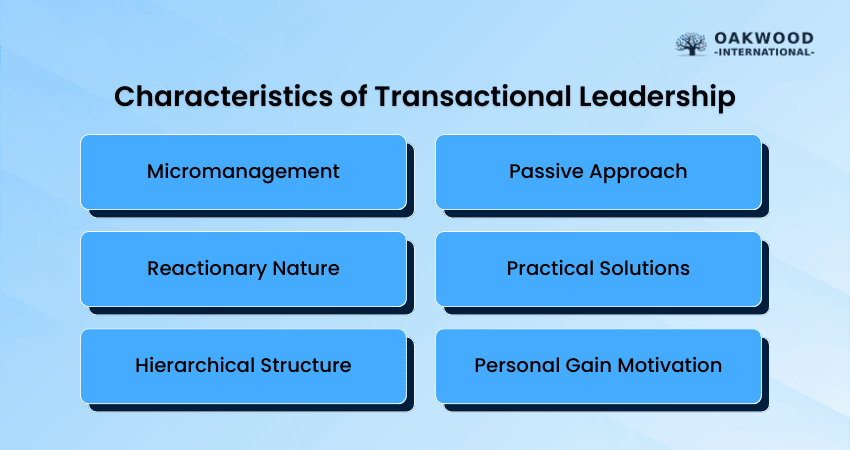
1) Micromanagement
Transactional Leaders closely monitor daily tasks and ensure rules are strictly followed. They pay attention to small details to keep everything under control. Micromanagement helps reduce mistakes but can limit creativity and independent decision-making.
2) Passive Approach
Leaders usually get involved only when there is a mistake or a drop in performance. As long as work is going well, they allow the team to operate on their own. Feedback is given after issues arise, rather than proactively.
3) Reactionary Nature
These leaders respond to problems as they happen instead of preventing them. They take quick action to fix issues when goals are not met. This style is useful in situations that require fast problem-solving.
4) Practical Solutions
Transactional Leaders focus on realistic and clear solutions to meet specific targets. They depend on proven methods instead of taking risks with new ideas. Efficiency and productivity remain their top priorities.
5) Hierarchical Structure
Decision-making authority lies at the top, and instructions flow down through the organisation. Roles are strictly defined, and employees are expected to follow orders. There is usually limited room for employee input.
6) Personal Gain Motivation
Rewards like bonuses, incentives, and recognition are used to encourage good performance. Employees feel motivated by personal achievements and growth opportunities. Teamwork may receive less focus as individuals compete to meet goals.
Enhance your training abilities through the
ILM Level 5 Certificate in Effective Coaching and Mentoring
– Register today!
Benefits of Transactional Leadership
Transactional Leadership also offers helpful advantages that support productivity and clear direction at work. It provides structure, sets goals and ensures everyone knows what to do. Here are the key benefits of Transactional Leadership:
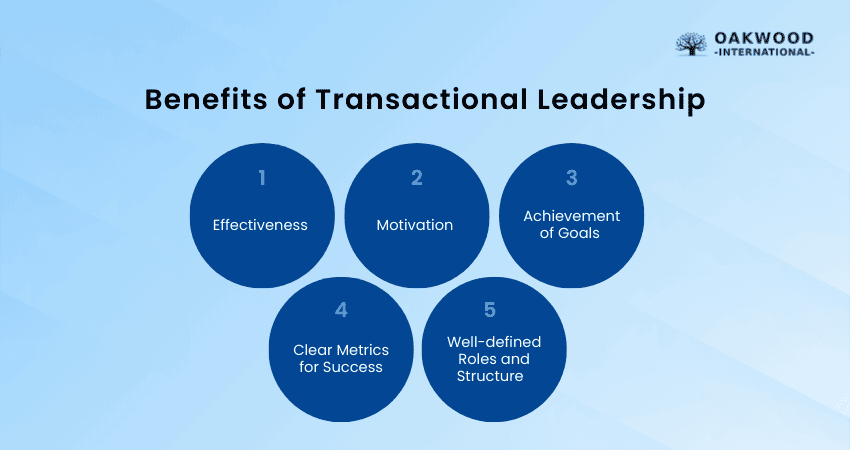
1) Effectiveness
This leadership style ensures that tasks are done on time and meet the required standards. It is especially useful in organisations with clear rules and processes. Leaders focus on maintaining consistency and efficiency.
2) Motivation
Rewards like bonuses or recognition encourage employees to work harder. People stay motivated because they know exactly what they will get if they perform well. This creates a culture of accountability and results-driven effort.
3) Achievement of Goals
It helps teams stay focused on reaching specific targets. Breaking big goals into smaller tasks makes it easier to achieve success step by step. Leaders ensure everyone stays on track to reach the objectives.
4) Clear Metrics for Success
Performance is measured using simple and clear criteria. This helps employees understand how they are being evaluated and where they can improve. Progress can be tracked easily, making adjustments straightforward.
5) Well-defined Roles and Structure
Everyone knows their responsibilities and who they report to, thereby reducing confusion. This clear structure helps teams work smoothly and efficiently. It creates a stable work environment with minimal uncertainty.
Challenges of Transactional Leadership
Transactional Leadership has some drawbacks that can affect team growth and motivation. Here are the main limitations of Transactional Leadership:
1) Low Morale
Employees may feel unappreciated because attention is mostly on results. The strict work environment can feel rigid and stressful. When there are few chances to grow or learn new skills, people may lose interest in their work.
2) Costly Mistakes
Transactional Leaders often focus on rules instead of preventing issues early. Small mistakes can become bigger problems if not noticed in time. The system is too rigid, which makes it harder to solve problems in a flexible way.
3) Emphasis on Short-term Goals
The main aim is to achieve quick results, which can reduce focus on long-term success. Planning for future changes may be ignored. Teams may forget the overall purpose of the organisation over time.
4) Lack of Motivation
If rewards or recognition are not given often, employees may lose interest in their work. Tasks can feel repetitive and boring after some time. New ideas and personal contributions are rarely encouraged, which lowers motivation.
5) Dependence on Leadership
Teams depend a lot on the leader for instructions. Employees may find it difficult to work on their own without guidance. This prevents them from developing important leadership skills for future roles.
6) Internal Conflict
Rewards can create competition that leads to tension between team members. Strict rules may cause frustration and disagreements. When employees feel undervalued, conflicts with leaders or colleagues can increase.
7) Limited Innovation
The structured approach holds back creative thinking. Employees may feel they cannot explore new ideas or better ways of working. This makes it difficult for the organisation to adjust when the business environment changes.
Start your journey to becoming a great trainer through the
ILM Level 5 Diploma in Effective Coaching and Mentoring
– Join now!
Tips for Implementing Transactional Leadership
Transactional Leadership can be highly effective when used thoughtfully and strategically. Here are some tips for implementing Transactional Leadership:
1) Infuse Purpose Into Tasks and Objectives
Help employees understand why their work matters and how it supports the bigger picture. This can make routine tasks feel more meaningful and important. Clear communication of goals ensures everyone stays focused and motivated.
2) Foster Employee Development
Make chances for employees to grow their skills and take on new challenges. Even in a structured system, personal growth can boost engagement and performance. Offer regular feedback to help them improve and feel valued.
3) Tailor Rewards for Individuals
Recognise that employees are motivated by different things, like bonuses, time off, or public recognition. Customising rewards shows appreciation and encourages better performance. This personal touch makes employees feel valued and understood.
4) Involve Employees in Setting Goals
Ask employees for input when creating team goals to give them a sense of ownership. When employees participate in defining expectations, they tend to stay engaged and show higher accountability. It also helps build trust and better teamwork.
Examples of Transactional Leadership
Transactional Leadership is used in industries where clear goals, structure, and rewards drive performance. Here are examples of how this Transactional Leadership style is applied in various fields:
1) Marketing Sector
a) A Marketing Manager sets weekly targets for the team to complete specific campaigns and rewards them with bonuses when goals are met.
b) Social Media teams follow strict schedules and guidelines for posting content to maintain brand consistency.
2) Automotive Sales
a) A car dealership rewards salespeople with commissions for every vehicle sold, motivating them to hit monthly sales targets.
b) Managers enforce strict procedures for customer interactions to maintain professionalism and secure deals.
3) Hospitality and Restaurants
a) Restaurant Managers ensure staff follow specific service protocols, such as greeting customers within a set time.
b) Chefs and kitchen staff adhere to detailed recipes and timeframes to maintain consistency in food quality.
4) Retail Industry
a) Store Managers use sales targets and reward employees with bonuses for meeting individual or team goals.
b) Employees follow strict processes for organising inventory and assisting customers on the shop floor.
5) Healthcare
a) Hospital Administrators track staff performance, rewarding nurses or doctors who meet efficiency or patient care targets.
b) Healthcare professionals follow clear procedures for patient treatment and safety, ensuring compliance with strict regulations.
6) Technology Field
a) Information Technology (IT) Project Managers assign specific tasks to developers, ensuring deadlines are met with rewards for on-time delivery.
b) Tech support teams follow strict guidelines for resolving customer issues within defined time limits.
Take charge of your future through the
ILM Level 5 Award in Leadership and Management
- Start today!
Transactional vs Transformational Leadership
Here are the key differences between Transactional Leadership and Transformational Leadership:

1) Focus on Goals
a) Transactional Leadership: Focuses on achieving specific tasks and short-term goals. Leaders ensure rules are followed to get the job done.
b) Transformational Leadership: Aims to inspire teams to work towards a long-term vision and big changes. Leaders encourage creativity and innovation.
2) Motivation Style
a) Transactional Leadership: Uses rewards, like bonuses or recognition, to motivate employees. Motivation comes from meeting set goals or following rules.
b) Transformational Leadership: Inspires employees through shared purpose and passion. Motivation comes from a desire to grow and make a difference.
3) Leadership Approach
a) Transactional Leadership: Leaders take a hands-on approach, monitoring progress closely. They intervene only when problems occur.
b) Transformational Leadership: Leaders guide by inspiring and supporting their team. They encourage independent thinking and collaboration.
4) Flexibility
a) Transactional Leadership: Relies on strict structures and processes, leaving little room for change. It works best in stable environments.
b) Transformational Leadership: Adapts to new ideas and
Workplace Challenges
easily. It works well in dynamic and creative settings.
Conclusion
Understanding What is Transactional Leadership helps organisations decide if this style suits their goals and work culture. It can deliver quick results through structure and rewards, but may limit creativity and long-term growth. When used in the right environment with clear expectations, this leadership approach can help teams stay focused, productive and aligned with business targets.
Develop strong management skills and lead with confidence through the ILM Level 5 Training - Join now!
Frequently Ask Questions
How do I Identify my Leadership Style?
Look at how you make decisions, communicate and guide your team daily. Notice what motivates you and how you handle challenges. Feedback and simple leadership assessments can also help you see whether you lead through structure, inspiration, teamwork or a mix. Knowing this supports better and more confident leadership.
What is one Downside to Transactional Leadership?
One downside to Transactional Leadership is that it can limit creativity. Since the focus is mainly on rules, performance and rewards, employees may feel restricted and hesitate to share new ideas or explore better ways of working. This can affect innovation and long-term growth in the organisation.
What is Another Name for Transactional Leadership?
Another name for Transactional Leadership is Managerial Leadership. This term highlights its focus on supervision, structure and performance-based rewards to keep daily tasks running smoothly.
Didn’t Find What You’re Looking For?

Our commitment to excellence ensures an exceptional learning experience tailored to your professional development needs.


© Copyright 2026 - Oakwood International ™ - All rights reserved.


SUPER SALE
 Get Amazing Discounts
And Deals
Get Amazing Discounts
And Deals