

 Back
Back


 Back to Catagories


Table of Contents


 + 44 7452
122728
+ 44 7452
122728
 07-Sep-2026
Maria Thompson
Have you ever worked with a leader who stayed calm under pressure and made you feel understood during difficult situations? That ability comes from emotional awareness, empathy, and self-control. The Role of Emotional Intelligence in Leadership is integral, as it helps leaders connect with people, manage challenges thoughtfully, and build trust that inspires teams.
Leadership is about understanding emotions, handling conflict wisely, and motivating others authentically. The Role of Emotional Intelligence in Leadership is becoming a defining factor that separates good leaders from truly effective ones. In this blog, you will explore What is Emotional Intelligence, its role in leadership, its key components, and more.
What is Emotional Intelligence?
Emotional Intelligence (EI), also known as Emotional Quotient (EQ), refers to the ability to recognise, understand, and manage your own emotions while interpreting and influencing the emotions of others. It involves key skills such as self‑awareness, self‑regulation, empathy, and social awareness. These abilities help individuals navigate situations with clarity, make thoughtful decisions, and stay composed under pressure.
Beyond personal growth, EQ plays a crucial role in how we connect with people, communicate in meaningful ways, and respond to challenges. High EQ supports stronger relationships, improves teamwork, and enables more effective leadership by fostering trust and positive influence in any environment.

Key Components of Emotional Intelligence in Leadership
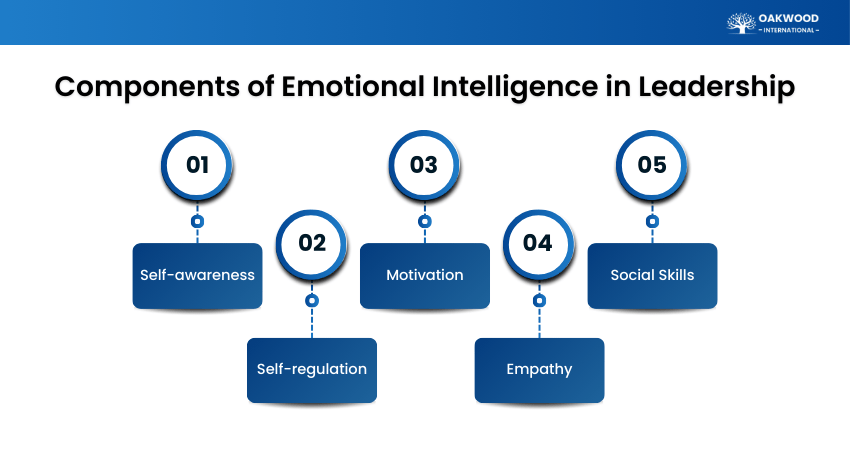
Emotional Intelligence in Leadership is built on core components that help leaders understand emotions, manage behaviour, and build strong relationships. Let’s look at them below:
1) Self-awareness
Self-awareness means to recognise and understand your own emotions and how they influence your thoughts, decisions, and actions. Leaders with strong self-awareness understand that emotions can directly impact performance, communication, and team morale. This leads to more balanced and thoughtful leadership decisions.
2) Self-regulation
Self-regulation is the capacity to manage and control emotional responses. Leaders who practice self-regulation remain calm, composed, and professional even under pressure. This helps them manage conflicts effectively, prevent emotional reactions from escalating, and create a respectful work environment.
3) Motivation
Motivation refers to intrinsic drive, the inner desire to achieve goals. Emotionally intelligent leaders are highly goal-oriented, proactive, and committed to continuous improvement. Their enthusiasm and determination inspire teams, encourage productivity, and help shape a positive
Workplace Culture
focused on progress.
4) Empathy
Empathy means to understand and respect the emotions, perspectives, and experiences of others. Empathetic leaders are more aware of team dynamics and individual needs. This skill has become important in modern workplaces, where leaders support employees through uncertainty, stress, and change.
5) Social Skills
Social Skills are the ability to build relationships, communicate effectively, and interact positively with others. Leaders with strong social skills manage collaboration, resolve disagreements, and influence people constructively. These skills help leaders navigate different work-related situations while maintaining supportive professional relationships.
Develop essential EI skills that transform communication and leadership - Sign up for
Emotional Intelligence Training
now.
Why is Emotional Intelligence Important for Leadership?
Emotional Intelligence helps leaders communicate effectively, build strong relationships, and guide teams through challenges. Let's look at the key reasons why the Role of Emotional Intelligence in Leadership is important below:
1) Improved Communication:
Empathy and social awareness help leaders communicate clearly, listen actively, and understand different perspectives.
2) Stronger Team Dynamics:
Understanding team behaviour and relationships helps leaders build trust, collaboration, and united teams.
3) Better Conflict Resolution:
Emotionally intelligent leaders manage disagreements calmly and resolve issues fairly and effectively.
4) Higher Employee Engagement:
When employees are valued and understood, they are more motivated, committed, and productive at work.
5) Ethical Decision-making:
Greater awareness of employee needs leads to fair, thoughtful, and responsible decision-making.
6) Greater Adaptability During Change:
Emotionally intelligent leaders stay resilient and guide teams smoothly through transition and uncertainty phases.
Become a strategic, confident people manager and lead teams effectively with the
ILM Level 4 Diploma in Leadership and Management
now!
How do Leaders Develop Higher Emotional Intelligence?
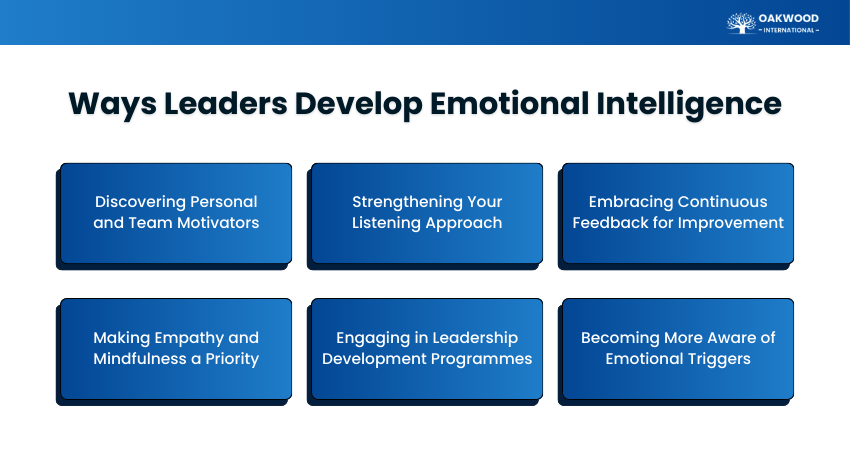
Emotional Intelligence can be developed through consistent self-awareness, reflection, and intentional practice. Let’s look at the effective and practical ways to enhance Emotional Intelligence below:
1) Discovering Personal and Team Motivators
Learn about individual goals, aspirations, and values to better support performance and engagement. Recognising what motivates people helps leaders inspire action, align objectives, and create a more purposeful work environment.
2) Strengthening Your Listening Approach
Practise active listening by giving your entire attention to what others are saying without interrupting or judging. Notice verbal and non-verbal cues and respond thoughtfully. Strong listening builds trust, encourages openness, and helps team members feel valued.
3) Embracing Continuous Feedback for Improvement
Seek regular feedback from team members and stakeholders. External perspectives provide deeper insight into strengths and areas for improvement. Utilise tools such as 360-degree feedback to help refine other people’s behaviour and enhance self-awareness.
4) Making Empathy and Mindfulness a Priority
Empathy allows leaders to understand other perspectives, while mindfulness helps them stay present and aware of their emotional responses. Together, these skills enable leaders to respond thoughtfully, support team wellbeing, and handle challenging situations sensibly.
5) Engaging in Leadership Development Programmes
Learning opportunities such as training, Coaching or Mentoring can strengthen Emotional Intelligence. These programmes help leaders improve communication, relationship management, and emotional awareness through guided practice and feedback.
6) Becoming More Aware of Emotional Triggers
Pay attention to situations that provoke strong emotional reactions and identify the underlying causes. Recognising emotional triggers helps leaders manage responses effectively, keep themselves composed under pressure, and handle future situations with greater control.
Strengthen your leadership skills for real success with the
ILM Level 4 Certificate in Leadership and Management
now!
Why Emotional Intelligence is Crucial for Career Growth?
Emotional Intelligence plays a crucial role in shaping long-term career success. It influences how you handle pressure, respond to feedback, and build meaningful relationships. Let's look at the key reasons below:
1) Leadership Ability Beyond Technical Expertise
Technical skills may open career opportunities, but Emotional Intelligence shapes how far you progress. It helps you manage pressure, communicate clearly, and work effectively with others. These abilities support consistent performance in everyday professional situations.
As responsibilities grow, building trust and handling complex situations become essential. Employers often recognise leadership potential through strong emotional awareness and interpersonal effectiveness.
2) Using EQ Effectively in Interviews and Collaborative Work
Emotional Intelligence plays a major role in interviews and teamwork. Recruiters assess how candidates reflect on experiences, respond to challenges, and collaborate with others. Strong EQ helps individuals present themselves with confidence and clarity.
In group projects and professional roles, Emotional Intelligence supports cooperation and constructive communication. It helps manage conflict, respond positively to feedback, and work effectively with others. Professionals who show empathy often build a strong reputation for growth.
Emotional Intelligence in the Workplace: Real-world Examples
The Role of Emotional Intelligence in Leadership is not only a theory, but a practical way to improve culture and performance. Let’s look at some real-world examples that demonstrate strong EQ below:
1) EQ-driven Culture at Patagonia
Patagonia integrates Emotional Intelligence into everyday leadership through transparent communication, compassionate decision-making, and meaningful interactions. Managers are encouraged to understand emotional context, resolve tensions respectfully, and lead with purpose. This people-focused leadership approach supports high
employee satisfaction
, strong retention, and a culture built on trust and shared values.
2) Leading Through Change
When Satya Nadella became CEO in 2014, he reshaped Microsoft’s culture by moving from a competitive mindset to one based on learning and empathy. Encouraging listening, psychological safety, and openness to new ideas gave employees confidence in sharing their perspectives. This emotionally intelligent leadership improved morale, strengthened collaboration, and supported innovation across cloud, AI, and enterprise markets.
Conclusion
Leadership requires understanding people, managing emotions, and building strong relationships that inspire trust and performance. The Role of Emotional Intelligence in Leadership is crucial for communicating clearly, resolving challenges, and creating an environment where teams can thrive. With workplaces evolving, those who embrace Emotional Intelligence will support long-term growth and lead teams with purpose.
Build practical leadership skills with
ILM Level 4 Training
– Join now!
Frequently Ask Questions
What are the Five Benefits of Practicing Emotional Intelligence in Leadership?
The five Benefits of practicing Emotional Intelligence in Leadership include:
a) Better Decision-making
b) Stronger Team Relationships and Trust
c) Improved Conflict Resolution
d) Higher Employee Engagement and Morale
e) Greater Adaptability and Resilience During Change
What is the Role of Emotional Intelligence in Leadership by Daniel Goleman?
According to Daniel Goleman, Emotional Intelligence is a key driver of leadership excellence and is more important than IQ or technical skills. It includes self-awareness, self-regulation, motivation, empathy, and social skills, enabling leaders to manage emotions, resolve conflict, and guide teams towards strong performance.
What is an Emotional Intelligence Skill That Contributes to Effective Leadership?
Empathy is one of the most important Emotional Intelligence skills for effective leadership. It allows leaders to understand, share, and respond to the emotions of their team members. Showing genuine understanding, leaders build trust and strengthen relationships, leading to better team performance.
Didn’t Find What You’re Looking For?

Our commitment to excellence ensures an exceptional learning experience tailored to your professional development needs.


© Copyright 2026 - Oakwood International ™ - All rights reserved.


SUPER SALE
 Get Amazing Discounts
And Deals
Get Amazing Discounts
And Deals