

 Back
Back


 Back to Catagories


Table of Contents


 + 44 7452
122728
+ 44 7452
122728
 22-Jul-2026
Maria Thompson
Let’s be honest, most of us have been stuck in that frustrating loop at work where decisions take forever, ideas get lost in layers of approval, and you’re left wondering who’s really in charge of what. If that hits close to home, it might be time to rethink how things are structured. Enter the Flat Organisational Structure, a modern way of working that trims the fat off traditional hierarchies and puts people, not positions, at the centre.
It’s like trading a stiff suit for a comfy hoodie: less formal, more flexible and often much more appealing. And while that sounds ideal, it’s worth asking whether it always works in practice. To help answer that, this blog explores What is a Flat Organisational Structure, how it functions, who can use it and how to implement it. Let’s get into it!
What is a Flat Organisational Structure?
A Flat Organisational Structure is a company layout that minimises levels of middle management between staff and executives. Instead of a traditional pyramid of authority, it resembles a wide, horizontal structure with fewer layers. In simple terms, it’s about cutting out the “red tape” so decisions can be made more quickly and communication flows more freely.

Flat structures are increasingly popular in startups, creative industries, and tech companies that prioritise agility and innovation. Employees in these organisations typically enjoy more responsibility and autonomy. However, this freedom also demands high levels of trust and Self-management.
Characteristics of a Flat Organisational Structure
Here are the key Characteristics of a Flat Organisational Structure:
a) Fewer Management Layers: Employees have direct access to top leaders because there are only a few levels of hierarchy, making the structure simpler and less rigid.
b) Greater Flexibility and Adaptability: Flat organisations can respond quickly to new opportunities or challenges since fewer approval steps are needed for change.
c) Informal and Friendly Work Environment: The reduced focus on formal titles encourages open communication, stronger relationships, and a more relaxed workplace culture.
d) Coaching-focused Leadership Style:
Leaders act more like mentors, supporting and guiding employees instead of controlling them, which boosts confidence and participation.

How Does a Flat Organisational Structure Function?
In a flat structure, decision-making power is often decentralised. Teams are motivated to take ownership of their projects, collaborate openly, and resolve issues at the ground level. Without a rigid chain of command, communication lines remain short, reducing delays in project approvals or escalations.
If present, Managers act more as facilitators than traditional authoritative leaders. They support their teams rather than dictate tasks. This flexibility allows organisations to pivot quickly and adapt to changing business landscapes, which is why many agile firms thrive in flat models.
Who Can Use a Flat Organisational Structure?
Not every business is suited to a flat hierarchy. However, it works particularly well in:
a) Startups and small companies where headcount is low and fast decision-making is crucial.
b) Tech and creative agencies where innovation thrives on flexibility.
c) Modern, digital-first firms where employees are expected to be self-driven and accountable.
d) Cross-functional teams that require fast feedback loops.
Larger organisations may also adopt flat structures in specific departments, like Product Development or marketing, to foster creativity and speed.
How to Implement a Flat Organisational Structure?
Implementing a flat structure successfully is less about removing job titles and more about rethinking how work gets done. Here’s how to implement it effectively: Title: Tips for Implementing a Flat Structure:

1) Set Clear Expectations
When there are fewer bosses, everyone needs to know what’s expected of them. Clearly defined goals, responsibilities, and KPIs help avoid confusion. Regular check-ins and performance reviews should still exist, but they should be more collaborative than hierarchical.
2) Ensure Access to Resources
Flattening the structure means individuals must have the tools and authority to make decisions. This includes access to information, software, training, and budgets. If employees are held accountable, they should also be empowered to act independently.
3) Develop Training Programmes
A flat model requires employees to be more multi-skilled. Ongoing training in leadership, communication, problem-solving, and time management is essential. The goal is to create confident, well-rounded individuals who can manage their own workloads.
4) Determine the Level of Flattening
Not all flat structures are completely flat. Some companies maintain a light management layer to provide direction and strategy. Decide what’s right for your business. You don’t have to remove all titles, just reduce the hierarchy where it slows things down.
5) Establish an Open-door Policy
Encourage openness and feedback by making senior leaders approachable. Whether it’s weekly Q&A sessions or digital suggestion boxes, employees should feel their voices are heard. This transparency fosters trust and accountability.
6) Create Growth Opportunities for Employees
Just because the structure is flat doesn’t mean people shouldn’t grow. Introduce horizontal growth pathways like skill development, special projects, mentoring roles, and cross-functional assignments. Career progression doesn’t always have to mean climbing a ladder.
Take your career to the next level with the
CIPD Level 7 Advanced Diploma in Strategic People Management
– Register now!
Advantages of a Flat Organisational Structure
Choosing a Flat Organisational Structure can unlock a range of benefits for modern workplaces. Let’s break down the most compelling reasons companies are adopting this model.
1) Increased Efficiency
With fewer layers to go through, decisions are quicker, and implementation is faster. Time spent waiting for approvals is drastically reduced, which improves productivity across the board.
2) Stronger Team Unity
Flat structures promote collaboration. Since everyone is on a more level playing field, teamwork and mutual respect become the norm. This often leads to a healthier and more positive work culture.
3) Faster Decision-making
Forget the endless chain of approvals. In flat organisations, decisions can be made on the spot, which is vital in fast-moving industries like tech or media.
4) Greater Employee Autonomy
Flat structures are great for employees who thrive on freedom and responsibility. Being trusted to manage their own tasks helps boost engagement and satisfaction.
5) Lower Management Costs
Fewer managerial layers mean fewer salaries to pay. For startups or lean companies, this reduced overhead is a significant financial advantage.

Disadvantages of a Flat Organisational Structure
While flat structures can seem ideal on paper, they aren’t without their challenges. It’s important to understand the potential drawbacks before making the shift.
1) Work-life Balance Challenges
When responsibilities are widely shared, employees may take on more than they can handle. Without proper boundaries, this can lead to burnout, especially in high-performing teams.
2) Potential for Employee Overwhelm
Not everyone is comfortable working without clear leadership. Some may feel lost or unsupported in a flat model, especially if they’re new or less experienced.
3) Risk of Uncontrolled Hierarchy Formation
Ironically, in a structure without formal hierarchy, informal ones can still form. Strong personalities may dominate, and cliques may arise, leading to power imbalances.
4) Career Growth and Promotion Opportunities
Employees who value traditional promotions might find flat structures frustrating. With fewer managerial roles, upward mobility can feel limited.
Enhance your management abilities with the
CIPD Level 5 Associate Diploma in People Management
– Register today!
Tall vs Flat Organisational Structure
In a tall structure, there are several layers of management. It’s more controlled but slower. Flat structures, on the other hand, are quicker and more agile but may lack the same level of oversight.
Tall Organizational Structures
suit industries that require strict compliance, such as healthcare and finance, while flat structures shine in dynamic, creative fields. Ultimately, the best choice depends on your organisational goals and culture.

Flat vs Hierarchical Organisational Structure
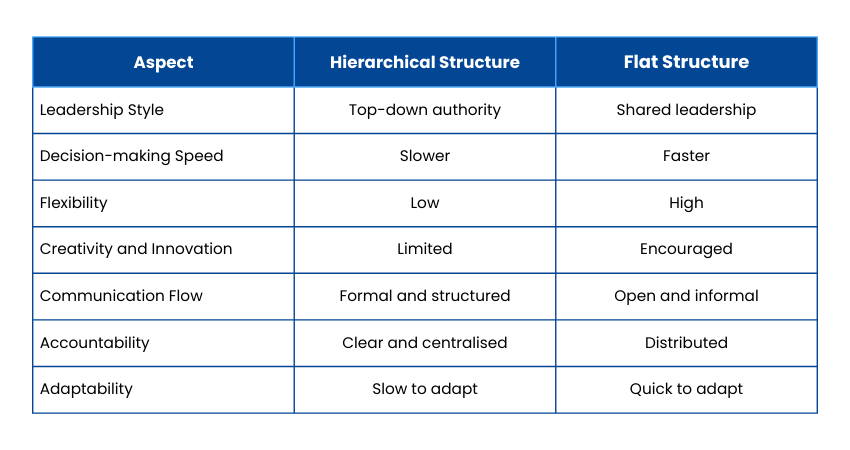
While flat and hierarchical structures are often compared, they are more like two ends of a spectrum. The traditional hierarchical model follows a top-down approach, offering clear authority and accountability. Flat structures promote shared leadership and agility.
While hierarchical structures ensure discipline and order, flat models foster creativity and collaboration. As a result, many companies follow a hybrid approach - maintaining structure in some areas while flattening others.
Example of a Flat Organisational Structure
Take a look at a startup like Basecamp. Known for its small teams and minimal management, Basecamp operates on trust and clear responsibilities. Everyone understands their role, decisions happen quickly, and the founders remain closely involved in daily operations, making it a strong example of a Flat Organisational Structure in action.
Valve, the Game Developer behind Half-Life and Portal, also follows a similar approach. They do not use formal job titles. Employees choose the projects they are passionate about and build teams around them, highlighting how a Flat Organisational Structure can unlock creativity, ownership and innovation.
Gain essential HR knowledge and unlock opportunities through the
CIPD Level 3 Certificate in People Practice
– Register today!
Other Types of Organisational Structures
Apart from the Organisational Structures, several other structural models are commonly used by businesses. Here are the other types:
1) Functional Organisational Structure
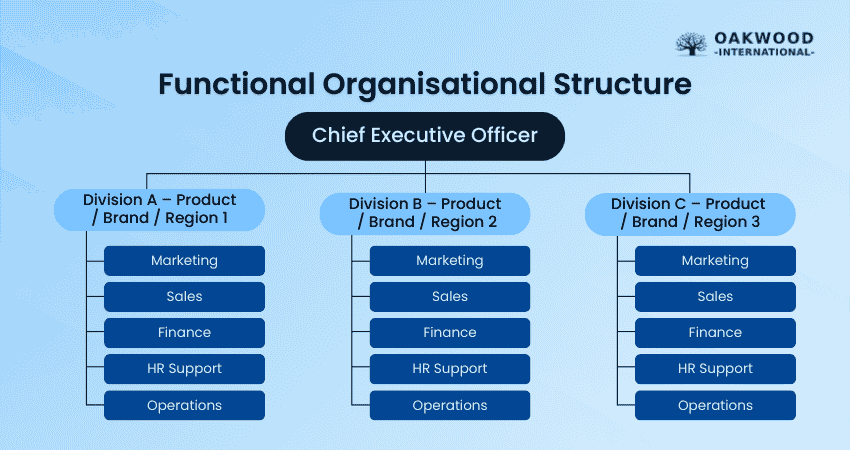
This model groups employees according to their specialised competencies such as Finance, Marketing, Human Resources, and Operations. Authority flows vertically, with Functional Managers exercising control over their respective domains.
Benefits:
a) Deep functional expertise and clear accountability within departments
b) Standardised processes that enhance operational efficiency
Limitations:
a) Limited cross-functional collaboration, potentially leading to departmental silos
b) Decision-making may be slower due to centralised authority
2) Divisional or Regional Structure
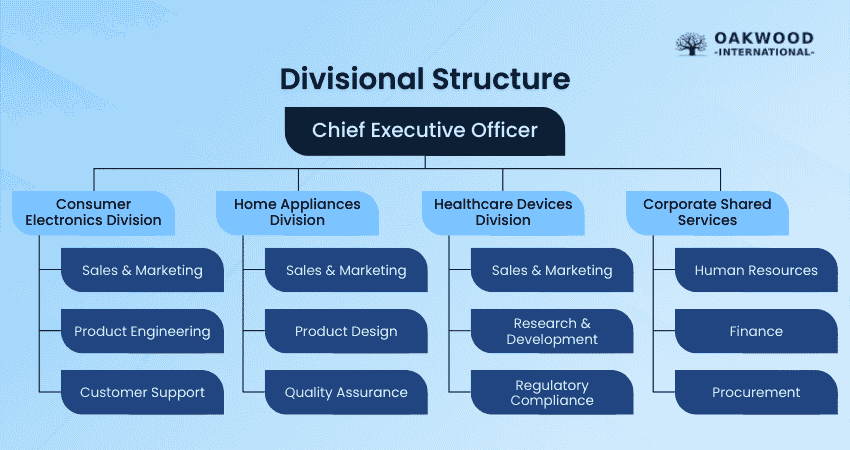
The organisation is segmented into autonomous divisions based on products, markets, or geographic regions. Each division works as a self-contained unit with dedicated resources and decision-making power.
Benefits:
a) Strong alignment with market demands and regional customer expectations
b) Faster responsiveness due to decentralised governance
Limitations:
a) Duplication of resources and functions across divisions increases operating costs
b) Difficult to maintain enterprise-wide standardisation and policy consistency
3) Matrix Structure
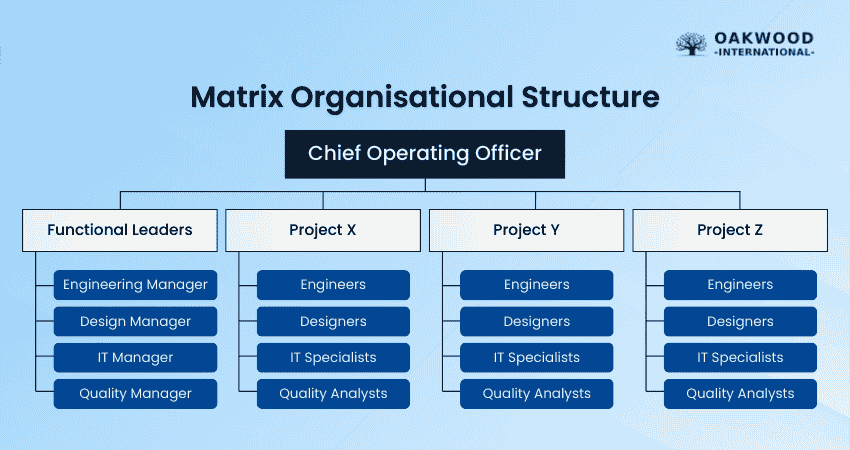
The Matrix Structure integrates both functional and divisional reporting lines. Employees typically report to two leaders, one representing the functional discipline and another overseeing project or product outcomes.
Benefits:
a) Encourages knowledge sharing and cross-functional collaboration
b) Enhances organisational agility and innovation capabilities
Limitations:
a) Dual reporting may create ambiguity in roles, priorities, and decision rights
b) Requires strong coordination mechanisms to mitigate internal conflicts
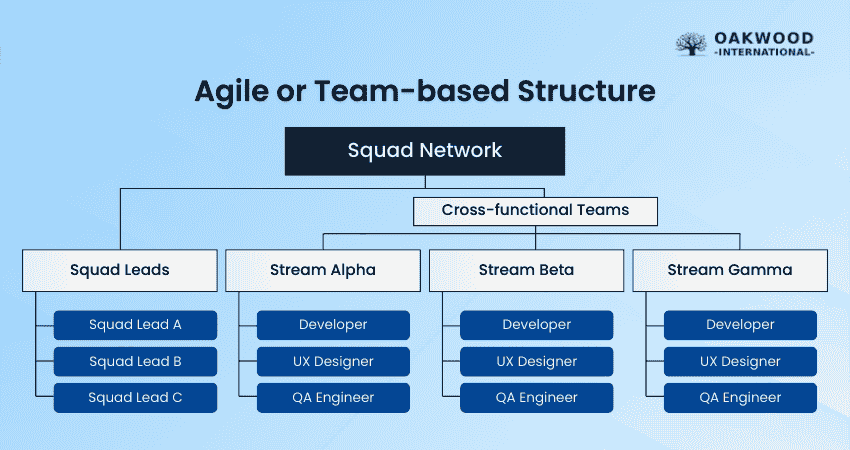
4) Agile or Team-based Structure
This contemporary structure emphasises dynamic, cross-functional teams formed to deliver products, services, or initiatives with a high degree of autonomy. Teams rapidly adapt to evolving requirements through iterative work cycles.
Benefits:
a) Exceptional adaptability to change and accelerated value delivery
b) Heightened employee engagement and empowerment within teams
Limitations:
a) Governance challenges may arise, leading to inconsistency in execution
b) Resource allocation complexity increases without strong leadership oversight
Conclusion
A Flat Organisational Structure empowers employees, speeds up decision-making, and improves collaboration by removing unnecessary hierarchy. When people feel trusted and connected to leadership, innovation rises and productivity grows. This modern model helps organisations stay agile and competitive in a fast-changing business world, creating a workplace where ideas and talent thrive.
Gain globally valued HR expertise and boost your confidence through CIPD Qualifications – Join now!
Frequently Ask Questions
Does a Flat Structure Improve Teamwork?
Yes. A Flat Organisational Structure improves teamwork by promoting open communication, faster collaboration, and shared decision-making. Also, helping teams work more effectively together.
How to Transition to a Flat Structure?
To transition to a flat structure, organisations should remove extra management layers, empower teams with decision-making authority, improve communication, and train leaders to act as mentors rather than controllers.
What is a Key Characteristic of a Flat Organisational Structure?
A key characteristic of a Flat Organisational Structure is having fewer management layers, which allows employees to communicate directly with leaders and take more responsibility in decision-making.
Related Blogs
Didn’t Find What You’re Looking For?

Our commitment to excellence ensures an exceptional learning experience tailored to your professional development needs.


© Copyright 2026 - Oakwood International ™ - All rights reserved.


SUPER SALE
 Get Amazing Discounts
And Deals
Get Amazing Discounts
And Deals