

 Back
Back


 Back to Catagories


Table of Contents


 + 44 7452
122728
+ 44 7452
122728
 08-Sep-2026
Maria Thompson
Employee Retention is an organisation's capacity to retain its employees over a particular time. It encompasses strategies, policies and practices to mitigate voluntary employee turnover in a workplace. It is a representation of a company's overall work environment that caters to employee requirements.
A sound Employee Retention strategy will address the underlying concerns on why employees quit the company and initiate solutions to retain them. By understanding the underlying concerns, employee satisfaction, and workplace culture, companies can keep the turnover rate minimal and contribute to an organisation's stability.
What is Employee Retention?
Employee Retention is the organisation's ability to keep talented and productive employees for the long term. Its primary focus lies on reducing turnover by fostering a positive, engaging, and supportive workplace environment. This can be achieved by recognising employee contributions and offering competitive salaries and benefits packages.
When competition for talent is high and unemployment is relatively low, Employee Retention becomes significant. For retaining employees, organisations utilise
HR technology
to improve recruiting, onboarding, engagement, and recognition. By incorporating them together, these practices strengthen loyalty and aid in building a stable and committed workforce.

Why is Employee Retention Important?
Employee retention is important because it shapes how employees feel, work, and grow within an organisation, while helping reduce Dysfunctional Turnover . When employees experience clear communication, fair recognition, and supportive development, they stay motivated and loyal, strengthening overall Employee Engagement in the Workplace.
Strong retention also reduces hiring costs, preserves valuable knowledge, and boosts productivity. Stable teams collaborate better, maintain higher morale, and help the organisation build a positive reputation that attracts skilled, long-term talent.
Benefits of Employee Retention
There are various benefits of effective Employee Retention for organisations, which are stated below.
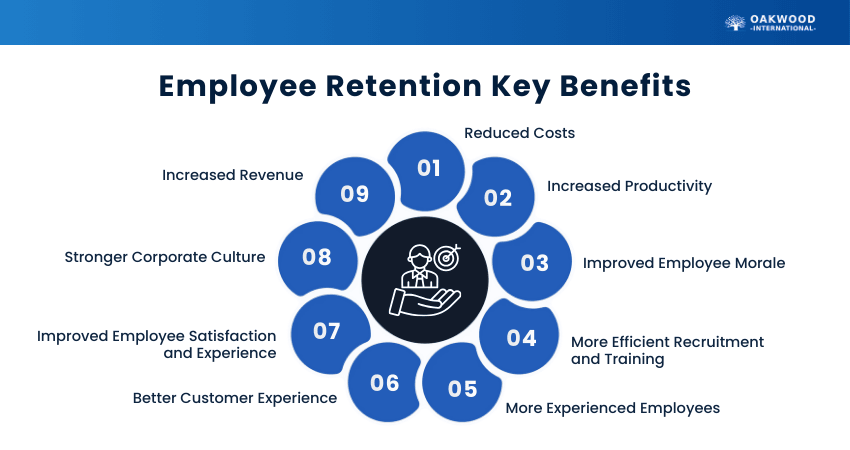
a) Reduced Costs: High employee turnover contributes to losses in the financials, resulting in a deviation from the budget. Expenses are incurred in recruitment, onboarding and training. Employee Retention eradicates these costs and facilitates better fund allocation.
b) Increased Productivity: Employees who have worked for significantly longer periods are very accustomed to their roles. This leads to better expertise and thus leads to smoother functioning in comparison to the newly hired employees.
c) Improved Employee Morale: A stable work environment also contributes to an employee's trust and reliability and cultivates a sense of accomplishment among employees. A high Employee Retention Rate also signals that the company cares about its workforce, thus promoting commitment.
d) More Efficient Recruitment and Training: Employees who stay for a longer period can reduce the resources spent on frequent recruitment and training. Instead, they can focus on the primary objectives of the organisation.
e) More Experienced Employees: Experienced employees can factor in humongous knowledge and skills, thus acting best in the interests of the stakeholders. This can also come in handy for them to train the new members of the team and contribute to more effective decision-making processes.
f) Better Customer Experience: Employees who stay longer build stronger relationships with customers. They understand customer needs better, leading to improved satisfaction and loyalty.
g) Improved Employee Satisfaction and Experience: Retention strategies often focus on creating a supportive and rewarding work environment. This improves employees' overall satisfaction, making them more likely to remain loyal to the organisation.
h) Stronger Corporate Culture: Retaining employees helps maintain and strengthen the company culture. Long-term employees embody and uphold the organisation's values, which helps create a cohesive and positive workplace.
i) Increased Revenue: When employees are engaged and productive, the business benefits from higher efficiency and profitability. Retention directly contributes to the organisation's bottom line.
Develop effective employee contracts and policies with our
Employment Law Training.
Employee Retention Models
Here, we will be discussing some of the Employee Retention Models:

1) The Hierarchy of Needs
Abraham Maslow's Hierarchy of Needs emphasises that employees must have their basic needs met, such as security, belonging, and self-esteem, before they can focus on self-actualisation. Effective retention strategies should support each level of the hierarchy to strengthen overall job satisfaction.
2) Motivation-Hygiene Theory
Frederick Herzberg's Motivation-Hygiene Theory suggests that certain factors, such as recognition and growth opportunities, motivate employees. While others, like salary and job security, prevent dissatisfaction. Balancing these elements can improve Employee Retention.
3) Human Motivation Theory
David McClelland's Human Motivation Theory identifies three key motivators: achievement, affiliation, and power. Developing retention practices that address these motivators can enhance engagement and long-term commitment.
4) Job Characteristics Model
The Job Characteristics Model highlights five job dimensions: skill variety, task identity, task significance, autonomy, and feedback, which influence employee motivation and satisfaction. Designing roles that integrate these dimensions can significantly improve retention.
Join our
Direct and Indirect Discrimination Training
now to ensure compliance and foster equality in your workplace.
How to Improve Employee Retention?
Let's talk about strategies to improve employee retention:
1) Recruit the Ideal Candidate
Effective Employee Retention starts with hiring the right people. Ensure candidates align with the company's culture, values, and long-term goals. Use structured interviews and assessments to identify those most likely to succeed and stay engaged.
2) Enhance Orientation and Onboarding Programmes
First impressions matter; a well-structured onboarding programme helps new employees acclimate to their roles and the workplace culture. Providing clear expectations and support early on increases the likelihood of long-term retention.
3) Provide Attractive Compensation Packages
Offering competitive salaries, bonuses, and benefits is essential to attracting and retaining top talent. Regularly review compensation packages to ensure they remain market-competitive and reflect employees' contributions.
4) Deliver Purposeful and Engaging Work
Employees are more likely to stay when they find their work meaningful. Provide opportunities for autonomy, creativity, and personal growth. Encourage employees to contribute ideas and recognise their impact on the organisation.
Why do Employees Leave?
High employee turnover can significantly impact an organisation's stability, productivity, and financial health. Understanding the root causes of why employees leave is essential for implementing effective retention strategies. Below are some of the most common causes of high employee turnover:
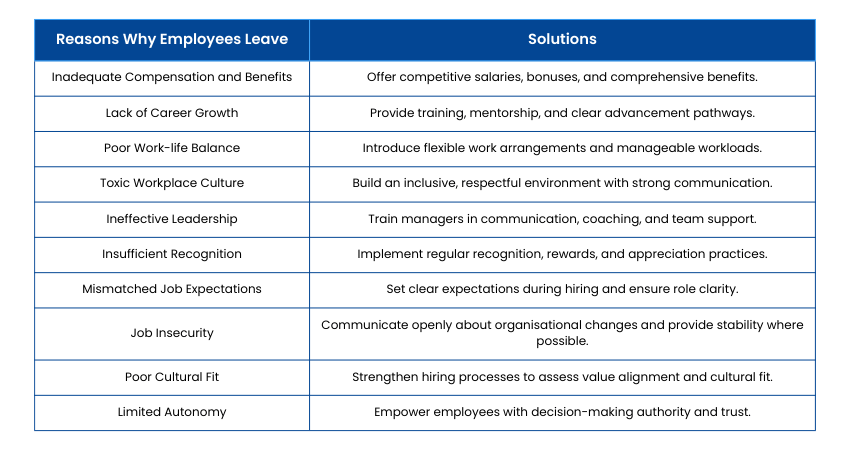
1) Inadequate Compensation and Benefits
One of the primary reasons employees leave is feeling undervalued or underpaid. When compensation packages do not align with industry standards or fail to reflect the employee's contributions, they are more likely to seek opportunities elsewhere. A lack of meaningful benefits, such as health insurance, retirement plans, or flexible work options, further exacerbates the issue.
2) Lack of Career Growth Opportunities
Employees who feel there is no room for advancement within the organisation often lose motivation and seek positions elsewhere. Limited development opportunities or unclear growth pathways create a sense of stagnation, prompting talented employees to leave.
3) Poor Work-Life Balance
Unrealistic workloads, long hours, or a lack of flexibility can lead to burnout. Employees today place a high value on work-life balance, and companies that fail to accommodate this risk losing talent to more flexible employers.
4) Toxic Work Environment
A negative workplace culture marked by poor communication, lack of inclusivity, or conflicts with colleagues or management can drive employees away. Such environments cause stress, dissatisfaction, and disengagement, leading employees to seek healthier workplaces.
5) Ineffective Leadership
Managers have an integral role in influencing
employee satisfaction
. Poor leadership, characterised by micromanagement, lack of support, or unclear expectationscan lead to disengagement and turnover. Employees often leave managers, not companies.
6) Insufficient Recognition and Rewards
Employees want to feel valued for their contributions. When their efforts go unnoticed or unappreciated, morale drops, leading to disengagement and eventual turnover. A lack of rewards, whether monetary or non-monetary, compounds the problem.
7) Mismatched Expectations
When employees' actual job responsibilities differ significantly from what they were promised during the hiring process, dissatisfaction arises. Unrealistic expectations or a lack of clarity during recruitment can lead to early exits.
Learn about legal aspects of employee relations with our
Employee Relations Training
- Join now!
8) Job Insecurity
Uncertainty about the future of a role or the organisation can make employees anxious. Frequent restructuring, layoffs, or financial instability within the company are significant drivers of turnover.
9) Poor Fit with Organisational Culture
Employees who feel their values or work style do not align with the company culture may struggle to thrive. A lack of alignment between personal and organisational values often leads to disengagement and eventual departure.
10) Limited Autonomy
Micromanagement or a lack of decision-making authority can make employees feel undervalued and stifled. Employees who don't feel trusted to perform their roles independently may look for organisations that offer more freedom.
The Business Case for Employee Retention
Employee Retention is a core business strategy. It helps organisations to control costs, enhance productivity, and maintain a reliable, motivated workforce.
1) High Turnover is Expensive
When you replace an employee, it can cost three to four times their annual salary, according to the Society of Human Resource Management (SHRM). Businesses tend to lose money on recruitment, onboarding, and training when employees leave. Also, there are additional expenses, such as job advertisements, background checks or temporary staffing.
2) Turnover Damages Organisational Performance
When employees leave, morale drops and teams can face extra pressure. These lead to additional responsibilities being taken by the remaining staff, potentially making them stressed, burned out and low engagement. This affects the quality of work, impacting revenue and customer satisfaction.
3) Losing Talent Weakens Competitiveness
If departures are frequent, valuable employees can feel insecure. Highly skilled individuals may leave for competitors who provide more stability and support in the workplace. Losing these individuals disrupts continuity and reduces the ability to innovate.
Empower your workforce - start
Talent Management Training
and create high-performing teams today.
4) Skilled Workers are Hard to Replace
The job market often faces a shortage of talented and competent workers. When experienced employees leave, filling the gap may take longer. This increases hiring costs and creates skill gaps, leading to affected service delivery, timeline and performance.
5) Retention Protects Organisational Knowledge
Long-term workers carry valuable knowledge about an organisation's systems, processes and clients. When they depart, organisations lose expertise, which takes time and resources to rebuild and refill. By effective Employee Retention, crucial knowledge stays within the business.
Measuring and Monitoring Retention Metrics
To improve Employee Retention, organisations must measure and monitor relevant metrics. Key indicators include:
1) Turnover Rate: The percentage of employees leaving over a specific period.
2) Retention Rate: The percentage of employees staying during the same period.
3) Employee Satisfaction Scores: Surveys and feedback tools to gauge overall satisfaction.
4) Exit Interview Insights: Reasons employees leave can reveal patterns to address.
Tracking these metrics provides actionable insights to refine retention strategies and measure their effectiveness.
Employee Retention Examples
Let's look at some key Employee Retention examples for more clarity.
Microsoft: Career Progression Tracks
Microsoft focuses on employee growth by offering clear career progression tracks. Employees can pursue vertical or lateral moves within the company, ensuring they remain engaged and see long-term potential in their roles.
Walmart: Educational Support
Walmart provides tuition assistance programmes to its employees, enabling them to further their education while working. This investment in personal development strengthens loyalty and helps attract ambitious talent.
Conclusion
Employee Retention is a core element of an organisation's success. By understanding its importance, benefits, and strategies, businesses can create a workplace that fosters loyalty and engagement. Addressing the root causes of turnover, implementing proven retention models, and adopting effective strategies can significantly improve workforce stability and drive growth.
Boost your leadership skills and manage teams confidently with People Management Courses today!
Frequently Ask Questions
What are the Four Pillars of Retention?
The four pillars of retention include engagement, culture, communication and recognition. These help employees feel valued, supported, and connected to the organisation’s culture.
What is a KPI for Employee Retention?
A Key Performance Indicator (KPI) for retention is Employee Retention Rate. It helps to measure employees who stay for a period. This is useful for tracking stability in the workforce and identifying areas that require improvement.
What are the Three Most Important Factors for Employee Retention?
The three most important factors for Employee Retention include competitive compensation, strong leadership, and career growth opportunities.
Related Blogs
Didn’t Find What You’re Looking For?

Our commitment to excellence ensures an exceptional learning experience tailored to your professional development needs.


© Copyright 2026 - Oakwood International ™ - All rights reserved.


SUPER SALE
 Get Amazing Discounts
And Deals
Get Amazing Discounts
And Deals