

 Back
Back


 Back to Catagories


Table of Contents


 + 44 7452
122728
+ 44 7452
122728
 21-Jul-2026
Maria Thompson
True Leadership is not about titles, but about earning trust, inspiring action, and uniting people toward meaningful goals. Great leaders show strong Leadership Qualities by listening, supporting others, and leading with purpose. They communicate clearly, stay true to their values, and face challenges with confidence. When leaders grow, their teams grow too, creating real success.
In this blog, we explore what makes a great leader and the 22 key Leadership Qualities, along with the three core traits of true leaders. Apply these qualities daily to inspire others, build trust, and lead with confidence. So read on to climb up the leadership ladder!
What Makes a Great Leader?
A great leader knows themselves well and keeps learning. They understand their strengths and weaknesses and listen to others with respect. They help their team grow by giving support, guidance, and chances to learn new skills. They plan, make thoughtful decisions, and adapt when things change.
Great leaders are honest, responsible and care about both their team and the wider community. They communicate clearly, listen actively, and build trust, making people feel motivated and confident to do their best. These Leadership Qualities help leaders build trust and guide their teams with confidence and purpose.

22 Essential Leadership Qualities Every Leader Should Have
Effective Leadership Qualities are shaped by key qualities that help people and organisations succeed. Skills like clear communication, honesty, confidence, and problem-solving guide on how leaders make decisions and support their teams.
In the next sections, we will look at the most important Leadership Qualities and how to apply them in real life. Now, let us explore these qualities one by one.
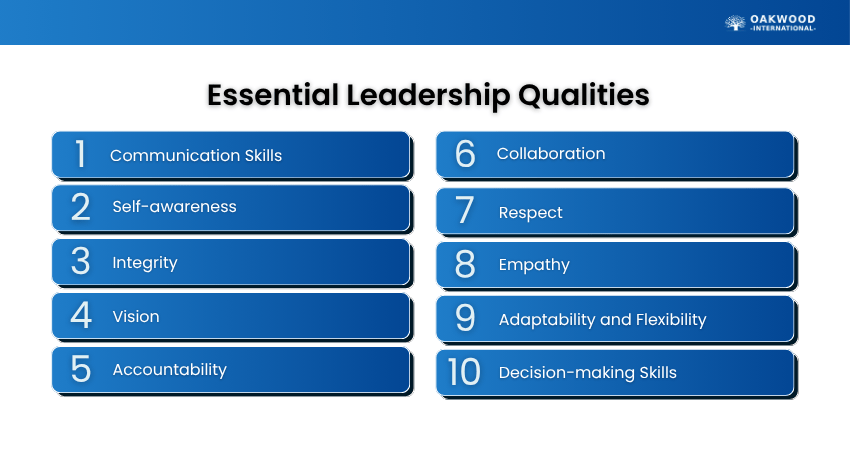
1) Communication Skills
Effective communication in Leadership Qualities means sharing ideas clearly, listening carefully, and making sure everyone understands one another. Strong leaders explain their vision, give clear direction, and actively listen to their team. When communication is open and clear, confusion is reduced and everyone works toward the same goals.
Leaders can strengthen communication by having regular one-to-one discussions, offering helpful feedback, and encouraging honest conversations. This approach builds trust, improves relationships, and boosts overall team morale and performance.
2) Self-awareness
Self-awareness means understanding your own emotions, behaviour, strengths, and weaknesses. Though it is inward-focused, it is a powerful Leadership skill. Leaders who know themselves stay grounded, make thoughtful decisions, and lead with humility.
By recognising how you think, act, and how others see you, you can improve your responses, grow personally, and support your team better. Take time to reflect, seek feedback, and build this essential quality.
3) Integrity
Integrity is one of the most important Leadership Qualities because trust is the foundation of Effective Leadership. It means being honest, fair, and consistent in your actions so people can rely on your decisions. This quality is especially crucial for senior leaders who guide the organisation and make major choices.
Many workplaces struggle with maintaining strong integrity at all levels, so it is important to remind and encourage leaders to act honestly and responsibly in every situation. When leaders show integrity, they earn respect and build a culture of trust.
4) Vision
Vision means having a clear idea of the future you want to create. A strong leader inspires others to believe in that vision and work toward it. Great leaders connect daily tasks and team values to the bigger goals of the organisation, helping everyone understand why their work matters.
When people see purpose in what they do, they feel more motivated, engaged, and committed. To achieve this, leaders should communicate their vision clearly and often, so the team understands it, remembers it, and feels confident sharing it with others.
5) Accountability
When leaders take responsibility for their actions, they set a strong example for the team. This builds a culture where everyone feels responsible and reliable. Leaders who are accountable admit mistakes, learn from them, and take steps to fix the situation.
By showing this behaviour, they create a safe and supportive environment where team members also feel comfortable owning their actions and trying their best.
6) Collaboration
Great leaders know how to work well with others. Having vision and passion is important, but it only matters if you can share it clearly with your team. Strong communication skills and the ability to understand others' feelings help leaders build good relationships and work smoothly with everyone.
Leaders must also connect with people from different backgrounds and experiences. When they show respect, empathy, and understanding, they create a supportive and inclusive environment where everyone can contribute and succeed together.
7) Respect
Showing respect is one of the most powerful things a leader can do. When leaders treat others with respect, it reduces conflict, builds trust, and helps everyone work together more effectively. Creating a respectful workplace means more than simply avoiding disrespect.
It starts with valuing people's opinions, listening to different perspectives, and making sure everyone feels included and supported. Leaders who show respect help build a positive and healthy work culture where every person feels they belong.
8) Empathy
Great leaders show empathy by understanding how others feel and seeing things from their point of view. This helps them solve problems, build trust, and create a friendly and supportive workplace.
Leaders can show empathy by listening carefully, helping team members during tough times, and making sure everyone feels welcome. When leaders care about their team's feelings and needs, people feel more comfortable, motivated, and ready to do their best.
Discover design thinking techniques that boost creativity and results. Join our Design Thinking Course now!
9) Adaptability and Flexibility
Leaders need to adapt when situations change. Those who remain flexible and open to new ideas can guide their teams confidently through uncertain times. Adaptable leaders adjust plans, learn quickly, and stay calm during challenges. This adaptability is one of the essential Leadership Qualities that keeps teams focused and resilient.
If a leader struggles with change, they can improve by staying open-minded, trying new methods, and encouraging the team to experiment. Flexible leaders shift priorities when needed, helping their teams stay strong, creative, and successful in a fast-changing environment.
10) Decision-making Skills
Strong decision-making is one of the most important Leadership Qualities, helping projects stay on track and reach goals. Leaders must make confident choices even when plans change, considering risks, benefits, time, and budget.
Since the construction industry changes quickly and unexpected challenges are common, strong leaders are prepared to explore different solutions and choose the best option. They make informed decisions that support both the company's goals and the client's needs, helping projects stay on track and move forward smoothly.
11) Problem-solving
Problem-solving helps leaders recognise challenges, understand what is causing them, and explore different ways to fix them. Leaders who are strong problem-solvers stay calm, think clearly, and look at problems from different angles to find the best path forward.
They also use both creativity and logic to choose solutions that work well in real situations. By taking thoughtful and practical action, leaders make sure their decisions support the organisation's goals and help the team move forward smoothly.
12) Trust
Trust is a vital quality for any leader. When people trust their leader, they feel safe, supported, and confident. This creates a positive work environment where everyone can work well together and focus on their goals. Leaders build trust by being honest, dependable, and fair in their actions.
To strengthen trust, leaders should keep their promises, listen carefully, communicate openly, and treat everyone with respect. When trust is strong, teams feel motivated, work more effectively, and stay committed to success.
13) Passion and Motivation
Passion and Motivation are powerful qualities that help leaders inspire their teams. Passionate leaders truly care about their work and stay committed, even when faced with challenges. Their energy and enthusiasm keep the team focused and encouraged.
By leading with passion, working hard, and staying involved, leaders set a strong example. This motivates team members to put in their best effort and stay dedicated to reaching the final goal together.
14) Creativity and Innovation
Creativity is an important Leadership Qualities, because it helps solve problems, spark new ideas, and find better ways to work. Leaders who encourage creativity build a positive and innovative environment where team members feel confident to share ideas and think differently.
To support creativity, leaders can hold brainstorming sessions, allow experimentation, and provide the right tools. Innovation helps organisations stay competitive, so leaders should welcome new ideas, accept change, and encourage smart risks to help their teams grow and succeed.

15) Influence
Influence means a leader can guide and inspire others through trust and respect, not by force or pressure. A leader with influence encourages people to follow their vision, support decisions, and work together toward a common goal.
Leaders build influence by speaking clearly, being honest, and treating people well. They listen to others and set a good example through their actions. When leaders influence the right way, teams feel motivated, respected, and willing to give their best.
Transform group dynamics and unlock team excellence with our High-Performing Teams Training – Join now!
16) Courage
Courage means being brave enough to make hard decisions and face challenges confidently, even when things feel uncertain. Courageous leaders take smart risks, stand up for what is right, and guide their teams through tough situations.
For example, a leader may support a bold new idea instead of sticking to old methods if it promises better results. When leaders show courage, they earn trust and inspire their team to face challenges confidently and aim for success.
17) Gratitude
Gratitude means feeling thankful for the help, support or good things we receive. It is a positive emotion that can improve confidence, reduce stress, and even help us feel more relaxed. Showing genuine gratitude can also make someone a stronger and more quality leaders.
Many people forget to say "thank you" at work, even though appreciation boosts motivation. Great leaders show gratitude regularly by recognising effort and expressing thanks. This builds a happier, more motivated team.
18) Empowerment
Empowering others means giving team members the freedom, support, and resources they need to take charge of their work confidently. When people feel trusted, they perform better and grow in their roles. This is one of the key Leadership Qualities that helps build strong teams.
Leaders empower their teams by setting clear goals, offering support without micromanaging, and recognising effort. This boosts confidence, encourages responsibility, and strengthens teamwork.
19) Delegation
Effective delegation is a key Leadership Qualities for strong leaders. It means giving tasks to team members based on their strengths and trusting them to handle the work. When leaders delegate well, team members get a chance to grow, build confidence, and take responsibility for their tasks.
Delegation also allows leaders to focus on bigger goals and important decisions. This improves teamwork, increases productivity and helps the whole team work more efficiently.
20) Learning Agility
Leaders need to be fast learners. Learning agility means being able to learn from experiences and adjust quickly to new situations. This helps leaders make better decisions and solve problems more effectively.
Leaders with strong learning agility stay updated on industry changes, encourage their teams to keep learning, and use new knowledge to improve their work. This habit of continuous learning helps everyone grow and succeed.
21) Humility
Humility is one of the important Leadership Qualities. Especially in supportive workplaces. Humble leaders put ego aside, listen to others, and value the skills and ideas of their whole team.
Such quality leaders are approachable and easy to talk to, which builds trust and strong relationships. By staying humble, they create a positive and collaborative work environment where everyone feels respected and able to grow.
22) Resilience
Resilience means not only bouncing back from problems but also staying strong and adapting when things get tough. Leaders with resilience stay positive and calm, which helps their team stay motivated and focused even during setbacks.
A resilient leader takes care of their own wellbeing and supports their team's mental and emotional health. This helps everyone stay strong, keep moving forward and continue doing their best work.
Become a creative and analytical thinker who drives results with our Creative and Analytical Thinking Training – Join today!
The Three Core Traits of True Leaders
Here are the three core ideas for better Leadership Qualities:
1) Great Leaders are Developed, not Born
Leadership is a skill that grows with experience, learning, and effort. Anyone can improve as a leader if they stay open to feedback, keep practising, and work on self-development. Organisations can support this by offering training, guidance, and mentoring opportunities.
2) Leadership is an Ongoing Learning Journey
Great Leadership Quality is not about one person doing everything. It is about helping a group work together toward a common goal. Effective Leaders create clear direction, build alignment within the team, and inspire commitment, so everyone moves forward together.
3) True Leadership Never Stops Evolving
Leadership does not stop at a certain point. Every new role or challenge requires new skills. Strong leaders keep learning, adapting, and growing throughout their careers so they can lead confidently in different situations.
Conclusion
Effective Leadership is not about power, but about inspiring people, earning trust, and guiding teams with purpose. When leaders communicate clearly, stay humble, and support growth, they create a space where everyone can thrive. Practising key Leadership Qualities daily helps build trust, motivate others to do their best and create lasting success.
Lead with Agility and confidence with our Agile Leadership Training – Join now!
Frequently Ask Questions
What are the Three C's of Effective Leadership?
These are the three C’s of Effective Leadership:
a) Character: It means being honest and doing the right thing
b) Competence: It means having the skills and knowledge to lead well
c) Communication: It means clearly sharing ideas and listening to others
What Type of Leader is the Most Successful?
The most successful leader does not stick to one style. Instead, they adjust their approach based on the team and the situation.
Leaders who inspire growth and involve their team in decisions are often very effective, but no single style fits every situation. The best leaders stay flexible and choose the right approach for the moment.
What are the Four Types of Leadership?
The four types of Leadership are:
a) Autocratic: Leader makes decisions alone and gives direct instructions
b) Democratic: Leader involves the team in decision-making
c) Laissez-faire: Team works independently with minimal guidance
d) Transformational: Leader inspires and motivates growth and improvement
Related Blogs
Didn’t Find What You’re Looking For?

Our commitment to excellence ensures an exceptional learning experience tailored to your professional development needs.


© Copyright 2026 - Oakwood International ™ - All rights reserved.


SUPER SALE
 Get Amazing Discounts
And Deals
Get Amazing Discounts
And Deals