

 Back
Back


 Back to Catagories


Table of Contents


 + 44 7452
122728
+ 44 7452
122728
 27-Jul-2026
James Smith
What makes people trust a leader, follow their direction, or feel motivated by their vision? The answer always circles back to Leadership Communication. This isn't just about speaking well; it's about connecting with people, understanding their needs, and guiding them with clarity and confidence.
Building this skill takes intention, and that's exactly what this blog will help you do. We'll break down what Leadership Communication really is, why it matters, and the key principles behind it. You'll also discover smart strategies and practical tips to strengthen how you communicate as a leader. Let these insights guide you forward. Your Leadership journey grows from here.
What is Leadership Communication?
Leadership Communication is the ability to convey ideas, decisions, and expectations in a way that inspires confidence, trust, and action. It goes beyond simply sharing information; it focuses on understanding people, adapting messages to their needs, and creating meaningful connections.
Effective Leadership Communication helps teams stay aligned, motivated, and clear about goals. It blends clarity, empathy, authenticity, and influence, enabling leaders to guide others through challenges, change, and everyday work with purpose and confidence.

Why is Leadership Communication Important?
Leadership Communication is important because it shapes how effectively a leader guides, motivates, and connects with their team. Clear communication reduces confusion, builds trust, and ensures everyone understands the vision and expectations. It also strengthens relationships, encourages collaboration, and helps leaders resolve conflicts with confidence.
When leaders communicate well, teams feel more engaged, aligned, and empowered to deliver results. In short, strong Leadership Communication turns ideas into action and helps organisations achieve their goals more smoothly and successfully.
Core Principles of Leadership Communication
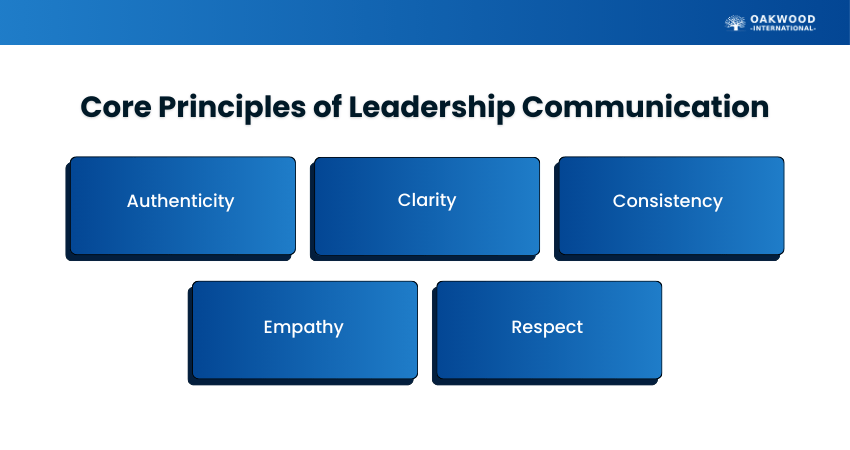
For building effective Leadership Communication, it needs to follow key principles. This will help to guide leaders on how to speak, listen and connect with others. Some core principles involve:
1) Authenticity
Authenticity is the foundation of strong Leadership Communication. Leaders who speak honestly, stay true to their values, and communicate with transparency naturally earn trust. Authentic communication helps teams feel connected, respected, and confident in the leader's intentions.
2) Clarity
Clarity ensures that messages are easy to understand and free from ambiguity. Great leaders simplify information, focus on key points, and avoid unnecessary jargon. Clear communication helps teams move in the right direction with purpose and confidence.
3) Consistency
Consistency strengthens reliability and reinforces a leader's credibility. When messages, actions, and expectations remain steady over time, people feel secure and aligned. Consistent communication prevents confusion and builds a culture of stability.
4) Empathy
Empathy allows leaders to understand the emotions, perspectives, and needs of their teams. By listening actively and responding with care, leaders create a supportive environment where people feel valued and heard. Empathy reduces conflict and enhances collaboration.
5) Respect
Respect in Leadership Communication means acknowledging others' contributions, opinions, and experiences. A respectful leader communicates politely, treats everyone fairly, and fosters a culture where every voice matters. This builds stronger relationships and encourages open dialogue.
Strengthen your Leadership abilities with the ILM Level 2 Certificate in Team Leading Course – Register today!
Key Strategies for Effective Leadership Communication
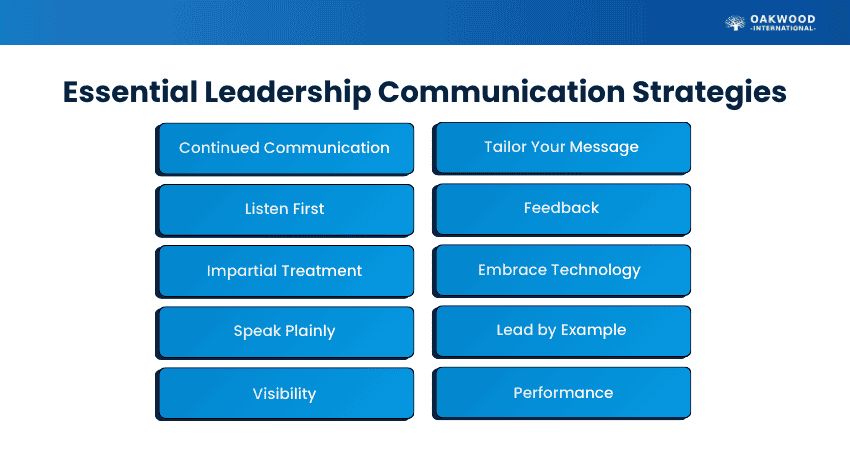
The best way to develop good communication is by putting into practice and following effective strategies. Below, the strategies will help to build strong Leadership Communication skills to inspire, direct, and encourage teams.
1) Continued Communication
Strong leaders communicate regularly, not only during crises or major changes. Continued communication keeps teams informed, aligned, and confident about what's happening within the organisation.
2) Listen First
Effective Leadership Communication starts with listening. Leaders who listen before responding gain deeper insight into challenges, concerns, and opportunities. This builds trust and makes communication truly two-way.
3) Impartial Treatment
Fair and unbiased communication strengthens credibility. Leaders who communicate with impartiality, treating everyone equally, create a positive environment where employees feel safe, valued, and motivated.
4) Speak Plainly
Great leaders speak simply and directly. Using plain, clear language ensures people understand the message quickly, avoiding misinterpretations and delays in action.
5) Visibility
Leadership Communication improves when leaders remain visible and approachable. Being present, whether through meetings, updates or informal interactions, helps teams feel supported and connected.
6) Tailor Your Message
Different audiences require different communication styles. Tailoring your message shows awareness and respect while ensuring information resonates with the right people at the right time.
7) Feedback
Encouraging feedback strengthens communication quality and builds trust. When leaders invite opinions, ask questions, and respond constructively, they show commitment to continuous improvement.
8) Embrace Technology
Using digital tools enhances Leadership Communication across distributed or fast-paced teams. From collaboration platforms to video updates, technology helps leaders communicate quickly, clearly and consistently.
9) Lead by Example
Leaders communicate most powerfully through their actions. Leading by example reinforces messages, strengthens influence, and builds trust across the team.
10) Performance
Strong communication boosts performance by ensuring teams know what to do, why it matters, and how success will be measured. Clear communication encourages accountability and supports better results.
Develop practical team leading skills with the ILM Level 2 Award in Leadership and Team Skills Course now!
Tips for Building Effective Leadership Communication
Effective communication is essential for a team's overall success. For building effective Leadership Communication, we have provided key tips:
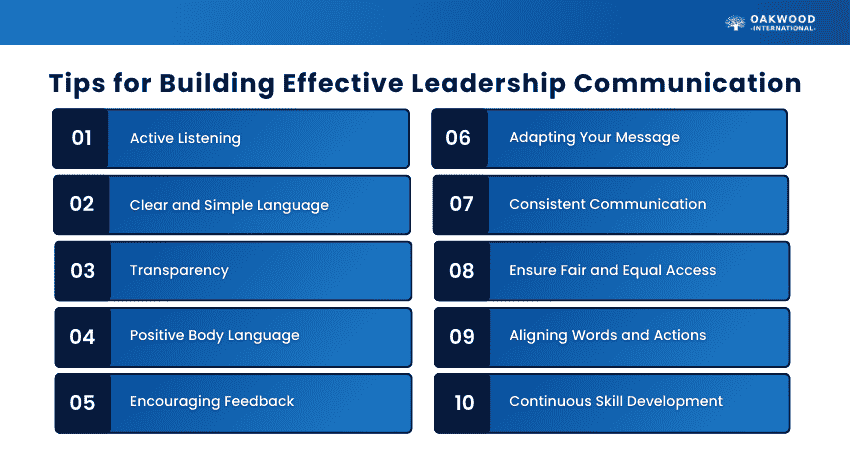
1) Practise active listening to truly understand your team's thoughts, concerns, and ideas.
2) Use simple and clear language so your message is easy to follow and free from confusion.
3) Be transparent about goals, challenges, and decisions to build trust and credibility.
4) Maintain positive body language, including eye contact and an open posture, to reinforce your message.
5) Encourage regular feedback to improve understanding and strengthen communication on both sides.
6) Adapt your message based on your audience's needs, communication style, and level of expertise.
7) Communicate consistently to keep everyone aligned, engaged, and informed.
8) Show empathy and appreciation to create a supportive and respectful working environment.
9) Match your actions with your words to build strong credibility as a leader.
10) Keep developing your communication skills through learning, reflection, and practise.
Conclusion
Strong Leadership Communication helps leaders inspire trust, guide teams with clarity, and create a positive working culture. By applying core principles and effective strategies, leaders communicate with purpose and impact. With consistent practice, anyone can develop this skill and strengthen their influence and Leadership success. Let your words become the spark that moves people forward.
Build essential Leadership skills with ILM Level 2 Courses – Join today!
Frequently Ask Questions
What are the Six Leadership Communication Skills?
The six Leadership Communication skills are:
a) Active Listening
b) Clear and Simple Communication
c) Emotional Intelligence
d) Effective Feedback Delivery
e) Conflict Management
f) Adaptable Communication Style
What are the Barriers of Communication?
Barriers of communication are obstacles that prevent messages from being shared or understood clearly. They can include language differences, noise, emotional stress, cultural misunderstandings, unclear structures, or personal perceptions. These barriers often lead to confusion, errors, and reduced teamwork if not addressed properly.
What are the Qualities of a Good Leader?
A good leader shows confidence, integrity, empathy, and clear communication. They motivate their team, make fair decisions, handle challenges calmly, and take responsibility for outcomes. Strong leaders also encourage growth, build trust, and create a positive environment where people feel supported and valued.
Related Blogs
Didn’t Find What You’re Looking For?

Our commitment to excellence ensures an exceptional learning experience tailored to your professional development needs.


© Copyright 2026 - Oakwood International ™ - All rights reserved.


SUPER SALE
 Get Amazing Discounts
And Deals
Get Amazing Discounts
And Deals